Viraj Bahl’s comeback has a piece of advice attached that rather spoils the motivational poster: keep your house. He sold his own family’s home to help start Veeba after a restaurant business failed. Years later, with the sauces on shop shelves and a seat on Shark Tank India, he has asked other founders not to repeat that part. A successful wager, it turns out, need not become a recommended household activity.
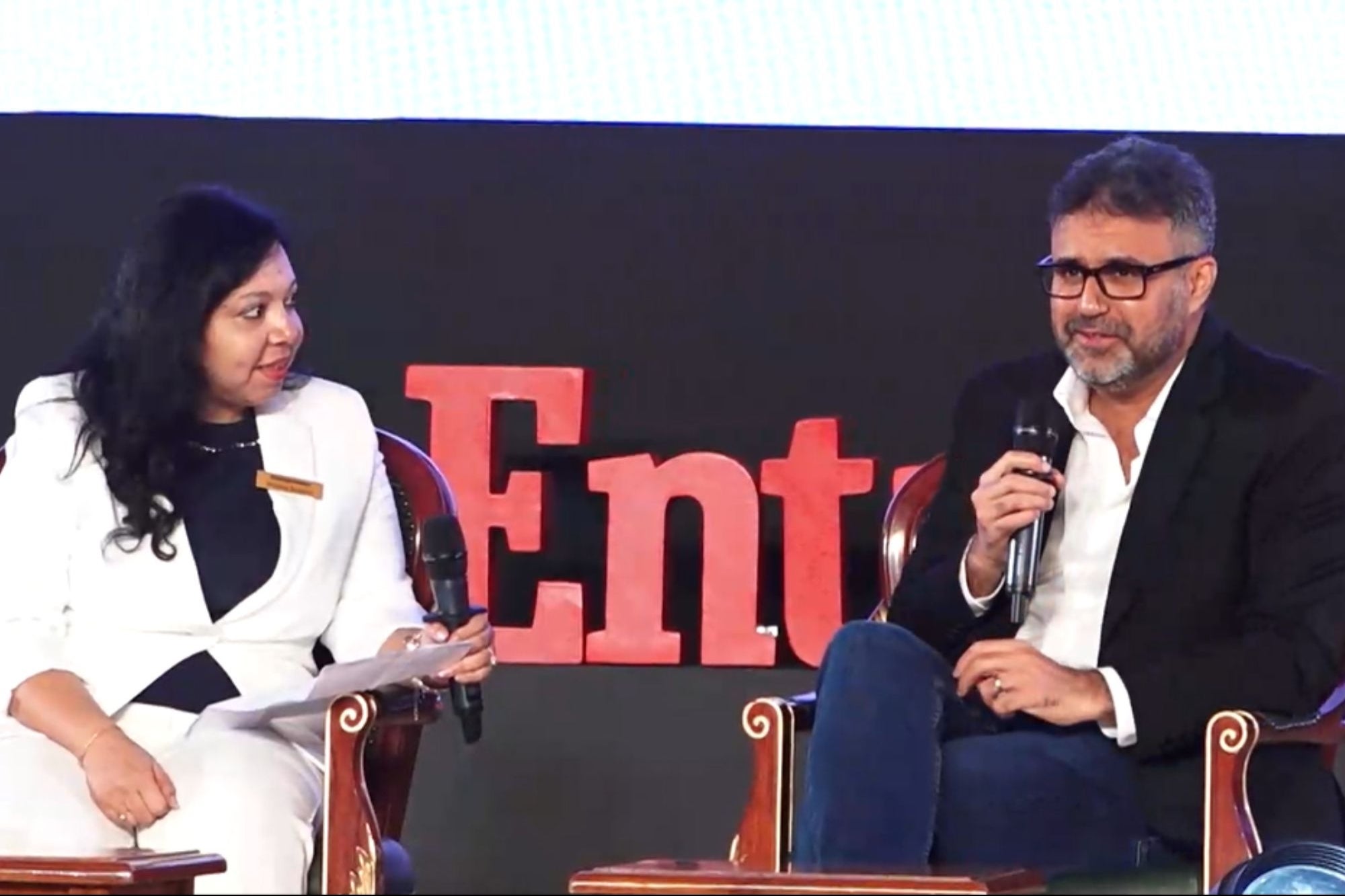
The distinction is revealing. Bahl can tell a story with all the ingredients audiences expect: a family business, an independent career, a disappointing first venture, a spouse who says yes, and a company that eventually finds its customers. He also interrupts the applause. At a 2025 entrepreneur gathering, he characterised the house sale as naivety rather than heroism. He had done it. He was grateful it worked. That was enough.
To understand how he arrived at this unusually useful ending, begin with the restaurants. Pocket Full was his attempt to build a food business after the family sold Fun Foods. It expanded to six outlets; by 2013, all had closed. An empty restaurant is a painfully public balance sheet. The tables advertise the problem before the accountant has finished explaining it.
A house becomes a factory
After that closure, Bahl wanted to make sauces. His wife, Ridhima, agreed to sell their home to fund the next attempt. In his retelling, the speed of her agreement still matters. He had lost money in one business and was asking the household to back another. Her willingness gave him a beginning when the previous venture had supplied only an ending.
Veeba started in 2013. Its name carries another family connection: his mother, Vibha. The plan also grew out of a practical frustration from the restaurants. Bahl had wanted a wider selection of sauces than he could readily source in India. The failed business had left behind a customer’s complaint, and he happened to know food manufacturing.
This is a less glamorous origin than a lightning-bolt invention, but a more intelligible one. A restaurateur wants an ingredient. The ingredient is difficult to obtain. A person with experience making food sees a chance to supply it. The restaurant and the supplier serve different customers, carry different costs and ask different things of their owner. Returning to food did not mean repeating the restaurant.
“Please don’t sell your house.”
Viraj Bahl, speaking to aspiring founders in 2025
The factory made the wager expensive before it made it convincing. Manufacturing in-house gave the new company responsibility for the product and the process, along with bills that did not wait politely for customers. Bahl has described the early difficulty of facing salaries without enough business coming in. Equipment can establish capacity. It cannot place an order with itself.
A berth before the family business
Food had been part of Bahl’s life well before Veeba. His parents, Rajiv and Vibha, built Fun Foods. As a child, he visited the factory and later worked at its stall at Aahar in Delhi. He wanted to join. His father wanted evidence that he could first earn his own living at the standard of comfort the family had given him.
So the route home went through Singapore Polytechnic and the merchant navy. He studied engineering, worked at sea and returned to Fun Foods in 2002 after meeting the earning requirement. It is an arresting detour: the prospective sauce entrepreneur first had to demonstrate his usefulness somewhere a family surname could not do all the work.
In 2008, Dr. Oetker acquired Fun Foods. Bahl had opposed the sale, but the family went ahead. The restaurant venture followed. Looking across those chapters, he had already seen food as a manufactured product, a family asset and a service delivered across a table before Veeba began. Each view revealed a different place for something to go wrong.
That background helps explain the choice to own manufacturing. Consistency has a particular meaning in a bottle: someone buying it again expects the same taste and texture. A good first encounter gets you a trial. Repeating it gives the customer a reason to stop considering the alternatives. Novelty has an excellent publicity department; reliability gets the repeat business.
- 2002Joins Fun Foods
- 2008Family business sold
- 2013Starts Veeba
- 2025Joins Shark Tank
- 2026Enters beverages
The customer on the other side of the door
Veeba’s early audience was the restaurant chain, rather than the person shopping for dinner. Domino’s became a decisive institutional customer after persistent approaches and checks on the factory. Bahl remembers the order as a moment when the company’s survival suddenly felt possible. Other chains followed, including KFC, Pizza Hut, Taco Bell and Burger King.
A purchasing department is a demanding place to begin. A supplier must do more than present an appealing recipe. The customer needs confidence that batches will arrive, meet requirements and behave consistently. For a young manufacturer, winning that confidence can take longer than developing the thing being sold. Persistence needs something competent behind it when the door finally opens.
Bahl’s later account of the growth sequence is factory first, institutional supply next, consumer retail after that. He wanted a substantial business before taking on the cost of building a retail brand. The sequence gave him production experience and customers while the public-facing business was still ahead. Much of the work preceded the recognisable bottles.
There is also a modest correction hiding in his interviews. When a podcast host pressed the company’s size, Bahl qualified the claim rather than accepting the grandest version. Volume and value describe different things. An institutional business can move a great deal of sauce while carrying a different margin from retail. A flattering adjective does very little bookkeeping.
The shop around the corner
The next audience was scattered across India’s shops. Bahl has become an advocate for general trade, the network of neighbourhood retailers that can seem unremarkable beside an app promising delivery in minutes. He serves quick commerce too. His argument is about the weight of the channels, and what it takes to turn an available product into a familiar purchase.
At a July 2025 retail summit, he said roughly 70 percent of Veeba’s revenue came from general trade. That figure belongs to that moment, rather than being a permanent law of the business. It nevertheless explains why he keeps returning to the kirana store when founders want to talk about growth.
General trade’s share of revenue, as described by Bahl in July 2025. A snapshot of his argument for offline distribution.
He is equally clear that offline retail costs money. In 2022, he told founders he would delay entering retail if he were beginning again, until the business had greater revenue or sufficiently patient financial backing. Salespeople, stock and retailer relationships make demands on cash long before a national presence becomes an attractive statistic.
His advice is to start with a regional cluster that includes different kinds of cities. The suggestion has the charm of an actual operating instruction. It gives a founder somewhere to begin and something to test. India is a large place to discover, at full expense, that the friends who liked your product were a rather specialised sample.
A founder’s hours, an employee’s bargain
Bahl’s view of effort is less theatrical than the house-sale anecdote might suggest. In the debate over seventy-hour working weeks, he drew attention to who benefits. A founder has a financial stake in the value being created. An employee asked to make the same sacrifice needs a proportionate conversation about compensation.
In February 2025, he said Veeba had reduced employee working hours to forty a week. The broader point was about the bargain: extraordinary demands should come with rewards that make sense to the person accepting them. Ownership cannot be quietly added to someone’s responsibilities while being omitted from their pay.
That position sits comfortably beside another lesson he has described: hire people whose abilities improve on your own. The company can otherwise remain bounded by the founder’s ideas. A person who starts with a very personal bet eventually has to build something that depends on more than personal will. The transition requires giving other people room to be useful.
The other side of the pitch
Shark Tank India made Bahl’s face more familiar. He joined Season 4 and returned for Season 5. Someone who had once needed a customer’s confidence was now asked to judge a founder’s proposal, with the additional inconvenience of doing it on television.
He has talked about being attracted to founders who know the details. He has also explained why a televised agreement may not become an investment: checking the numbers takes longer than the conversation in the tank, and information can change after filming. The camera supplies urgency. It does not remove the need to examine the business.
The table includes a longstanding friend, Kunal Bahl. People sometimes mistake the two for brothers; Viraj has described their relationship as becoming like family over the years. The actual family also remains in his account of everyday life. Time with his sons, Rajvir and Ranvir, is something he says he values beyond the work.
The bottle after the bottle
The next chapter extends beyond sauces. VRB Consumer Products is building a broader portfolio, with Wok Tok in noodles and cooking products and Zyro in beverages. The latter was co-founded with singer Karan Aujla. A June 2026 announcement added a Skinny Pop range including cola, ginger ale and tonic water.
A new category brings back the old questions, even with a more established company answering them. Will someone try it? Will they return? Can production and distribution keep their promises? Recognition can get a product noticed. The second purchase remains a decision made somewhere else.
The home sale will probably remain the most retold scene in Bahl’s career. It has characters, stakes and an ending people enjoy. His own caution makes it better. He can honour Ridhima’s confidence, acknowledge the risk and still tell the next hopeful entrepreneur to leave the house out of the pitch. Experience has earned him the right to edit his origin story.