At the beginning of 2025, Abdullah Asiri had a new number to put in front of his team. In earlier years, his annual speech had asked them to believe Lucidya could reach $1 million in annual recurring revenue. Then the ambition became $10 million. This time, he was talking about $100 million. The meeting still served its familiar purposes: celebrating last year's work, announcing promotions, recognizing colleagues and setting the next year's goals. But the horizon had moved.
Asiri described the change as emotional. A revenue target is usually dressed in the sober clothes of a spreadsheet; here it marked how far a group of people had travelled together. The $100 million figure was an ambition, not a reported result. That distinction matters. He was asking a company accustomed to smaller milestones to imagine a much larger version of itself, while admitting that the next stretch would be difficult.
There is a pleasing complication in his story. The founder of a company built to understand what people say has had to learn when to stop supplying the answer himself. His career runs through computer engineering, an unsuccessful shopping app, an enterprise technology business and an Arabic-first AI company. Along the way, the problems have changed. First he needed something worth building. Later he needed people who could build beyond him.
A shopping app before the listening business
Asiri's technical education preceded the present enthusiasm for artificial intelligence. He earned a computer-engineering degree at Virginia Tech, studied computer science at King Abdullah University of Science and Technology, and later added an MBA at Prince Mohammed Bin Salman College of Business and Entrepreneurship. The combination spans the machine and the business around it. His public biography also records student leadership at Virginia Tech, including its Saudi Club and a robotics team.
His first entrepreneurial detour began with ShopMate. An account by entrepreneur Osama Natto describes Asiri as a serious KAUST student who devised the shopping app as a weekend project. Fellow programmer Kassem Bagher joined the team as an iPhone developer. The project grew sufficiently absorbing that both stepped away from their studies to pursue it. A spare-time experiment had become a decision about what to do with their lives.
ShopMate connected shoppers with products they were interested in. It was an attempt to put useful information in the path of a person who might buy something. The later Lucidya would tackle a different information problem: helping a business understand the people already speaking to it. These ventures belong to different markets, but both begin with a programmer seeing a gap between available information and a useful action.
The shopping venture did not last. By Asiri's 2019 account, losses forced its closure. He chose to carry the experience into another business, Waqood Tech, founded in 2013 with two partners and effectively no starting capital. The three handled the founding work, marketing and sales themselves. After several months, income made a first employee possible. By the time he told the story, a small room and three partners had become a business employing 25 people.
Waqood worked with organizations including Saudi Arabia's Ministry of Interior, Aramco and KAUST. These were practical encounters with enterprise customers, well before Lucidya's later funding announcements. An institution buying technology brings its own demands, constraints and expectations. A clever demonstration has to survive contact with the organization that will actually use it.
The customer was already speaking Arabic
By 2015, Asiri had noticed a more specific gap. Businesses could find tools to analyze online writing in other languages, yet Arabic conversation remained poorly served. He wanted to understand the feelings and opinions inside social posts, rather than merely count them. He brought together partners with digital analytics and AI experience. Lucidya was founded in Jeddah in 2016; its co-founding team included Hatem Kameli, Mohamed Milyani and Zuhair Khayyat.
The difficulty was apparent early. Developing the first version involved extensive research and consultation. Hiring people with the required technical skills was another obstacle, as was persuading large organizations to trust a young local supplier. To the founder, the language gap offered a business opportunity. To a prospective customer, the young business still had to earn its place beside established vendors.
In a 2018 podcast conversation, Asiri explained a further change in the idea: an initial emphasis on geographic analysis had developed into analysis of social media and news sites. He discussed testing the product around a feature customers needed and would pay for. He also described building subscription pricing and shaping the product around customer requirements. Before grand ambitions came the modest commercial question: what would somebody pay to keep using?
A progression in scope, rather than a measure of performance.
Lucidya's current suite brings together listening, surveys, customer profiles, media monitoring and engagement across channels. Its company figures describe more than 120 large enterprise and government clients and operations reaching 13 countries. The distinction between clients and their customers is useful: Lucidya says those organizations collectively serve more than 75 million people. Those people are not all individual buyers of Lucidya software.
The company reports 92 percent accuracy for Arabic sentiment analysis. That is a company-reported measure for a particular task, rather than a promise that every AI answer will be correct. What matters to Asiri's original proposition is the attention to regional language. Customer experience happens in the words people actually use, and the enterprise wants those words to make sense inside its systems.
Money arrives at the pit stop
In January 2022, Lucidya announced a $6 million funding round led by Rua Growth Fund, with M.A.L Ventures, AlRashed Group and other investors participating. The announcement reported more than 100 enterprise customers across more than six countries and annual recurring revenue growing fivefold year over year. It was evidence of commercial traction around a problem that had once required explanation.
Asiri had an automotive description for fundraising: the round was a refuelling stop on a longer journey. His advice to other founders was practical. Allow six to twelve months to close a round, begin before the need becomes urgent, and hire a lawyer who has handled similar deals. The romance of entrepreneurship makes room for legal paperwork. Indeed, legal paperwork tends to insist on its own chair.
He also described a wide ambition for the product: businesses serving consumers throughout the Middle East and North Africa should be able to use something from Lucidya's customer-experience suite. Expansion meant taking the same Arabic-content problem into other Arab markets. Raising money supplied the means to broaden the offering; the customer problem supplied the reason.
On July 14, 2025, Lucidya announced a $30 million Series B led by Impact46. Wa'ed Ventures, Takamol Ventures and SparkLabs joined, alongside returning investors Rua Growth Fund and ARG. The company planned to develop its AI agent offering across customer-facing work. Asiri linked the investment to a wager made years earlier, when AI had much less of the executive world's attention.
“We bet on AI back in 2016, long before it became a boardroom buzzword.”Abdullah Asiri, July 2025
The announcement put Lucidya in 11 countries at that point. Funding and geographic reach make convenient public milestones, but neither is a substitute for a functioning customer relationship. For Asiri, the next use of capital involved extending what the technology could do after it had understood a conversation. Listening had created the starting point for a more operational product.
The founder learns to leave a little room
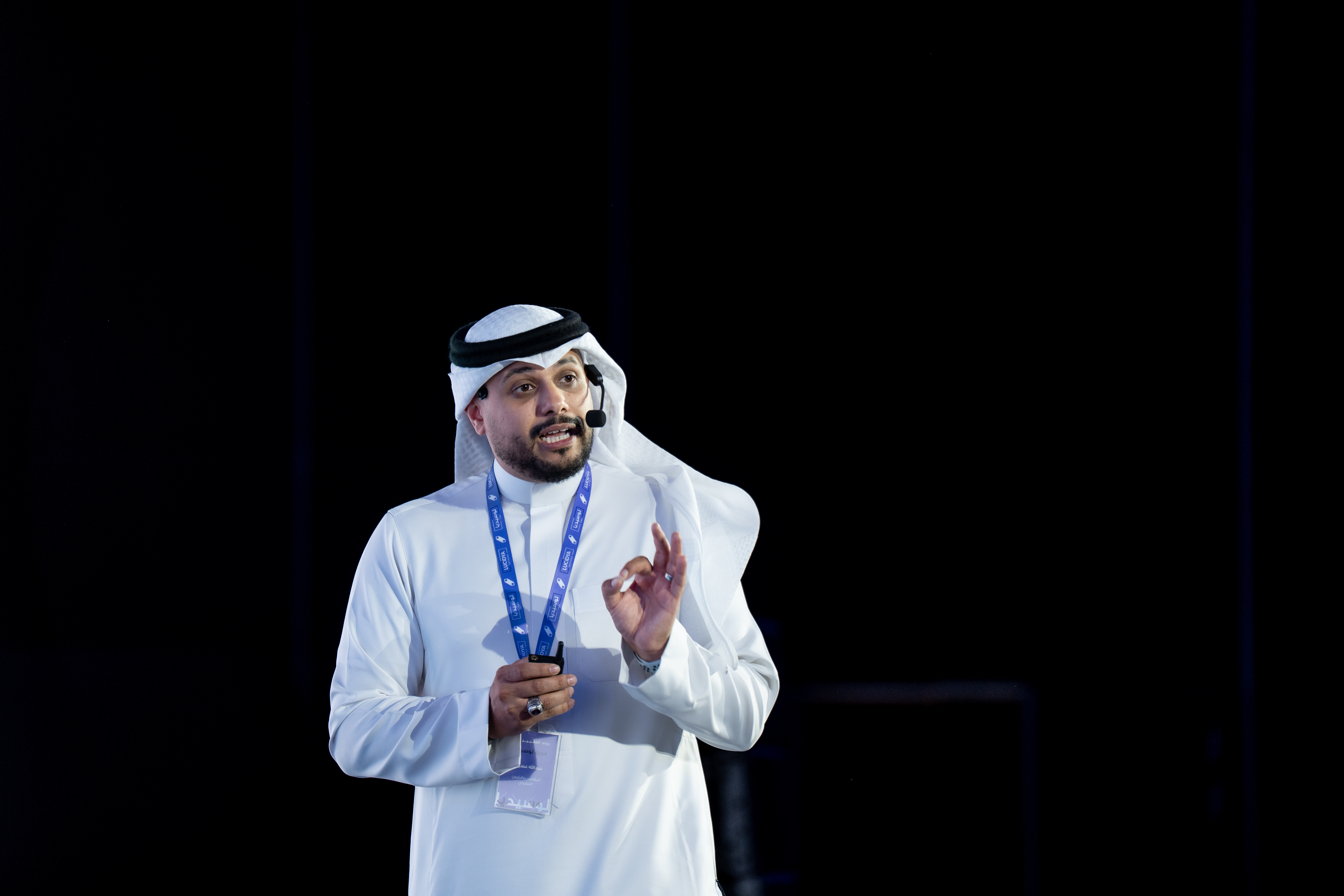
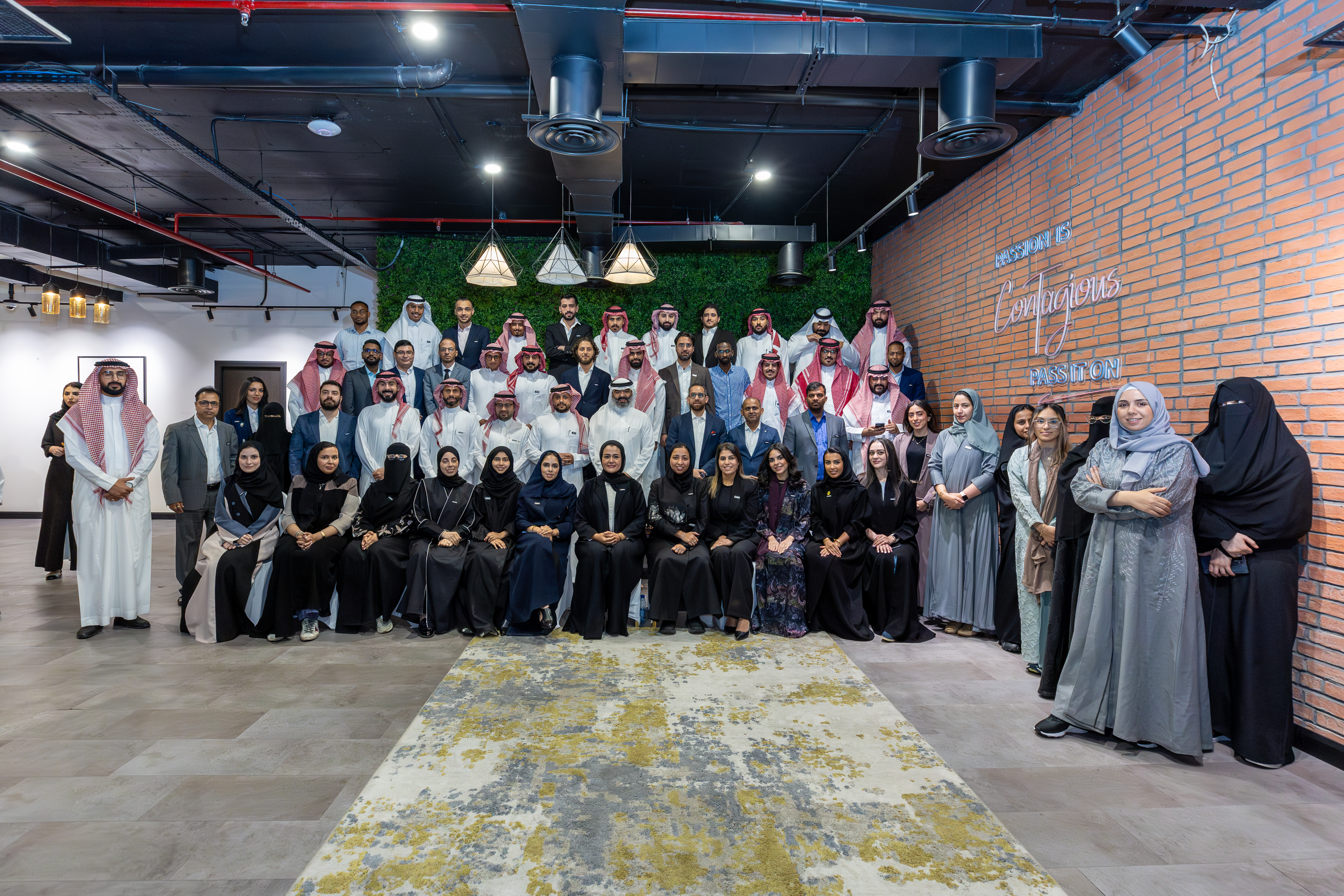
Growth has required Asiri to change his own working habits. He describes the early job as an assortment of pitches, sales meetings and discussions with engineers about accuracy. As the product range widened in 2022 and 2023, he could no longer personally contain the whole organization. Experienced leaders could take responsibility for parts of the business. Letting them do so required a second adjustment.
“Hiring them was the easy part. Getting out of their way was much harder,” he said. Liz Wiseman's book Multipliers helped him recognize how quickly supplying an answer can suppress somebody else's thinking. He now describes a rule under which another person should make a decision if they can do it at roughly 70 percent of his standard. A founder's availability need not become everybody else's bottleneck.
His public advice to entrepreneurs has also emphasized investing in the team as ideas change. There is consistency between that advice and the lesson he describes learning himself. The people must be capable of navigating an evolving business, and the chief executive must permit them to use that capability. Delegation becomes rather less impressive if every road still leads back to the same desk.
A good reply still leaves the refund undone
In 2026, Asiri's product argument has turned toward resolution. Lucidya's Enterprise AI Agent platform is designed to execute approved actions inside the systems companies already use. Its intended work includes requests that depend on billing, customer records and case management. Complex cases can move to human teams. The customer conversation becomes the entrance to a workflow, with an outcome at the other end.
Asiri argues that delays often come from fragmented execution after a conversation has begun. A courteous response cannot complete an unresolved request by being exceptionally courteous. The new platform therefore puts permissions, approval hierarchies, logs and escalation alongside the AI. He treats control as part of adoption: organizations need to know which actions the agent may take and who owns the consequences.
That is a fitting next problem for a founder whose ventures have repeatedly tried to close an information gap. ShopMate began with a shopper and a product. Lucidya began with Arabic conversation and a business that needed to understand it. Now Asiri wants the understanding to lead somewhere useful. His stated ambitions extend to international competition and a larger starting point for the Saudi founders who follow. The next annual speech will have more to account for than a number.