An old towel factory is an unlikely place to begin an argument about the future of work. Factories are designed to make the same thing repeatedly. Omar Shah wanted this one to put different people together and see what happened. In 2019, he and his twin brother Ali co-founded COLABS in Lahore. A building with an industrial past acquired a new occupation: giving other people somewhere to pursue theirs.
The setting matters. This was a return to a city Shah knew, supported by a family business that knew how to build. It also meant exchanging the investor’s position outside a company for the operator’s position inside one. A disappointing investment can occupy a spreadsheet. A disappointing office occupies a building, complete with lights, bills and clients who would quite reasonably like the internet to work.
Seven years later, his next chapter is in Riyadh. COLABS has opened a Saudi campus and moved its headquarters to the Kingdom. The route between those two cities runs through a surprisingly consistent idea: businesses need dependable places to work, and useful people should have more chances to meet. Shah has spent the intervening years trying to make both happen under the same roof.
A return ticket to Lahore
Shah grew up in Lahore and went to SOAS in London to study development economics. It is an education concerned with how countries grow, who benefits and what holds progress back. His subsequent career took him into finance: investment banking, equities and then private equity. The institutions included Berenberg and the Abraaj Group.
His work exposed him to emerging markets including Mexico, Turkey, the United Arab Emirates and Pakistan. By the time he came home in 2019, he had spent years looking at companies across borders. Lahore gave that experience a particular address. Instead of evaluating someone else’s expansion, he would have to persuade customers to walk through his own doors.
There is a useful distinction between knowing a market and living with its daily inconveniences. An investor can discuss infrastructure as a category. An office operator discovers which part needs fixing before nine tomorrow morning. Shah’s career change brought the two perspectives together. The development-economics questions survived, only now they came with floor plans.
Two brothers, different toolkits
Ali brought the other half of the proposition. He ran SABCON, the family’s construction and real estate development business. Omar brought the investment experience; Ali brought the ability to turn a proposed workspace into an actual one. Their twin partnership was practical as well as familial. For a business whose product is a place, construction knowledge is rather more useful than another inspirational slogan.
The original site on Gurumangat Road gave COLABS an industrial starting point. Turning it into offices made the family’s property experience part of a new venture. It also gave Shah a concrete answer to a large question. If he wanted to help companies get going in Pakistan, he could start by removing one substantial piece of work from their list: setting up an office.
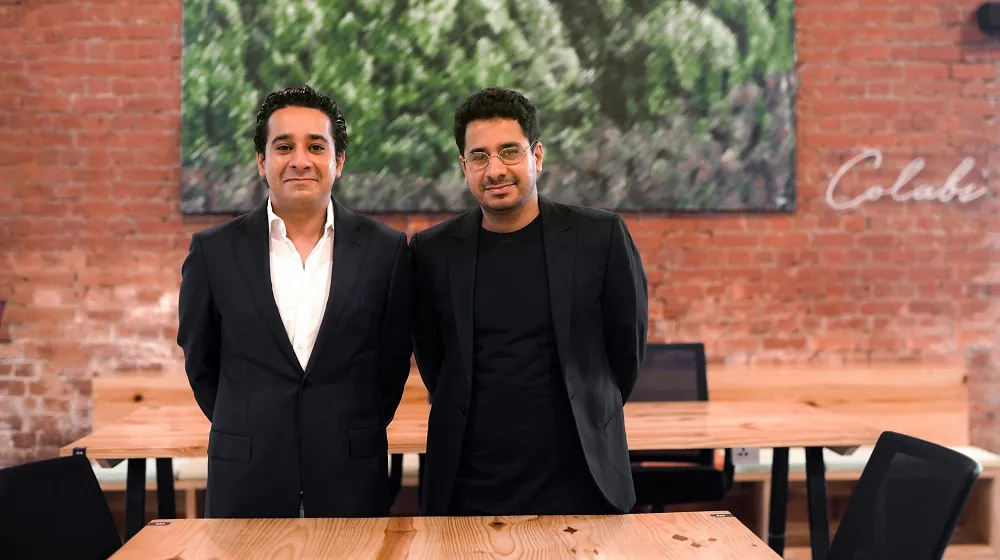
That combination helps explain why Shah’s story cannot be reduced to a lone founder with an idea. COLABS began with complementary skills and an existing relationship with buildings. The brothers were finding a new use for experience they already possessed, in a city where they already had roots.
The coffee stand had a job to do
In its first year, COLABS offered individual seats, offices for teams and meeting rooms. Shah wanted freelancers, established startups, smaller businesses and larger companies sharing an address. He described the coffee stand as a place where those groups could encounter each other. “We are facilitating these interactions,” he said.
The thinking was specific. Put a business needing advice near someone able to supply it. Give a small team a chance to encounter a larger client. Allow people from finance, media and creative work to cross paths. The coffee had the modest responsibility of keeping everyone upright while the introductions took place.
Shah also distinguished the workspace from an incubator. He wanted companies already operating, and he did not intend to collect equity simply because they rented desks. That commercial boundary was useful: an office membership could remain an office membership. Any investment decision belonged elsewhere. The arrangement kept the customer relationship understandable, which is a considerable virtue when entrepreneurship already supplies enough uncertainty.
“We are a real estate company.”
Omar Shah, FWDstart conversation, October 2026
A big ambition meets an ordinary invoice
In 2021, Shah described an ambition to connect 100,000 entrepreneurs and freelancers. At the time, COLABS had roughly 700 members and two Lahore spaces, with another planned. The numbers showed the distance between an operating business and its hoped-for reach. A community can be much larger than its physical seating capacity, but it still needs reasons for people to keep returning.
COLABS developed events, networking and business support alongside workspace. The logic followed its customers’ needs: getting an office does not finish the job of setting up a company. Registration, recruitment and payroll remain. A founder who has secured a desk can still lose an afternoon trying to discover which form belongs where.
Shah’s venture therefore grew around the work that surrounds work. It is an unromantic category, populated by recurring tasks rather than dramatic launches. Yet a company that makes those tasks easier can become useful well beyond the square footage it rents. The ambition was expansive; the daily test was whether customers found enough value to stay.
Three parts of COLABS’ offer, rather than three separate businesses a customer has to assemble.
Art enters the floor plan
Shah’s interest in a workspace extends to what people see and experience inside it. His conversation with Happa Studios’ Omer Jilani explored construction, craftsmanship, the history carried by buildings, and the role of art and music in COLABS. Those interests make the factory origin feel less incidental. A space comes with a past before it gets a business model.
The COLABS Creative Collective gives that interest an organizational home. Shah is part of its team, while curator Zarish Shahzad oversees exhibitions, workshops, the gallery and an artist residency program. This is work with its own practitioners and responsibilities. A painting on an office wall may be decoration; a program supporting artists requires someone to do the programming.
For Shah, the cultural and commercial parts of the place coexist. People arrive to do their jobs, but the building can introduce them to other kinds of work as well. It is a more particular idea of an office than a row of interchangeable desks. The surroundings have something to say, even when the meeting in the next room does not.
From hosting founders to raising capital
COLABS’ $3 million funding announcement in 2022 brought together Indus Valley Capital, Zayn Capital and Fatima Gobi Ventures as lead investors. Other participants included Shorooq Partners and individual investors. For Shah, this was the other side of a familiar conversation. His years assessing businesses now had to support a case for his own.
The company also built relationships with organizations whose work involves founders. In 2023, COLABS and Endeavor Pakistan agreed to collaborate on events and other initiatives; Endeavor established its Lahore office at COLABS. Putting an entrepreneurial network inside a workspace made the original idea of proximity rather literal. The people helping businesses grow were tenants too.
By October 2024, COLABS announced a further $2 million round led by Shorooq Partners, with Waad Investment participating. It reported ten locations, more than 5,000 seats and net profitability. The new money was intended to support Saudi expansion. These were company milestones, rather than measures of Shah’s personal wealth, and the distinction matters: capital raised belongs to the business and comes with obligations.
- 2019Omar and Ali establish COLABS in Lahore.
- 2022A $3m funding round supports the next stage.
- 2024A $2m pre-Series A backs plans for Saudi Arabia.
- 2026The Riyadh campus opens in Al-Narjis.
Riyadh was already on his map
Saudi Arabia had entered Shah’s working life before the campus announcement. He attended the Future Investment Initiative in Riyadh in October 2022. He took an interest in sessions featuring founders and investors, including Mudassir Sheikha, Fadi Ghandour and Ben Horowitz. He also wanted COLABS to represent Pakistan internationally. The visit supplied an early glimpse of the market he would later enter.
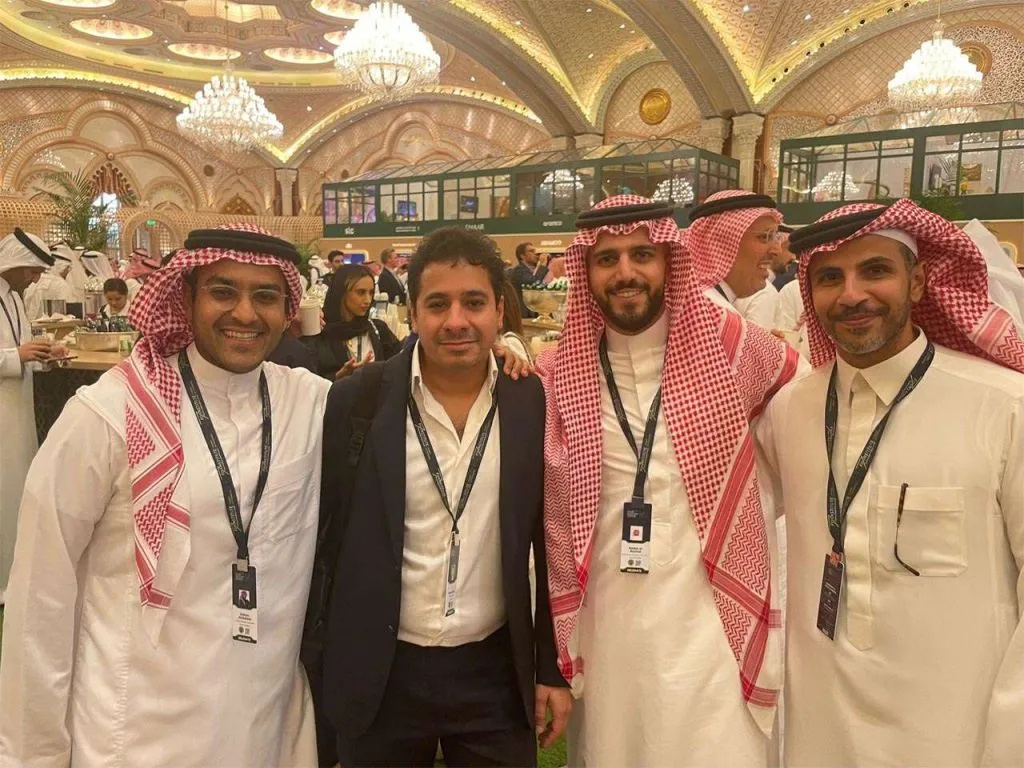
The April 23, 2026 launch announcement described a 4,000-square-metre campus in Al-Narjis, northern Riyadh, designed for more than 500 members. It included a rooftop terrace, podcast studio, meeting rooms, café and daycare facility. These details are an operator’s answer to the varied requirements people bring to a working day.
“Saudi Arabia represents a significant long-term market for us,” Shah said. The company reported more than $8 million raised by that point. Its Saudi move also carried the cultural thread forward through collaborations involving artists from Pakistan and Saudi Arabia. A second country required new relationships, while the preference for putting business and culture together travelled with him.
A new address for a proposition first tested in Lahore.
The host who needed a little encouragement
There is a personable complication in Shah’s career: building a business around gatherings does not mean enjoying the microphone. In a 2025 LinkedIn post, he acknowledged discomfort with speaking onstage and credited the VCast team with helping him tell his story. His own colleagues had been encouraging him too. A company can become known for bringing people together while its founder is still learning to address the room.
He connected that story to a wish for practical impact. He wanted COLABS to help people find work, meet clients and gain opportunities across Pakistan. The aspiration has a recognizable personal shape: after years in finance abroad, he wanted to see what his effort could enable at home. The workspace gave him a place to look for the answer.
The international chapter has tested that confidence. In his October 6, 2026 FWDstart interview, Shah described six months of fundraising and more than 100 investor meetings while trying to finance the expansion. The repeated rejections brought him close to abandoning it. His financial background could help him explain the proposal; it could not make another investor say yes.
That is where the factory story becomes personal again. Shah had returned to Lahore with experience, family connections and a brother whose skills complemented his own. He still had to turn those advantages into a service people would buy. Riyadh presents the same task at a new address. The buildings have changed, but the question inside them remains admirably concrete: who will come here, what will help them work, and whom might they meet?
Continue the conversation
Follow Omar’s work and hear him describe the decisions behind it.