At Wyze, the smart-home company, the parcels were moving. The emails were not. According to parcelLab’s customer account, a technical error at Wyze’s previous provider stopped post-purchase messages for nine months. An invisible failure had become part of the shopping experience.
- parcelLab connects shipping data to branded messages, tracking and returns.
- Wyze reports 20% fewer “Where is my order?” inquiries after adopting it.
- The useful lesson: audit what happens after payment, especially when an order arrives in pieces.
Wyze’s split shipments compounded the confusion: one box arrived while the rest of an order remained elsewhere. Customers called support. The company chose parcelLab, which supplied shipment-specific updates, delay notifications and an integrated returns experience. The reported reduction in inquiries is a customer result, rather than a promise for every retailer.
The shop disappears at precisely the wrong moment
Consider the peculiar manners of online shopping. Before payment, the retailer is a solicitous host. It remembers your preferences, rearranges its windows and makes the purchase button irresistible. After payment, it may introduce you to a carrier’s tracking page and quietly leave the room. You bought a lamp; you acquired a small research assignment.
parcelLab sells software for this interval. It takes order information and carrier events and turns them into communications a shopper can understand. A tracking page can live inside the retailer’s website. Notifications can carry its voice. An exception can trigger an explanation before a customer has to compose an irritated email. The retailer keeps speaking after the money changes hands.
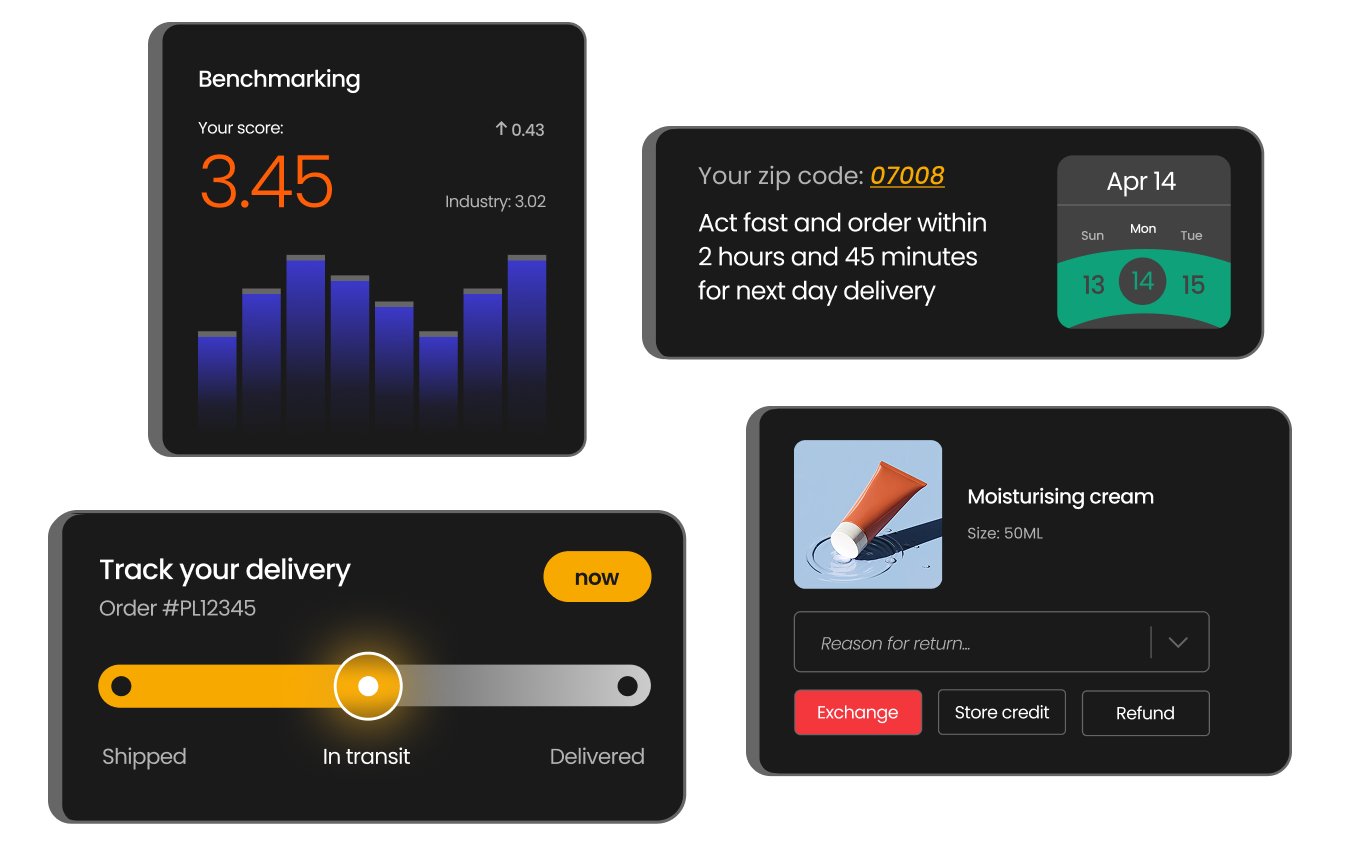
The appeal crosses departments. Service teams want fewer repetitive questions. Logistics teams want to identify delivery problems. Marketing wants another useful visit to the store. Customers want the missing box. parcelLab’s expertise lies in connecting these interests through the same order data, without requiring the shopper to understand the retailer’s internal organization.
A barcode scanner, a dating site, then this
The company began in Munich in 2015 with Tobias Buxhoidt, Julian Krenge and Anton Eder. Their backgrounds made an interesting combination: Buxhoidt had worked in engineering and consulting; Eder in marketing; Krenge in software. The problem sat comfortably between their disciplines. A shipment was an engineering event with a marketing consequence.
Krenge’s route was less tidy than a founder biography usually suggests. In a 2021 Retail Bulletin interview, he described working at a trucking company, moving from manual labor into IT and barcode scanners. Later came attempts at small-business ERP, a dating site organized around local parties and trade-fair software. None stuck. Software contracting paid, but building a product offered a different business.

“customers expect transparency.”Julian Krenge, Retail Bulletin, June 2021
That observation gives the company a sensible organizing principle. The customer does not care which system knows the answer. They expect the business that accepted the order to produce it. A delivery update becomes a test of whether the retailer can explain its own operations.
Four jobs around one order
The product now extends on both sides of the original delivery problem. Convert places predictive delivery promises on product pages, in the cart and at checkout. It helps answer the question that precedes the purchase: will this arrive when I need it? Order protection adds a route for dealing with lost, stolen or damaged purchases.
Engage handles branded delivery communications and tracking. Retain supplies returns journeys, including exchanges and store credit. Insights brings reporting, benchmarking and customer feedback into the picture. Together, they let a retailer examine the promise, the delivery and the aftermath. A disappointing purchase still has several opportunities to become a competent customer interaction.
This is an established software category. Narvar and AfterShip offer overlapping tracking, notification and returns capabilities. parcelLab emphasizes enterprise customization and dedicated implementation support. The distinction matters most when a retailer has complicated requirements. Buyers should compare how each system handles their actual exceptions; a polished demonstration with an uncomplicated order proves rather little.
The price of answering before someone asks
parcelLab operates as enterprise software-as-a-service. Its contracts put purchased services, term and financial conditions in an Order Form, with implementation details scoped separately. The buying decision therefore starts with a negotiated proposal. The practical calculation includes integration work, continuing software costs and the value of fewer support contacts, alongside any additional purchases attributed to the experience.
The company reports more than 1,000 brands, including IKEA, H&M and YETI. Its $112 million Series C, announced in May 2021, was led by Insight Partners with Endeit Capital, Capnamic Ventures and coparion participating. The stated purpose was international expansion and product development. That funding bought room to expand; customers still have to justify the software order by order.
Partnerships show where parcelLab fits. An October 2024 agreement pairs Metapack’s delivery-management capabilities with Engage and Retain. A January 2025 OrderProtection integration adds branded claims handling. parcelLab occupies the layer where fulfillment information becomes a customer experience, connecting to the systems that organize physical delivery.
Delivering that service also takes people. parcelLab describes a remote-first workforce with hubs in Boston, London and Munich, dedicated customer-success and implementation managers, and regular customer check-ins. Its own model acknowledges an enterprise-software reality: connecting a platform is the beginning of the work. Someone still has to decide which events matter and what to tell customers about them.
A useful evaluation would compare support contacts per order before and after launch, rather than celebrate a falling total during a quiet month. It would also check whether notifications arrived and whether shoppers understood them. Revenue attribution needs the same care: a customer returning to a tracking page is showing interest in an existing purchase. A second purchase should be counted separately. These are practical ways to test the proposition, rather than published guarantees from parcelLab.
The next reply needs to know the facts
The latest chapter adds AI to those workflows. The September 2026 Copilot update connects an in-app assistant to a retailer’s live setup, with proposed actions under user control. Its WISMO/R Agent addresses order and return inquiries using order records, carrier events and policies. The interesting feature is access to the facts behind the conversation. Fluency alone cannot locate a parcel.
A retailer can copy the first step without buying anything: follow one of its own orders. Test the messages. Split the shipment. Attempt a return. Count the questions left unanswered. The approach needs dependable data and clear policies; automation will faithfully spread confusion if those are wrong. For a simple store with few inquiries, setup costs may outweigh the benefit. For a complex one, the waiting customer deserves an explanation before another campaign.