A founder can sell another slice of the company, or try to finance growth without giving that slice away for good. STV has built a business around the first option. Its more revealing experiment is the second: an investment structure that lets founders buy equity back as their businesses generate revenue. In an industry fond of announcing checks, the Riyadh firm is asking what the check should look like.
The question travels well beyond Saudi Arabia. A promising company can have customers, momentum and an urgent need for cash at the same time. Raising another equity round takes attention away from running it. Borrowing introduces a different set of obligations. The wrong financing can turn a manageable expansion into a negotiation with the calendar.
STV’s answer now spans conventional venture capital, growth equity, a $100 million NICE fund and a separate AI fund announced at $100 million with Google backing. These serve different businesses at different moments. Together, they suggest an investor trying to make its capital fit the company’s job.
A $500 million entrance
STV did not arrive with a tiny experimental fund. Saudi Telecom announced a $500 million technology vehicle in 2017, led by former Google executive Abdulrahman Tarabzouni. Operations began in 2018, the founding year STV uses in its public profile. Its base was Riyadh, and its hunting ground was the Middle East and North Africa.
The first year was busy. STV assessed more than 500 opportunities and deployed close to $100 million, according to reporting in The National. It participated in financing rounds totaling nearly $250 million. Those are different numbers: the size of a round includes other investors’ money. Confusing the two gives a venture firm credit for checks it did not write.
Careem supplied an early demonstration of the ambition. STV invested in the ride-hailing business before its acquisition by Uber. After that exit, Tarabzouni spoke publicly about doubling down on businesses shaped by local needs. The lesson he emphasized was that regional knowledge could produce companies worth the attention of global buyers.
That thinking remains visible in a portfolio that includes Tabby, Salla, Foodics and Calo. STV’s website reports backing more than 30 startups since 2018. Buying something, running a merchant business or arranging a meal may sound less glamorous than inventing a new category of computing. They are also activities people repeat, pay for and complain about. For an investor, that is useful territory.
When the money stopped fitting
STV’s public explanation for NICE starts with a squeeze: higher interest rates, lower equity valuation multiples and founders spending too much time fundraising. Its criticism of venture debt centers on fixed repayment schedules and restrictive covenants. Variable startup revenues do not always cooperate with either.
NICE stands for Non-Dilutive Investment in Callable Equity. Under STV’s description, founders have the option to repurchase equity in installments, with buybacks linked to revenue and investor returns capped. Tabby was its first recipient. Co-founder Hosam Arab called it “an efficient cost of capital versus equity.”
The published illustration makes the trade concrete: a company raises $1 million, buys shares back over three years at a 7 percent revenue share, and delivers a 1.6-times cash return to the investor. That is an example, not a universal price. Preserving ownership still consumes cash.
≠ free capital
A buyback has an economic cost. The useful comparison includes cash paid, ownership retained and the obligations attached to each offer.
It is tempting to read the name and stop there. A more useful reading follows the money through the business. Revenue can increase while margins shrink; expansion can require cash before new customers pay. Any financing linked to sales needs to be considered alongside the expenses needed to produce those sales. That is a practical implication of the structure, rather than a promise about its outcome.
A bridge with somewhere to go
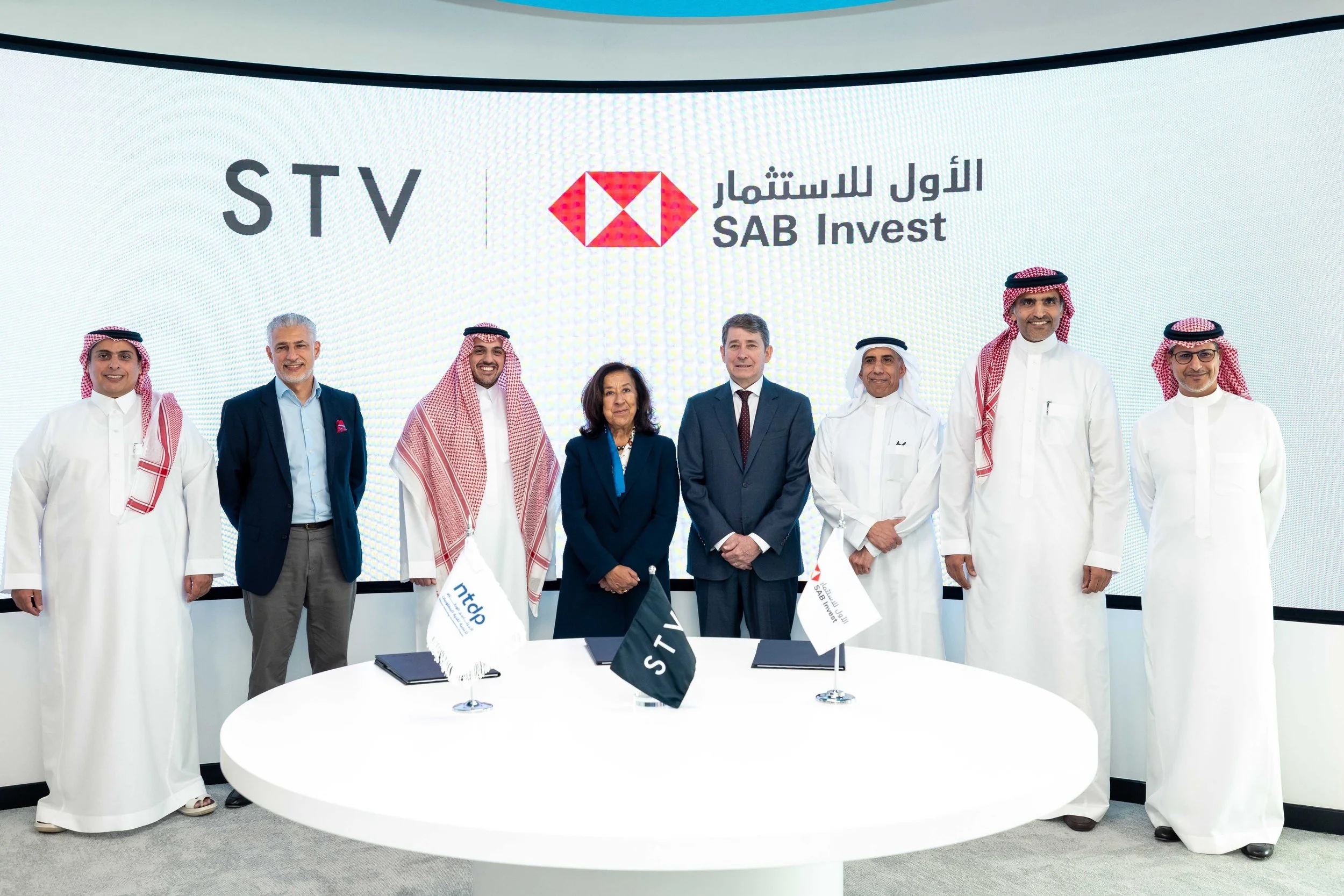
By May 2025, STV announced the final close of NICE Fund I at $100 million. SAB Invest participated through its Alternative Financing Fund, alongside family offices, with strategic backing from Saudi Arabia’s National Technology Development Program. Early investments included Morni, RedBox and Invygo. A proposed alternative had become a dedicated pool of capital.
Invygo offers one view of the intended customer. In October 2024, the car-subscription company announced an $8 million Series A extension involving STV’s NICE fund and existing investors. It reported an annualized gross merchandise value above $100 million and was targeting profitability. That round total was shared across investors, and the profitability statement was a target. The point is the company’s stage: an operating business seeking fuel for expansion.
Stake provides a later example. In a February 2026 case study, STV described financing the digital real-estate platform after it approached the firm in mid-2025. The capital supported its runway and expansion plans ahead of a subsequent $31 million Series B.
“Speed mattered for us at that stage.”
Rami Tabbara, Stake co-founder
The account is STV’s own, but the sequence is useful: a company with traction needed money before a larger institutional round. The bridge had a destination. For founders reading along, the transferable question is specific: what milestone would this capital let the business reach, and why would reaching it improve the next financing decision?
Two funds, two different clocks
The AI fund addresses an earlier moment in a company’s life. Announced in May 2025 with Google backing, it supports AI-native startups across MENA. STV’s launch thesis pointed to a gap between the region’s investment in AI infrastructure and the funding available for applications built on top of it.
Capital for growth through callable equity.
Early-stage investment in AI-native companies.
The distinction helps explain the portfolio. An AI startup building its first enterprise product faces technical and commercial uncertainty. A business financing an established expansion has another problem. Treating both as candidates for exactly the same funding instrument would ignore what each needs the money to accomplish.
Sawt, the fund’s first announced investment, develops Arabic-native voice AI for enterprises. STV co-led its seed round with Saudi communications company T2. The attraction included local speech and customer-service workflows, plus a distribution partner that STV said served more than 12,000 enterprise and government clients. A capable voice agent still needs someone to buy it.
There is a small personnel twist: Sawt co-founder Khaled AlJuraywi previously worked at STV. The firm was backing someone who had crossed from evaluating businesses to building one. His co-founders are Abdulmalik Alsaeed and Basim Alharbi.
Clarity followed. In September 2025, STV announced it was co-leading a $12 million round with Prosus Ventures. Formerly Anecdote, Clarity combines customer feedback analysis with AI agents and support automation. Its reported customers included Careem and Booking.com. Across those first two investments, customer service supplied a concrete buying problem for the AI thesis.
The introductions are part of the product
STV serves two constituencies. Fund investors supply capital and expect investment returns. Founders receive financing and help building companies. The consumers using a portfolio company’s app sit another step away. Keeping those relationships straight explains why an investor spends time on partnerships as well as term sheets.
stc’s investor materials describe STV as an independent fund with access to the telecom group’s assets, including channels, analytics and customers. STV also announced a Meta partnership intended to strengthen portfolio companies’ technical capabilities and improve their use of its platforms. The advertised benefit is practical: help companies reach customers and spend more effectively.
This puts STV among regional alternatives such as BECO Capital, Wamda Capital, MEVP and Shorooq Partners. Venture firms can compete for a deal and share the same round. STV’s distinctive combination is its regional growth-investing history, institutional relationships and specialized financing vehicles. The value of that combination depends on which doors a particular founder needs opened.
Its commercial logic remains investment management: deploy committed capital and seek returns. In this industry, management fees support the investment operation and carried interest can reward successful outcomes. A founder assessing a firm should therefore distinguish the size of its funds from the economics of the management business. A large fund announcement is not a sales report.
An analyst job with room to build
STV Alpha makes its recruiting philosophy unusually tangible. Launched in May 2025, the track offers paid work in venture investing alongside the possibility of developing a company. Participants join as investment analysts, with access to the firm’s research, network and resources.
The conditions matter. Time to build an idea requires approval; the program is aimed at people based in Riyadh or willing to relocate. That makes it a particular route into entrepreneurship, rather than an open-ended grant. Still, it offers an observable expression of culture: STV has put space for company-building into a job proposition.
The next test is in the applications
The AI fund continued attracting institutional support in 2026. Saudi Awwal Bank joined in May. On September 8, STV announced backing from Arcapita and named four investments: Sawt, Clarity, Signit and Stream. Their work spans voice agents, customer service, legal software, and billing and payments.
That list brings the story back to ordinary business problems. The investable opportunity is in answering a call, understanding a complaint, handling a contract or collecting a payment. STV’s bet is that locally informed companies can turn those tasks into durable businesses. The new backers expand the network available to try.
The useful lesson for founders is to specify the job before choosing the capital. An early product experiment, a proven expansion and a bridge to another round require different arguments. STV has built more ways to hear those arguments. Whether the financing works will depend on what the company can do with the time and cash it buys.