Abdulrahman Tarabzouni has an unexpected entry in his account of how he learned to think: Bruce Wayne. The attraction, he has written, extended beyond Batman’s theatrical equipment. He admired the character’s craftsmanship, independence and willingness to put resources to work for something larger than recognition. A fictional billionaire had quietly become part of a future investor’s education. Gotham supplied an unusually elaborate reading assignment.
In April 2026, Tarabzouni used that childhood attachment to examine a question about adulthood: which convictions had he chosen, and which had arrived before he knew to question them? His answer took the form of an essay called “Soul.md,” borrowing the language of instructions written for AI agents. The founder and CEO of STV was inspecting his own operating assumptions.
That is an interesting exercise for someone whose working life involves choosing where other people’s futures might go. Tarabzouni has moved from MIT engineering to Google’s international businesses to venture investing in the Middle East. Alongside the professional milestones, his recent writing asks how a person should decide what deserves years of attention. The résumé records the appointments. The essays question the destination.
Before the fund, an inbox
One of his early ventures confronted a problem with considerably less glamour than a cape: email. Tarabzouni co-founded Syphir, whose MailRank algorithm assigned importance to messages using probabilistic analysis of a person’s social graph. The point was to reduce the time people spent sorting correspondence. Anyone who has opened an inbox after a holiday can appreciate the choice of adversary.
Syphir won the MIT Enterprise Forum Arab Business Plan Competition in 2009. In 2012, Tarabzouni was among five innovators recognized in the regional TR35 program. The work was specific: a system for deciding which messages merited attention. It belongs in his story because it shows him working on a product before he became known for financing companies.
His formal preparation was technical, too. He earned bachelor’s and master’s degrees in electrical engineering and computer science at MIT, with an economics concentration in his undergraduate studies. Later, he became a member of Kauffman Fellows Class 22, serving his fellowship at STV. Engineering, economics and investment practice appear together in that education, across several stages of his career.
The return was in the plan early
Go back further, to 2004, and the regional ambition is already there. Home in Riyadh on vacation from MIT, Tarabzouni discussed a proposed Saudi Entrepreneurs and Technology Leaders Association. He wanted talented Saudis to gain research experience and help develop technology businesses. He was thinking about an institution while still a student.
He participated in Saudi Aramco’s innovation program in 2002 and worked at the startup FreeWebs to gain entrepreneurial experience. Bill Gates’s The Road Ahead had helped inspire him. The interests were already connected: learn how technology gets built, learn how organizations work, and bring that knowledge into a Saudi setting.
The student proposal gives his later choices some historical context. His eventual move back from Silicon Valley did not introduce the idea of building a local technology economy into his public life. That idea had been occupying him long before he had a fund with which to pursue it.
Google made the map larger
Tarabzouni joined Google in 2009 to establish and lead emerging business operations in the Middle East. His responsibilities included regional product and business strategy, growth and partnerships. Later, his remit expanded to Android and Play across Russia, Eastern Europe, the Middle East and North Africa.
He subsequently held leadership responsibilities at Google’s California headquarters, working on new businesses and partnerships for Android, mobile and wireless communications. Before Google, his experience included projects at Oracle, Morgan Stanley and Blueprint. The common thread was work at the meeting point of technology, commercial decisions and institutions.
The geography is worth pausing over. A product can be global while its route to customers remains stubbornly local. Partnerships, distribution and market conditions determine what happens between software being available and a business being established. His Google responsibilities placed him around those practical questions across several regions. For the later investor, that operating background offered a different vantage point from a career spent entirely evaluating companies from outside.
A larger cheque, and a wider set of bets
STV began investing in 2018 with a $500 million first fund backed by Saudi Telecom. Tarabzouni had left Google to lead its launch. In October 2022, Saudi Telecom announced plans to commit another $300 million. Those are figures for the investment firm’s backing, and belong to its institutional history.
By early 2019, his explanation of venture capital emphasized the usefulness of taking many entrepreneurial bets across an economy. He spoke about the role of founders in finding opportunities throughout different industries and about the capital and experience needed to support them. “We pursue the moonshots,” he said. The space metaphor came with a terrestrial concern: giving businesses enough support to develop.
The portfolio made that proposition tangible. Careem, Tabby and Jasper had each reached unicorn status by the time he appeared in Forbes Middle East’s 2024 venture-capital ranking. That year, STV also led an extension round for mobility company invygo and co-led a funding round for Abyan Capital. The range matters more to this portrait than a parade of valuations. Tarabzouni’s work had become the allocation of attention and capital across multiple teams, each with its own operating problems.
Even capital needs a redesign
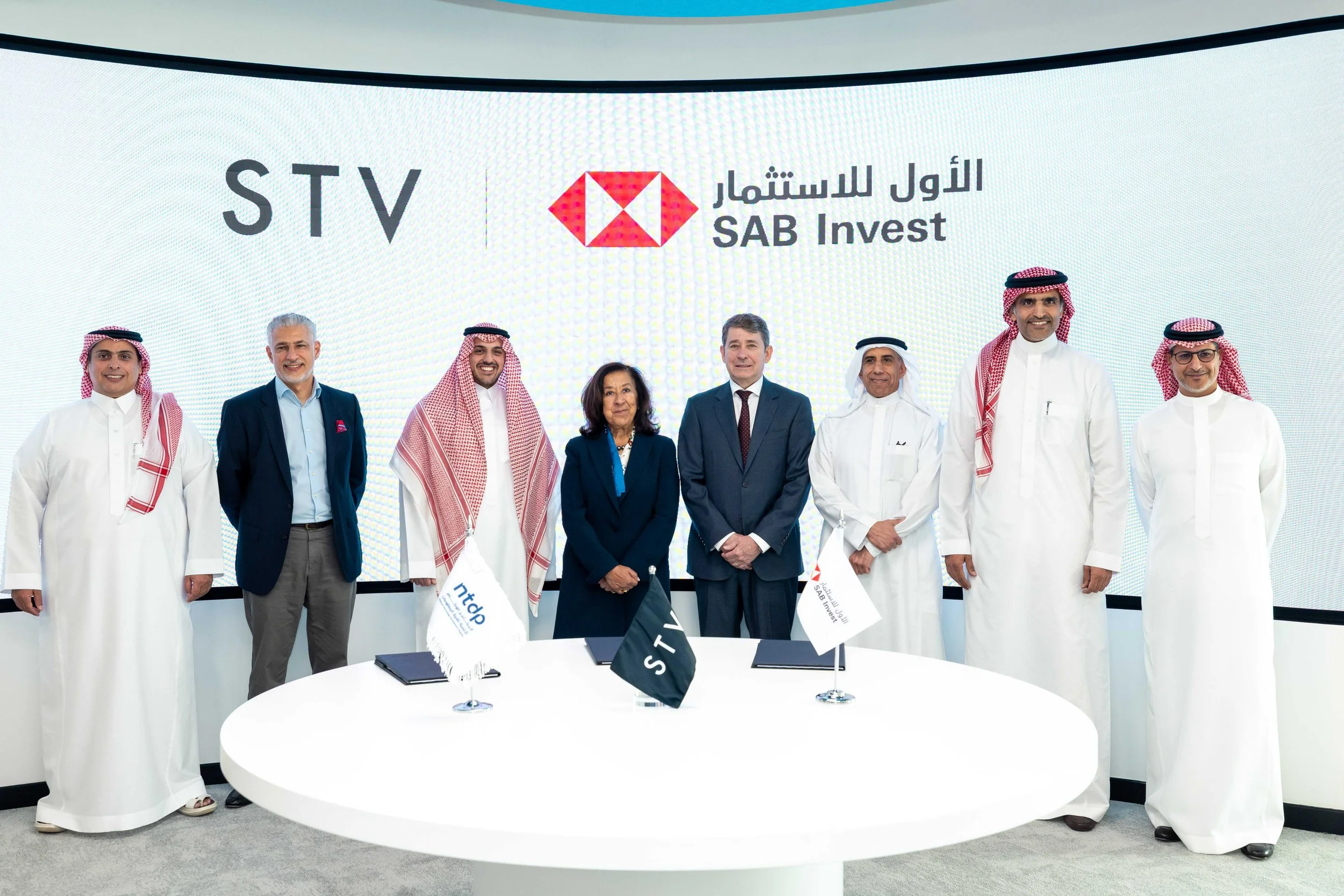
In April 2025, Tarabzouni joined the launch of a partnership involving STV, SAB Invest and the National Technology Development Program. STV’s $100 million NICE Fund I offered another way for growth companies to obtain financing. NICE stands for Non-Dilutive Investment in Callable Equity. The instrument is structured to provide capital while avoiding equity dilution, within a Sharia-compliant framework.
That is a less cinematic problem than identifying the next famous startup, and a consequential one for founders. Raising money has terms as well as a headline number. The ownership a team retains and the timing of financing can shape its next several years. STV had expanded its work from selecting companies to developing an additional financing instrument for them.
A later example was Stake. STV described providing NICE bridge financing after the digital real-estate platform approached it in mid-2025. The financing supported continued execution and expansion ahead of a subsequent $31 million Series B. The useful detail is the sequence: operating needs arrived before the next conventional funding round. An investment firm’s contribution could include making that interval manageable.
The Google connection comes round again
In May 2025, STV announced a $100 million AI fund backed by Google. For Tarabzouni, his former employer was now connected to the investment platform he led. The fund’s stated focus included AI applications, localized models and supporting infrastructure, with startups across the Middle East and North Africa in view.
STV’s own research supplied a reason for the focus. It estimated that AI received 1.5 percent of MENA venture funding in 2024, compared with 38 percent in the United States and 13 percent in India. Those figures describe funding allocation, across those three markets. They nevertheless help explain why the firm saw room for a dedicated vehicle.
The first investment was Sawt, an Arabic-native voice AI company, in a seed round co-led with communications business T2. By September 2026, the fund had also backed Clarity, Signit and Stream, working across customer-service analytics, legal software, billing and payments. That month, Arcapita joined its investors. The emerging picture was practical software for business workflows, where language and local requirements can matter as much as a demonstration’s sparkle.
AI’s share of venture funding, 2024
A different kind of allocation
Tarabzouni also founded Project1932 in 2020. Named for the year of Saudi Arabia’s unification, it connects experienced professionals with younger Saudi talent through structured mentorship. Its vocabulary is deliberately familial: BigSibs and LittleSibs. A relationship gets a name that makes it rather harder to mistake for a networking transaction.
The idea has a recognizable connection to his earlier interests. As a student, he wanted more Saudis to gain access to research and entrepreneurial experience. Through Project1932, the access is to people: someone further along who can offer perspective and sustained guidance. The program describes mentorship as a way to connect emerging leaders with experienced professionals, through an organized program.
His institutional commitments extend beyond startups. His public record includes service as founding chairman of the Saudi Venture Capital and Private Equity Association, board positions at Riyad Bank and Jarir, and a trusteeship at King Fahad National Library. These affiliations place him among banks, retailers, cultural institutions and the investment community. They also keep the story from shrinking into the familiar journey from a technology company to a fund.
“Build things that outlast the builder.”Abdulrahman Tarabzouni · Soul.md, April 2026
What happens after the milestone?
In February 2026, Tarabzouni published “The Golden Block.” He described a change in his thinking after crossing forty: questions about why he was doing his work and what he would choose if he could start again. He divided a life into roughly twenty-year chapters, treating the period from forty to sixty as a chance to make deliberate use of accumulated experience, relationships and autonomy.
His April essay “The Shape of a Life” turned to a graph. A peak is an isolated moment; the area beneath a curve represents the longer experience of getting there. He argued for giving substantial undertakings the time they require. A friendship or a body of work acquires something through duration that repeated fresh starts cannot easily reproduce. The diagram is a metaphor, and he uses it as one.
Read alongside the career, these reflections add an unresolved question to an otherwise orderly list of achievements. How does someone whose profession depends on growth decide what enough looks like? Tarabzouni’s published answer emphasizes choosing the work, examining the assumptions underneath it and remaining with things that reward patience. One line in “Soul.md” is particularly plain: “Build things that outlast the builder.”
The inbox venture, the regional operating jobs, the investment firm and the mentorship initiative are different undertakings. Each gives that sentence a different practical meaning. His current writing leaves room for the possibility that a well-appointed career still needs editing. For an engineer who became an investor, that may be a personal design problem with plenty left to solve.
Keep reading, or press play
Interviews, essays & further reading
- The 2004 student interview
- Syphir and the regional TR35 recognition
- Kauffman Fellows biography
- Google career biography
- STV’s early backing and 2022 commitment
- The 2019 interview
- The 2024 venture-capital profile
- The NICE Fund I announcement
- The Stake financing case
- Google backs STV’s AI fund
- The Sawt investment
- The September 2026 Arcapita announcement
- The Project1932 story
- The Golden Block
- The Shape of a Life
- Soul.md