At fourteen, Adwa AlDakheel had a guitar and a plan for financial independence. She taught children to play, collected the fees, and saved for a trading account. There are gentler ways to spend your teenage earnings. She chose foreign exchange. By sixteen she had put together $4,000; on her first day trading, it became $8,000. On the second, the balance went below zero.
In her telling, she finished $126 in the red. The market had delivered a brisk introductory course, with rather aggressive tuition. She raised another $1,000 and began again, this time in stocks. The episode would make an efficient opening to a cautionary tale. AlDakheel's career kept going in a different direction: toward entrepreneurship, angel investing, and eventually the work of helping other people build businesses.
Today, the Riyadh-based founder is associated with Falak, the business and investment hub she established in 2018. Her résumé also includes books, music, aviation and squash. The list invites the usual question about where she finds the time. A more useful question concerns her attention: how did someone so intent on earning her own independence become occupied with creating opportunities for everyone else?
The piano did not get the job
Music arrived before the business vocabulary. Her parents appreciated art and music; the family had a piano, and she took lessons as a child. The instrument failed its audition. Guitar suited her better, particularly its portability, and she began playing around eight, when she also started writing poetry. Her listening tastes ran toward instrumental music while the pop charts offered rather different company.
One early composition, “Taxi Driver,” came from a New York cab ride and the driver's account of supporting the family he had left behind. It is a small, revealing detail: an ordinary conversation became something she wanted to make. Business would later give her another way to act on everyday encounters.
The competitive streak was already explicit. “I am a competitive person that is driven by overachievement,” she said in 2013. Squash supplied another arena for it. She became Saudi women's champion in 2008 and 2009. Her later service on the Saudi Squash Federation's board gave that interest an institutional life as well as a sporting one. A hobby, in her case, could acquire a second job.
“I am a competitive person that is driven by overachievement.”Adwa AlDakheel · 2013
Boston, books and a second education
AlDakheel took her interest in business to Suffolk University in Boston, completing her undergraduate studies in 2015. Her education spanned entrepreneurship and management, with finance and psychology also appearing in accounts of her studies. The combination makes sense beside her later work: she has spent time considering both how businesses function and how the people inside them make decisions.
Trading remained part of that education. She entered competitions and carried her interest in public equities into professional work, specializing in derivatives and options. Her subsequent move into startups changed the object of analysis. A listed business offers a price and a record. A young company asks an investor to judge a team, an unfinished product and a market that may still need persuading.
Reading became a public project too. She published Proven Billionaires' Formula, with an Arabic edition known as Al-Zubdah. Her professional profile describes the Arabic book as drawing together 328 business and psychology books into 111 pages. Readers could reasonably appreciate the saving in shelf space. The larger habit matters: she was taking material gathered for herself and arranging it for other people to use.
She later completed an MBA at Prince Mohammad Bin Salman College of Business and Entrepreneurship, in collaboration with Babson, graduating in 2020. By then, the work outside the classroom had become considerably more crowded. She was running Falak while continuing to learn about the businesses it hoped to support.
One vacancy. More than 7,000 answers.
The origin of Ns3a is an instructive piece of administrative trouble. In late 2017, AlDakheel advertised an entry-level opening on Snapchat. Within twenty-four hours, more than 7,000 people had applied. A useful audience had become an exceptionally large inbox. The immediate problem was finding a hire; the business opportunity was finding a better way to sort through applicants.
She began investigating how recruitment could account for personality, interests and career values alongside a résumé. Ns3a developed as a localized recruitment platform and a candidate-management system, using automation and matching tools. Its approach included screening questions intended to reduce repetitive work during the hiring process.
Building a recruitment marketplace brought its own familiar problem: employers needed candidates, and candidates needed employers. Ns3a initially made its software free to recruiters while assembling applicant profiles. By June 2021, its published account listed more than 885 career providers and 34,000 job seekers. Those are historical figures, but they give the Snapchat anecdote a useful sequel. The pile of applications had become a product.
One entry-level job announcement.
A hub with more than desks
Her early startup experience also included an e-commerce investment in 2016. On her personal profile, she describes working across marketing, founding and investment as that business grew. The involvement moved her closer to company building: the work behind the price, rather than the price on a screen.
A humanitarian visit to Bangladesh also changed her thinking about the purpose of business. She has described returning with a wider sense of responsibility and a wish to direct her resources toward society. Falak became the vehicle for that ambition. Financial independence had been an early destination; it left her with the freedom to choose another.
Founded in 2018, Falak combined acceleration, incubation, workspace, education and angel investment. Its design reflected a practical frustration with startup support that amounted mainly to renting an office. A founder could need legal structure, accounting, marketing, customers and a next investor at roughly the same moment. A desk was unlikely to settle the entire matter.
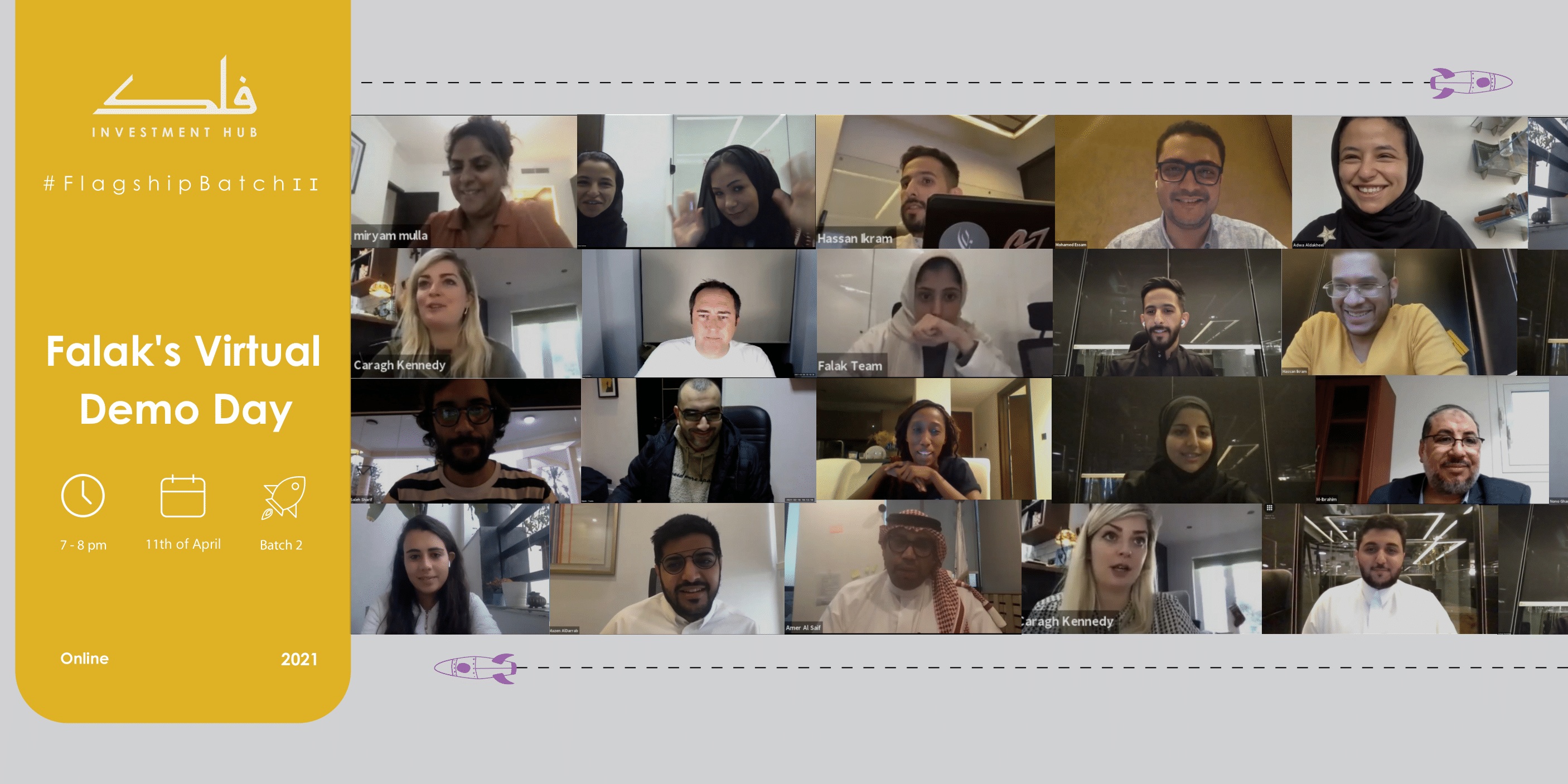
In 2021, AlDakheel described an accelerator aimed at technology businesses with full-time founders and a MENA base. The benefits included direct investment, workshops, individual mentoring and preparation for further fundraising. Mentors included founders of Zid, Mrsool and Foodics. Saudi market access was another part of the offer, including help for companies arriving from elsewhere in the region. The network had work to do beyond exchanging business cards.
Teaching both sides of the table
The investor needed attention too. By June 2023, AlDakheel said Falak had helped businesses raise more than SAR 400 million, largely through its angel network, alongside SAR 20 million invested by Falak itself. The distinction matters: money a company helps others raise is different from money it invests. Both figures describe activity around founders, with different responsibilities attached.
Her explanation was that investible companies and knowledgeable investors need one another. An angel who can offer useful judgment, introductions and advice changes what a founder receives after the money arrives. Improving the companies without improving the investors would leave half the job unfinished. Falak's educational work therefore extended to the people evaluating pitches.
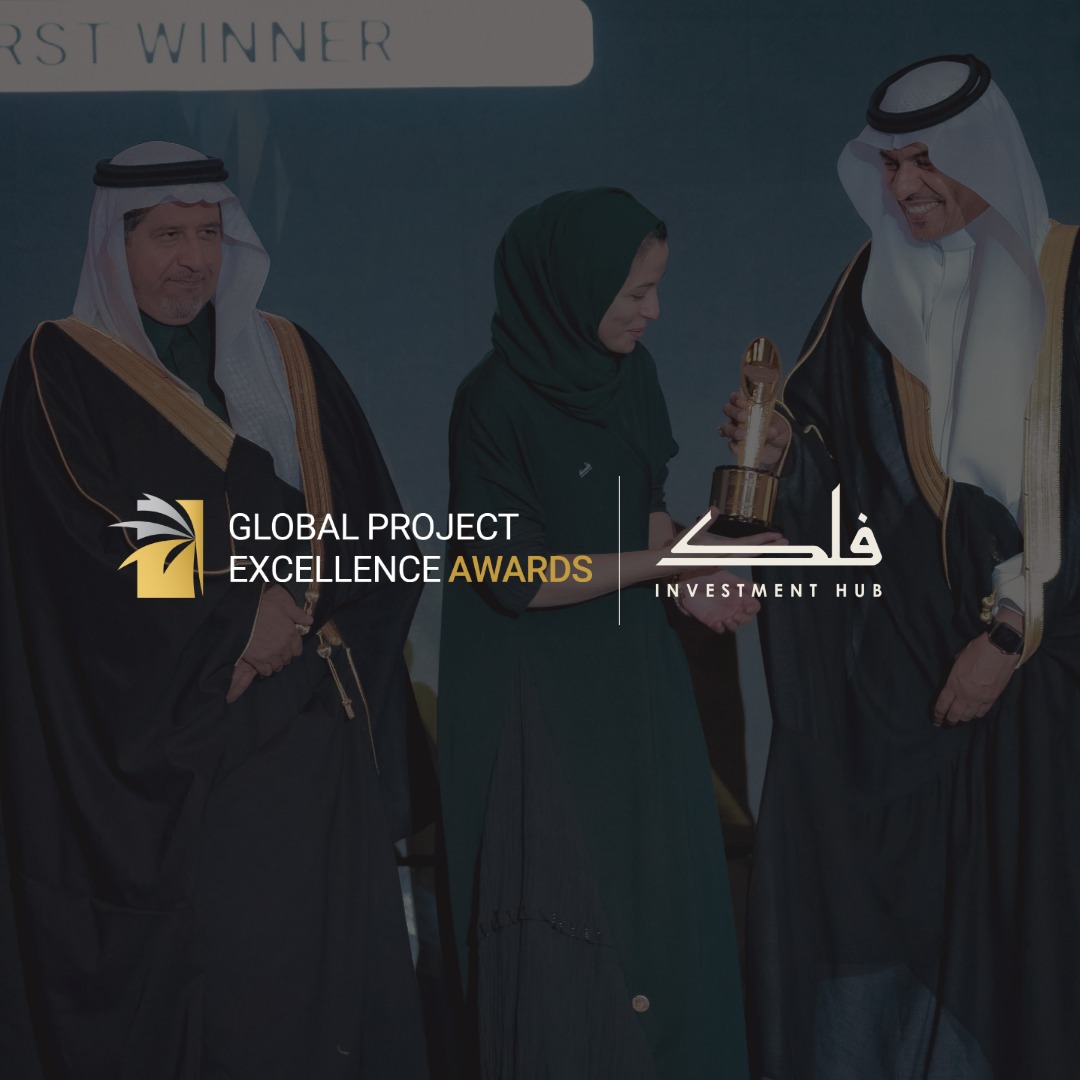
Recognition followed. She appeared at number 95 on Forbes Middle East's 2023 businesswomen list, and Falak received first place in the entrepreneurship category of the Global Project Excellence Awards in 2024. The award photograph catches a ceremonial moment in a business otherwise concerned with recurring, less photogenic tasks: designing programs, finding participants and helping companies make progress.
What happens after demo day
The Women in Tech program with Standard Chartered gives that work a specific shape. Its fourth Saudi cohort concluded in September 2026 after eight weeks of workshops, mentoring, business development and pitch preparation. Ten women-led startups participated, selected from 251 applications. Three received a combined $45,000 in equity-free grants.
AlDakheel's stated measure of success was “the clarity of its model, the quality of its decisions” within each company. That is a more demanding standard than a confident presentation. A founder has to return to work after the audience leaves, make another hiring choice, find a customer and decide what to stop doing. The presentation is a deadline; the business continues.
Her investment philosophy also resists treating women-led investing as a substitute for commercial judgment. In 2025, she described Falak's wider investment scope as gender-agnostic, concerned with mindset and potential. A dedicated program can address access while still asking whether a company can compete. Her ambition for founders has repeatedly included reaching markets beyond Saudi Arabia.
The next question has more moving parts
Falak's 2026 developments suggest the founder is applying the same appetite for expansion to her own organization. In January, Falak joined Classera and SuperCharger Ventures to launch C.XSEED, focused on education technology and the future of work. In April, it announced a majority acquisition of Kernel, covering the AI company's Saudi and Jordanian operations. Kernel would continue operating independently within the group.
The holding-company structure announced in August brought advisory, investment and artificial intelligence under one umbrella. It gave distinct organizational homes to activities that had grown around the original hub. In September, Falak Ventures launched its 3X Flagship Accelerator with eight AI-focused startups and support from the National Technology Development Program. The next month brought announced accreditation of Falak Flagship Fund by the Premium Residency Center.
These are concrete extensions of her earlier interest in helping a company become capable of growth: technical expertise, programs, capital and routes into the Saudi market. They also make her own role more complicated. Coordinating businesses takes a different kind of attention from following a trade. The founder who once wanted independence now runs an organization built around interdependence.
- JANUARY 2026C.XSEED announced with Classera and SuperCharger Ventures.
- APRIL 2026Majority acquisition of AI company Kernel announced.
- AUGUST 2026Falak Holding structure announced.
- SEPTEMBER 20263X accelerator launched with eight AI-focused startups.
- OCTOBER 2026Flagship Fund accreditation announced.
Her private pilot's license, guitar playing and years in squash make colorful biographical shorthand. The more durable connection is a willingness to be a beginner, then put in the work. Her career began with money earned one guitar lesson at a time. Its continuing question is how to make opportunity available to someone else - and give that person enough practical help to use it.
Follow the next chapter
- Personal page
- Falak official website
- Twitter / X
- YouTube channel
- Watch: Investment and Growth
- Listen: the album Adwa
- Books on Goodreads
- The early music and squash interview · 2013
- The guitar lessons, trading and Falak interview · 2019
- Building the investor network · 2023
- On founder support and investing · 2025
- Ns3a’s founding story
- Falak’s 2026 announcements