Seventy invitations. One person turned up. Before Ayman Alsanad could spend much time thinking about the size of a delivery network, he had a more immediate question: how to get the network into the room. An early meeting for prospective Mrsool couriers produced an attendance figure that would fit comfortably on a postage stamp.
It is a useful place to begin his story. The Saudi entrepreneur would become known as the co-founder and CEO of a delivery app. There would be investors, regional expansion and a football stadium carrying the company’s name. But the awkward little meeting belongs in the picture, too. It supplies something a polished company biography tends to misplace: the distance between inviting people to join an idea and persuading them to do so.
Alsanad told the story in a 2022 television conversation with Abdullah Al-Mudaifer. His wife had helped with the search for couriers. The starting budget was 50,000 Saudi riyals. Here was a business built to find somebody who could fetch almost anything, beginning with the rather difficult task of finding somebody.
One small meeting, recalled years later.
A programmer before a delivery company
Alsanad came to entrepreneurship with a technical education and a working career already under way. He completed a computer science bachelor’s degree at King Saud University in 2005, then a master’s in information systems at Stevens Institute of Technology in 2010. Riyadh and an American technology institute appear in his story before restaurant orders do.
His early work at Saudi Arabia’s General Organization for Social Insurance included software engineering, project management and leadership in its IT project management office. The sequence matters. Writing software asks whether a system works. Managing projects adds people, schedules and the inconvenience of several things needing to work at once. Both are relevant preparations for a service whose promises must eventually survive traffic.
Mrsool was also preceded by other attempts. One was PeerCar, a marketplace intended to let people buy and sell cars directly. Another addressed Arabic support in early Android versions. Those projects place him in a particular tradition of founder: someone who approaches an everyday obstacle by trying to build a usable piece of technology around it.
There is no need to turn every earlier venture into a secret rehearsal for the later one. A car marketplace and an Arabic software tool have their own purposes. What they establish is that Alsanad had been making products before the product that made him publicly recognizable. His career did not begin when a delivery app became interesting to investors. Keeping those earlier efforts in view also keeps the person visible: a working engineer trying different answers, before one of those answers became a recognizable business.
The errand already existed
Mrsool’s founding in 2015 paired Alsanad with Naif Alsamri. Alsamri’s account of the spark was wonderfully ordinary: his brother was heading to a shop, and the family called to ask him to bring something extra. A trip already being made could solve another person’s problem. The family favor contained the outline of a marketplace.
That origin keeps the company from becoming an abstract exercise in moving dots across a map. The favor comes first. Somebody is somewhere useful. Somebody else needs something. Between them is a message, followed by the practical matter of getting the right object to the right door.
The app made room for that conversation. Customers could describe what they wanted, couriers could offer a delivery price, and the two could communicate directly. The request did not have to begin and end with a restaurant menu. The model left customers space to explain the errand in their own words.
For Alsanad, the human analogy persisted. In 2019 he described the courier as someone a customer could turn to much as they would a brother. The examples were pleasingly resistant to corporate tidiness: flowers, chocolates, groceries, even fuel for a motorist whose car had run dry. A business category might call that delivery. The stranded driver would probably call it excellent timing.
- 01 / AskA customer describes the job.
- 02 / AgreeCouriers bid; the customer chooses.
- 03 / DeliverDirect conversation keeps the request clear.
The resignation took time
The dramatic number in Alsanad’s account of leaving employment was his monthly salary: 40,000 riyals. He left in the hope of earning 7,000 riyals from his own venture. The arithmetic is memorable. The timing deserves equal attention.
His advice in 2022 was to establish that the project could succeed before resigning. He and his partner had waited two years before concluding that their idea was working. That qualification changes the character of the story. It gives the leap a long run-up.
The account also included failure, a period of offering the service free and the eventual arrival of revenue. There is room here for ambition and caution to share a desk. A founder can want independence badly and still ask for evidence before giving up a salary.
This is the part that makes Alsanad’s story useful to somebody with a job and an unfinished idea. The pay cut is a striking anecdote; the waiting is a method. Neither makes the outcome inevitable. Together they give a more honest picture of what he chose.
Back to university, with naming rights
By the end of 2018, Mrsool had four million registered users, according to investor RAED Ventures. In 2019, backing came from STV, RAED and Saudi investor Mazen Al-Jubeir. Those are milestones in the company’s development, but they also mark a change in the founder’s working world. An idea once short of attendees was now attracting institutional capital.
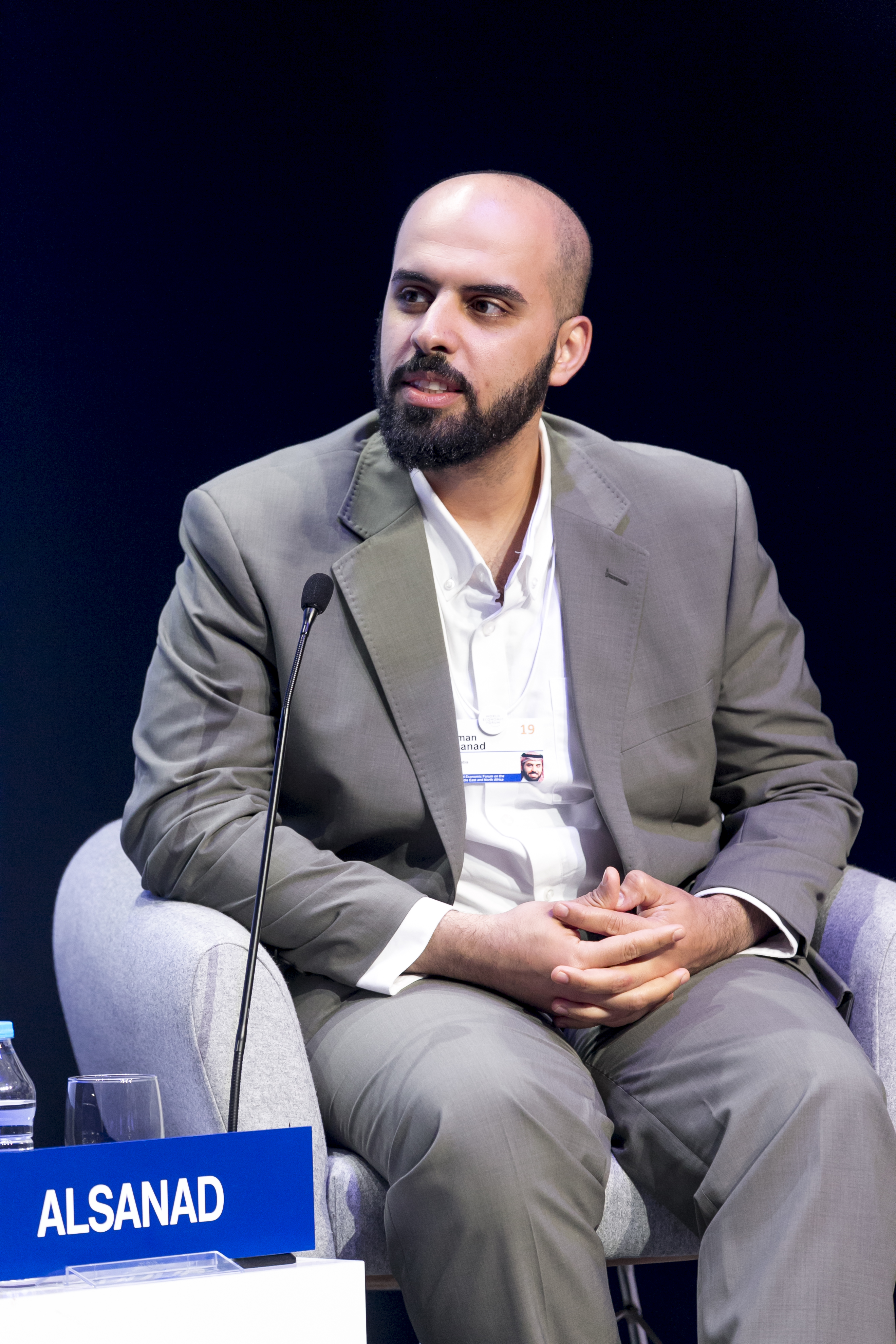
The widening circle was visible elsewhere that year. Alsanad appeared at the World Economic Forum’s Middle East and North Africa meeting in Jordan, taking part in “The Start-Up Revolution.” He was also announced as a speaker at Cairo’s E-Commerce Summit. The geography of the invitations had changed.
Then came a particularly neat return journey. The former King Saud University student became associated with an investment in the university’s stadium, which took the name Mrsool Park. Naming rights and event rights gave the brand an address in football, where people have strong loyalties and an unusually good memory for names.
By October 2021, Alsanad was discussing challenges that had brought the app close to closure, alongside the progress that had allowed the founders to return to the university as investors. The contrast needed little decoration. Most graduates are pleased to come back and recognize the campus. This return came with a company name on a stadium.
It is tempting to treat the stadium as the ending. It makes a satisfying photograph and a tidy sentence. But a delivery business has to work again the following morning. The customer waiting for an order is entitled to be unmoved by the naming rights.
Alsanad and Alsamri found Mrsool.
STV, RAED and Mazen Al-Jubeir back the business.
NOMW Capital acquires a majority stake.
His work also took him into cross-border partnerships. In May 2024, he attended a signing ceremony at the Pakistani Embassy in Riyadh for an agreement between Mrsool and travel technology platform Bookme. It was a different kind of encounter from recruiting the first couriers: an established company arranging to connect its customers with another business. The founder’s job had acquired more counterparts, more institutions and more kinds of promise.
Teaching the part before the applause
As Mrsool grew, Alsanad became a public participant in the wider founder community. Misk’s startup school listed him as an instructor for its market validation masterclass. It is an apt subject for someone whose early recruiting meeting had supplied such an economical lesson in the difference between interest and attendance.
Market validation can sound like a dry phrase. In practice, it asks questions with consequences: does anybody want this, will they use it, and what happens when a real person tries? His story gives those questions faces. There is a co-founder, a wife helping recruit, a courier who arrives, and a customer describing an errand.
In February 2025, speaking around a Misk entrepreneurship gathering, he urged younger founders to try their ideas and become examples for the generation after them. He credited the support available through incubators and accelerators. The emphasis was communal: people starting companies, people backing them, and people encouraging the attempt.
That outlook also puts his own public appearances in perspective. A television interview can make a founder’s decisions look wonderfully orderly in retrospect. A class on checking demand gives the next founder work to do before the retrospective. There is value in handing on the questions along with the success story.
A different seat at the table
In April 2025, NOMW Capital announced its acquisition of a majority stake in Mrsool. The plans included strengthening technology and logistics and preparing for a possible Saudi stock market listing. A public listing remained an objective in the announcement.
On 17 March 2026, Alsanad announced that he had stepped out of his executive role after 11 years. He would remain close as a consultant. In his account, Mrsool had served nearly 15 million customers and worked with well over a million couriers. Those were his reported figures, attached to a particular moment.
His interests now include technology, product and AI, with an invitation to meet builders and explore investing or working together.
“I am excited to build again.”
Ayman Alsanad · March 2026
It is a fitting place to leave him: experienced enough to know what can happen after the first meeting, and still interested in the work that comes before anyone applauds. Somewhere between 70 invitations and one arrival, there was already a question worth pursuing.