A shop can be full of people and still know remarkably little about them. Someone buys a coffee, someone else buys a gift, the till records the money, and the customer disappears through the door. For Saud Binsaeed, the interesting part of that transaction is what happens afterward. Will the customer return? Would anyone notice if they did not? A receipt is an excellent record of yesterday. It is rather less helpful about Thursday.
Binsaeed, the co-founder and chief executive of Riyadh-based Bonat, has built his company around that gap. His working life has included a Subway franchise, a large confectionery store, international business studies in Miami and a stretch helping other founders develop their companies. The connecting thread is commerce at close range: products, customers, teams, and the awkward distance between a promising idea and a business that people actually use.
Bonat gives merchants tools for loyalty, customer engagement and analysis. Its subject matter sounds technical until you translate it into the language of a small business owner: who came back, what they wanted, and how to give them a reason to visit again. Behind the software is a founder whose earlier work involved the physical business of opening shops. He has occupied both sides of the sales pitch.
A retail education, with sweets
Before Bonat, Binsaeed was a Subway franchisee. His work ran from building the outlet and finding equipment to hiring staff and overseeing finances. These are jobs with little room for abstraction. A contractor either arrives or does not. An employee needs a shift. A supplier expects payment. The elegant strategy must eventually account for the lunch rush.
He also worked on Candylawa at Panorama Mall, with responsibility for developing the store, its branding, procurement and recruitment. The shop covered 2,000 square metres. That is a substantial amount of floor on which to discover whether an idea has customers. Confectionery may be cheerful merchandise; the arithmetic behind it keeps a straight face.
Those ventures matter to his later career because they place him inside the category he now serves. Restaurants and retailers appear in Bonat’s customer base; they also appear in his own work history. He approaches the merchant’s counter with experience of the tasks behind it. That does not make software succeed automatically. It gives the problem a recognisable address.
Miami, then the other side of the advice
Binsaeed studied international business at Barry University, graduating in 2017. His career then took him through Startup Miami and Saudi Arabia’s Badir technology incubator. The sequence puts an international business education alongside practical exposure to young technology companies. A founder needs customers; an adviser needs to understand why the founder has not yet found them.
At Badir, his responsibilities included business development and helping startups think through their markets. It is a useful apprenticeship in the variety of ways a company can get stuck. The product may be understandable to its makers and bewildering to everyone else. A potential customer may praise a demonstration and never buy. Advice is abundant; evidence arrives more slowly.
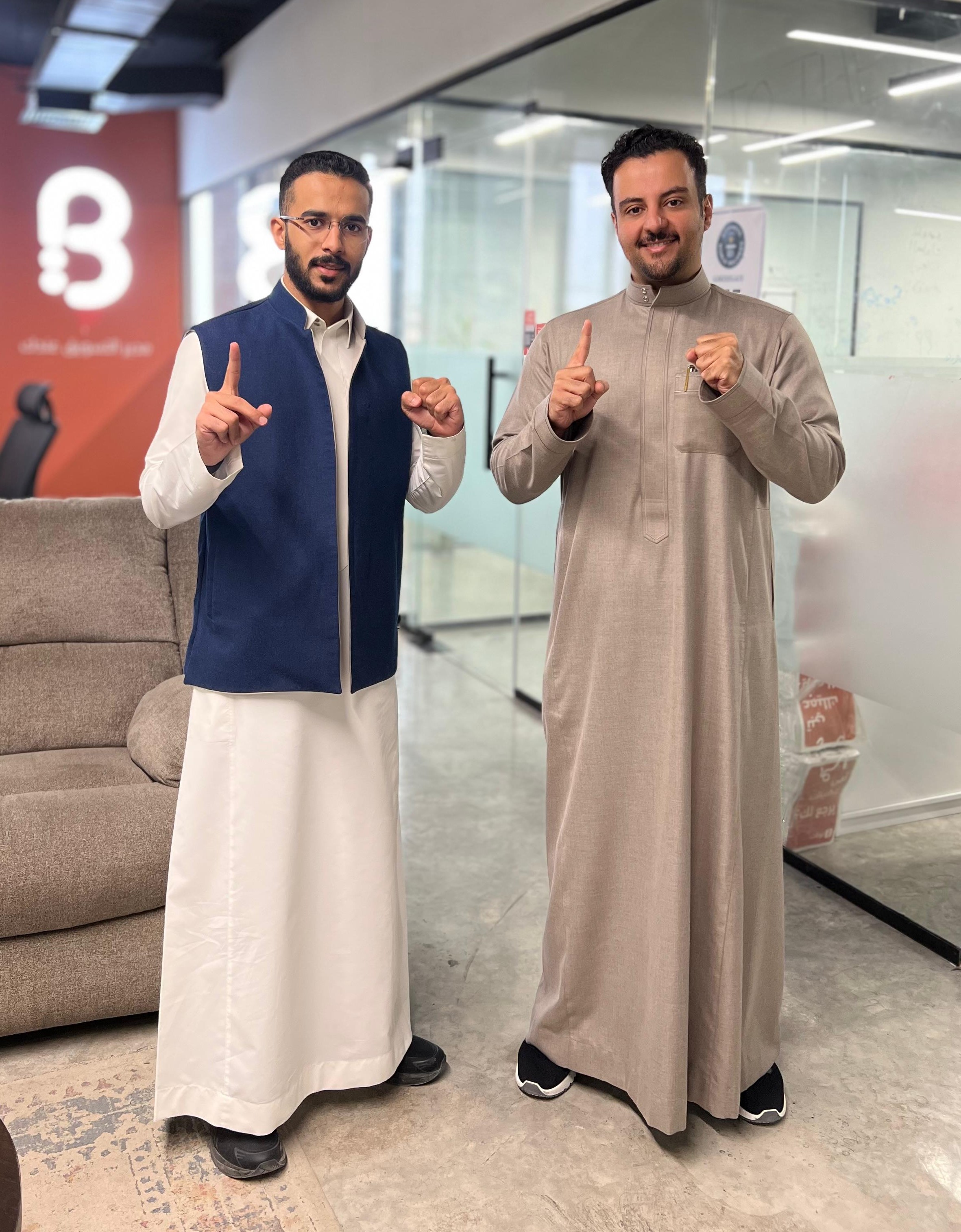
Badir also became the setting for his connection with future Bonat co-founder Bader Alfouzan. Their paths brought together experience in retail, startups and investment. By 2020, they had committed to working on Bonat full time. The adviser had acquired a company of his own to test. There is a particular economy to that transition: the person suggesting a better route now has to drive it.
Barry University
Business development
the full-time commitment
partnership
The useful inch of the counter
Bonat’s proposition starts where a merchant already meets a customer. Its loyalty system connects participation in a rewards programme with information the business can use. A web dashboard brings together customer analysis, feedback, communication and gifts. For Binsaeed, the opportunity is to make a recurring relationship visible to the people responsible for maintaining it.
Consider the question a loyalty programme is supposed to answer. Giving away a reward is easy to understand. Knowing which customer to contact, and why, requires more attention. A business can keep counting transactions while failing to understand the people making them. Bonat packages those concerns together, so a merchant can work on the relationship as well as the sale.
Binsaeed’s description of the company’s ambition is simple: “Make Each Customer Your Best Customer.” It is a compact description of the ambition. The phrase puts the customer ahead of the points balance. The software’s job is to help a merchant treat a visit as the beginning of another visit, with enough information to make the invitation relevant.
“Make Each Customer Your Best Customer.”Saud Binsaeed · On customer loyalty
That framing also keeps the business grounded. A shop owner does not need an impressive vocabulary for customer engagement. They need to decide what to do on a working day. The practical test of Binsaeed’s product is whether its information helps someone make that decision. A dashboard has to earn the time spent looking at it.
One less thing to remember
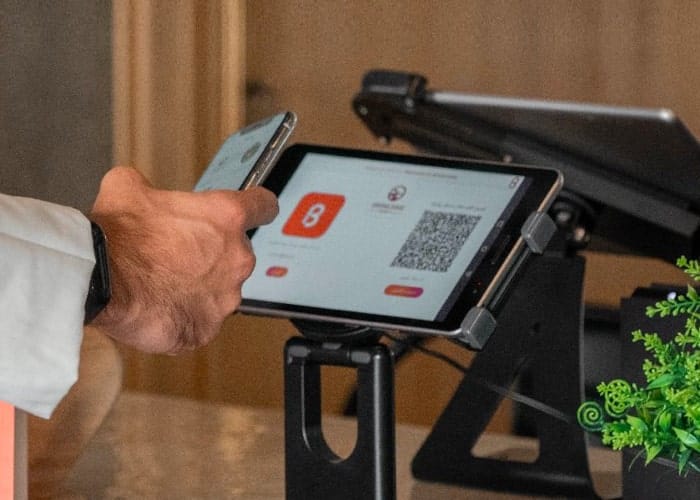
In December 2022, Bonat announced loyalty cards using NFC in Apple Wallet. Customers could add a loyalty card to their wallet and collect points alongside a payment with an iPhone or Apple Watch. The detail is small enough to fit into a product release. Its significance is the effort removed from an ordinary purchase.
Rewards schemes ask customers to remember things: a card, an app, a password, a balance. The more errands a programme invents, the more opportunities a busy person has to abandon it. Binsaeed’s explanation of the wallet feature emphasised easier registration and point collection. In this part of his work, progress could be measured by how little extra the customer had to do.
There is something pleasingly unceremonious about that ambition. After the strategy meetings and the product work, the desired scene is a person finishing a purchase without a separate ritual for their reward. It is an approach to technology that respects the shortness of a queue’s patience. The merchant gets participation; the customer gets on with the day.
Visit→02
Recognise→03
Understand→04
Invite back
Six million reasons to keep the question simple
In November 2025, Bonat announced a $6 million Series A led by Tali Ventures, stc group’s venture investment arm. Participants included anb Seed Fund, Rua Growth Fund, RZM Investments and angel investors. By the funding announcement, the company was described as serving thousands of merchants in Saudi Arabia and connecting with more than six million users.
Those are company milestones, with a direct bearing on Binsaeed’s job. The founder of a customer engagement platform must now manage a business whose own relationships include merchants, partners, employees and investors. The counter remains the point of departure; the organisation required to serve it becomes more complicated.
Led by Tali Ventures, with Saudi investment partners backing the next stage.
The stated plans for the capital included stronger AI capabilities, personalised campaign automation and expansion into additional sectors, including retail and services. Bonat also set out ambitions for payment and wallet integrations and growth across the Gulf. These plans widen the reach of the original proposition: help a business understand a customer well enough to make the next interaction useful.
The ambition deserves a practical reading. Automation has value when it helps a merchant take a sensible action. Personalisation has value when the recipient recognises a reason to care. Binsaeed’s opportunity is to keep those everyday tests attached to a growing product. The vocabulary can expand much faster than a customer’s willingness to read a message.
A signature in April
On April 12, 2026, TABsense announced a partnership with Bonat. Binsaeed signed alongside Shadi Daboor, TABsense’s co-founder and chief commercial officer. The agreement connected TABsense with Bonat’s analytics, with the aim of helping Saudi restaurants understand customer behaviour and act on it through more targeted engagement.
It is a fitting development in this particular career. Binsaeed’s earlier work included operating a restaurant franchise; here he was signing an agreement intended to help restaurant operators use their customer information. A partnership announcement is a formal occasion, but the problem underneath it remains familiar: a business needs a reason for the next visit.
In May 2026, he added a board role at Thimar Development Holding to his responsibilities. The appointment extends his career into the boardroom of a listed company, alongside his work at Bonat. His professional circle has grown with the business: from merchants and startup founders to investment partners and fellow directors.
His route to Bonat has passed through shops, classrooms and incubators. Each setting brings a different way of judging an idea. Retail asks whether someone buys. Education offers concepts for understanding the transaction. Incubators ask whether the company can make a repeatable business of it. Bonat places Binsaeed at the intersection, responsible for turning the explanation into a product that merchants continue using.
The story comes back to the person leaving the shop. There is no grand gesture involved in returning for another coffee, another meal or another purchase. For the merchant, those small decisions accumulate into a business. Binsaeed has made them the subject of his own. A second visit is an unshowy thing to build toward. It is also the one that gives the first visit a future.