A shop can have two front doors and only one last item. One customer walks in from the street. Another arrives through a website. Both would like to buy it. Somewhere between the shelf, the till and the browser, somebody has to keep count. Mohammed Al-Qusair has spent years building a company around that apparently modest obligation.
Rewaa, which he co-founded with Abdullah Aljadhai in 2018, brings inventory, sales and accounting into a shared system. Its subject matter is the working day of a retailer: what has sold, what remains, and what the numbers say when the shutters come down. There is little romance in reconciling stock. There is considerable aggravation in getting it wrong.
The company announced a $45 million Series B in December 2025, following a $27 million Series A in 2023. Those are the numbers that travel easily. Al-Qusair’s own journey contains smaller, more revealing units: a schoolboy’s forum, a university engineering project, an introduction to a future partner. Before he could connect a retailer’s systems, he had to assemble his own.
A forum before a company
His first venture was SHR4, an online news forum he started in high school. He sold it in 2009. The teenager had already encountered a particular pleasure of the internet: build somewhere people want to gather, and they may arrive in numbers you did not anticipate. A forum requires participation to become useful. A founder can provide the room; the visitors provide the life.
He went on to Boise State University, studying electrical and computer engineering. His projects there offer a rather different portrait from the familiar photograph of a founder beside a funding announcement. He worked with teammates on an audio amplifier, radio models and wireless video transmission. The work involved constructing things, testing them and documenting whether they performed as intended.
One project used two software-defined radios to transmit uncompressed video wirelessly. Another concerned residential voltage regulation. These are practical engineering problems, with results that resist a persuasive presentation. A circuit will remain unimpressed by your confidence. The technical work is an early thread in a career that would eventually turn toward the machinery of commerce.
Construct, test, document
Two radios, one connection
A residential engineering project
The opening was behind the shopfront
In 2017, around the time of his graduation, Al-Qusair examined Saudi Arabia’s ecommerce market. The small proportion of retail happening online suggested room to grow. His question was how to help that growth happen. For a physical retailer, opening a digital storefront creates an immediate operational puzzle: the products online must correspond to the products actually available.
“How could we help this market grow?” he asked. The question placed the merchant near the centre of the idea. A new sales channel is only useful if the shop can fulfil the orders that arrive through it. Selling a product twice is an ingenious way of acquiring two customers and disappointing at least one of them.
Wa’ed’s incubation programme and a SAR 100,000 grant supported the early development. The ambition involved helping existing shops participate in online commerce through inventory software. That choice matters to the shape of the business. Al-Qusair was working with merchants who already had shelves, stock and customers. The technology had to make sense alongside all three.
The path needed revisions. In his account of the early company, an initial product depended on connecting to Souq.com; that arrangement fell away. A conversation at the Badir incubator helped point him toward adding Rewaa’s own cashier system to its inventory product. The scope widened from connecting other systems to taking responsibility for more of the merchant’s workflow.
“How could we help this market grow?”
Mohammed Al-Qusair, on Saudi ecommerce
An interview that changed direction
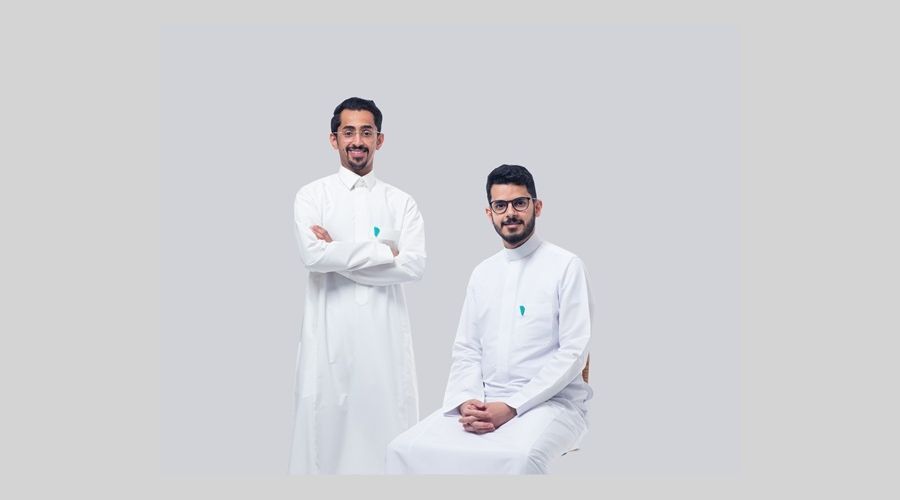
Al-Qusair and Aljadhai were introduced through a mutual friend in 2018. Their backgrounds complemented one another. Al-Qusair brought engineering and previous ventures; Aljadhai’s experience included consulting, finance and investment management. Their partnership joined the product question to the financial one. Both would have a long list of follow-up questions.
Al-Qusair later recalled preparing questions to assess Aljadhai’s financial knowledge, only to find himself learning from the prospective partner within minutes. It is an appealing reversal. The person conducting the examination discovers that he ought to be taking notes. Recognising another person’s expertise can be a useful qualification for founding something together.
By 2024, the pair had joined Endeavor’s network of entrepreneurs. Rewaa’s platform had processed more than $2 billion in transaction volume and served more than 7,000 businesses, figures reported at that stage of its development. Behind the platform sat a partnership formed through an ordinary human mechanism: someone knew someone whom the other person ought to meet.
The cashier has a vote
In a September 2023 conversation with Mashhoor Aldubayan on Sowalif Business, Al-Qusair described Rewaa’s development from a simpler model into inventory management linked to online stores. He also discussed the difficulties caused by poor equipment in the market. Rewaa decided to develop its own devices to improve the service merchants received.
That detail brings the business back down to counter height. Software reaches a customer through equipment, and a retailer experiences the combination. A useful feature has limited appeal if the device through which it operates makes the working day harder. The cashier, faced with a queue, delivers a fairly direct product review.
Al-Qusair also put attention into helping merchants understand their operations. Rewaa developed educational blog content and then a podcast. The aim was to improve understanding of sales management while bringing prospective customers closer to the company. Teaching became part of reaching the market. Before asking a shopkeeper to change a routine, it helps to explain what the change is for.
Growth needs an inside
The August 2023 Series A brought in $27 million in a round led by Wa’ed Ventures, with STC’s corporate fund among the participants. At the time, Rewaa reported more than 250 local jobs. It was also among the 35 technology businesses selected for the Saudi Unicorns Program. The company had acquired a wider circle of investors and institutional relationships.
Al-Qusair’s ambition was to become a technology partner to small and medium retailers with a product capable of competing globally. “Globally competitive” is a demanding phrase when the work includes the unglamorous details of running a shop. A merchant’s tolerance for ambition tends to depend on whether the system can answer today’s questions.
Growth also changed the organisation he was helping to lead. Former HR leader Ammar Hennawi described a period in which Rewaa expanded from about 170 people to more than 300, alongside work on salary structures, career paths and performance management. He thanked the two founders for their trust and empowerment. Those are the internal systems behind the external software.
There was room for ordinary company life, too. At a Riyadh office celebration for Saudi Founding Day in 2023, employees took part in games and competitions. Al-Qusair spoke about pride in the country’s development and digital transformation. The photograph of a growing technology business is incomplete without the people who occasionally stop working long enough to enjoy being in it.
When a click failed the test
One revealing episode in Al-Qusair’s account of running Rewaa concerns advertising that attracted interest without producing enough subscriptions. In a February 2025 marketing case study, he described work with Google and Assembly MENA to improve the quality of leads. More people entering a sales funnel had not, by itself, solved the commercial problem.
The team connected advertising and customer relationship data, then assigned different values to stages on the way to a purchase. A completed form, a qualified prospect and a subscribed customer represented different outcomes. The revised approach reported a 96 percent improvement in return on advertising spend in just over a month. It was a specific campaign result, with a specific measurement period.
The episode supplies a useful view of his work as an operator. A number can look encouraging while the business underneath it needs attention. Counting is necessary; choosing what to count takes judgement. The founder selling merchants a clearer view of their operations had needed to apply that same discipline to his own company.
Reported improvement in just over a month in Al-Qusair’s February 2025 marketing case study. A campaign result, measured over that period.
Another round, the same counter
The December 2025 funding round added a new chapter. Wa’ed Ventures, Idrisi Ventures and Unity Ventures led the $45 million Series B. Rewaa set out plans to develop AI-powered operating technology for small and medium businesses, with an emphasis on reducing manual effort and improving the accuracy and efficiency of daily work.
That is a development agenda, and it carries the practical test built into the company’s beginnings. A retailer has finite time for administration. An automated task must save some of it. An insight must help with a decision. A new capability earns its place when someone running a business can use it without needing a second career in software.
Al-Qusair’s public work also extends to conversations about the future of software and retail, including ProductTank Riyadh and Rewaa’s own retail events. His subject has expanded with the business. The early question about bringing shops online now sits beside questions about how those shops should organise information, manage several channels and make decisions as they grow.
Look back across the forum, the radios, the stock system and the advertising experiment, and a recurring concern comes into view: what happens between the separate parts? Visitors need somewhere to gather. A signal needs to reach a receiver. A sale needs to update a stock count. Al-Qusair’s career has kept finding work in those connections.
The last item on the shelf remains a useful measure. Millions in funding can pay for a great deal of engineering, hiring and development. The shopkeeper still needs to know whether there is one left. It is a small question to have carried a founder this far, and a sufficiently stubborn one to keep him occupied.
Continue the conversation
Visit Rewaa or follow Al-Qusair on LinkedIn.