Two hundred thousand wallets ought to be a reassuring number. It suggests a product people have noticed, a company with momentum, a slide that can hold an investor’s attention. For Maher Loubieh, it also belongs to the chapter HALA left behind. The fintech he co-founded with Esam Alnahdi began with a consumer wallet, then changed course toward small businesses. A conspicuous number survived in the company’s history. The customer at the centre of the business changed.
That decision is the hinge of Loubieh’s story. The familiar founder biography moves briskly from launch to growth to a large cheque. His requires a pause between the first two. HALA had reached 200,000 individual wallets. Its move into the SME market meant rebuilding around a different set of needs: accepting a payment, keeping track of a business’s money, finding the means to grow. A shop counter is a less glamorous setting than a funding announcement. It is also where the service has to work.
Loubieh now leads HALA as Group CEO. The company’s ambition is to become the future bank for small and medium-sized enterprises. The phrase is expansive; the work beneath it is particular. A founder can speak about a region. A merchant still needs today’s transaction to go through.
The number he walked away from
HALA’s consumer beginnings make its later direction more interesting. A wallet aimed at individuals and a financial platform aimed at businesses can share some technical ingredients, but they enter different working lives. One lives alongside a person’s spending. The other becomes part of how a business receives money and manages its operations.
In his Moghamra interview, Loubieh discussed the pivot and the loss of more than 200,000 users that accompanied it. By the time of that conversation, HALA was serving more than 130,000 SMEs. Put those figures next to each other and they resist the usual upward arrow. Individuals and businesses are different units. The decision between them deserves more attention than the arithmetic.
There is a useful discipline in that awkward comparison. A large count can establish that people tried a product. It cannot, on its own, settle which customer a company should serve next. HALA’s founders chose a direction that made the company’s first success an earlier chapter, rather than the plot of the entire book.
in the consumer chapter
for small businesses
Different customers. A different company to build.
A financier on the other side of the desk
Loubieh came to this problem with a finance education and a career already concerned with where money goes. He holds a BSc in Finance and Accounting from Hariri Canadian University and an MBA from the University of Manchester. Before HALA, he worked at Abudawood Group on private equity deals and fund investments, then held a director role in corporate finance advisory at SaudiMed Investment Company.
That background puts him in a particular position among fintech founders. He had worked within investment banking and corporate finance before building a company whose customers included much smaller businesses. The vocabulary carries across: capital, transactions, investment. The scale of the business asking for help can change almost beyond recognition.
His career also included angel investing at Seeders, mentoring at the American University of Beirut’s business school and Confideo Venture Mentoring, and coaching startups at ESA Business School. These are different vantage points on entrepreneurship. An adviser examines a company’s choices. A mentor talks them through. A founder eventually has to make them, with a payroll and a product attached.
None of those earlier roles makes a pivot easy. They do make his route to HALA more substantial than a sudden discovery of financial technology. He arrived having spent time with both capital and the people trying to put it to work.
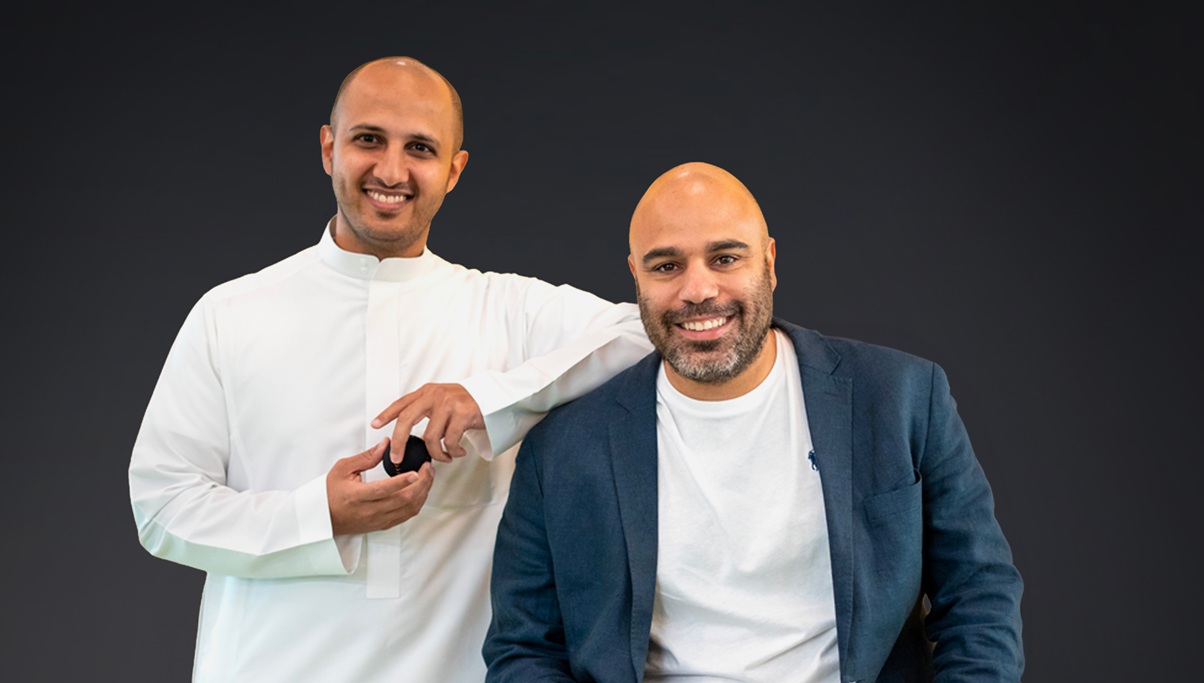
A business, one transaction at a time
HALA’s small-business offering ties together jobs that can otherwise sit in separate places. A business account. A way to accept payments online or at a physical counter. Cards, expenses, payroll and bill payment. Financing. The list is practical enough to sound unromantic, which is a compliment in this setting. Nobody opens a business because they dream of reconciling payments.
The link to financing helps explain why payment acceptance matters beyond the terminal. Transactions create a record of commercial activity. A company working with that record has another way to understand the business behind it. HALA’s model connects that everyday relationship with lending, rather than treating the request for capital as an entirely separate encounter.
Loubieh has described how a modest amount of financing can help a business add inventory or open another branch. His examples keep the ambition at a scale an owner can recognise. Growth need not arrive in the form of a dramatic announcement. Sometimes it has to fit on a shelf.
“Even small amounts of funding can make a huge difference to these businesses’ growth prospects.”
Maher Loubieh
By December 2025, HALA had more than 140,000 active businesses. It processed $6.6 billion in transactions during that calendar year and launched its lending business in 2025. Those figures describe the company’s activity; they also describe the size of the job its founders now have. A payment platform earns its place repeatedly, across ordinary working days.
December 2025
Calendar year 2025
The cheque comes with homework
In September 2025, HALA announced a $157 million Series B co-led by The Rise Fund, TPG’s impact investing strategy, and Sanabil Investments. The new capital was intended to deepen the company’s Saudi presence, broaden embedded financial services and lending, and support regional expansion. It was an investment in work still to be done.
Loubieh’s own response supplied a revealing choice of emphasis. He welcomed the investors, then turned to obligations: value for merchants, for the team, and for shareholders. The public celebration of a financing round can become a curious ritual in which everyone applauds a company for acquiring more work. He appeared to understand the assignment.
“Still, raising money is not a reason to celebrate, it is rather a responsibility.”
Maher Loubieh, September 2025
The word responsibility leaves room for ambition without declaring the job finished. Money expands the choices available to a founder. It also adds people who expect those choices to be made well. For a business handling other businesses’ financial routines, that expectation follows the product into every working day.
The round brought international investors into a company built around Saudi businesses. Loubieh welcomed the global experience those partners could contribute. A broader investor table gave HALA resources for its next stage; the usefulness of that stage would still be judged by what the company could deliver.
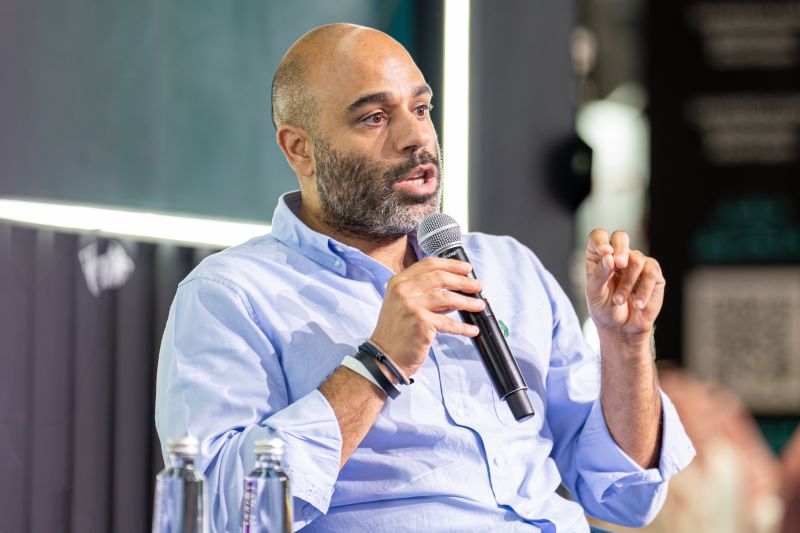
A bigger job, the same customer
When he became CEO in 2023, Loubieh announced it with a concise phrase: “A new role serving the same vision.” A later appointment widened the remit again. As Group CEO, he oversees HALA’s payments, financing and ventures, along with inorganic and international expansion. The company also gave him a mandate to prepare it for an IPO journey.
That remit changes the shape of the work. Leading a group means holding several businesses and future possibilities in view at once. Payments and financing have to develop together. Expansion brings another set of decisions. IPO preparation adds its own demands on governance. The appointment describes an agenda, with plenty left to execute.
His public appearances have followed the widening scope. He spoke at the Future Investment Initiative in October 2024 and at London Business School’s 22nd Annual MENA Conference in 2025. At the latter, HALA’s pivot and its SME banking ambition were part of the discussion. The shop counter had travelled some distance into the conference room.
Even the company’s name has a small place in this story. In 2020, Loubieh welcomed the simplified HALA brand and thanked the earlier HalalaH name for getting the business that far. It was an affectionate farewell to a few letters, attached to a regional and global ambition. Founders usually talk about adding things. Here was another moment of subtraction.
The court outside the boardroom
His own introduction for an Endeavor gathering offers a less corporate accounting of time. Work, two daughters and basketball occupy his days. He also describes himself as less adventurous in activities than his wife. That is a refreshingly modest entry on a founder’s list of attributes. The professional appetite for a changed business model need not extend to every possible weekend pursuit.
Basketball is a concrete detail in a biography crowded with financial nouns. So are his daughters. Neither needs to become a theory about leadership. They give the person a life beyond the next funding round, which is something a company profile can easily mislay.
Loubieh and Alnahdi joined Endeavor in 2024. In July 2026, Loubieh was among the panelists at its selection gathering in Athens, helping assess other entrepreneurs. The earlier mentor and the working founder now occupied the same chair. His experience had become something another founder could draw on.
HALA’s next chapter includes financing, expansion and preparation for a possible public-market future. Loubieh’s story remains anchored in a decision made before those ambitions acquired their present scale. He and his co-founder changed whom they were building for. The old wallet count still sits in the history. At the counter, a business owner has another payment to take.