In October 2023, Infineon completed a US$830 million purchase of GaN Systems, an Ottawa company that made power-conversion semiconductors. Cycle Capital had backed it. The interesting object in this transaction was small enough to disappear inside another machine. Gallium nitride devices help electricity do its work more efficiently. Climate technology, in this case, arrived without a wind turbine in sight.
- Cycle Capital finances technologies that cut energy use, waste and resource consumption.
- Its active strategies separate deep tech, circular materials and water.
- Founders get access to specialist investors and industrial expertise; commercial fit still matters.
That is a useful entrance to the Montreal investment firm. Founded by engineer Andrée-Lise Méthot in 2009, Cycle Capital looks for businesses whose environmental contribution can survive a customer's purchasing decision. A more efficient component has two audiences: the person counting emissions and the person approving the invoice. Ideally, both have a reason to say yes.
01 The climate story inside the machine
Cycle's investment page sorts much of its portfolio into “Electrons” and “Molecules.” The names have the charm of a school science cupboard, but the distinction does real work. Electronics demand expertise in chips, power conversion and connectivity. Materials demand knowledge of chemistry, processing and resource recovery. A pitch about saving the planet becomes a set of technical questions someone can actually investigate.
Fund V concentrates on microelectronics, photonics, digitalization, the Internet of Things and energy efficiency. Portfolio examples make the remit concrete: Mysa sells smart thermostats for electric heating; MineSense supplies sensor-based mining intelligence; Blumind develops low-power analog AI chips. Cycle supplies investment capital and support. The devices, software and industrial systems belong to the businesses it backs.
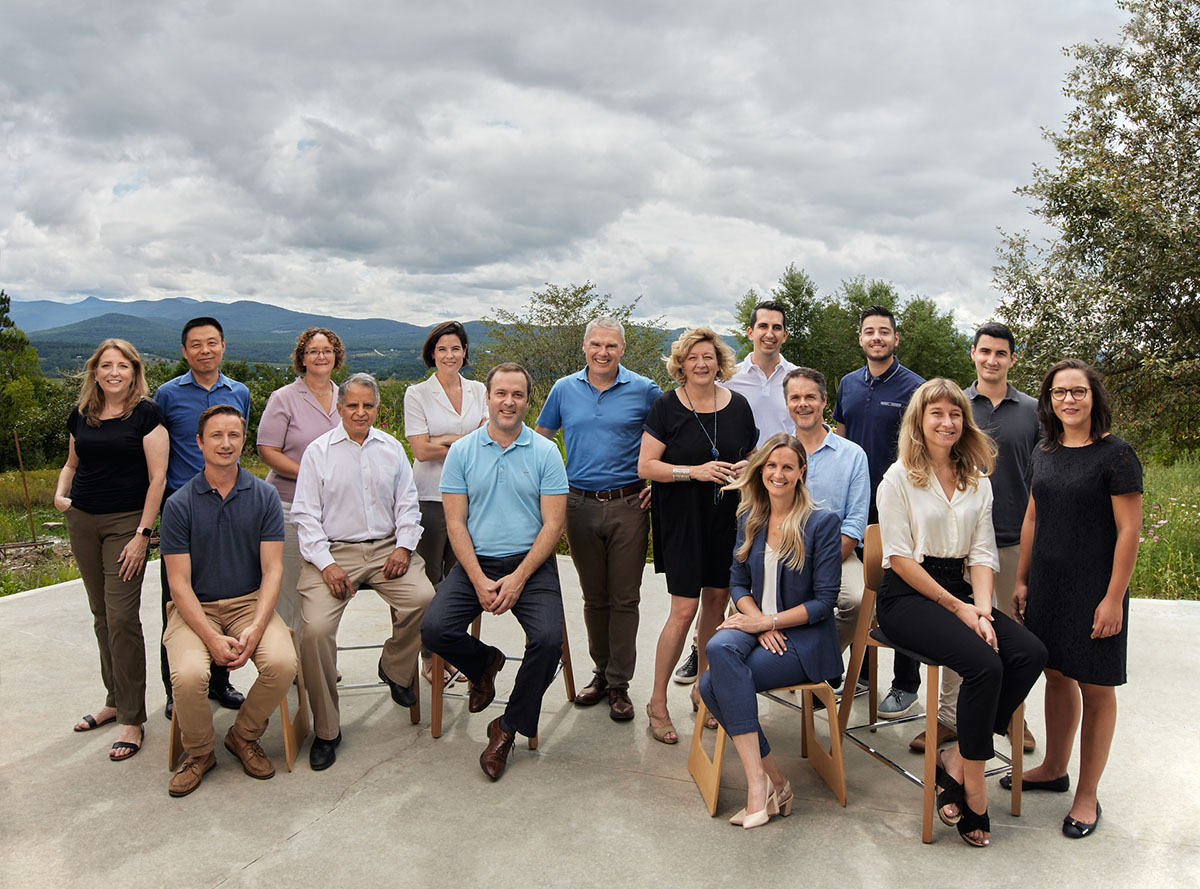
The firm's practical expertise combines investment professionals with technical advisers. In February 2024, GaN Systems' former CEO Jim Witham joined its industrial expert advisory committee. The experience of selling a semiconductor business can now inform the examination of another one. That is a more interesting form of recycling than the usual conference tote bag.
02 Three doors, different keys
The Circular Innovation Fund takes the materials route. Launched in 2022 and co-managed with Demeter, it was announced as a €150 million fund, anchored by L'Oréal's €50 million contribution. Its mandate includes circular packaging, recycling, new materials and efficient processes. A cosmetics group has good reason to care about what happens to a bottle after the last drop.
Chips · photonics
Energy efficiency
Innovation
New materials
Resource reuse
Water technology
Commercialization
Water has its own entrance. In June 2024, Cycle Capital and H2O Innovation announced Cycle H2O's initial close, with a C$30 million target. The launch focused on seed and early-stage companies in Quebec and Eastern Canada. H2O Innovation brought commercial water-treatment experience; Quebec, through Investissement Québec, acted as anchor investor. A fundraising target describes an ambition, rather than money already in the bank.
Then there is Cycle Momentum, the accelerator and open innovation platform founded by Cycle Capital. It offers workshops, mentoring and investor connections, while corporate programs support technology adoption. Its Origo matching program makes equity investments in Quebec startups. For an entrepreneur, these are separate routes with different eligibility and maturity requirements. One introduction does not confer admission to every fund.
03 Put the promise into the economics
Cycle is a private fund manager. Limited partners provide capital; its funds acquire stakes in companies and seek financial returns through growth and eventual exits. Institutions, industrial groups, family offices and private investors sit on one side of this arrangement. Founders seeking financing sit on the other. The ultimate commercial customers include utilities, manufacturers and consumer brands.
The capital arrives in stages, too. Fund IV announced a C$109 million first close in February 2019, including C$50 million from Quebec through Investissement Québec. Its final close reached C$145 million in December 2020, when Export Development Canada joined the limited partners. That was the same fund growing, rather than two pots to add together. Industrial investors such as Suez, Rio Tinto and Hydro-Québec also participated. Their presence helps explain the firm's industrial orientation; a place on the investor list does not automatically make a corporation a customer.
Its place in the market is specialist venture capital for technology commercialization. BDC Capital's Climate Tech Fund is one alternative for Canadian founders. Cycle's distinguishing combination is its technical focus, industrial relationships, associated accelerator and impact assessment. Those features are reasons to examine fit, rather than a league table of investor performance.
Share of GP carried interest committed to three impact KPIs, according to the 2025 report.
Carried interest is a manager's share of investment profits. Linking part of it to impact gives environmental performance a place in the compensation discussion. Cycle also integrates impact analysis with financial and organizational assessment, using established frameworks and third-party greenhouse-gas expertise. Measurement matters, but an estimate of future emissions avoided still depends on assumptions and deployment. It deserves a different reading from an observed result.
04 An exit is only half the story
GaN Systems gives this approach an appealing outcome. Its US$830 million acquisition price describes what Infineon paid for the company. It does not tell us Cycle's proceeds or its investment return. Those require ownership and fund information that a purchase-price headline cannot supply.
A harder example is Enerkem. In 2011, Cycle disclosed another C$3.5 million investment in the waste-to-fuel company, taking its participation to C$7 million at that time. Enerkem entered Canadian creditor protection in May 2025. Financing the journey to an industrial business can be expensive and uncertain. A promising process and committed investors do not guarantee a solvent company.
The current emphasis is becoming clearer. Cycle's 2025 report describes a market moving toward practical technologies with economic benefits. In August 2026, it led Quintessent's US$40 million Series A for optical interconnect technology serving AI data centres. September brought operator and investor Rémi Fournier into the managing partnership; Pascal Drouin's subsequently published promotion added a mandate to integrate AI into investment operations.
“Our word is our bond”
Cycle Capital's published company values
The lesson a founder can copy is simple enough to be demanding: explain who pays, what improves and what integration costs. Pair the environmental case with the customer's economics. This approach needs defensible technology, a sizeable market and a credible path to adoption. Where the buyer's savings disappear under manufacturing costs or deployment delays, an impact calculation cannot rescue the invoice.
Cycle Capital · LinkedIn · X · Latest news · Company essays · Cycle Momentum programs · Cycle Momentum videos