photonics
(38)
NextCorps knows why your prototype isn’t a business yet
In Rochester’s former Sibley’s department store, NextCorps connects startup ambition to factory-floor reality. Its bet: the right help before production can save a founder from some very expensive surprises.

Mike Noonen Bet His Career on the Space Between Pixels
After three decades of chips, turnarounds and startup bets, Mike Noonen arrived at a peculiar frontier: making holography behave like a semiconductor business.
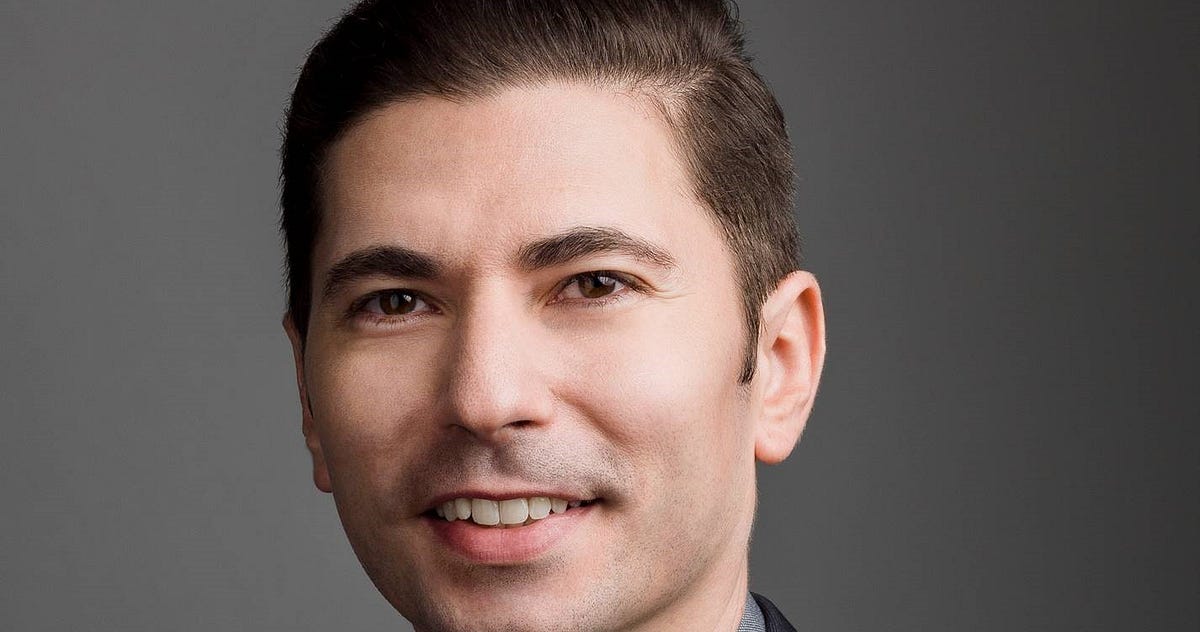
Jon Karafin Wants Light to Stop Behaving Like a Picture
Before he built displays that turn photons into objects, Jon Karafin made a two-ton sculpture run on living yeast. His career is a study in what happens when an artist's appetite for wonder meets an engineer's refusal to hand-wave the physics.
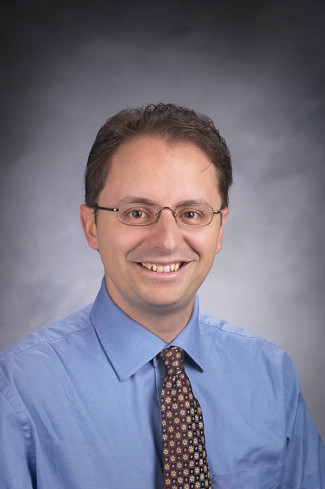
Rafik Ward and the Strategy of Light
Before AI made optics fashionable, Rafik Ward had already spent two decades translating tiny components into big strategic bets. At Lumentum, he is now helping decide where light goes next.
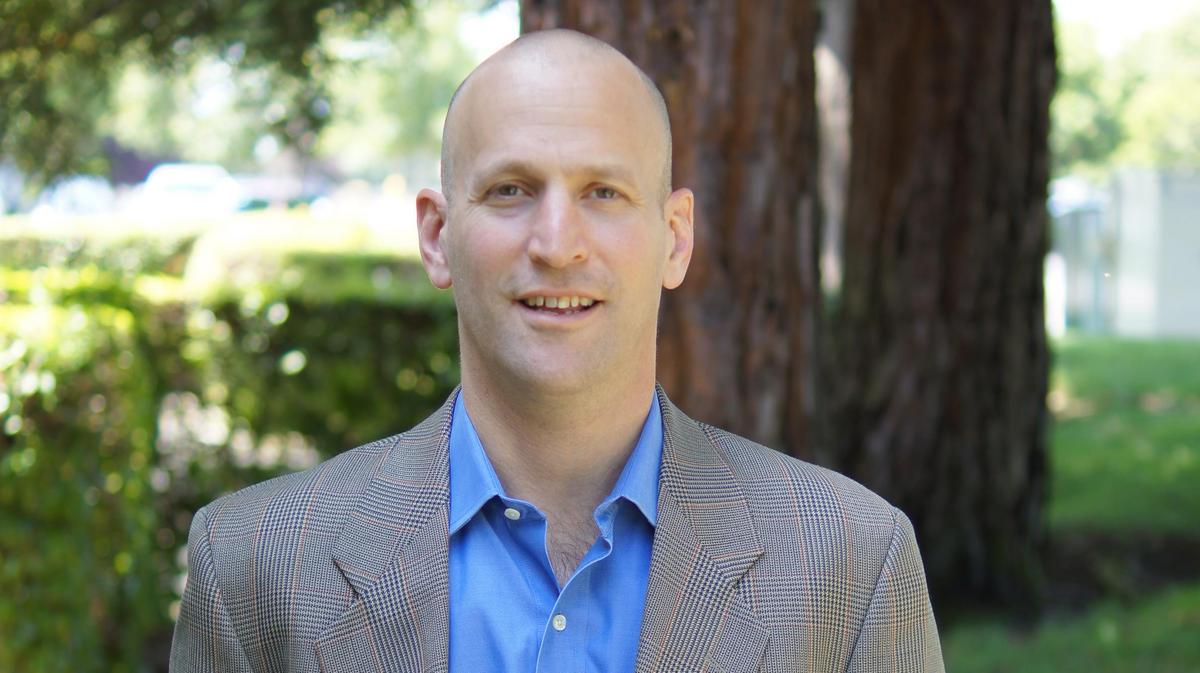
David Friedman Has Spent 30 Years Finding the Bottleneck Before It Becomes Obvious
Before AI data centers ran into a wall of copper, David Friedman had already made a career out of standing where hardware, software and manufacturing collide. His latest act at Lumilens turns a founder’s oldest habit - spotting the constraint early - into an operations job measured in light.
EXFO Built the Picks and Shovels for the Fiber Gold Rush - Now It Is Testing the AI Boom
The Quebec City company made its name finding microscopic faults in fiber networks. After four decades of expansion, acquisitions and a return to private ownership, EXFO is narrowing its focus just as AI data centers turn network testing into a much bigger problem.

Louis Adam Turned Telecom Complexity Into a Marketing System
At EXFO, Louis Adam made a discipline of translating dense network technology into useful customer conversations - then turned the process into a playbook others could use.

Adam Carter Is Turning a Photonics Lab Bet Into an Open Chip Business
After three decades selling the plumbing of the internet, Adam Carter is making a quieter bet: the next wave of AI infrastructure will be built by letting more companies put light directly on silicon.
Lumentum
The AI boom has a plumbing problem: copper cannot carry every conversation between millions of chips. Lumentum is turning light into the scarce infrastructure layer - one laser, transceiver and microscopic mirror at a time.

Sanjai Parthasarathi
An engineer who learned to market complexity, Sanjai Parthasarathi has spent three decades turning invisible technologies into a story customers, investors, and colleagues can act on.
Coherent Corp.
AI may live in software, but it moves through light. Coherent makes much of the physical kit - from laser chips and specialty materials to complete optical links - that lets data centers, factories and scientific instruments work at speed.
Advanced Navigation
Advanced Navigation is a Sydney-based deep-technology company building navigation and autonomy systems that let robots, ships, aircraft, submarines and spacecraft know where they are when GPS is jammed, denied or simply unavailable. Founded in 2012 by Xavier Orr and Chris Shaw to commercialise AI-based inertial navigation research, it now designs and manufactures fibre optic gyroscopes, MEMS inertial sensors, underwater acoustic positioning and a miniature autonomous underwater vehicle across defense, space, marine, mining and commercial markets. In March 2026 it raised US$110M in Series C funding to accelerate its expansion into photonics, AI and quantum sensing.
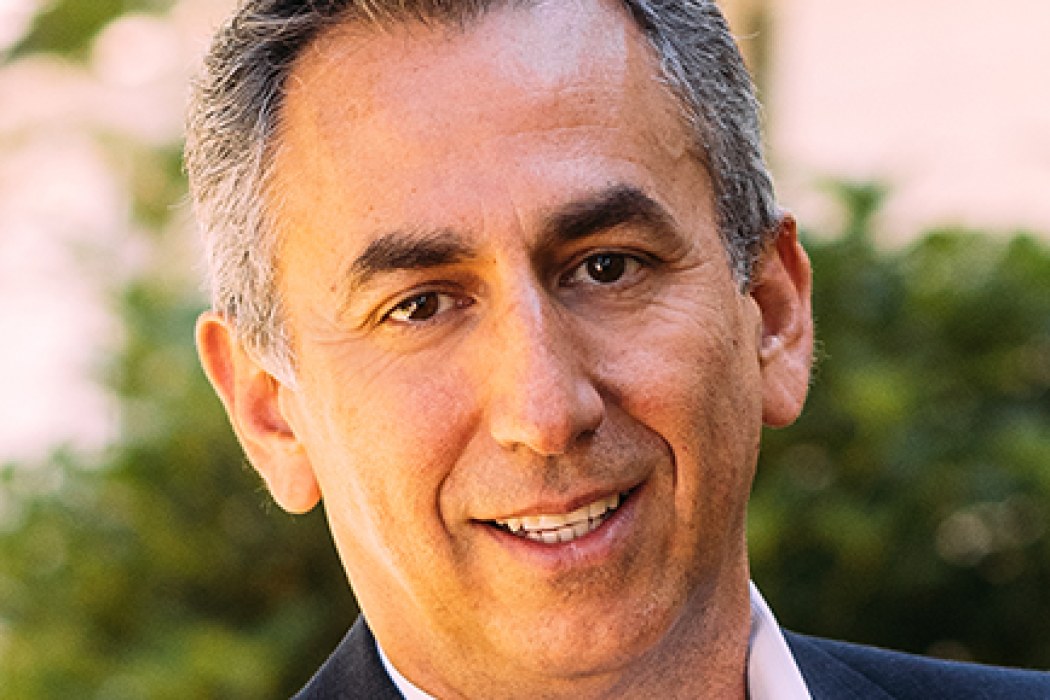
Sam Heidari
Dr. Sam Heidari is the CEO of Lumotive, a Redmond, Washington semiconductor company building programmable, all-silicon lidar chips based on its patented Light Control Metasurface technology. An electrical engineer with a PhD from USC and more than 40 patents, Heidari previously ran Wi-Fi chipmaker Quantenna Communications, taking it from zero revenue to a 2016 IPO and a roughly $1 billion sale to ON Semiconductor in 2019. He now serves on and chairs several technology boards and is turning Lumotive's software-defined optics from a lab breakthrough into mass-produced 3D sensing hardware.

3D Glass Solutions, Inc.
3D Glass Solutions (3DGS) is an Albuquerque, New Mexico advanced-packaging company that turns its patented photosensitive APEX glass-ceramic into precise 3D microstructures for chips. Its wafer-level glass substrates, interposers and integrated passive devices serve RF, photonics, high-performance computing and defense customers who need low-loss, high-frequency, thermally stable packaging. Spun out of technology developed at Sandia National Laboratories and led by semiconductor veteran Babu Mandava, the ISO 9001 / AS9100 certified foundry has raised more than $54 million, counts Intel Capital, Applied Ventures and Lockheed Martin Ventures among its backers, and is a partner in DARPA's Next-Generation Microelectronics Manufacturing (NGMM) program for U.S.-based 3D heterogeneous integration.
Halo Industries, Inc.
Halo Industries is a Santa Clara deep-tech company that uses lasers instead of diamond wire saws to slice silicon carbide crystal boules into wafers, the foundational substrate for high-voltage power electronics. Spun out of Stanford in 2014, its proprietary light-based process aims to eliminate kerf loss, cut defects, and slash water and energy use, giving more usable wafers from every expensive crystal. Backed by an $80M Series B, Halo is scaling SiC production for electric vehicles, grid infrastructure, renewables, and aerospace, and extending the same approach to silicon, sapphire, and diamond.
Light Field Lab, Inc.
Light Field Lab is a San Jose deep-tech company building SolidLight, a holographic display platform that projects three-dimensional objects into open space with no glasses, headsets, or eyewear required. Founded in 2017 by three veterans of the light-field camera company Lytro, it assembles self-emissive, bezel-less panels into modular video walls dense enough - roughly 10 billion pixels per square meter - to form images the eye reads as physically real. Backed by $85M including a $50M Series B with Bill Gates' Gates Frontier, Corning, LG, NCSOFT, and Samsung, and named to TIME's Best Inventions of 2022, the company is now productizing SolidLight for enterprise, entertainment, and public-display markets.

Lumotive
Lumotive is a Redmond, Washington optical-semiconductor company that turns beam steering into a chip. Its patented Light Control Metasurface (LCM) technology uses thousands of tunable liquid-crystal optical resonators etched into a CMOS die to steer light electronically - no moving parts - powering solid-state LiDAR, 3D sensing, and, soon, optical switching for AI data centers. Spun out of Intellectual Ventures and Bill Gates-backed metamaterials research, the company sells programmable beamforming chips like the LM10 to sensor and systems makers rather than building full LiDAR units itself.

nEye.ai
nEye.ai (nEye Systems) is a Santa Clara semiconductor company building optical circuit switches (OCS) on a single chip. By fusing MEMS with silicon photonics and CMOS at wafer scale, its flagship SuperSwitch aims to move data between thousands of GPUs, CPUs and memory units with far less power and space than conventional electrical switching. Founded in 2020 by UC Berkeley photonics researchers and led by telecom-optics veteran Ashish Vengsarkar, the company raised an $80M Series C in April 2026, bringing total funding to about $152.5M as it scales foundry-based manufacturing for AI data centers.

OpenLight
OpenLight is a Goleta, California silicon photonics company building the world's first open silicon photonics platform with integrated lasers. Spun out of Juniper Networks in 2022, it licenses a validated process design kit (PDK) and designs custom PASICs - photonic application-specific integrated circuits - that combine lasers, modulators, amplifiers and detectors on a single chip for AI data centers, datacom, telecom, LiDAR and quantum computing.
Swave Photonics
Swave Photonics is a Belgium-based fabless semiconductor company building the world's first true holographic display chip. Spun out of imec and Vrije Universiteit Brussel in 2022, Swave's Holographic eXtended Reality (HXR) platform uses a CMOS spatial light modulator with sub-300nm 'Diffraction Pixels' to sculpt light into natural 3D images - aiming to replace the waveguides and varifocal lenses in AR glasses, heads-up displays and glasses-free 3D walls with a single scalable chip.

Aurelius Systems
Aurelius Systems is a San Francisco defense-technology startup building Archimedes, an autonomous, high-powered laser turret that detects, tracks and neutralizes drones in seconds for roughly the cost of electricity. Founded in 2024 by photonics veterans Michael LaFramboise and John Marmaduke, the company fuses commercial off-the-shelf hardware, advanced optics and AI-guided targeting into a compact, low-cost counter-UAS platform aimed at protecting soldiers and critical infrastructure from cheap, swarming aerial threats.

Axiomatic AI
Axiomatic AI is a Cambridge, Massachusetts deep-tech company building AI that engineers can actually trust. It pairs frontier language models with formal mathematical and physics-based verification so that the reasoning behind a design decision can be checked, proven, and traced. Its first commercial focus is photonics and semiconductor engineering - fields where simulations are sophisticated but fragmented and a fabrication error is expensive. Founded in 2024 by a group of MIT and ICFO physicists and led by former White House quantum-policy lead Jake Taylor, the company raised an $18M seed in March 2026 to build what it calls the intelligence infrastructure for verified science and engineering.
Diffraqtion
Diffraqtion is a Somerville, Massachusetts deeptech company building what it calls the first quantum camera for satellites and telescopes. Spun out of research at MIT and the University of Maryland, its photon-counting sensors paired with AI aim to extract far more information from incoming light than conventional CMOS or CCD sensors, letting smaller, cheaper optics see beyond the diffraction limit. The company targets space domain awareness, defense, and Earth observation, and raised $4.2M in pre-seed funding in January 2026 alongside a DARPA SBIR contract.
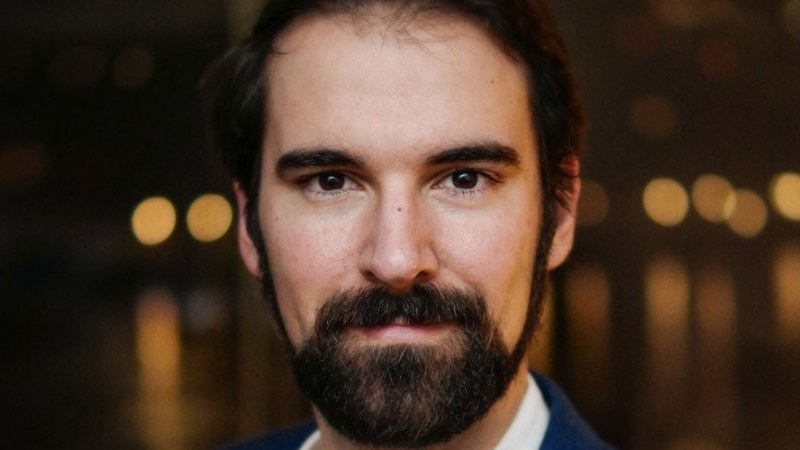
Johannes Galatsanos
Johannes Galatsanos is Co-Founder and CEO of Diffraqtion, a Boston-based quantum imaging startup that has built a quantum camera capable of recovering 95% of photon information lost by conventional sensors - translating to 20x higher resolution and 1,000x faster image processing than any existing optical system. A multilingual MIT and Oxford graduate with Greek-German roots, Galatsanos pivoted from leading AI and data transformation at Novartis to commercializing a decade of DARPA- and NASA-backed quantum photonics research. Diffraqtion won first prize at SLUSH 2025, secured a $4.2M pre-seed round in January 2026, and is targeting satellite launches for space domain awareness and Earth observation by 2028-2029.

Kris Merkel
Kris Merkel is the President and CEO of S2 Corporation, a Bozeman, Montana deep-tech firm turning rare-earth-doped crystals into an optical computer that watches the entire radio spectrum at once. A physicist by training and a patient operator by temperament, he has spent more than two decades pulling a niche piece of laboratory physics, spatial-spectral holography, out of Montana State University and into the hands of the U.S. Department of Defense, DARPA, and the intelligence community.

Michael LaFramboise
Michael LaFramboise is the CEO and co-founder of Aurelius Systems, a San Francisco defense startup building autonomous, AI-guided laser turrets that detect and destroy drones at the speed of light for roughly pennies per shot. A Case Western engineer, Navy veteran, and ex-Coherent and Amazon Devices operator, he dropped out of a Columbia PhD in nano optical systems to build Archimedes, a low-cost directed-energy weapon. Aurelius raised a $10 million seed co-led by General Catalyst and Draper Associates in September 2025 and opened a U.S. manufacturing line for high-power fiber lasers in 2026, aiming to become America's domestic one-stop laser shop.
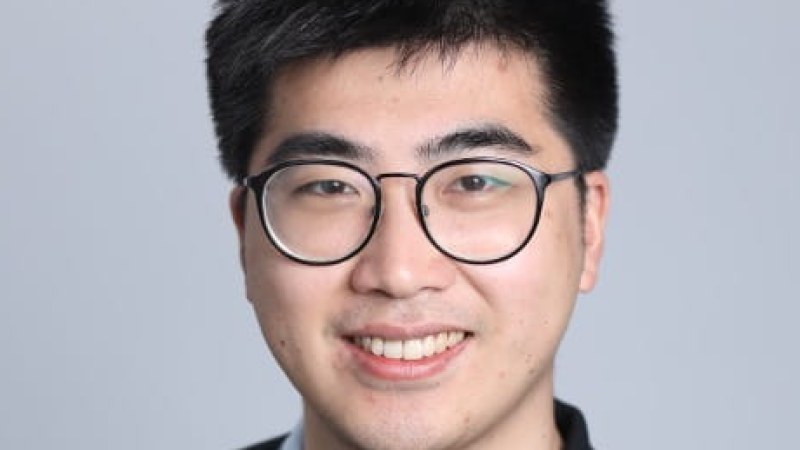
Zaijun Chen
Zaijun Chen is a physicist-turned-founder building light-powered computers for artificial intelligence. As co-founder and CEO of Opticore, he is developing photonic optical processing units (OPUs) that the company says are up to 100x more energy efficient and 25x denser than leading GPUs. Trained at the Max Planck Institute of Quantum Optics and MIT, and now director of the Laboratory of Intelligent and Quantum Photonics at USC, Chen turned a decade of precision-optics research into a venture-backed bet that the future of AI compute runs on photons instead of electrons.
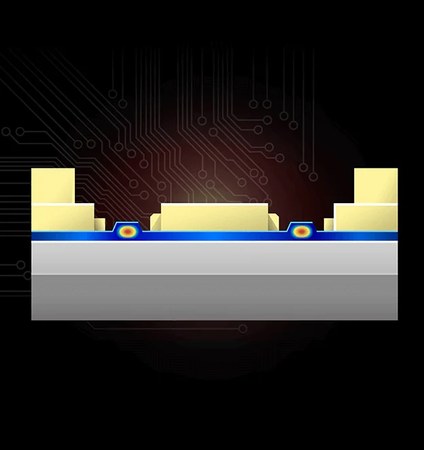
HyperLight Corporation
HyperLight is a Cambridge, Massachusetts company that designs and manufactures photonic integrated circuits on thin-film lithium niobate (TFLN), a material prized for ultrafast, low-voltage electro-optic modulation. A 2018 spin-out from Marko Loncar's lab at Harvard, the company built what it describes as the industry's first high-volume, qualified 6-inch TFLN manufacturing line - now expanding to 8-inch - and packages it as a modular TFLN Chiplet platform. Its modulator chips target the bandwidth and power-efficiency demands of AI data centers, telecom optical networks and high-performance computing, enabling 1.6 Tbps-class links at CMOS-level drive voltages.
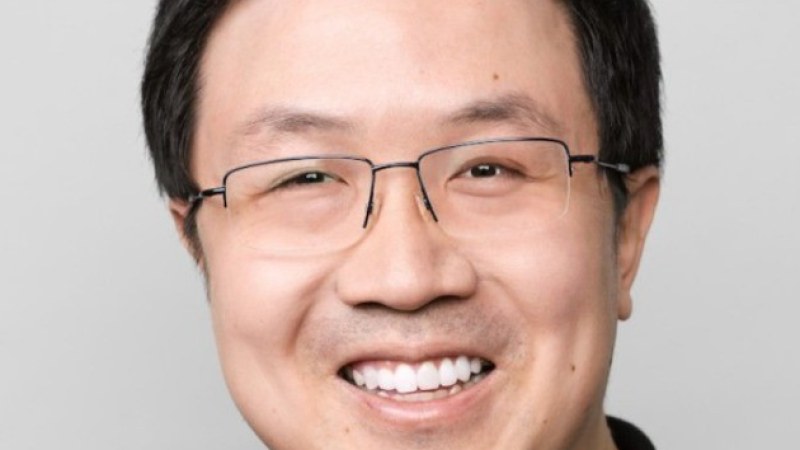
Mian Zhang
Mian Zhang is the co-founder and CEO of HyperLight, the Cambridge-based deep-tech company commercializing thin-film lithium niobate (TFLN) photonics. A Cornell-trained physicist who did his foundational work in Marko Loncar's lab at Harvard, Zhang took a notoriously hard-to-manufacture optical material and shrank it onto silicon-style chips - cutting signal loss roughly 100-fold in work published in Nature. HyperLight now runs the industry's first high-volume, qualified 6-inch TFLN production line and is pushing 400G-per-lane photonic circuits into hyperscale AI data centers through partnerships with UMC, Wavetek, and Jabil.
Avicena Tech
Avicena Tech builds LightBundle, a microLED-based optical interconnect that moves data between chips at terabit-per-second densities while sipping sub-picojoules of energy per bit. The Sunnyvale company is betting that the GPU clusters powering AI need a new physical layer - one that copper can't deliver and traditional silicon photonics can't match on power.