The most revealing artifact in Celerity’s portfolio is not a predictive model or a gleaming control room. It is a stack of three-ring binders - 665 of them. A utility needed a decade of records audited for a general rate-case hearing. Fifteen Celerity consultants captured more than 30 metadata fields from each record and finished in six weeks. Somewhere between the paper cuts and the regulatory deadline sits the company’s entire thesis: infrastructure runs on evidence, and the evidence is usually messier than anyone admits.
Celerity is a privately held consulting firm for electric and gas utilities. It combines data management, analytics, engineering, GIS, estimating, project delivery, litigation support and regulatory work. The corporate phrase is “risk optimization,” which sounds smooth. The actual labor is jagged: reconcile systems that disagree, establish which record is authoritative, map an asset to a location, test whether a work order is complete, and package the result so an engineer, executive, lawyer or regulator can use it.
Rachelle and Christopher Yowell co-founded the firm in 2001 around information management. Rachelle led its operational and financial start-up and later served as CEO and CFO. The early orientation toward discovery and defensible records matters. Utility data is not cleaned merely to make a dashboard prettier. It may need to explain why a pipe operated at a given pressure, whether a worker’s qualification had lapsed, or what vegetation work was completed before a fire.
The product is a trustworthy chain
A utility’s risk does not live inside one department. It migrates. A maintenance record starts with a field crew, moves through an enterprise system, gets joined to GIS, appears in a compliance report and may eventually land in court. Every handoff is a chance to lose context. Celerity’s differentiation is less about owning a miraculous algorithm than about working across that chain.
Consider its operator-qualifications assignment for a large East Coast utility. Regulators wanted to know whether employees and contractors had experienced lapses in the credentials required for maintenance, inspection and construction. Celerity gathered 18 datasets covering 14 years, 22 courses and changing prerequisites. Its analysts wrote SQL queries to reconstruct who was qualified, when, and for what. The result supported a regulatory response and identified jobs potentially exposed to noncompliance.
“The useful output is not more data. It is a version of events that operations, counsel and regulators can all interrogate.”YesPress analysis of Celerity’s public case work
That pattern repeats in gas pipeline work. Celerity has centralized as-built drawings, pressure-test reports and dozens of other document types to verify maximum allowable operating pressure. It has built databases for accelerated leak surveys and reviewed migrated SAP maintenance records for completeness. Its VeriLine platform adds web and mobile workflows for field capture, traceability and reporting. Yet Celerity is not best understood as a SaaS company. Technology standardizes the work; experienced people still interpret the asset, rule and exception.
Make records usable
Collect, map, de-duplicate and validate evidence from paper, GIS and enterprise systems.
Translate risk
Turn clean evidence into compliance analysis, engineering judgment and project priorities.
Close the loop
Manage programs, verify work and return better field evidence to the system.
Why the trees changed the company
Private-equity firm Hastings acquired Celerity in 2021 as a platform investment, with plans to grow both organically and through acquisitions. Its first add-on arrived in April 2023: Clear Path Utility Solutions, founded by utility veteran Steve Tankersley. Clear Path brought vegetation management, grid hardening, disaster response and work verification. The price was not disclosed.
The strategic logic is visible in one Clear Path case. A major investor-owned utility had promised regulators and communities that high-priority vegetation work would be completed in a high-fire-threat area. The schedule slipped. Extra crews arrived, which created a second concern: speed might outrun quality. In less than four weeks, Clear Path built an audit process, GIS capability, a 14-person team and a project-management office. It sampled 535 miles over 12 weeks and reported finishing on schedule and under budget.
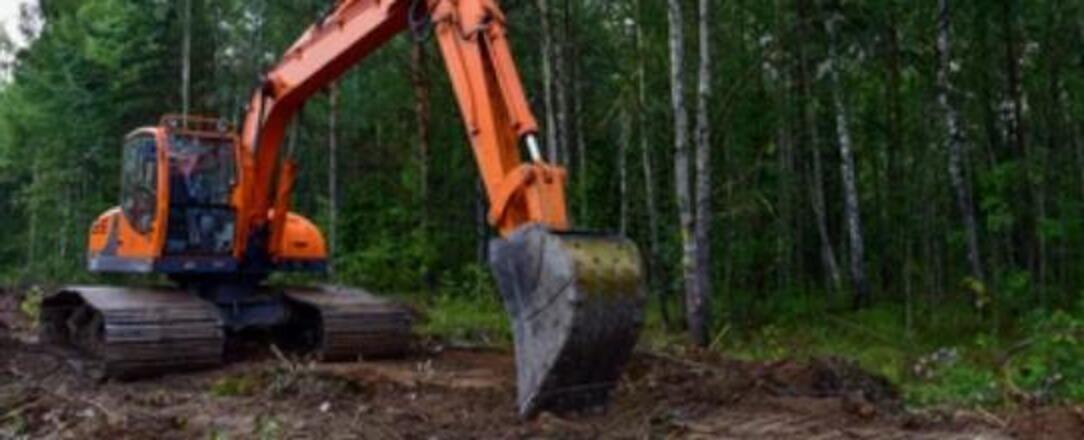
Buying Clear Path moved Celerity closer to the physical work its analysis was meant to improve. It also widened the sales conversation. A utility can hire one platform for data quality, engineering support, program management and vegetation verification rather than coordinate specialists at each handoff. Clear Path reportedly grew from one employee to more than 150 and $25 million in annual revenue before the deal. The combined group now describes a national, largely distributed workforce; public head-count signals range from roughly 180 in business databases to nearly 220 people in a recent procurement profile.
What failed first in these assignments was rarely the glamorous technology. It was the join. A training system did not use the same identifier as a work system. A scanned drawing could not be queried like a database. A contractor marked work complete, while an inspection team still needed proof of quality. In the binder project, the first constraint was not analytical horsepower but a physical archive that had to become structured evidence before anyone could calculate with it. Celerity’s case studies read like a catalog of broken joins - between formats, departments, rules and the physical world.
That also explains what appears to have changed the company’s mind about its market. Celerity did not abandon litigation-grade information management; it carried the discipline into utility operations, where the same rigor can prevent a weak record from becoming a larger exposure. The Clear Path deal then pushed the logic one step further. If the data says work is late or incomplete, the customer still needs a program, qualified people and verification in the field. The acquisition made the consulting platform less dependent on handing its conclusions to somebody else.
The business hiding in “boring” data
Celerity sells scoped professional work, not a one-click subscription. Public pricing does not exist, and cost depends on the number of systems, records, assets, jurisdictions, experts and field miles involved. The work can include an audit sprint, a multiyear program office, expert support for litigation, engineering and estimating, or a technology-enabled data collection effort. That makes revenue less frictionless than pure software but the customer problem is difficult to postpone. Regulatory deadlines and incident response do not respect a product roadmap.
For a buyer, the more useful cost question is therefore not “What is a seat?” but “What is the unit of uncertainty?” It may be a mile of line, a regulator station, a work order, an employee qualification or a gigabyte collected for litigation. A good scope reduces that uncertainty to measurable batches, then prices the people, review levels and technology needed to resolve each batch. Celerity does not publish those rates, so any dollar figure would be guesswork. Its public cases do show the operational units clearly enough for another firm to imitate the scoping method.
Its likely alternatives depend on which piece a buyer sees first. Large infrastructure consultancies such as TRC, Guidehouse, Black & Veatch and Burns & McDonnell can attack broad utility programs. Davey Resource Group and ACRT live closer to vegetation management. FTI Consulting, Ankura and Consilio overlap with disputes and information governance. The most common alternative may be an internal team stitching together engineers, GIS specialists, counsel and contractors.
What operators can copy
The stealable idea is to choose a regulated workflow where bad data has a visible cost. Do not begin with “AI for infrastructure.” Begin with a narrow, expensive question: Which workers were qualified on the date the job was done? Which records prove a station’s operating pressure? Which miles were actually inspected? Build a repeatable taxonomy and quality-control method around that question. Then follow the answer toward the next decision.
Celerity’s own arc suggests three useful moves. First, use services to learn the ugly exceptions that generic software misses. Second, encode the stable parts in workflows such as VeriLine. Third, expand into adjacent execution only when it closes a costly handoff. The Clear Path acquisition makes sense because vegetation evidence and vegetation work inform each other. A random software acquisition would not.
This model fails under a few clear conditions. It is overbuilt for clean, standardized data and low-consequence decisions. It struggles when a client will not grant system access, supply knowledgeable staff or agree on a source of truth. And bespoke consulting loses its advantage if every project requires a new method with no reusable process. The sweet spot is repeatable complexity: enough regulation, fragmentation and physical consequence to justify expert labor, but enough similarity across utilities to reuse the playbook.
In June 2024, the firm shortened its public name from Celerity Consulting Group to Celerity and adopted “We empower power.” The line is tidy; the underlying business is not. That is precisely the appeal. Celerity operates in the part of the utility stack where tidy diagrams meet old binders, mismatched databases, drone footage, tree crews and a deadline with legal consequences. Plenty of firms want to own the dashboard. Celerity has made a business out of earning the right to trust what goes into it.
Meet the work, not just the pitch
Company pages covering its services, people, case work and current openings.