The awkward detail in USEReady’s story is a Word document. In a May 2024 account of its work with a legal insurance provider, the company described a team producing more than 1,000 customized reports for client servicing staff and account executives. The reports tracked enrollment, plan usage, and attorney services. They needed careful formatting. Someone had to assemble them. The organization already had Tableau dashboards. Yet the Word documents kept coming.
There is a familiar temptation in technology: assume the arrival of the clever new thing makes the old thing unnecessary. A dashboard arrives; surely the report can retire. But a client still expects a document. A business process still requires a particular layout. The new system is splendid until somebody asks it to do Tuesday’s work.
- The job: move enterprise analytics, data, and business rules into usable cloud and AI systems.
- The distinctive bit: engineers plus proprietary tools for migration, report generation, and validation.
- The buyer: large organizations with complicated reporting estates and costly manual work.
- The useful lesson: preserve what a report means before changing where it lives.
The document wins the argument
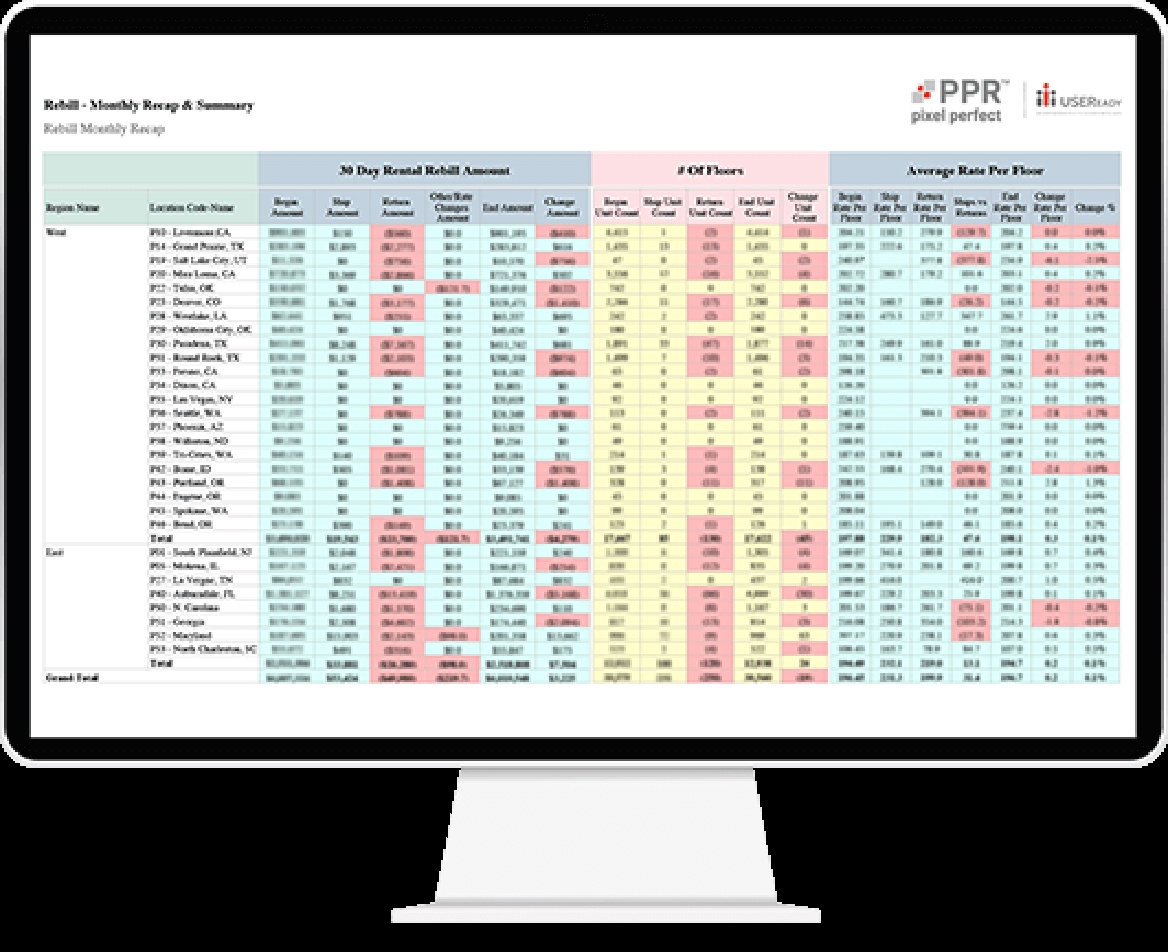
USEReady’s answer to the insurer was Pixel Perfect for Tableau. Rather than asking client teams to abandon their documents, it generated customized Word reports from the dashboards they already used. The company reported a 40% reduction in reporting time. That is a more interesting outcome than announcing that an organization had become digital. It had already become digital. It was still copying and formatting.
Pixel Perfect occupies the gap between interactive analysis and an artifact someone can send, print, file, or review. It supports paginated reports, scheduled delivery, and bursting: producing different versions for different recipients. The attraction is mundane and precise. Keep the analytical system; automate the repetitive packaging around it.
This explains something about the company’s position. USEReady supplies the connective work around platforms such as Tableau, Snowflake, Databricks, and AWS. Its services include cloud data engineering, analytics modernization, AI implementation, and ongoing operations. It can build pipelines and governed data models, move reporting estates, train users, and connect a new application to the systems that must keep running.
Eight hundred dashboards, and all their baggage
An airline offers the same problem at a different scale. In a published case study, USEReady described a major US carrier moving more than 800 dashboards from Tableau Server to Tableau Cloud. Manual migration was cumbersome. Data quality varied. Testing demanded effort. Maintaining the server infrastructure added another burden.
The team used STORM, its Tableau migration accelerator, with the customer’s Tableau center of excellence. First came assessment and prioritization. Then performance optimization and content cleanup. The migration mapped projects, folders, users, groups, permissions, data sources, and dashboards between environments. Progress tracking helped the team deal with issues as they appeared.
USEReady reports 65% savings in time and effort against manual methods. A project result, rather than a promise for every migration.
A dashboard is therefore a misleading unit of measurement. It looks like a picture, but it carries access rights, dependencies, calculations, and expectations. Moving the picture while losing those relationships would produce an excellent-looking mistake. STORM’s value lies in treating migration as an inventory and validation problem as well as a transfer problem.
The airline case provides a practical sequence others can borrow. Identify the business-critical assets. Clean up the estate. Map the permissions. Test what arrives. An organization can follow that sequence with other tools or its own engineers. Automation becomes useful once the team knows what it is automating.
When a machine needs a definition of revenue
USEReady’s newer AI products extend this concern with meaning. Its August 2026 MigratorIQ announcement describes five agents sharing discovery, migration, semantic harmonization, validation, and compatibility work. Customers set a fidelity threshold for migrated assets and a ceiling on agent token costs. Engineers handle exceptions and govern handoffs. A no-cost discovery and assessment agent offers an entry point.
The design is revealing. The product needs a way to decide whether a conversion is acceptable, a way to limit computational spending, and a person for the cases that resist automation. Those controls are part of the product proposition. Anyone considering agentic migration should ask to see them operating on their own troublesome reports.
In September 2026, USEReady announced SemaBridge for Snowflake. The problem it addresses is easy to miss: two departments can use the same word for different calculations. An AI answer may sound perfectly sensible while using the wrong definition. The announcement describes versioned business definitions and audit trails, with processing inside customer infrastructure.
There is a useful qualification in the product’s rollout: Power BI semantic drift detection is described as available, while Tableau and Qlik extraction appear on the roadmap. A buyer should check the supported source platform before treating the broader vision as an available feature. The appealing idea is to carry existing business knowledge into AI; the implementation still depends on which knowledge can actually be extracted.
“The real test for enterprise AI is what happens after the PoC.”
Amit Phatak, Chief AI Officer, September 2026
The invoice that defeated the template
Consider a different published engagement: a North American midstream energy company handling more than 360,000 invoices and related documents annually. Its existing OCR and robotic automation struggled with varied layouts, scanned material, handwritten shipping documents, and invoices embedded in emails. The first weakness was the template’s assumption that the next document would resemble the last.
USEReady describes replacing that rigidity with Document AI and language models, extracting 13 data fields, incorporating human corrections, and integrating approved invoices into SAP with audit trails. Its case study reports a monthly close shortened from nine days to seven and a half, and more than $50 million in pending accounts payable cleared.
Clearing payable documents is not the same as creating revenue or saving $50 million. The useful result is a processing bottleneck removed, with better visibility and a faster close. For a finance buyer, the reproducible idea is to combine extraction, human review, and ERP integration. Recognition alone leaves the workflow unfinished.
A consultancy with tools in its pockets
Founded in 2011 by Uday Hegde and Lalit Bakshi, USEReady has expanded from analytics into data modernization and enterprise AI. Hegde is chief executive; Bakshi is president. Its business model combines professional services, managed support, and licensed software. Pixel Perfect offers cloud, on-premises, and hybrid deployment, with licensing that can cover teams or an enterprise.


Abry Partners supplied growth capital in 2022. In announcing that investment, Hegde pointed to order-book growth above 55% and plans to expand practices, geography, and delivery. That gives the capital decision a concrete context: a growing services business wanted more capacity and reach.
Its alternatives depend on the assignment. A customer might use an internal engineering team, platform-native migration tools, another analytics consultancy, or a broader systems integrator. USEReady’s pitch is the combination of platform expertise and reusable products. The reasonable buying test is whether that combination removes work the customer would otherwise have to commission or perform.
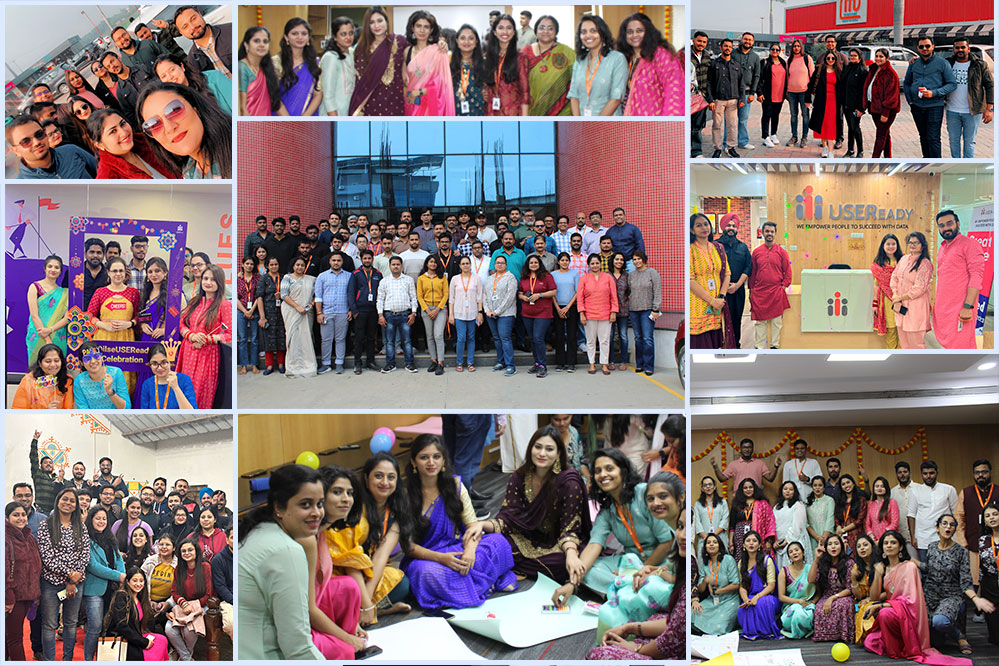
The company lists humility and continuous improvement among its values. More concretely, its talent-development programs include technical bootcamps, coaching, women’s leadership development, and higher-education support. In a business that sells people’s judgment alongside automation, maintaining those skills belongs in the operating model.
Begin with the thing everyone hates doing
The most useful way to approach USEReady is with a troublesome workflow in hand: the report assembled manually, the migration delayed by access mappings, the invoice nobody can reconcile. Establish a baseline for time, errors, and exceptions. Ask for a demonstration on representative data, including the awkward cases. Agree on what a correct result means before celebrating the speed.
This approach requires accessible source data, agreed business definitions, and owners willing to resolve exceptions. If the organization cannot agree on a metric or permit access to its dependencies, a migration agent cannot settle the dispute for it. A small organization with simple reporting may need little of this machinery.
USEReady’s story is interesting because its oldest work and newest products concern the same stubborn question. How does a company change its technology without misplacing what it knows? The Word document provides one answer. Sometimes progress begins by admitting that the old thing still has a job.
Keep exploring
PRODUCTS, PEOPLE & A DEMO