A power line can be perfectly ordinary until the afternoon it becomes the most consequential object on a hillside. The wind rises. The vegetation is dry. A fault produces a spark. For the utility responsible for that line, the difficult question arrives before any of these things happen: should it keep the electricity on?
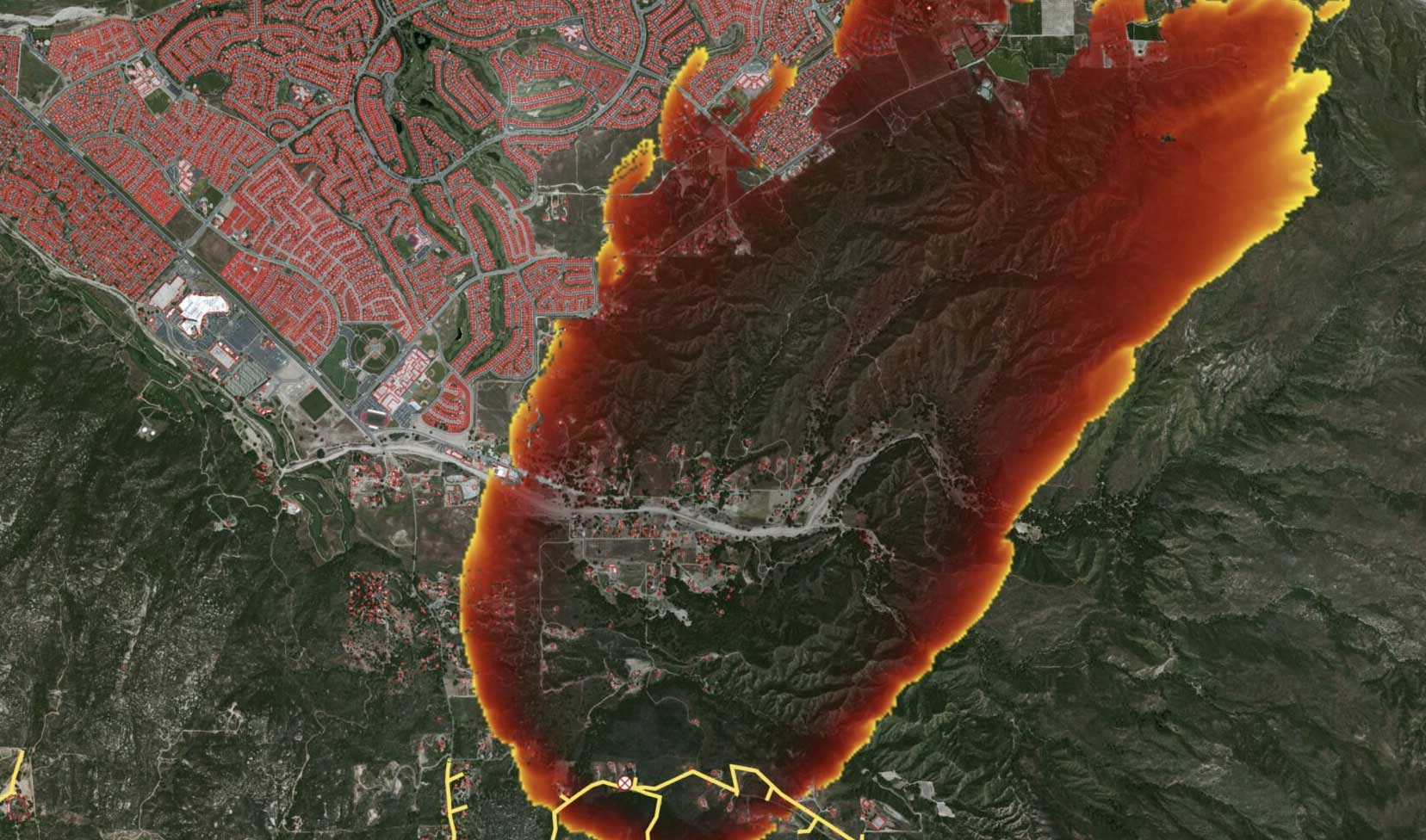
Technosylva gives that question a peculiar rehearsal. It starts fires on a computer. Many of them. It places hypothetical ignitions near infrastructure, combines weather with terrain and burnable vegetation, and calculates what might follow. The result can inform an uncomfortable power shutoff today or an expensive infrastructure project next year.
THE STORY IN FOUR POINTS
- Utilities use simulated fires to judge consequences before a spark occurs.
- Fire agencies use predictions and shared maps to prioritize response.
- The business combines enterprise software with fire and weather expertise.
- Its expansion into storms follows the same question: what will this weather do to our assets?
This is an enterprise software company operating where a forecast has to become a decision. Its customers include CAL FIRE, PG&E, San Diego Gas & Electric, and other utilities and public agencies. Their problem is less a shortage of maps than a shortage of time to decide what those maps mean.
The spark that exists only on a screen
Consider two power lines. One might be comparatively likely to fail, yet sit in a place where a resulting fire would have limited consequences. Another might fail less often, but lie beside fuels and terrain that could carry fire toward homes. A maintenance list based only on failures could put them in the wrong order.
Technosylva’s planning tools combine likelihood with modeled consequences. Its current Wildfire Planning product, FireSight, helps utilities assess individual assets, compare hardening projects, and support wildfire mitigation plans. The practical outputs include estimated burned area, buildings affected, and population exposed. They give a capital budget a geographical argument.
FROM FORECAST TO FIELD DECISION
Conceptual workflow. Operators choose the action; the model supplies decision support.
The near-term counterpart, Wildfire Operations or FireRisk, uses forecast conditions to help identify emerging danger and support operational choices. Technosylva advertises on-demand spread predictions in under 30 seconds. The consequential feature is what a user can ask: if an ignition occurs here, under these conditions, who and what could be in its path?
That changes the meaning of a weather alert. A regional warning supplies context. An asset-specific consequence estimate can help an operator decide which circuit warrants attention. The operator still owns the decision, including the disruption imposed on people whose electricity is disconnected.
What convinced the people who fight fires
The route into California’s operations offers a useful test of the sales pitch. State budget materials describe a 2018 request for innovative wildfire technology. Of 131 submitted concept papers, two advanced to proof of concept. In fall 2019, CAL FIRE personnel, including Fire Behavior Analysts, received training and used Technosylva’s FireSIM and FireCAST during real incidents.
The department found the technology valuable, according to the budget account, and entered a three-year license. That sequence matters. The purchase followed a trial in the setting where the answer had to be useful, with the people who would have to interpret it. A demonstration had acquired witnesses.
The relationship continued into development of operational tools and an Initial Attack Assessment Index, intended to help assess a fire’s potential to escape during its first two hours. Technosylva’s CAL FIRE account says the agency used nearly 13,000 automated incident simulations in 2025. That is a company-reported usage measure, rather than a count of fires prevented.
“Validation is a key component because we want our customers and stakeholders to rely on the metrics.”
Adrián Cardil · Director of Fire Science, Technosylva
Cardil describes comparing simulations with observed events, using historical weather and pre-fire fuel conditions. The appeal is straightforward: a beautiful prediction deserves less attention than a prediction that has survived comparison with reality. For public safety software, the second is the more interesting product.
A forecast with somewhere to go
A model can be correct and still arrive in the wrong place. Firefighters need resource locations. Dispatchers need incident status. Different agencies may be using different systems. Technosylva sells software for those handoffs as well as for the prediction itself.
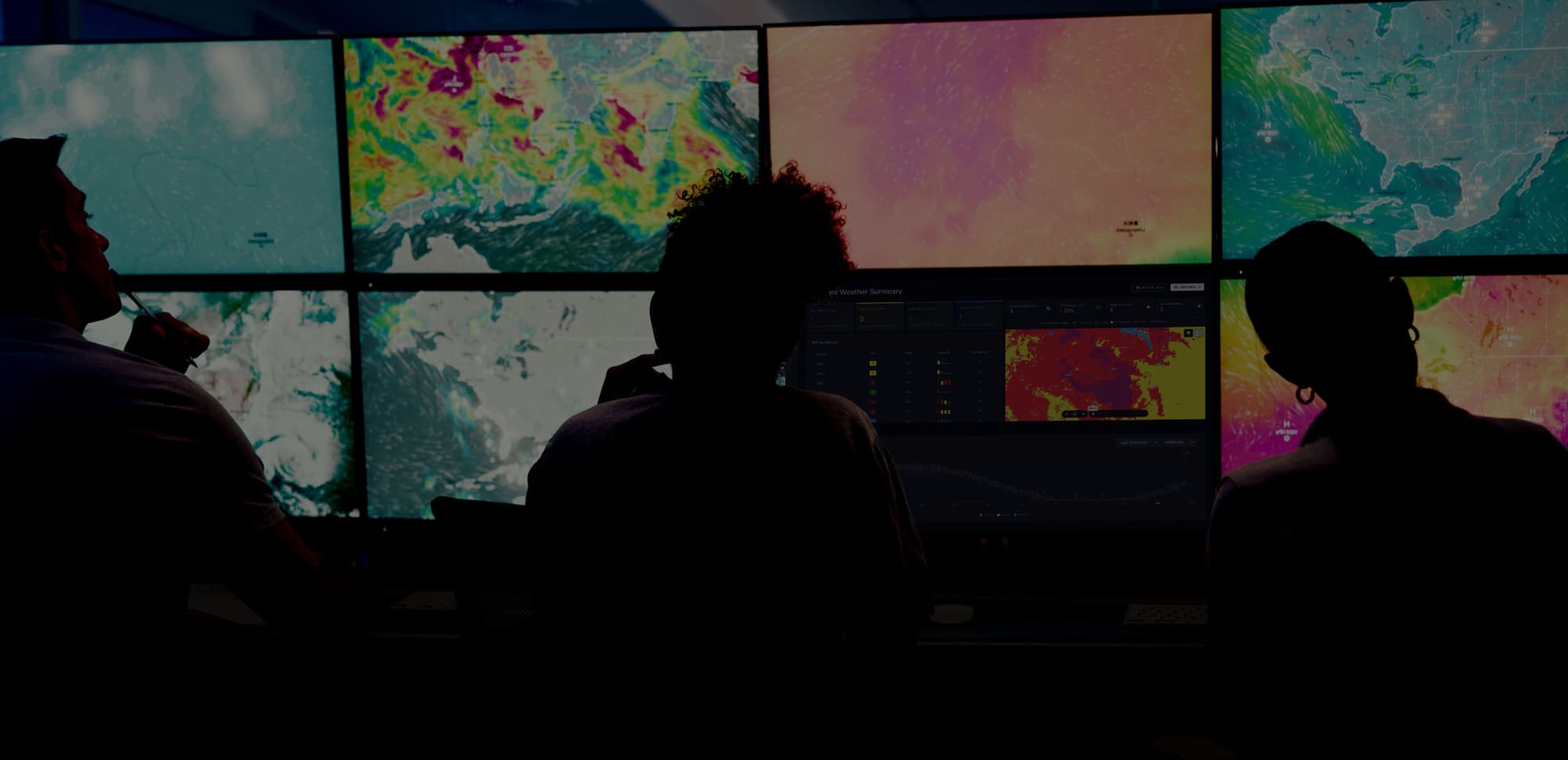
fiResponse manages incidents, dispatch, and resources across agencies and hazards. Tactical Analyst assembles a common operating picture, bringing forecast and operational information into a shared map. Together, these products address an ordinary organizational problem with extraordinary consequences: people can act on different versions of the same situation.
The market already has fire modeling tools. The US Forest Service’s FlamMap, incorporating FARSITE, can analyze fire behavior, growth, and conditional burn probabilities. It requires landscape data and users who understand fire behavior. Technosylva’s commercial proposition adds an operational package around modeling: forecasting, customer-specific asset analysis, shared information, dispatch connections, and support.
Its business model is institutional software licensing and cloud-based SaaS, alongside scientific and implementation services. The customer buys a working capability for its territory and organization. Integration and training therefore belong inside the product’s value, however little glamour attaches to a firewall configuration.
The map that needed mending
There is a number that makes this business less abstract. PG&E recorded $3.6 million for Technosylva Fire Spread Modeling in 2020. Its regulatory testimony describes a partnership begun in 2019 and improvements made the following year. This was a recorded expenditure for a particular deployment, not a subscription price other buyers can assume.
PG&E’s recorded 2020 expenditure for Technosylva Fire Spread Modeling.
Historical project spending. Scope and prices vary.Later PG&E testimony supplies an instructive detail about the work behind the forecast. The utility described improving fuel maps to fix known issues in the US Forest Service’s LANDFIRE dataset, adding detail where wildlands meet development, and incorporating recent burn scars. A hillside that has burned is different from the hillside remembered by an old dataset.
The documented problem was in the inputs. It explains why useful prediction involves patient map maintenance as well as mathematics. Add vegetation regrowth, seasonal changes, and asset-location uncertainty, and the supposedly static background becomes a moving assignment.
Even the accounting needs to survive scrutiny. California’s Public Advocates Office recommended denying recovery of a separate $608,180 expense associated with Technosylva because PG&E had not supplied the requested invoice or substantiated the amount. That was a cost-documentation dispute, not evidence that a fire model had failed.
Technosylva’s PG&E customer page highlights a 56% fall in average Public Safety Power Shutoff duration in 2022 versus 2021. The figure belongs to the utility’s wider mitigation program. It illustrates the desired direction without isolating the software’s contribution. An appealing case study should not turn a shared outcome into a single-vendor trophy.
Following the weather beyond fire
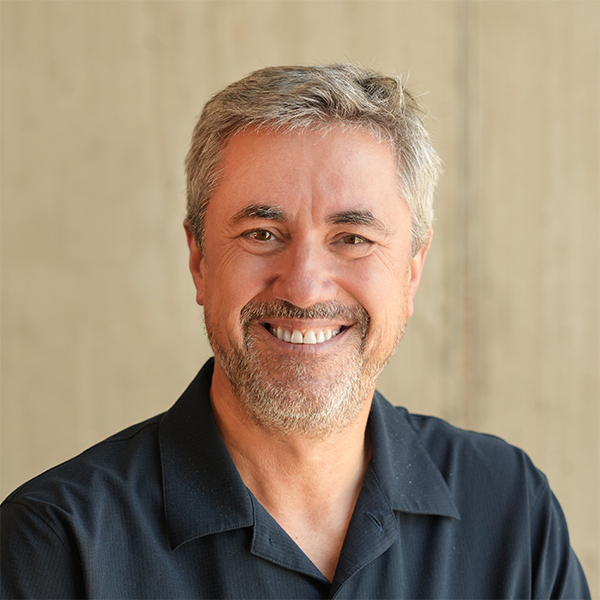
Joaquin Ramirez
Founder and CTO. The fire scientist’s problem has grown to include a larger catalogue of bad weather.
Founded in 1997, Technosylva now has Bryan Spear as CEO and founder Joaquin Ramirez as CTO. Its expansion has a visible acquisition trail. Atmospheric Data Solutions joined in October 2023, adding atmospheric data and analytics. KatRisk followed in November 2024, bringing catastrophe models used by insurers and financial firms.
TA announced a growth investment in August 2022. General Atlantic’s BeyondNetZero fund announced another in November 2024. The investments accompanied a business broadening beyond wildfire into several kinds of weather risk. The KatRisk deal, for example, connected fire expertise with flood and other catastrophe modeling.
By June 2026, Technosylva had announced expanded storm preparedness and restoration capabilities, deployed by CenterPoint Energy. The platform is designed to anticipate outages and damage, help size and position crews, and plan restoration. A storm forecast becomes an estimate of work: where it will occur, how much of it there may be, and which resources it requires.
July brought FPI 2.0, a suite of fire danger metrics with five ratings from Very Low to Extreme, including an index for conditions conducive to wind-driven powerline fires. August brought recurring Intel Briefs from scientists and analysts. Both developments acknowledge that customers need help interpreting information as well as receiving it.
The useful thing to steal
The copyable idea is a sequence: identify a consequential decision, test a prediction where that decision is made, repair the inputs, and give the answer a route into daily work. A retailer or hospital will have different variables. It can still ask whether its forecast changes a specific action, and whether the people taking that action can understand the uncertainty.
For Technosylva’s users, the conditions matter. Fuel and weather data must describe the place being modeled. Teams need training. Cloud simulations need connectivity, although downloaded desktop results and local basemaps can support some offline work. A prediction built from stale inputs, or stranded outside the operational workflow, has less to offer.
The interesting unit of value is the decision made before the scene everyone remembers. Somewhere on a map, an ordinary power line is being considered. The weather has not arrived. Nobody has seen smoke. There is still time to do something useful.
Take a closer look
Explore the tools, the people, and the ongoing conversation.