A road survey vehicle can do its job perfectly and still leave an engineer waiting. The camera collects the images. The hard drive fills. Back at the office, somebody must upload the files, inspect the pictures and identify the signs, guardrails and other roadside assets. A road has been recorded. An inventory has yet to arrive.
That interval is a good place to meet iENGINEERING. The company builds custom software and data systems, much of it for transportation organizations. Its most revealing work lives between an observation and a usable answer: the interface that makes pavement research searchable, the database that gives bridge records a common home, the processing step that turns a road photograph into an asset record.
- The work: transportation data portals, custom applications, cloud services and AI-assisted asset inventories.
- The customers: highway agencies, engineering firms, technical associations and publishers.
- The useful idea: improve the handoffs, then keep a human check on the result.
A camera is only the beginning
In its account of conventional roadway inventory collection, iENGINEERING describes survey vehicles spending at least a week gathering images before returning or sending their hard drives to the office. Uploads can take several more days. Trained technicians then work through the photographs with point-and-click software. The expensive part of the exercise extends well beyond the drive.
The company’s proposed alternative puts a trained deep-learning model on an edge device connected to the vehicle’s computer. Processing happens onboard. The office receives processed data, and technicians check a sample rather than classify every asset by hand. Those checks can feed further model training. The published design names a Google Coral USB Accelerator and provides for cloud processing as another option.
The order matters. Collection remains compatible with the agency’s existing practice. Classification moves earlier. Quality control stays in the process, followed by an acceptance routine. This is an attempt to shorten a queue without asking a transportation department to surrender its judgment.
Transconomy, its transportation asset-management offering, extends that idea across collection, processing, visualization, validation and integration. A published brochure describes both baseline products and custom technology, including collaboration with existing service providers. The commercial opportunity is therefore wider than replacing a survey contractor: iENGINEERING can supply technology to one.
The pavement researcher’s shopping cart
Consider a different problem. An engineer wants to examine how pavement performs under particular conditions. The measurements already exist, but they are spread across years, test sections and categories. Access is a design problem as much as a storage problem.
FHWA’s Long-Term Pavement Performance program collects research-quality information from in-service roads in the United States and Canada. Its public gateway, InfoPave, offers ways to select, visualize and extract that information. iENGINEERING says it designed and developed the web interface and continues to support and enhance it.
One of the portal’s features is wonderfully ordinary: a data bucket. Researchers select what they need and add it to the bucket, rather as a shopper adds items to a cart. A 2024 FHWA traffic-data guide spells out the sequence: choose a table, add it, request an extraction in a suitable format, then follow the notification to download the files.
The modesty of that feature is its appeal. An engineer should not have to become a database administrator to ask a pavement question. Giving a complicated research archive a familiar interaction makes the archive easier to use without making the underlying science any simpler.
“Listen, Understand, Solve, Deliver.”iENGINEERING’s stated work philosophy
iENGINEERING’s InfoPave case study also describes a move from a co-location environment to a hybrid cloud model, driven by cost and platform readiness. It dates the addition of 30 terabytes of NASA climate data to July 2016. That historical figure describes a particular expansion of the system, rather than its present size.
NASA climate data added to InfoPave in July 2016, according to iENGINEERING’s project account.
Weather becomes a pavement input
The climate story leads to one of the company’s more specific integrations. Working with FHWA’s LTPP InfoPave, iENGINEERING developed an API that connects NASA MERRA-2 climate records with AASHTOWare OpenAPI. The integration supplies hourly climatic data to AASHTOWare Pavement ME Design.
For an engineer, the practical point is access to climate inputs for a location and time range within a design workflow. Temperature, precipitation, humidity, wind and solar information become retrievable inputs rather than a separate expedition through an archive. The company describes global hourly coverage beginning in 1979.
Here, at least, the commercial detail is unusually explicit. iENGINEERING says the FHWA LTPP InfoPave API is available at no cost to AASHTO and integrated with its Pavement ME product. The same page offers custom licensing for other integrations. That distinction matters: a free interface for one organization does not make every surrounding software service free.
A bridge needs a common record
InfoBridge provides another view of the company’s role. The LTBP portal was developed with FHWA’s Long-Term Infrastructure Performance team, which supplied subject expertise, quality assurance and support. The division of labor is telling: software engineering and bridge engineering meet in the same product.
In iENGINEERING’s account, bridge information arrived from several sources without a standard upload and update process. The project required a database framework and more orderly procedures, alongside a better public interface. What needed attention first was the organization of the evidence.
The resulting system supports retrieval, analysis and visualization. Users can inspect selected bridges on a map, examine tabular results and view performance dashboards and historical graphs. iENGINEERING describes continuing maintenance and enhancements. The portal helps people investigate bridge performance; it does not make the engineering decision for them.
Reports, rights and the less glamorous machinery
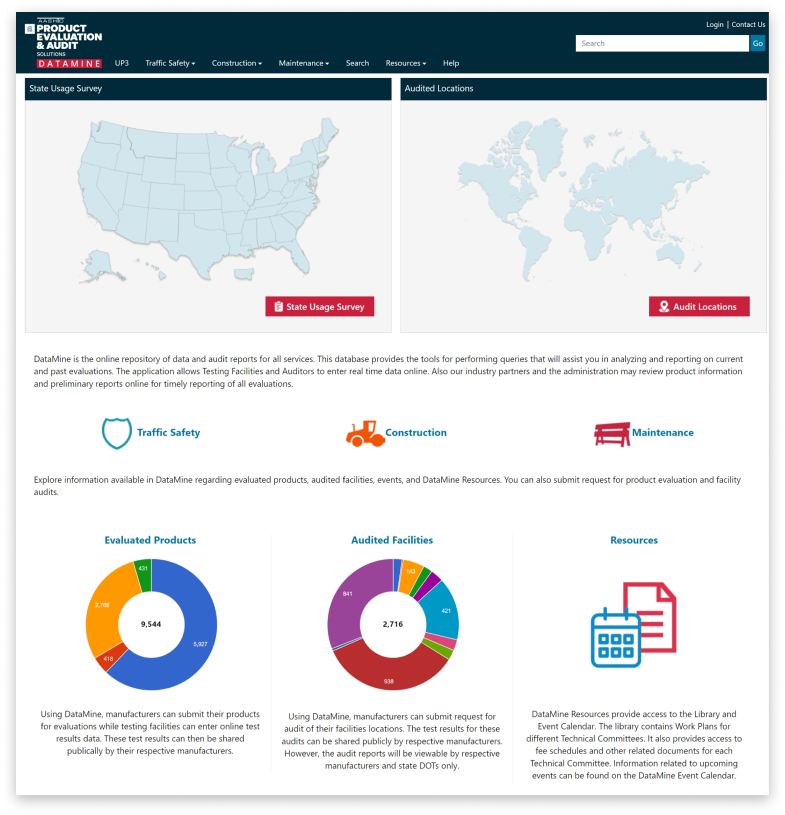
AASHTO DataMine handles another sort of evidence: transportation product evaluations and audit reports. Testing facilities and auditors can enter information online, while other participants review product records and preliminary reports. The company’s development description includes workflow, invoicing, payments, database implementation and AWS deployment.
That work makes the publishing business less surprising. iENGINEERING’s customers include technical associations whose publications must be sold, distributed and accessed under particular permissions. Its iWrapper product protects PDF documents and lets publishers control access, copying, printing and sharing. iManuscript addresses secure digital publishing and distribution.
The portfolio also includes custom web and mobile applications, cloud deployment and management, modernization, security and data analytics. Its services description names AWS, Microsoft Azure and Google Cloud. A buyer can commission a system, arrange support for an existing one or use a narrower product. This is a B2B services business with software offerings alongside it.
The specialist who can sit on either side of the table
The customer list puts iENGINEERING in an interesting position. It names FHWA, AASHTO, Minnesota’s transportation department and Maryland’s highway administration. It also describes work with Stantec, Kimley-Horn and TranSystems. An engineering consultancy may be a customer or collaborator rather than an opponent in every procurement.
Its distinction is the combination visible in these projects: transportation workflows, data management and the software needed to connect them. Buyers can also turn to other development consultancies, specialist asset-management vendors or their own teams. The sensible comparison is the job at hand: does it require a standard tool, a custom integration or an ongoing service relationship?

In July 2025, the company announced AWS Advanced Tier Partner status, following its Select-tier announcement in 2024. The newer release lists modernization, disaster recovery, web security, transportation asset analysis and multimodal retrieval-augmented generation among its offerings. The last of these extends retrieval across formats such as text, images and structured data. It is a service proposition, not evidence that every customer already uses it.
Borrow the sequence, keep the judgment
The transferable lesson is to trace a piece of information through its whole journey. Where does it wait? Who re-enters it? Which format prevents the next person from using it? iENGINEERING’s examples suggest improving those transitions before celebrating a new interface or model.
The conditions remain demanding. Road images must suit the model and the assets being identified. Acceptance checks must reflect what an agency needs. Exported records must fit the receiving GIS or management system. These are practical implications of the published workflow: speed at one stage cannot rescue an inventory the next stage cannot trust.
A pavement data bucket, a bridge database and a rights-controlled PDF share a quieter ambition. Each tries to put the right material within reach of the person entitled to use it. iENGINEERING’s work is most interesting at that scale, where a large technical promise becomes a small, repeatable action.