At CES in 2016, DSR’s assignment was a wall. Ten feet high, ten feet wide, it would bring together lights, window-covering controls, thermostats and sensors from manufacturers including Bosch, Legrand, OSRAM and Philips. The Zigbee Alliance wanted to demonstrate devices working together. An ordinary ambition, until you consider how many companies had written the instructions.
A lamp can be perfectly competent at being a lamp and still be a dreadful conversationalist. That is where DSR Corporation becomes interesting. The Colorado software company works on the agreements beneath connected products: what a message means, who receives it, how a gateway passes it along, and whether yesterday’s device will cooperate with tomorrow’s system.
- DSR builds software across devices, gateways, cloud systems and applications.
- Its ZBOSS Zigbee stack gives different hardware platforms common software foundations.
- Customers can buy managed engineering teams; ecosystem members can collaborate on the underlying stack.
A small flag, a large headache
In December 2015, DSR published an unusually revealing technical post. Engineers integrating security sensors had encountered a manufacturer-specific flag applied to standard commands or attributes. Enrollment then required a manufacturer code where ordinary behavior should have sufficed. The problem lived in the application layer, where the device’s radio connection becomes a meaningful instruction.
The company’s wonderfully exasperated description was that developers “invent their own bicycle.” Its engineers described retrieving codes through device descriptors, contacting manufacturers or examining captured traffic. A connected product could speak the right protocol and still require detective work before it made sense.
“developers invent their own bicycle”
DSR engineers, writing about Zigbee integration, 2015
Another example involved sleepy devices with long polling intervals. Packets could expire before collection. Extending the timeout helped, but keeping packets longer risked overflowing the queue. DSR advised testing the updated coordinator in a large network with many sleepy devices. The fix had a condition attached. Reality usually insists on one.
Give the neighbours a common rulebook
DSR’s answer includes ZBOSS, its Zigbee PRO protocol stack. It supports different hardware platforms through an operating-system and hardware-dependent layer, allowing engineers to port and customize the software. Predictably allocated memory matters for small devices whose resources cannot expand merely because the roadmap has acquired another feature.
The tools around the stack are part of the proposition. DSR publishes approximate automated run times of six hours for about 260 certification tests, three hours for roughly 170 regression tests, and three hours for about 60 application tests. Those are vendor figures for those suites, rather than a stopwatch guarantee for every product.
A network simulator also lets developers exercise product code without real radios. That makes early testing cheaper to organize. It cannot, by itself, establish how a finished installation will behave over the air; hardware validation remains part of the job. The appeal is to find software trouble before an engineer needs a room full of devices.
In January 2020, DSR launched the ZBOSS Open Initiative, or ZOI. Chipmakers and product companies could work on common software and influence its development. DSR called the approach “member-source.” ZOI’s FAQ explicitly says it is not open source: members receive royalty-free licenses, with access and participation governed by agreements.
ZOI’s reported total over its first two years, alongside more than 1,300 merged pull requests.
The rationale was sustainable development and maintenance. By January 2022, DSR reported nine core updates during the preceding year. The useful lesson is organizational: several companies can maintain a common foundation while continuing to compete over what they build upon it.
The bridge is becoming the product
NXP supplied a concrete endorsement in 2025. Its IW612 tri-radio solution gained Zigbee support using ZBOSS on Linux-hosted platforms. NXP also joined ZOI. Its own explanation emphasizes interoperability and support for systems combining an i.MX processor with the IW612 radio coprocessor.
For a product team, the attraction is continuity. Zigbee devices already installed in homes need a route into newer ecosystems. The NXP integration supports the hardware foundation for that route, including systems involving Thread. DSR separately offers X-to-Matter bridge middleware for connecting legacy Zigbee devices to a Matter fabric.
In March 2026, Kyoto’s mui Lab announced a DSR partnership to develop and commercialize an open smart-home platform for Japan. The intended buyers include housing, energy and equipment manufacturers. “Living OS” is the proposed service. Beneath that inviting name sits the familiar engineering challenge of connecting across communication standards.
Buy a team that can finish the sentence
DSR began in 1998 with an embedded-focused database engine. Founder and CEO Anatoli Pechkov now leads a company selling engineering across web, mobile, cloud, embedded systems and other specialties. Its market position combines custom development with experience maintaining products and protocols of its own.

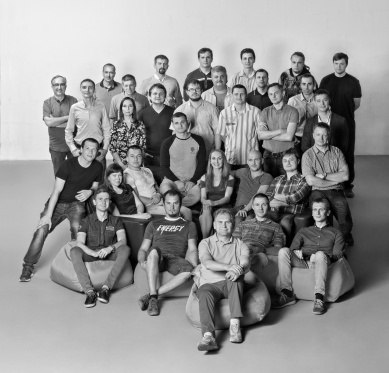
Commercial arrangements include fixed-price or time-and-materials projects, dedicated teams based on staffing commitments, component work and hourly consulting. The buyer’s choice is how much responsibility to hand over. An isolated integration task and a whole product require different working relationships.
Legrand’s Charlie Derk described DSR’s team as “an extension of our own,” including participation in planning and help with customer field issues. That testimony captures the offer better than a catalogue of programming languages. DSR also invests in teaching: its university-linked training began in 2011, and its 2019 intake attracted more than 600 applicants.
From devices to digital credentials
Digital identity provides another version of the same problem. In 2023, DSR announced three British Columbia government bids involving Indy test automation, network tooling and command-line software. The work moved supporting activities toward newer shared components.
In April 2026, DSR contributed its identity toolkit to Hiero as the Heka Identity Platform. Mobile wallets, web interfaces, backend services and credential protocols come together in a modular system for issuing, holding and verifying credentials. Here, too, the work is making separate parts agree.
A buyer can borrow that habit before hiring anyone: name the interfaces, assign responsibility for them, and test the uncomfortable combinations early. DSR’s story gives integration a proper place in the product plan. Even a very smart home needs somebody to introduce the guests.