A turbine does not care how smoothly an AI demo ran. Neither does a bank's creaking data warehouse, a refinery's safety officer or the engineer who gets paged when a virtual machine runs out of capacity at 2 a.m. These are the stubborn, physical edges of digital transformation - and they are where Usetech has chosen to work.
The Dubai-headquartered company is an enterprise software builder with roots in custom development and consulting. Since 2006, it has expanded from writing systems to selling a compact portfolio of its own: Launch for operational AI, USEBUS AI-Code for data integration, Octopus for infrastructure optimization, a Risk Digital Twin, vibration-monitoring technology and a method for analyzing microseismic signals in hydrocarbon exploration. The common theme is not AI for conversation. It is AI attached to a process that can break, drift, waste money or put someone at risk.
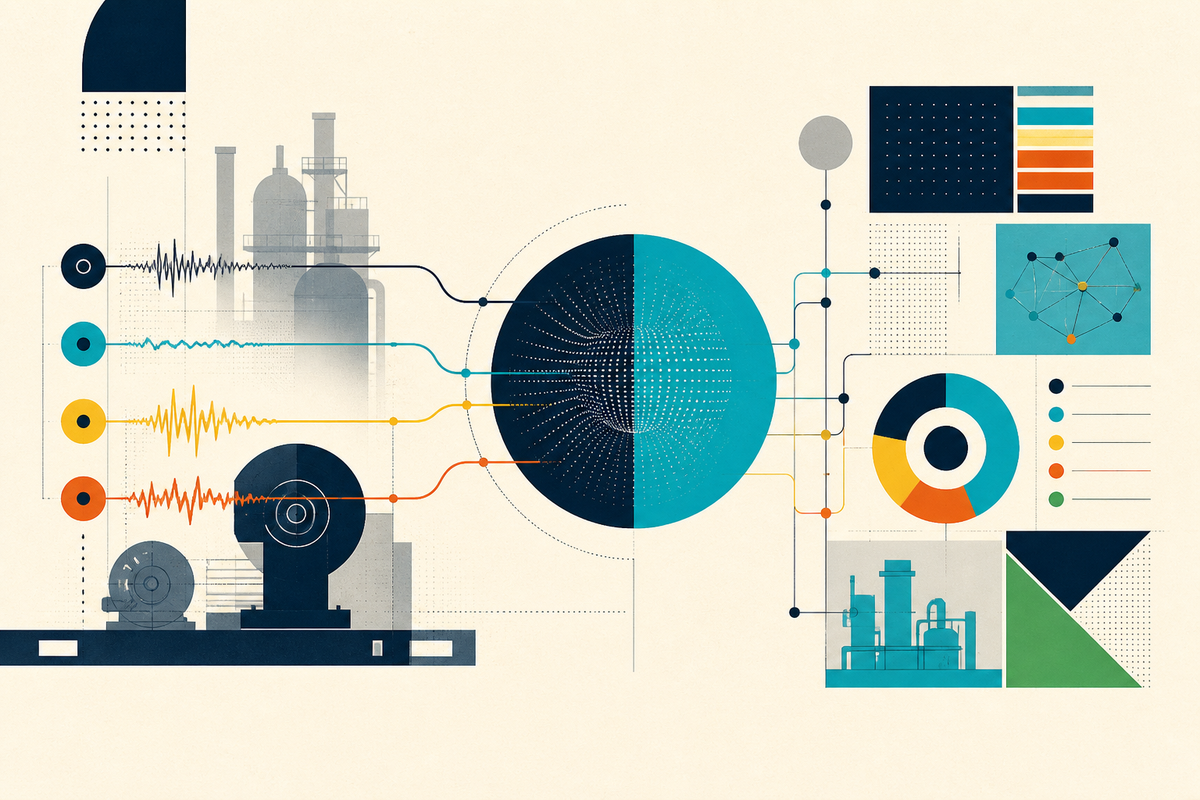
Between a model and a decision
Usetech's most revealing product is Launch. The company describes it as a single layer for processing video and visual data, running machine-learning models, generating events and alerts, building dashboards and connecting the result to outside systems. A factory might use it to detect missing protective equipment. A city operator might use it to identify an incident in a camera feed. A manufacturer might watch for defects that a tired human inspector can miss.
Detection is only the first half. An alert needs context, a route and an owner. Launch is designed to turn a model's output into a business event, then send that event into a workflow through APIs, webhooks or an integration bus. Usetech says a pilot can be deployed in as little as 48 hours. The more important claim is architectural: a customer should be able to add models and use cases without rebuilding the whole system each time.
“The next phase of digital growth in MENA will reward not just scale, but control.”Konstantin Petrosov / Chief Technical Officer, Usetech
That is a practical response to an old corporate habit. One department buys a computer-vision pilot, another experiments with predictive maintenance, and a third creates a clever forecasting notebook. Each may work on its own. Together they become a museum of proofs of concept. Launch is Usetech's attempt to provide the shared plumbing: streams, orchestration, events, analytics and permissions.
A bus, an octopus and a digital twin walk into a data center
The names are playful; the assignments are not. USEBUS connects information systems and moves structured or unstructured data between them. It is built on open-source components including Apache NiFi and Kafka, supports common enterprise protocols and is pitched as a way to modernize an IT landscape without replacing every legacy system. That matters because the largest expense in many AI projects is not training a model. It is persuading decades of software to exchange clean, timely information.
Octopus works one floor down, in the server room. It maps physical and virtual infrastructure, studies CPU, memory and storage use, and points out where resources are oversized or stranded. The platform can recommend or automate workload balancing across different hypervisors and orchestrators. In a region investing heavily in data centers and sovereign cloud, the sales argument is crisp: use more of the equipment already purchased before ordering another rack.
The Risk Digital Twin moves in the opposite direction, from components toward consequences. It combines live operating data, relationships and historical behavior in a virtual model, then lets teams simulate failure or a change in load. The point is not a cinematic 3D rendering. It is a safer answer to the question “what if?” before a refinery, plant or energy network discovers the answer in real life.
Listening to a machine in four dimensions
Usetech's vibration work is the portfolio's oddest and most concrete detail. Conventional monitoring often reads vibration in one direction. The company's method records three spatial axes at the same point while preserving their timing - what it calls 4D, or 3D plus synchronization. That produces a trajectory rather than a single wobbling line. Engineers can use the fuller pattern to identify cracks, imbalance and abnormal energy in rotating equipment.
For large turbines and flexible rotors, the company says the method can calculate balancing weights across multiple planes and reduce total vibrational energy beyond a conventional one-axis balance. The commercial logic is familiar to any plant manager: replace fewer healthy parts, catch a defect before an emergency stop and keep equipment running longer. Predictive maintenance is an abstract phrase until downtime begins charging by the minute.
Selling outcomes to companies with expensive problems
Usetech targets enterprises in oil and gas, energy, manufacturing, mining, agriculture, banking, retail, telecom, insurance, government and technology. These customers tend to share three characteristics: they own complicated infrastructure, their data lives in many places, and operational mistakes are costly. The company has said its systems serve organizations of different sizes, although its global website provides few named customer references.
The business model sits between a consultancy and a software vendor. Usetech sells strategy, engineering, integration, implementation and support; it also licenses its own platforms and adapts them to a customer's environment. That combination can make sales and delivery slower than pure cloud software. It can also be an advantage in industrial settings, where a standard subscription rarely strolls through the door and understands a proprietary control system on day one.
The broader services catalog fills the gaps around the products: enterprise and mobile development, data warehouses and data lakes, business intelligence, cloud architecture, DevOps, quality assurance, user-experience design and technology audits. In other words, Usetech can first diagnose an operating problem, then assemble the data layer, build the application and stay for support. The company highlights Java, React, Spring Boot, Kubernetes and OpenShift among the technologies used by its teams. The list is conventional for a large engineering shop. The differentiator is how those tools are applied to specific processes rather than the tools themselves.
Its competition changes by project. Global consultancies such as Accenture, Capgemini and IBM bring scale and boardroom access. Microsoft, AWS, Siemens and AVEVA bring broad platforms. Specialist vendors can go deeper on integration, observability, vision or digital twins. Usetech's pitch is that it can combine those categories: a product core, an engineering team and domain-specific work for the Gulf's industrial economy.
A buyer can steal a useful test from this positioning. Ask any prospective AI vendor to draw the entire path from signal to action. Where is the data captured? What cleans it? Where does the model run? How are confidence and false alarms handled? Who owns the next decision? What happens when a network link fails, and can the customer remove the vendor without rebuilding the data foundation? A polished model answers only one box. Usetech is competing on its ability to answer the rest.
Why Dubai is more than an address
The company lists Dubai Silicon Oasis as its headquarters and has made the MENA region central to its public identity. That gives it a clear market story. Gulf governments and enterprises are investing in AI, energy infrastructure, smart cities and local cloud capacity at the same time. Buyers must also contend with data residency, cyber security, legacy industrial assets and the cost of moving a pilot into production.
At GITEX in 2023, Usetech said it signed cooperation agreements with 11 regional AI providers and contracts to supply Octopus and USEBUS to government and agricultural organizations in Dubai. It has since used exhibitions, research and its own AI magazine to build visibility. Recent recognition includes a 2025 Oil & Gas Middle East award for an operational AI use case, a TechBehemoths AI award and a ninth-place listing among UAE big-data analytics firms by TopDevelopers in 2026.
Awards do not prove that a platform will survive a customer's production environment. Neither does a two-day pilot. The harder evidence arrives later: fewer false alarms, more utilized capacity, shorter downtime and an audit trail showing why a system acted. Usetech's opportunity is that the market is moving toward those measurements. Its risk is that every consultancy, cloud provider and industrial-software company has noticed the same shift.
The moat in industrial AI may not be the model. It may be the patience to connect the model to everything the customer cannot replace.
What makes Usetech interesting is its insistence on staying close to the mess. The company is not asking an energy operator to admire an algorithm. It is asking where the sensor data lives, who needs the alert, which system should receive it and what can safely happen next. Those questions are less dazzling than a generative AI demo. They are also the questions that decide whether enterprise AI becomes infrastructure or remains a slide in a quarterly presentation.