data-integration
(79)
Left Right Mind wants AI to check the fine print
From a $30,000 home-services app to NASA search tools, Left Right Mind has built a business around making information useful. Its next pitch: catching the gaps between what companies promise and what they actually do.
Aker Systems takes five months out of the data queue
The British data specialist says it cut Home Office integration times from seven months to two. Its business is built around a stubborn problem: getting sensitive information to the people who can use it.

Palantir Wants to Run the Room Where Decisions Happen
Palantir turns an institution’s scattered data into a working model of the institution itself. For teams with expensive decisions and tangled systems, that can be useful - but this is a serious commitment, not a dashboard you buy on Friday.

Karin Netzer Makes the Invisible Work of Enterprise Software Legible
From photography and television to smart cities and cloud integration, Karin Netzer has built a career translating complicated systems into reasons to care.

Katie Soderberg Makes the Plumbing of Business Software Feel Personal
Across Microsoft, ClickDimensions and a decade at eOne Solutions, Katie Soderberg has built a career around a stubbornly human idea: software works better when its people, partners and data can actually connect.
eOne’s 25-Year Bet: Move the Data, or Leave It Where It Is
The Fargo software company spent two decades making old business systems talk. Its latest trick is knowing when data should not move at all.

Domo Built the Business Dashboard. Now Its $400 Million Exit Is the Real Data Point
Domo spent 16 years turning scattered corporate data into dashboards, apps, workflows, and AI agents. Its next chapter is a $400 million sale to Progress - a useful lesson in both the power and the economics of becoming a company’s data operating layer.

The Spreadsheet Tax on Nonprofits - and the 24-Year-Old Software Company Trying to Kill It
Omatic built a business in the least glamorous corner of fundraising: the gap between a donation and a trustworthy donor record. Its pitch is simple - let software move the data so nonprofit staff can move the mission.
Qlik’s 33-Year Bet: The Dashboard Was Only Half the Job
Qlik built its name by letting people wander through data instead of following a prewritten query. Then it bought the pipes beneath the charts - and turned a clever analytics engine into a much larger bet on enterprise AI.
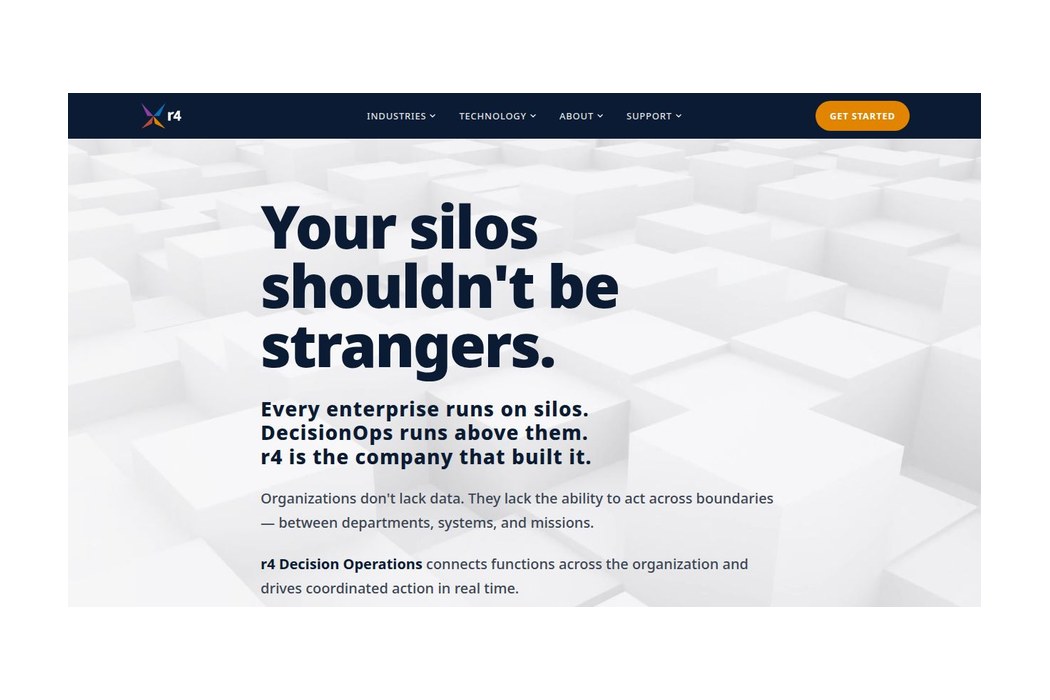
r4 Technologies Wants to Fix the Most Expensive Part of AI: Nobody Acts Together
Most enterprise AI predicts inside one department. r4's XEM is built for the awkward moment after the prediction - when inventory, pricing, logistics and people all have to move together.

Will Davis Is Making the Boring Part of AI Impossible to Ignore
After years selling data preparation and automation, CData’s CMO has arrived at a useful conviction: AI’s future depends on the plumbing everyone would rather ignore.

Michelle Blackmer Knows the Hard Part of Healthcare AI Is Everything Before the AI
After 25 years in healthcare data, Rhapsody's chief marketing officer has learned to look past the glossy interface and ask the stubborn question underneath: can the systems actually understand one another?
Semarchy Wants to Fix the Boring Data Problem That Breaks Expensive AI
Before an enterprise can ask AI to change the business, somebody has to reconcile the customer called three different things in 14 systems. Semarchy is betting that the unglamorous work of mastering, governing and moving data can become one product - and reach production in weeks, not years.
CData Built the Boring Plumbing. Now 10,000 Companies Need It for AI.
The enterprise AI race has produced a very old problem: the useful data is scattered everywhere. CData spent a decade standardizing those connections, and its unglamorous specialty has become the layer everyone suddenly needs.
Jitterbit Connected the SaaS Explosion. Now It Wants to Keep AI Agents From Breaking the Office.
The 23-year-old integration company grew by making incompatible software talk. Its next bet is that the same plumbing can keep enterprise AI useful, visible, and on a leash.

Scott Marshall Is Making Clinical Trial Data Behave
The QuartzBio CEO built his career around an unglamorous but expensive problem: a clinical sample can travel farther than the data that explains it. His answer is a connected system designed to catch the gaps before researchers have to play another round of spreadsheet detective.

Michel Tricot Kept Seeing the Same Data Problem. Then He Opened the Pipes.
A French engineer spent years watching teams rebuild the same brittle connectors. His response was not a clever feature, but an open system - and a company willing to pivot when the first market disappeared.

Suzanne Serwatuk Knows the Most Technical Product Still Needs a Human Story
From a provocative ice-cream shop to the C-suite of a geospatial software company, Serwatuk has built a career around the same practical question: how do you make people care?
Safe Software Built a $100 Million Business Translating the Data Nobody Else Wanted to Touch
FME began as a translator for stubborn map files. Three decades later, Safe Software is betting that the same obsession with interoperability can make enterprise data - and the AI consuming it - behave.

Airbyte Killed Its First Product - Then Turned Boring Plumbing Into a $1.5 Billion Company
A paid marketing tool died when COVID froze its buyers. What survived was the expensive, brittle connector code underneath - and a repeatable playbook for turning customers' least-loved engineering work into a platform.
The Startup That Bet Data Movement Should Cost a Flat Fee
A 13-person shop in suburban Philadelphia is going after the plumbing nobody sees - the pipelines that move enterprise data - by making it workflow-driven, auditable, and priced like a utility instead of a taxi meter.

Jonathan Stambolis learned to turn fragmented systems into one clear view
Before founding Zenysis, Jonathan Stambolis moved through corporate law, a housing venture, UN diplomacy and Palantir. The through-line is less glamorous than the résumé: making complicated institutions usable.
Usetech Wants AI to Leave the Demo Room and Run the Factory Floor
The Dubai-based technology company is betting that enterprise AI matters most when it can spot a failing machine, reconcile a broken data flow or turn a camera feed into an operational decision.
Treasure AI
Treasure Data spent 15 years teaching enterprises to recognize a customer across a maze of systems. Now, under a new name, it wants governed AI agents to turn that memory into action - without asking marketers to babysit another dashboard.
Precisely
The 1968 mainframe sorting company you have never heard of quietly became the plumbing behind 95 of the Fortune 100's data - and it is now betting the house on making that data safe for AI agents to act on.
Cashboard
Cashboard is a New York-based, Y Combinator-backed (S22) startup building a semantic layer that sits between a company's financial data and AI. It stores the metrics, data models, mappings and permissions that let AI agents - and finance teams - produce accurate, governed FP&A work: reports, dashboards and analysis pulled from 900+ connected systems. Founder Julian Rowlands frames the goal as turning AI into a 'trusted FP&A machine' and, eventually, the 'solo CFO.' The company raised a $5M seed led by FINTOP Capital in July 2026.

Lexer
Lexer is a Customer Data and Experience Platform (CDXP) built for retail and consumer brands. It unifies fragmented data from ecommerce, in-store, loyalty, email and SMS into a single customer view, then layers on analytics, predictive intelligence and activation so marketing, sales and service teams can understand and engage customers in a personalized way. Founded in Melbourne in 2010 and now used by 150+ brands including The Iconic, Rip Curl, Zimmermann and Quiksilver, Lexer positions itself as a retail-specialized alternative to horizontal enterprise CDPs.

Cédric Kovacs-Johnson
Cédric Kovacs-Johnson is the founder and CEO of Flume Health, a New York-based software company that connects the fragmented healthcare data ecosystem so payers and employers can build and run health plans more efficiently. A chemical engineer by training, he first made his name as co-inventor of Spectrom, a full-color 3D printing technology that won the 2014 Collegiate Inventors Competition and was acquired by MakerBot. He founded Flume Health in 2017 and has raised more than $40 million in venture funding, including a $30 million Series A in 2022.

AI One
AI One is a New York-based enterprise software company that builds an Enterprise Context Management (ECM) platform - a lightweight layer that sits beneath enterprise AI and agentic applications. Rather than forcing companies to migrate data into a new lake or warehouse first, AI One connects directly to the systems large organizations already run (Salesforce, Workday, on-premise databases, APIs and documents), resolves entities across fragmented data, and enforces security and permissions so AI operates with real business context instead of guessing. Founded in 2024 by Conor Twomey and Fergus Keenan, the company targets Fortune 500 firms in financial services, healthcare, insurance, energy and private equity, and raised $11M total including a $7M Series A led by Vestigo Ventures.
Aleph
Aleph is an AI-native financial planning and analysis (FP&A) platform that lets finance teams keep working in the spreadsheets they already know while syncing live data from 150+ source systems. Founded in 2020 by Albert Gozzi and Santiago Perez De Rosso and part of Y Combinator's Summer 2021 batch, the New York company pairs a web-based data platform with Excel and Google Sheets add-ins and AI that automates data cleaning, variance analysis, and reporting. Backed by Khosla Ventures, Bain Capital Ventures, Picus Capital, and Y Combinator, Aleph serves customers including Webflow, Turo, Notion, Zapier, Harvey, and Chess.com.