The Startup That Bet Data Movement Should Cost a Flat Fee
A 13-person shop in suburban Philadelphia is going after the plumbing nobody sees - the pipelines that move enterprise data - by making it workflow-driven, auditable, and priced like a utility instead of a taxi meter.
Nobody buys a house for the pipes. They buy it for the kitchen, the light, the yard - and then, one winter, a pipe bursts behind a wall and suddenly the pipes are the only thing anyone can talk about. Enterprise software works the same way. Companies pay for dashboards, models and CRMs. Then a data pipeline breaks at 2am, a reconciliation report comes back wrong, and the invisible plumbing becomes the whole conversation. EASL Tech, a small company based in Ambler, Pennsylvania, has decided to sell the pipes.
More precisely, EASL builds a "data movement platform" - software that fetches data from one system, transforms it into whatever shape a second system expects, reconciles the two, and delivers it in near real time. If that sounds unglamorous, that is roughly the point. The founders think the least glamorous layer of the modern stack is also the most broken, and they have built a product around a specific irritation: that moving data between systems is usually hand-coded, hard to audit, and billed in a way that punishes you for growing.
The bet01Priced like a utility, not a taxi meter
Most data pipeline tools bill by volume - per row, per record, per connector. It is a pricing model that quietly taxes success: the more data you move, the more you owe, which means the teams that need pipelines most are the ones most afraid to use them. EASL's counter-position is a flat, predictable price, deployable in the cloud, on-premises, or fully behind a customer's firewall. One healthcare communications firm, according to EASL's own case studies, swapped volatile usage-based costs for fixed-price infrastructure and reported cutting data delivery costs by 60 percent.
"Data is no longer an adjacency to core processing - it is the core of your technology and the core of your business."
EASL Tech, "You Don't Need More Data Engineers. You Need DataDevOps."That line comes from one of the company's essays, and it doubles as its thesis. If data really is the core, then the machinery that moves data around cannot be an afterthought stitched together with one-off scripts. EASL's argument is that pipelines deserve the same discipline software got two decades ago when DevOps arrived - version control, environments, observability, and code that deploys itself. The company has a name for the idea it is selling: DataDevOps.
The origin02A scar from someone else's deal
The three founders did not meet at a hackathon. They met in 2016, in the middle of selling a company - a digital TV monitoring business that John Derham and Lakshmi Venkataswamy had built, with Davis Rosborough advising on the M&A side. Anyone who has been through an acquisition knows where the pain hides: not in the term sheet, but in the weeks afterward when two companies' data models have to be reconciled and nothing lines up. That reconciliation grind is the scar EASL was built to heal.
Derham, now CEO, came up as a technology architect with a habit of translating between the engineers and the executives - the person in the room who can explain why the demo works but the migration will take six months. Venkataswamy, the CTO, brings 30-plus years as a CTO and CIO in banking and media, which is a polite way of saying she has personally owned the systems EASL now tries to rescue. Rosborough rounds out the founding trio with an investing and operating background. They named the company after a painter's easel: a plain wooden frame whose only job is to hold something upright so the real work can happen.
How it works03Connectors out, workflows in
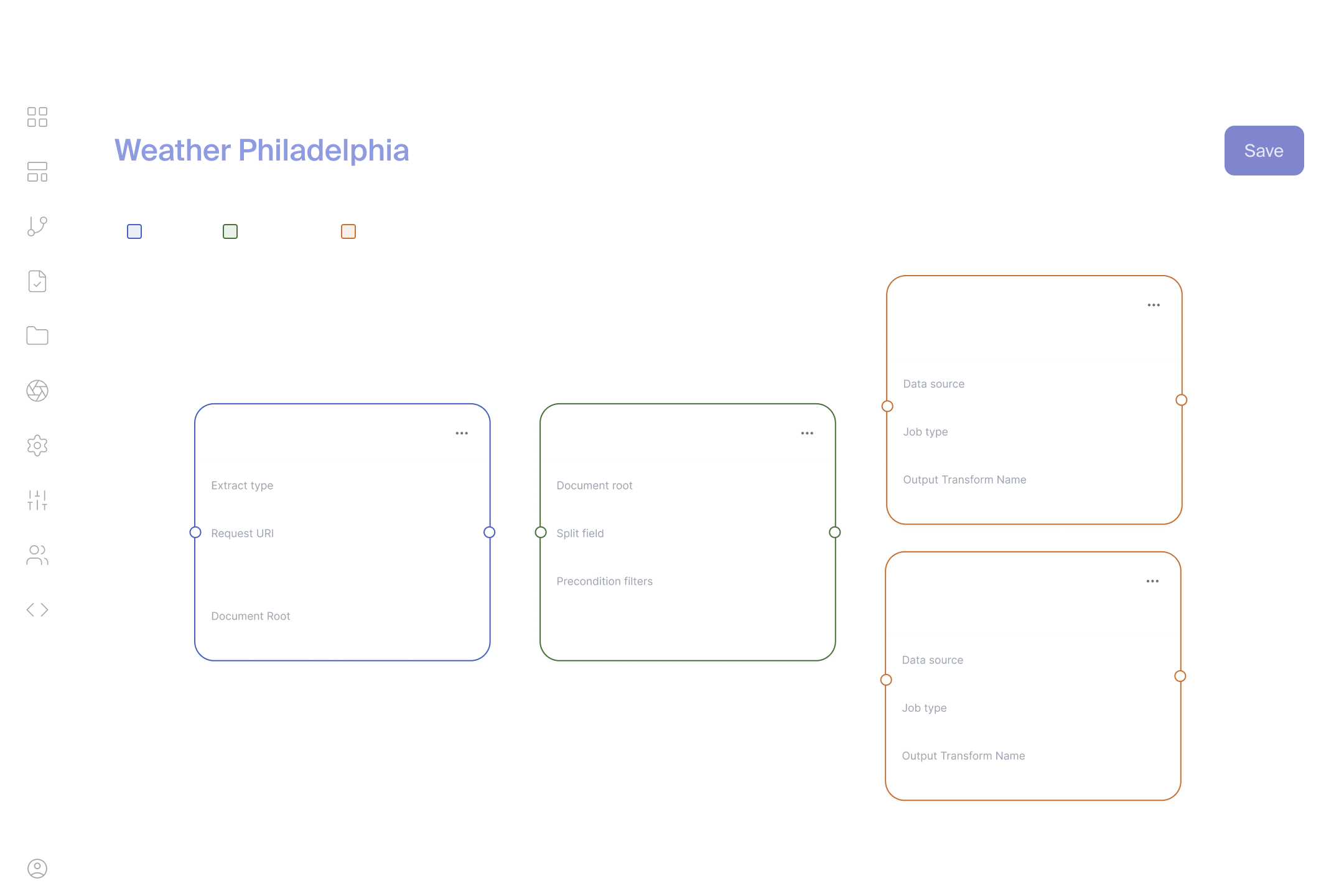
The technical wedge is a shift from connectors to workflows. A connector is a point-to-point link: System A talks to System B, and someone maintains that link forever. Add a third system and you have three links; a fourth and you have six. The math is unkind, and every one of those links is a small liability that breaks when a vendor changes a field name. EASL replaces the web of links with composable workflows - extract, transform, load - that you assemble, observe, and version like software.
Connector spaghetti vs. workflow-driven
Point-to-point connectors
- Links multiply as systems grow
- Breaks silently on schema changes
- Little to no audit trail
- Billed per row - cost scales with success
EASL workflow-driven
- Reusable extract / transform / load steps
- Adapts when schemas shift
- Trace ID and log on every job
- Flat, predictable pricing
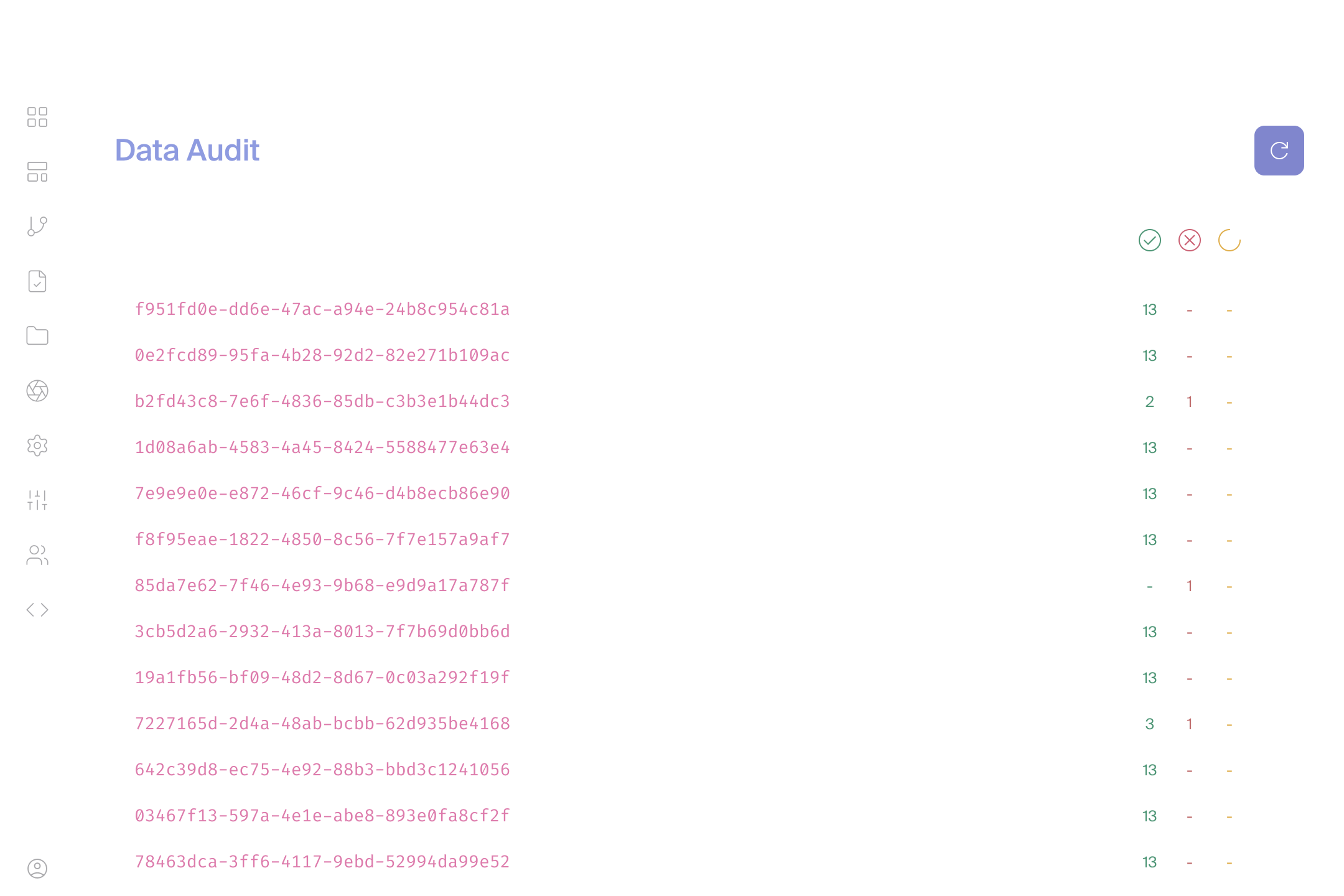
The observability piece is where EASL gets specific. Every job carries a UUID trace ID, with a start time, end time, elapsed time, and a success or failure state. Open the audit view and a reconciliation run reads less like a black box and more like a package tracker: you can see which records landed, which are still in progress, and which failed - down to the second. For a bank being asked by a regulator to prove where a number came from, that log is the product.
Who buys it04Banks, AI teams, and the modernizers
EASL points its platform at four rooms. The first is financial services, where the daily work is reconciling ACH, cards, wires and FedNow across providers, normalizing market data feeds, and surviving core system migrations without losing the audit trail. A regional bank in EASL's case studies modernized its core data infrastructure in about 40 days, the company says, while keeping full traceability throughout the switch.
The second room is AI and machine learning, and this is the timely one. The industry narrative fixates on models and GPUs, but teams building AI keep hitting the same wall earlier in the process: getting clean, multi-source training and production data to the model at all. EASL cites an AI venture that reported a 90 percent timeline reduction and roughly $750,000 in avoided capital expense after handing the data-movement problem to the platform. The third and fourth rooms - enterprise IT modernizing legacy systems, and professional-services teams doing analytics - round out the map.
Selected case-study outcomes (company-reported)
Figures are self-reported by EASL and approximate.
One line from the marketplace case study is the kind of number sales teams frame on a wall: a three-year integration backlog, cleared in three months, with about $300,000 in annual savings. Whether every prospect sees results that clean is unknowable from the outside - these are the company's own accounts - but the pattern across them is consistent enough to describe the pitch. Slow, brittle, expensive data plumbing becomes faster, observable, and flat-priced.
The landscape05Where a 13-person team fits
EASL is not alone in the pipe business. Above it sit the incumbents - Informatica, MuleSoft, Software AG - and the modern data-integration wave of Fivetran, Airbyte, Hightouch and Domo. Against that field, a 13-person company with roughly $2.08 million raised is not trying to win on breadth of connectors or brand. Its edges are narrower and sharper: reconciliation and audit trails built for regulated buyers, deployment behind a firewall for customers who will not let data leave the building, and pricing that does not spike when volume does.
The funding tells you what kind of company this is. Two rounds, the most recent a $1,725,000 debt financing closed in July 2024, and a headcount you could fit around two dinner tables. This is not a blitzscaling story; it is a focused-wedge story. EASL is betting that in a market obsessed with the AI layer, there is durable demand for the unglamorous layer underneath - and that regulated, cost-sensitive buyers will pay for pipes they can actually see through.
"You don't need more data engineers. You need DataDevOps."
EASL Tech company essayWhat can a reader steal from all this, even without buying anything? The framing, mostly. Treat your pipelines like software: give every job a trace ID so failures are searchable, not mysterious. Prefer reusable workflows over one-off connectors so your integration cost stops scaling with your system count. And watch how a vendor prices - if the meter runs faster the more value you get, you and the vendor are not on the same side. Where it would not work: a two-person startup with one database and one API does not have a data-movement problem yet, and bolting on this kind of infrastructure early is solving a pain you have not earned. EASL's world begins where the systems multiply and the audit questions start.