A conveyor belt has no interest in artificial intelligence. It needs the parcels to keep moving. At a logistics centre near East Midlands Airport, the automated picking area handled roughly 90 packages a minute, around the clock. A jam could become a backlog; a backlog could become a contractual problem. Hanwha’s cameras gave the engineering team a way to see what was happening and review it afterwards.
The installation’s most revealing episode was wonderfully mundane. Vibrations from building work knocked cameras out of focus. They were refocused remotely, without dispatching an engineer. That small repair captures the appeal of Hanwha Vision Europe better than a wall of product specifications: useful pictures, recoverable evidence and equipment that somebody can keep working.
The Chertsey-based business supplies professional surveillance hardware and software across Europe. Its customers include retailers, logistics operators and infrastructure owners. The wider Hanwha Vision company develops camera technology; distributors and integrators turn it into working installations. The current ambition is to make those installations useful for operational decisions as well as security.
Follow the parcel, then follow the problem
For the East Midlands project, integrator Zicam combined QND-8080R dome cameras, Wisenet WAVE video management software and RAID storage. The system supported recording at 20 frames a second, allowing detailed review of conveyor faults. Previous successful projects helped win the customer’s confidence. The lesson is specific: choose equipment around the event people need to investigate, then make the whole recording chain support that task.
That is a useful way to understand the company’s market. A professional surveillance installation has several jobs: see the scene, store the evidence, find the relevant moment and help someone respond. Each handoff creates a buying decision. A camera can have excellent specifications while leaving an operator with an awkward search process.
Hanwha sells across that chain. Its range includes fixed and moving cameras, network recorders, video management software, audio devices and analytics. Its expertise spans optics, image processing and embedded computing. These are practical ingredients: a poorly exposed picture is a poor starting point for either a human investigation or an automated detection.
The checkout gets a second pair of eyes
At Antalya Airport, ATÜ Duty Free’s installation demonstrates the jump from security to store operations. The specified camera mix was 1,200 QNV-C6083R domes and 250 QNO-C6083R bullet cameras. Integrator Arte Teknoloji connected Hanwha hardware with Genetec video management software. The deployment addressed theft and security breaches alongside customer flow and checkout congestion.
Two camera formats. One retail operation to understand.
Domes covered store interiors, corridors and warehouses; bullet cameras watched exterior areas and entrances. Analytics supported queue management and measurements of passenger density. In the company’s account, those observations helped inform staff distribution and store operations. The attractive proposition is straightforward: equipment bought to protect stock can also help managers understand where people accumulate.
The distinction matters when evaluating the result. A camera count describes the installation; it does not measure a sales increase. The operational value comes from what staff do with the information. Seeing a growing checkout queue becomes useful when somebody can open another till or move an employee to help.
Two processors behind the lens
The technological centre of Hanwha’s recent push is Wisenet 9, its in-house system on chip introduced in April 2025. It uses two neural processing units: one for improving the image, another for detection and analytics. That division gives each job dedicated resources. It also explains why this business talks about semiconductor design as readily as security cameras.
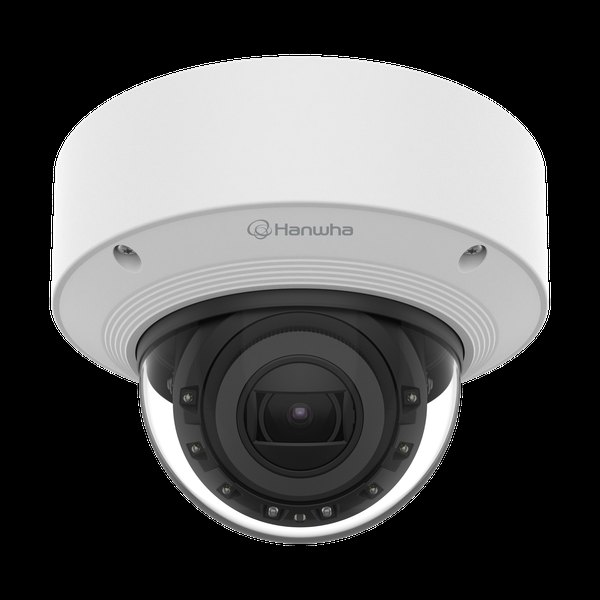
Hanwha’s launch explanation says development involved almost four years of research and testing. Image enhancement and noise reduction sit alongside object classification, with applications extending into retail, factories and traffic. The engineering logic is persuasive: improving the picture and interpreting it are related tasks, but they compete for computing resources if the design forces them to.
AI at the edge means processing happens in the camera. It can distribute analytical work across an installation and reduce dependence on central processing. What it delivers still depends on the model and configuration. A chip announcement is the beginning of a specification conversation, especially when an existing recorder or software platform must consume the results.
The recorder moves upstairs
Hanwha’s SolidEDGE takes the idea of a self-contained camera further. It puts a Wisenet WAVE server and a solid-state drive inside the camera, with 1TB and 2TB options. The host can record its own stream and up to five additional cameras, subject to the system’s limits. For a small site, that changes the equipment list considerably.
“Serverless” is the product’s shorthand for removing a separate recording server. The computing and storage still exist, now inside the camera. That arrangement can simplify a small installation, while concentrating responsibility in the host device. Retention requirements, recording throughput and the consequences of losing that device deserve attention before choosing the architecture.
The recording licence detail is easy to overlook: SolidEDGE includes one WAVE channel licence; recording additional cameras requires additional licences. The purchase therefore has several cost components - hardware, recording rights, installation, storage planning and support. A useful quote should identify them separately. A lower box count does not, by itself, establish a lower lifetime bill.
Thirty-five sites, one control-room problem
Finland’s Leppäkoski installation provides another architectural answer. The energy business needed to protect 35 sites, many in rural locations, ranging from substations to thermal plants. Installer Pirkan Verkkopalvelu Oy designed a system using 60 cameras, local recording devices and Wisenet WAVE, with central monitoring. The design responded to distance and dispersed equipment.
The reported reasons for choosing Hanwha included hardware robustness, cybersecurity and the capabilities of WAVE. The case also describes plans to add radiometric thermal cameras to monitor combustible-material storage. That was a future extension, distinct from the installed system. It illustrates why a buyer may want room to add another kind of sensor without replacing the operator’s entire workspace.
For an organisation with scattered properties, the useful question is how the sites behave together. Who can see them? Where does evidence remain? How are devices maintained? Those questions connect the camera supplier to the IT team and the control room. Geography can make remote administration a central requirement even when each location has few cameras.
Keep the software people already know
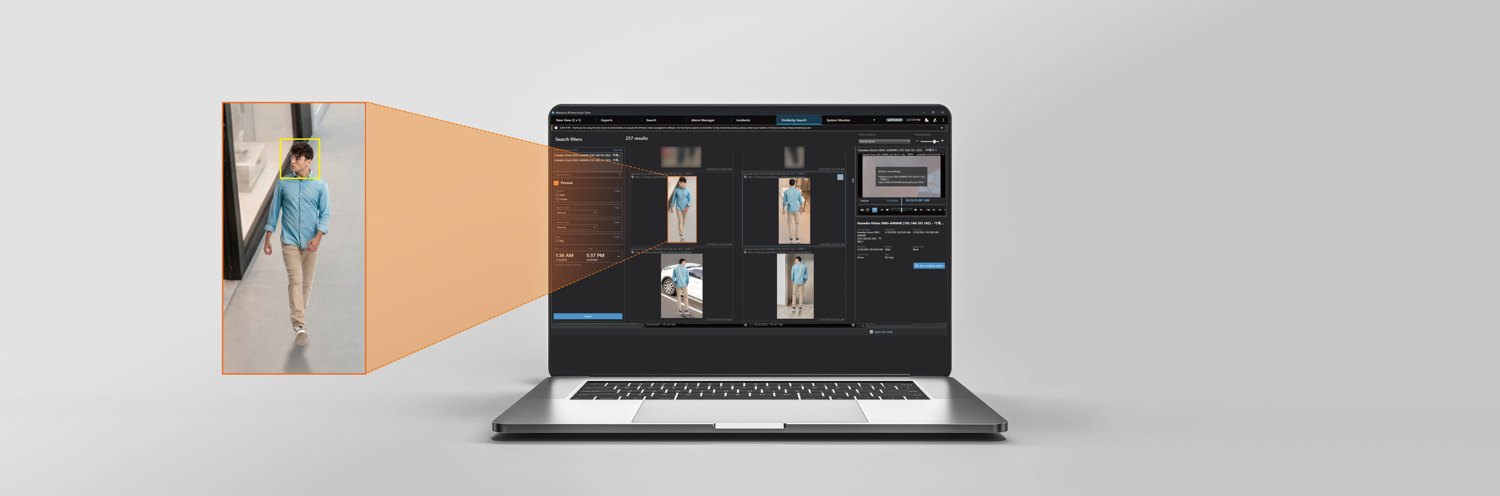
Hanwha’s July 2026 Milestone XProtect plug-in update is a telling move. It brings Similarity Search to supported Wisenet 9 cameras, helping operators find visually similar people or vehicles in recorded footage. Camera analytics and controls appear within XProtect. The benefit is access to additional functions from an interface the customer already uses.
“Many of our customers already run XProtect alongside Hanwha’s AI cameras.”
Thomas Bille · Milestone Systems · July 2026
There is an explicit boundary: the new Similarity Search depends on Wisenet 9-powered cameras. Existing Hanwha branding alone does not establish support. For a buyer, the practical move is to check the exact camera, software version and supported functions together. “Integrated” should lead to a demonstrated workflow, not end the discussion.
Meanwhile, the March 2026 BLAZE VMS launch expands Hanwha’s own software offering. BLAZE combines local systems with cloud federation and centralised user management. Its AI appliances add natural-language search. The company is pursuing both paths: a more complete Hanwha system and closer links to third-party software. Customers’ existing investments help explain the appeal of that flexibility.
There is history beneath the new name
The European company’s legal record begins on December 20, 2001. It has carried Samsung Techwin and Samsung Opto-Electronics names, became Hanwha Techwin Europe in 2016, and adopted Hanwha Vision Europe in April 2023. Those dates distinguish this subsidiary from the older industrial history behind the global brand. Today’s camera business has inherited substantial engineering experience.
The European legal entity is registered as a wholesaler of electronic and telecommunications equipment. Its commercial role sits within a wider business that develops and manufactures products. Equipment sales and software licences reach customers through the partner channel; installation and integration expertise help turn that catalogue into a usable system.
Its corporate vision centres on using video, AI and cloud technology to produce useful operational insights. Its stated values are Challenge, Dedication and Integrity. Those words describe the company’s intended culture. The more tangible expression is a business that must coordinate product development, distributor knowledge and installation expertise to deliver a functioning system at somebody else’s premises.
Hanwha competes in an established professional market. Axis Communications also offers camera-based analytics, and its Camera Station Edge handles monitoring and recording. Edge processing alone therefore offers little basis for declaring a winner. Hanwha’s case rests on the particular combination of its hardware, software, integrations and support that fits a customer’s project.
The next subject in the frame: a boat
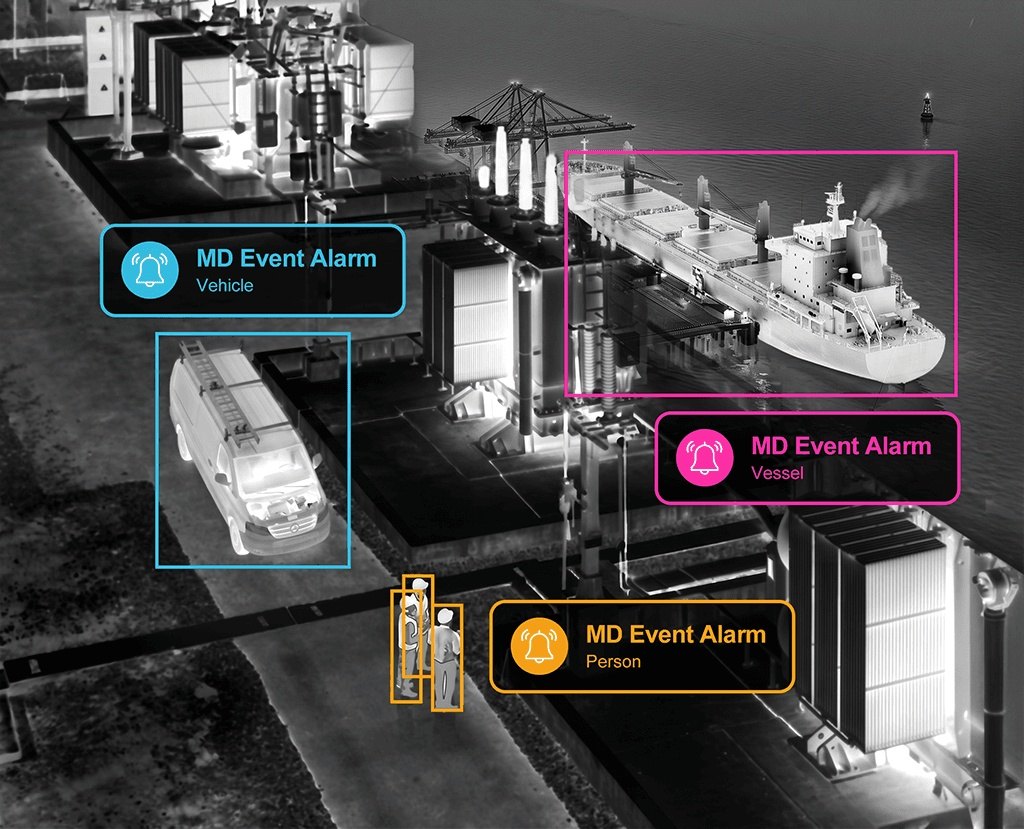
The August 2026 VGA AI thermal-camera announcement extends that range into vessel detection alongside people and vehicles. Four lens choices allow different fields of view and detection requirements. Thermal imaging gives operators another way to observe a scene when visible-light conditions are difficult, broadening the potential applications around ports and perimeters.
The practical lesson across these products is to begin with the decision that needs improving. Find a conveyor fault. Investigate an incident. Notice a queue. Check a distant site. Then test the complete sequence, including the person expected to act. Detection without a workable response simply gives a busy team another thing to watch.
Hanwha Vision Europe’s proposition has particular appeal where those details matter: organisations with real premises, existing systems and consequences when something stops working. A camera earns its keep when the picture helps somebody do the next useful thing. Sometimes that means finding the right clip. Sometimes it means bringing a blurry conveyor back into focus.