A tree moves in the wind. A shadow crosses a school entrance. Somewhere, a security system has to decide whether either deserves a person’s attention. That small judgment sits inside a much larger question: what good is seeing everything if you cannot find the thing that matters? Hanwha Vision America builds cameras, but its more interesting business is helping people make that distinction.
- AI cameras classify objects and make recorded video easier to search.
- Customers can combine Hanwha hardware with other security platforms.
- Local recording, cloud video, access control, and analytics serve different jobs.
The company supplies professional video surveillance hardware and software to schools, retailers, banks, hospitals, transport operators, and government organizations. Its range stretches from dome cameras and thermal devices to recorders, network speakers, and cloud services. This is equipment for people managing buildings, campuses, and distributed operations, with installers and technology partners helping assemble the system.
A school hallway is a sorting problem
Consider Oklahoma’s Putnam City School District. In Hanwha’s published customer account, its deployment totals about 1,500 cameras, including panoramic, multi-sensor, fisheye, and pan-tilt-zoom models. The district needed to replace aging equipment and standardize new devices around its existing Genetec security platform. Compatibility was part of the assignment from the start.
A two-lens camera could cover a hallway intersection without a conspicuous cluster of ceiling equipment. AI classification helped distinguish relevant activity from environmental motion. The account describes fewer false alarms, although it supplies no measured reduction. The revealing detail is the purchasing logic: coverage, useful alerts, and integration belonged in the same conversation.
“Response times are faster”
Mark Stout, Putnam City School District chief of police, in Hanwha’s customer account

The thinking moves into the ceiling
Hanwha’s technical bet begins inside the camera. Its Wisenet 9 system on chip, developed in-house, handles image processing and AI. In compatible products, the camera can classify a person or vehicle and attach descriptive information to footage. That metadata gives an operator a way to narrow a search before watching clips.
There is an economic consequence, too. Video consumes bandwidth and storage. Hanwha’s WiseStream compression varies by model; newer AI versions use object information to manage the stream. Its own support guidance warns that setting a bitrate cap too low damages image quality. Saving bytes only helps if the evidence survives the saving.
The expertise behind this approach is unusually physical for an AI story: lenses, manufacturing, image processing, and embedded computing. The parent company’s history dates its surveillance business and American operation to 1990. It adopted the Hanwha Vision name in 2023. The current software push grows from decades of making the device that collects the data.
One camera. Several different bills.
Follow the footage and the product names become easier to understand. Wisenet WAVE manages video, with perpetual recording licenses. OnCloud provides cloud video management with edge recording options. HealthPro monitors equipment condition. SightMind turns camera metadata into statistical reports. OnCAFE adds cloud access control, including management of doors and credentials.
For a buyer, those choices change where money goes. WAVE documentation describes lifetime software upgrades without annual software maintenance fees. Cloud service listings offer fixed terms, including one, three, and five years for several services. Cameras, storage, network capacity, installation, and the chosen software all belong in the budget. There is no useful single price for a campus assembled from these parts.
Compare the same camera count, retention period, and installation scope.
There is another distinction worth making before signing a contract. Monitoring whether a device appears healthy does not establish that its view is useful. Hanwha’s cloud terms explicitly say HealthPro does not replace a human inspection. A functioning connection and a well-designed camera position answer different questions.
The point of differentiation is choice across those layers. A customer can buy Hanwha cameras while retaining another vendor’s management platform, as Putnam did. Axis and i-PRO also compete in professional network cameras. Hanwha’s argument rests on its combination of in-house imaging technology, multiple deployment options, and integrations. A buyer should test the exact combination being proposed.
The revealing detail is a deleted menu
The most candid explanation of SightMind appears in its release notes. In February 2025, version 1.6.0 shifted emphasis toward long-term analysis across locations. Real-time monitoring, the notes said, belonged to the video management system. The Event menu disappeared, along with live-video integrations that no longer served the revised purpose.
That is a concrete product correction. A dashboard for studying trends and a console for responding to an incident ask different things of their users. Hanwha documented the separation; it did not publish the internal debate. The useful lesson for other builders is visible anyway: assign each tool a clear job before adding another dashboard.
Reliability includes less glamorous work. Hanwha maintains a vulnerability response team and publishes a disclosure process, promising an initial response within two business days. For an organization buying hundreds of networked cameras, firmware maintenance and security reporting deserve attention alongside resolution and night vision.
Now the camera can answer back
A September 2026 announcement brings the strategy into one object. The SPS-A8016 combines a 5-megapixel AI camera, a 90-decibel speaker, microphones, and a colored LED ring. An operator can see an event, speak to someone, and trigger a visible notification through the same indoor device. Built-in analytics include people counting and queue management.
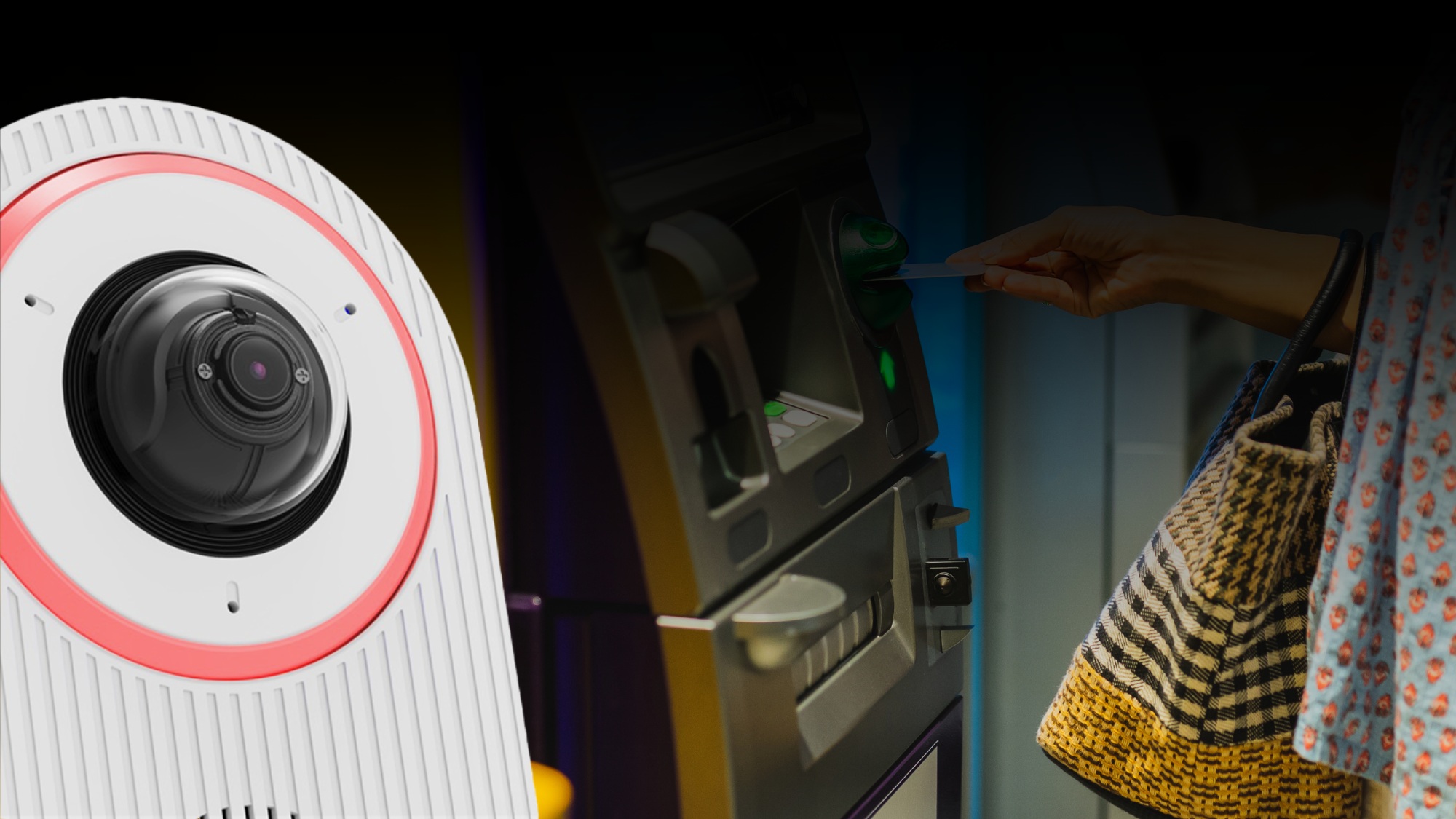
The practical approach to copying this system is to start with an event: an unauthorized entry, a crowded queue, a missing recording. Work backward to placement, compatible analytics, retention, and the person responsible for responding. Hanwha’s hardware and software offer the components. Their usefulness depends on the design around them.
For a school or store, a sensible evaluation could begin with a single representative location. Ask an installer to demonstrate the actual search, show the recorded image under difficult lighting, and explain who owns updates. Compare the result with the workflow already in place. A long feature list becomes more useful when someone has to operate it. That demonstration should include the people who will use it.
Cloud access needs connectivity. Analytics need a suitable view and supported devices. Compression needs enough detail left for review. A detection still needs someone empowered to act. The interesting question for Hanwha’s customers is wonderfully plain: when the camera notices something, who does what next?