Five security incidents occurred at different White Earth Behavioral Health sites in a single day. In an older arrangement, collecting the recordings would have meant travelling between locations. With OpenEye Web Services, the integrator Per Mar could retrieve the footage remotely and upload clips for review. The camera had always been capable of witnessing an event. The useful change was getting its evidence into someone else’s hands.
- The job: bring commercial cameras, recordings, permissions, and alerts into one manageable system.
- The buyers: organizations with stores, campuses, clinics, branches, and other sites to oversee.
- The appeal: retain compatible cameras, manage sites remotely, and connect footage to business events.
- The new question: can AI flag an ordinary operational problem before someone has to go looking?
White Earth operates 12 locations in Minnesota. Its previous video systems were varied, aging, and individually configured. Security staff needed to be on site to manage them. A pilot helped demonstrate the benefits of remote access and centralized administration, prompting a wider conversion. At one site, a hybrid recorder preserved some analog cameras and avoided new cable runs. The published account says materials and labor savings helped the installation finish under budget.
That is a rather good introduction to OpenEye. The company sells cameras, recorders, and software, but the customer’s problem often lives between those objects: a journey, a password, an export procedure, a device nobody realized had stopped working. Its commercial proposition is to shorten that awkward interval between something happening and someone being able to act.
The cloud has a local address
OpenEye Web Services, usually shortened to OWS, is the organizing layer. Authorized users can view video, search recordings, share clips, manage access, and check system health across locations. Security and loss prevention are obvious uses. IT departments also have reason to care: another store should not require another little kingdom of independently administered users and devices.
The word “cloud” can conceal an architectural choice. OpenEye’s recorder-based deployments retain video locally while using cloud services for management and access. Alarm.com’s acquisition announcement emphasized long-term, high-resolution storage and low bandwidth consumption. A distant administrator gets a common control layer without requiring every recorded frame to be treated as a permanent upload.
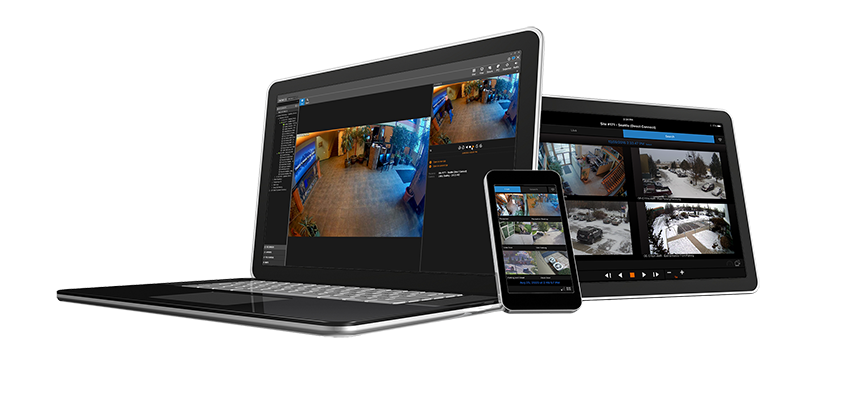
OpenEye also offers cloud cameras with onboard recording and analytics processing. These can work without a separate recorder, or join locations that already have one. Dome, bullet, turret, fisheye, and multisensor cameras fill different viewing needs; recording appliances and servers support other site designs. Command Station supplies a desktop option for operators handling multiple video views.
Hybrid architecture alone does not distinguish OpenEye. Verkada also combines onboard storage with cloud management. OpenEye’s more useful point of difference is the choice it offers around compatible existing equipment, recorders, cloud cameras, and integrations. For an enterprise already surrounded by cameras, the ability to preserve working assets can matter more than the elegance of an entirely new installation.
The grocery chain that helped write the software
Consider the unnamed U.S. grocery chain in OpenEye’s Select Systems case study. New stores needed an IP-camera solution. Meanwhile, roughly 100 existing stores still used analog systems. The transition started with modernization and grew into a deployment spanning more than 140 locations and over 15,000 cameras.
The grocery customer helped shape the product. OpenEye developed features in response to its requests, including changes to Command Station and a revamped thumbnail report. The account describes more than 3,000 Command Station users and participation beyond security: operations and marketing also used the platform. At that scale, the design of a report or a permission setting becomes consequential.
“Every decision is a phone call away without visiting individual stores.”Levon Postachian, Select Systems Technology
A thumbnail report sounds modest beside an AI demonstration. Yet a set of images taken at chosen times can let someone check important areas without opening every feed. The lesson travels well: ask what decision the employee needs to make, then make the evidence convenient to inspect. A larger wall of video is not automatically a better answer.
A camera with a second job
At Eagle Group, a manufacturer of commercial foodservice equipment, the question was whether products left a 14-acre facility undamaged. OpenEye tied barcode data to security video, making packaging and shipping easier to investigate. Existing cameras remained useful. Footage could help establish the condition of equipment rather than simply document who passed through a doorway.
Retail brings another data stream: the till. POS Connect links sales transactions with associated video, helping investigators review exceptions in context. Integrations can also connect alarm, access-control, and other business-system events to footage. OpenEye provides technology partners with APIs, example applications, and development resources; the practical ambition is to make one system’s event intelligible inside another.
Bargain Hunt illustrates the management side of this problem. Growth from 30 stores to more than 80, plus distribution centers, brought a collection of legacy systems requiring specialized training. It chose Alarm.com for intrusion and access control and OWS for commercial video. A central portal helped standardize the work of monitoring theft and safety as the business expanded.
These examples locate OpenEye in the market. It serves commercial organizations and the security partners who install and maintain their systems. Retailers, schools, financial institutions, health facilities, and manufacturers have different risks, but many share the same administrative inconvenience: several places to protect and too few people to sit beside every recorder.
A student, $5,000, and a very practical ambition
Rick Sheppard was a junior at Gonzaga University when he started OpenEye in 1999 with $5,000. Its first digital video recorder appeared at ISC East in 2001. Early recruitment meant persuading capable fellow students to give the new business a chance. The origin has the familiar youthful ingredients; the ensuing work was the decidedly less romantic business of making surveillance equipment useful.
In October 2019, Alarm.com acquired 85% of OpenEye. SEC purchase accounting records total consideration of about $67 million for that stake. The announcement preserved the OpenEye brand, existing management, and commitment to an open platform. In 2023, Alarm.com added Vintra assets and expertise to accelerate analytics for both platforms.
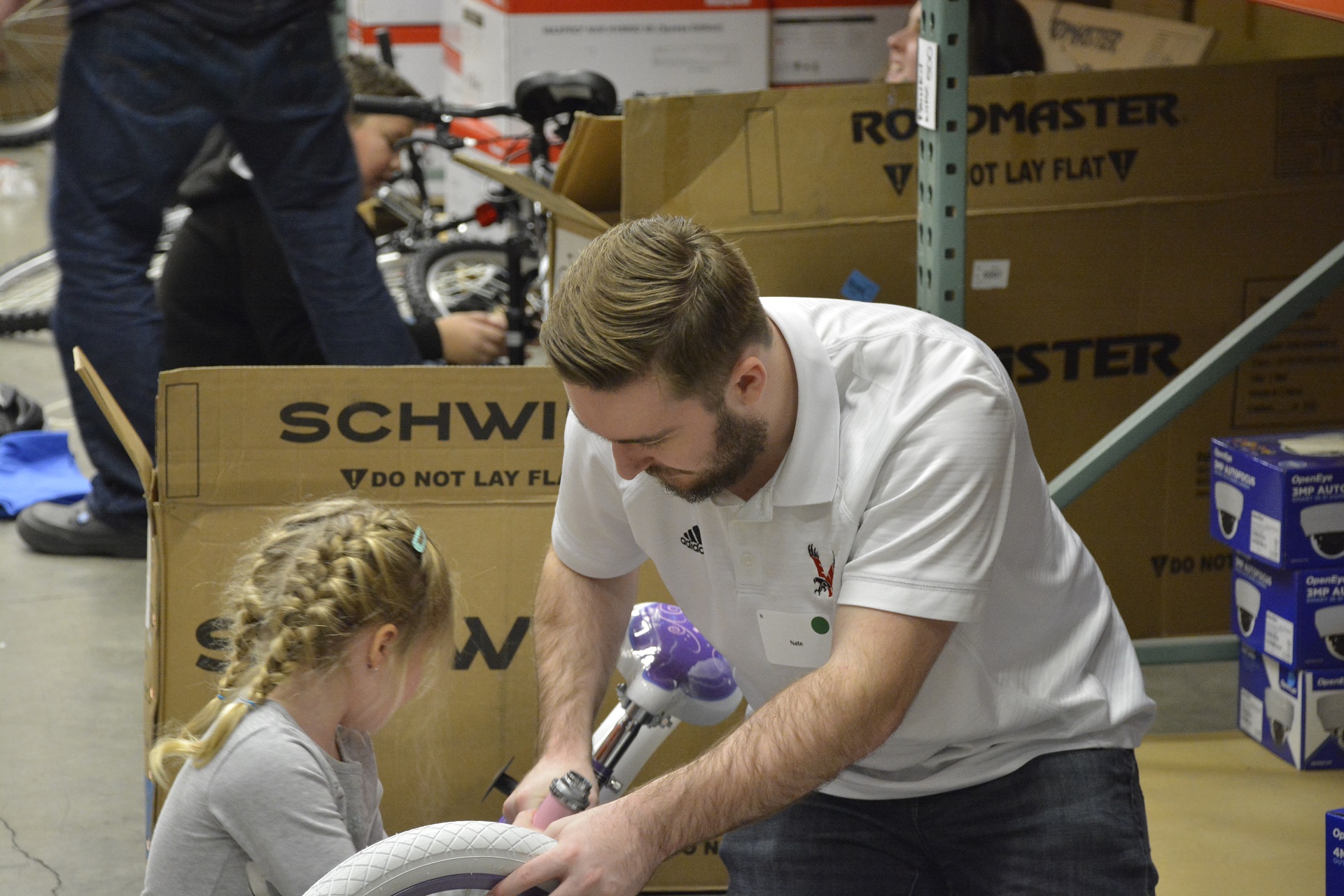
OpenEye’s published values are unusually explicit about the everyday work: simple products, customer service, continuing education, and promotion from within. Its support philosophy emphasizes solving the customer’s problem and backward compatibility. Those are company commitments rather than an independent verdict on every service call. They do, however, fit the repeated customer theme of adaptation instead of wholesale replacement.
Now ask whether the floor mats are in place
OpenEye’s 2026 demonstrations added AI Visual Search and AI Visual Check to this practical vocabulary. Search lets users describe relevant footage in natural language. Check evaluates a camera snapshot against a prompt: is the shelf stocked, is the walkway blocked, are the floor mats where they belong? It can run on a schedule and alert staff when a condition needs attention.
The smallness of these questions is appealing. A floor mat will never deliver a stirring keynote, but someone has to check it. Giving a camera a defined operational question could spare repetitive review. OpenEye’s knowledge base identifies AI Visual Check as beta and requiring an add-on license. Usage credits vary with camera count, frequency, and image complexity; higher image-quality settings and reference images can increase consumption.
There is a crucial limit. Visual Check analyzes a single snapshot, without temporal video analysis. A blocked view can make a result indeterminate, and AI results are not guaranteed. A scheduled image also cannot establish everything that happened between checks. The useful implementation starts with a visible condition, tests the actual view, and gives a person responsibility for the alert.
Buy the workflow, then count the cameras
OpenEye earns money from hardware and recurring software subscriptions sold through partners. Its licensing comparison offers Standard, Plus, and AI Pro options, with additional services affecting scope. A sensible budget includes installation, retention, compatible equipment, analytics, and support. The buyer should obtain a quote for the actual sites and intended work.
The customer stories suggest a repeatable evaluation. Pilot one location. Retrieve a real incident. Check who can view it, how quickly a clip can be shared, and whether a failed camera produces a useful warning. Estimate recurring AI usage at the intended cadence. Compare the time spent on those tasks with the current arrangement.
This approach suits organizations whose friction comes from dispersed sites and disconnected tools. A site with incompatible cameras, inadequate connectivity, or an AI task that depends on unseen action needs a different design or a narrower expectation. OpenEye’s most persuasive promise remains wonderfully plain: the recording should help the person who needs it do the next piece of work.