video-analytics
(28)
The Dashcam That Wants to Give a City Eyes
NAYAN’s cameras ride buses, police vehicles and commercial fleets, turning ordinary journeys into a live index of potholes, violations and risky driving. The clever part is not the lens - it is the workflow that turns street footage into evidence someone can act on.
Hanwha Vision Europe wants your cameras to earn their keep
A warehouse conveyor, an airport checkout and a Finnish substation explain Hanwha Vision Europe’s bet: cameras become more useful when they help people act on what they see.

Gorilla Technology’s Next AI Act Comes With a Bigger Bill
Gorilla made its name teaching cameras to spot trouble. Its next act is financing and deploying AI compute across Asia - a bigger business with a much bigger bill.
EPIC iO Bet the Camera Was Never the Point
The Fort Mill company is stitching cameras, sensors and wireless links into one operating layer for remote sites - a useful idea whose economics depend less on magical AI than on good placement, clean signals and humans who still make the call.

Adit Chhabra Wants the Camera You Already Own to Start Taking Notes
The Wobot AI co-founder spent years studying how work gets measured. His answer is disarmingly practical: keep the cameras, teach the software what matters, and turn hours of ignored footage into a useful prompt.

Krishna Khadloya Spent Decades Teaching Cameras to Notice What Matters
Before AI became a boardroom reflex, Krishna Khadloya was building the plumbing beneath it - engineering teams, edge intelligence and systems that turn a camera from a witness into a decision-maker.

The Garage-Built Machine That Reads a Room in Three Hours, Not Three Weeks
Christopher South and Rick Nguyen bet that the focus group was already dead. Their four-person, self-funded company has spent a decade selling Fortune 100 marketers a faster way to find out if their ads actually work.
The Austrians Who Wrote the Rulebook for How the Internet Plays Video
Stefan Lederer and his co-founders helped write MPEG-DASH during their PhDs. Then they built a company on top of it - and won an Emmy for the encoding tech that keeps modern streaming from choking.

Master Works
Master Works is a Riyadh-based Saudi technology company that helps public- and private-sector organizations turn data into assets. Founded in 2010, it delivers data management, business intelligence, artificial intelligence, computer vision, cloud and digital-transformation services alongside home-grown software products such as the P+ project-management platform and the Baseer speech-analytics engine. With around 700 employees and offices across the Gulf, Egypt, Jordan and India, it serves more than 140 clients and is positioned as a national data champion for Saudi Arabia's Vision 2030.
Unleash live
Unleash live is a Sydney-based enterprise computer vision company that turns live video and imagery from drones, CCTV, IP cameras and mobile devices into real-time, actionable insights. Its cloud and edge platform runs a library of AI models to inspect critical infrastructure - power lines, wind turbines, solar farms, rail, roads and industrial sites - detecting faults, corrosion and equipment wear so utilities, transport authorities and resource companies can inspect assets faster and safer. Alongside the core platform it offers Autofly for automated drone and robot inspections and an AI App marketplace for building and deploying custom vision models.

Intellicene
Intellicene is a Melville, New York-based security software company that builds Symphia, a unified, video-centric platform for physical security operations. Spun out of Verint and Cognyte's Situational Intelligence Solutions business and acquired by Canada's Volaris Group in December 2022, the company connects and correlates data from cameras, access control, intrusion detection and other networked devices so security teams can detect threats and respond to mission-critical events in real time. With roughly 25 years of heritage, it serves retail, airports, transportation, healthcare, safe cities, higher education and industrial customers worldwide.

Conviva
Conviva is a Silicon Valley analytics company that measures digital experiences from the consumer's point of view. Founded in 2006 by Carnegie Mellon and UC Berkeley computer scientists, it began by helping streaming brands cut buffering and improve video quality of experience (QoE), then expanded into a real-time Operational Data Platform (ODP) that processes trillions of client-side events daily. Its technology powers experience monitoring for many of the world's largest streaming services and, more recently, has extended into agentic AI performance and consumer-perspective analytics across apps, websites, and AI agents.
IntelliVision
IntelliVision is a San Jose-based developer of AI and deep-learning video and audio analytics software for smart cameras. Founded in 2002, its software runs on the edge, on-server and in the cloud to power face detection and recognition, license plate recognition, object detection and classification, intrusion detection, and driver-assistance (ADAS/DMS) systems. Sold primarily to camera makers (ODMs), chipset vendors, security integrators and OEMs, its analytics have shipped in millions of cameras across smart home, smart city, retail, banking/ATM, transportation and automotive markets. The company was acquired by Nortek Security & Control in 2018 and now operates as part of Nice.

Lumana
Lumana is an enterprise AI video security company that turns ordinary IP cameras into real-time monitoring, detection and response systems. Founded in 2021 by former Intel computer-vision leaders and based in Los Gatos, California, Lumana pairs its proprietary VIA-1 vision model with vision language models and agentic AI to run analytics on more than a billion images a day - flagging weapons, fires, falls and unauthorized access, cutting false alerts, and letting security teams search footage across 100+ attributes. The company raised a $40M Series A in 2025, bringing total funding to $64M, and counts McDonald's, Meta, the Minnesota Twins and NYU among its customers.
Invisible AI
Invisible AI builds edge-based computer vision systems for manufacturing floors. Its self-contained camera devices - each pairing an Intel RealSense 3D depth camera with an NVIDIA AI chipset and on-board storage - mount to existing factory infrastructure and turn manual assembly work into structured, cycle-level data without sending video to the cloud. Founded in 2018 by veterans of the autonomous-vehicle world, the company helps automakers and aerospace manufacturers such as Toyota spot cycle-time variation, ergonomic risk, and quality defects in real time. In 2026 it launched what it calls the world's first Vision Execution System, built on NVIDIA Metropolis and Cosmos Reason models, to run AI agents that analyze every production cycle at the edge.

Standard AI
Standard AI is a San Francisco computer-vision company that turns ordinary store cameras into a data layer for physical retail. Founded in 2017 (as Standard Cognition) around cashierless, autonomous checkout, it pivoted to VISION - an AI and edge-computing analytics platform that measures foot traffic, shopper engagement, product interactions, and store operations for retailers and CPG brands. Backed by SoftBank Vision Fund 2, Y Combinator, CRV, and EQT Ventures, it hit a $1B valuation in 2021 and has grown largely through acquisition, most recently buying spatial-intelligence firm Pathr.ai in January 2026.
Superb AI
Superb AI is a computer vision AI company that builds an end-to-end MLOps and DataOps platform, letting teams label, curate, train, and deploy vision models on images, video, and 3D LiDAR data. Founded in 2018 and a Y Combinator alum, it uses AI-assisted automation to shrink the slow, manual work of preparing training data, and serves enterprise customers across autonomous driving, manufacturing, security, and public sector from offices in San Mateo and Seoul.

Monarch
Monarch is a San Francisco based reseller and deployment partner for cloud-managed physical security and connected-operations technology. As an authorized Verkada reseller and Samsara channel partner, it designs and installs AI-powered camera systems, access control, environmental sensors, and fleet dash-cam and GPS telematics for schools, hospitals, warehouses, construction sites, and multi-site enterprises. The pitch is enterprise-grade security without the NVR/DVR complexity - hardware that updates over the air and is managed from a single cloud dashboard.

Hirsch Group (fka Vitaprotech)
Hirsch Group (formerly Vitaprotech Group) is a France-based provider of premium, integrated physical-security systems for sensitive and high-security sites. Built by rolling up specialist companies - perimeter-intrusion pioneer Sorhea, access-control firm TIL Technologies, video-analytics maker Foxstream, UK detection specialist Harper Chalice, and others - it made its biggest leap in 2024 by acquiring the security business of U.S. firm Identiv for about $145 million, which brought the iconic Hirsch access-control brand into the fold. In 2026 the whole group unified under a single name, Hirsch, spanning command-and-control (PSIM), access control, video intelligence, credentials, door readers, and perimeter protection, with roughly $185M in revenue and 700+ employees.

Tryolabs
Tryolabs is a Montevideo-born AI and machine learning consultancy that builds custom data and AI solutions for companies worldwide. Founded in 2009, it pairs deep engineering with applied research across computer vision, NLP, generative AI and MLOps, and is known for open-source tools like Norfair and Luminoth. Its clients range from MercadoLibre and LATAM Airlines to Halliburton, Allianz and UNICEF, spanning retail, insurance, manufacturing, telecom, oil and gas and transportation.

CompScience
CompScience is a San Francisco-based insurtech that runs computer vision and generative AI on a company's existing security cameras to spot more than 50 workplace hazards before they become injuries. It pairs that 'Visual AI' safety analytics with an active commercial workers' compensation insurance product, rewarding employers who act on the data with better insurance economics. The company says its system gives safety leaders roughly 300 times more data than a traditional walkthrough inspection, and it has set a public goal of preventing one million workplace injuries by 2035.
Wobot AI
Wobot AI is a video intelligence company that turns the cameras businesses already own into an operational analyst. Its AI-first SaaS platform plugs into existing CCTV systems to monitor standard-operating-procedure compliance, food safety, drive-thru speed of service, and loss prevention across restaurants, retail, manufacturing, hospitality, and pharma. Founded in 2017 and backed by Sequoia/Surge, Wobot helps multi-location operators cut the cost of manual monitoring and convert raw video feeds into actionable, real-time business insights.
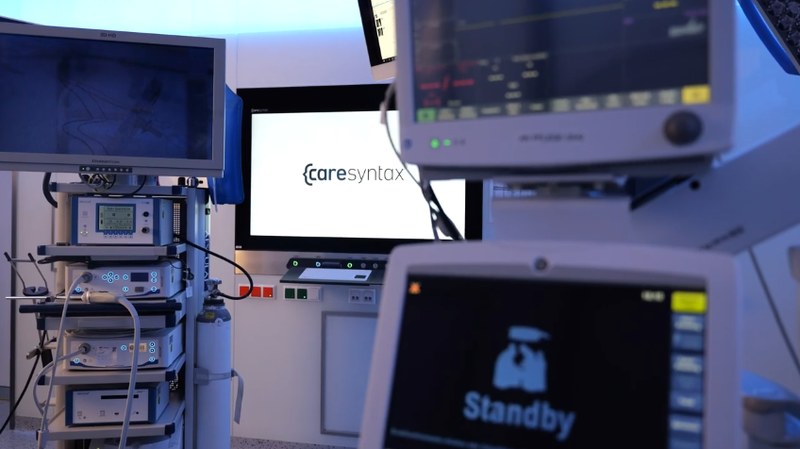
Caresyntax
Caresyntax is an AI-powered surgical intelligence platform that turns the operating room into a connected data environment. Its vendor-neutral software captures video, device, and EMR data across more than 4,000 ORs and supports over two million procedures a year, helping hospitals improve outcomes, reduce costs, and make surgery measurably safer.

Mux
Mux is the video API for developers. The San Francisco company gives engineers a simple set of endpoints for live streaming, on-demand video, encoding, playback, and quality-of-experience analytics, so they can ship video features without rebuilding the streaming stack from scratch.

Jon Dahl
Jon Dahl is the co-founder and CEO of Mux, a developer-first video infrastructure platform that powers video at scale for companies like Robinhood, PBS, and ViacomCBS. A serial founder who sold Zencoder to Brightcove for $30M in 2012 and co-created Video.js — the most widely deployed open-source video player on the web — Dahl has spent two decades turning the complexity of online video into simple, powerful APIs for developers. Mux has raised $173.9M in total funding, achieved unicorn status in 2021, and processes several billion monthly video streams.

vidIQ
vidIQ builds AI-powered software for YouTube creators - analytics, keyword research, thumbnails, scripts, and an AI Coach trained on channel data. Founded in 2011 by veterans of Viddler, the San Francisco company helps more than 20 million creators figure out what to post, why it works, and what to do next.

TwelveLabs
TwelveLabs is a San Francisco-based AI company building video-native multimodal foundation models that give machines the ability to see, hear, and understand video the way humans do. Its flagship models - Marengo for embedding and retrieval and Pegasus for video-to-text generation - power enterprise applications in media, government, sports, and security, enabling precise semantic search, summarization, and insight extraction from video at scale. With 30,000+ developers on its platform and backing from NVIDIA, Databricks, Snowflake, and In-Q-Tel, TwelveLabs is becoming the standard infrastructure layer for video intelligence.

Mathieu Planche
Mathieu Planche is the CEO and Director of R&D at Witbe, a Paris-founded, publicly traded company (Euronext Growth) that builds AI-powered robots and platforms for video Quality of Experience monitoring and automated testing. Since taking the helm in 2019, he has steered Witbe through a rapid AI transformation - from hardware testing appliances to the industry's first agent-native video QA platform - serving 300+ broadcasters, OTT providers, and telecom operators across 120+ countries. A dual-degree engineer from CentraleSupélec and Georgia Tech, Planche rose through every rung of the Witbe ladder: consultant, UI designer, Americas ops manager, Chief Experience Officer, and Chief Product Officer before becoming CEO.