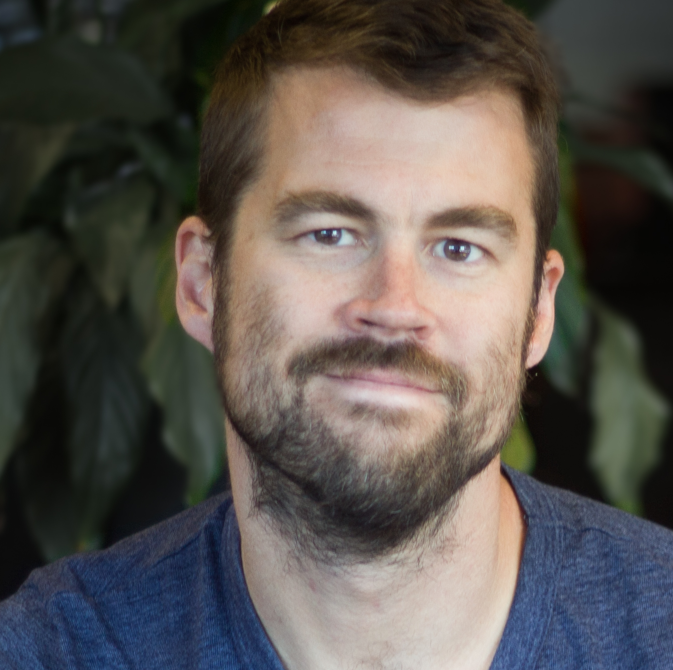
The Story
The man who turned video complexity into a single API call
In 2007, Jon Dahl was handed a problem he had no idea how to solve. A client at his Midwest software shop needed a video encoder built from scratch. He had never worked with video before. He wrapped the open-source FFmpeg tool in a Ruby library, shipped the thing, and discovered something that would consume the next two decades of his life: online video was far harder than it had any right to be.
That friction became a business. Then it became a second business. Then it became a unicorn. That's the short version. The long version involves a philosophy degree, a mid-six-figure domain name purchase, and a family line that runs from the invention of the Bobcat skid-steer loader to a San Francisco video infrastructure company serving several billion streams a month.
Mux - the company Dahl co-founded in 2015 with Steve Heffernan, Matt McClure, and Adam Brown - is what happens when four engineers who've spent careers inside the guts of video decide to stop complaining and just fix it. The pitch is almost absurdly clean: video infrastructure that would have taken an engineering team six months to build, condensed into one API call for developers.
The customers include Robinhood, PBS, ViacomCBS, Equinox Media, and VSCO. The investors include Andreessen Horowitz, Accel, and Coatue. The revenue was growing fast enough that Mux quadrupled it in the twelve months before its $105M Series D in 2021. The valuation crossed a billion dollars that April.
None of that happened in a straight line.
Before Mux there was Zencoder, a cloud video encoding platform Dahl co-founded in 2010 with Heffernan and Brandon Arbini as part of Y Combinator's Winter 2010 batch. It was early. Amazon Web Services was not yet the obvious default for everything. Cloud video encoding was a novel proposition. Zencoder grew fast anyway - early customers included SmugMug, Yammer, Funny or Die, and PBS. Two years in, Brightcove acquired it for $30 million. Dahl says they weren't really looking to sell.
The Brightcove years - Dahl served as VP of Technology from 2012 to 2015 - were an education in how big companies operate, how enterprise sales works, and what gaps in the video ecosystem no one was filling. He came out the other side with unfinished business. The team had always wanted to parallelize video encoding. There were other things they'd never gotten to build. The market had changed but the fundamental problem hadn't: most video publishers were flying blind, with no data on quality of service, rebuffering rates, or viewer experience.
We started Mux with an ambitious goal: let's build the absolute best video technology in the world, and package it as a simple cloud API.
- Jon Dahl, Co-founder & CEO, Mux
Mux launched with data before it launched with video. Mux Data - the analytics product - shipped first, deliberately. The competitive landscape for video encoding was crowded. But video quality analytics? That was wide open. Companies like Discovery, CBS, Reddit, and YouTube signed on. The data showed what Dahl had suspected: most publishers had no visibility into what happened when they pushed a video out the door. Buffering, startup time, quality degradation - all invisible to the people responsible for the viewer experience.
Video didn't stay the only product for long. Mux Video launched after Data had established a foothold. The pitch was the same: don't build your own video infrastructure from scratch. Don't manage CDN contracts, encoding pipelines, and adaptive bitrate logic. Use Mux and get a Netflix-grade viewing experience in an afternoon. The product clicked with developer-first companies who wanted video in their product but had no interest in becoming video engineers.
There's a detail about Dahl's background that makes this founder story harder to fit into the standard template. He studied philosophy as an undergraduate at Wheaton College and went on to pursue a Master of Arts in Theology at Trinity International University. He taught himself to code. The video expertise came from a client project, not a computer science program. His LinkedIn username is still "zencoder" - the name of a company he sold over a decade ago.
The family context adds another layer. Entrepreneurship runs three generations deep in the Dahl line. His great-grandfather E.G. Melroe invented the Bobcat skid-steer loader. His grandfather co-founded that company. His father Howard Dahl founded Amity Technology, an agricultural equipment manufacturer with significant operations in Russia. When asked about his own entrepreneurial instincts, Jon Dahl put it simply: "It was never a conscious decision. It was in my blood."
He moved from Minneapolis to San Francisco in 2011 when Zencoder raised its Series A. He never moved back. He has two kids. His Mux bio notes that he "makes better BBQ than code these days" - which is either deeply modest or a sign that the BBQ is extraordinary, because the code underpins a significant fraction of the video the internet delivers.