On Brand Road in Dublin, Ohio, the interesting thing about a streetlight is that it has learned to pay attention. A pedestrian approaches the crossing. A camera detects the person. An LED array directs light along the crossing path. The pedestrian moves; the illumination follows. For a moment, an ordinary trip across the road acquires the production values of a modest theatrical entrance.
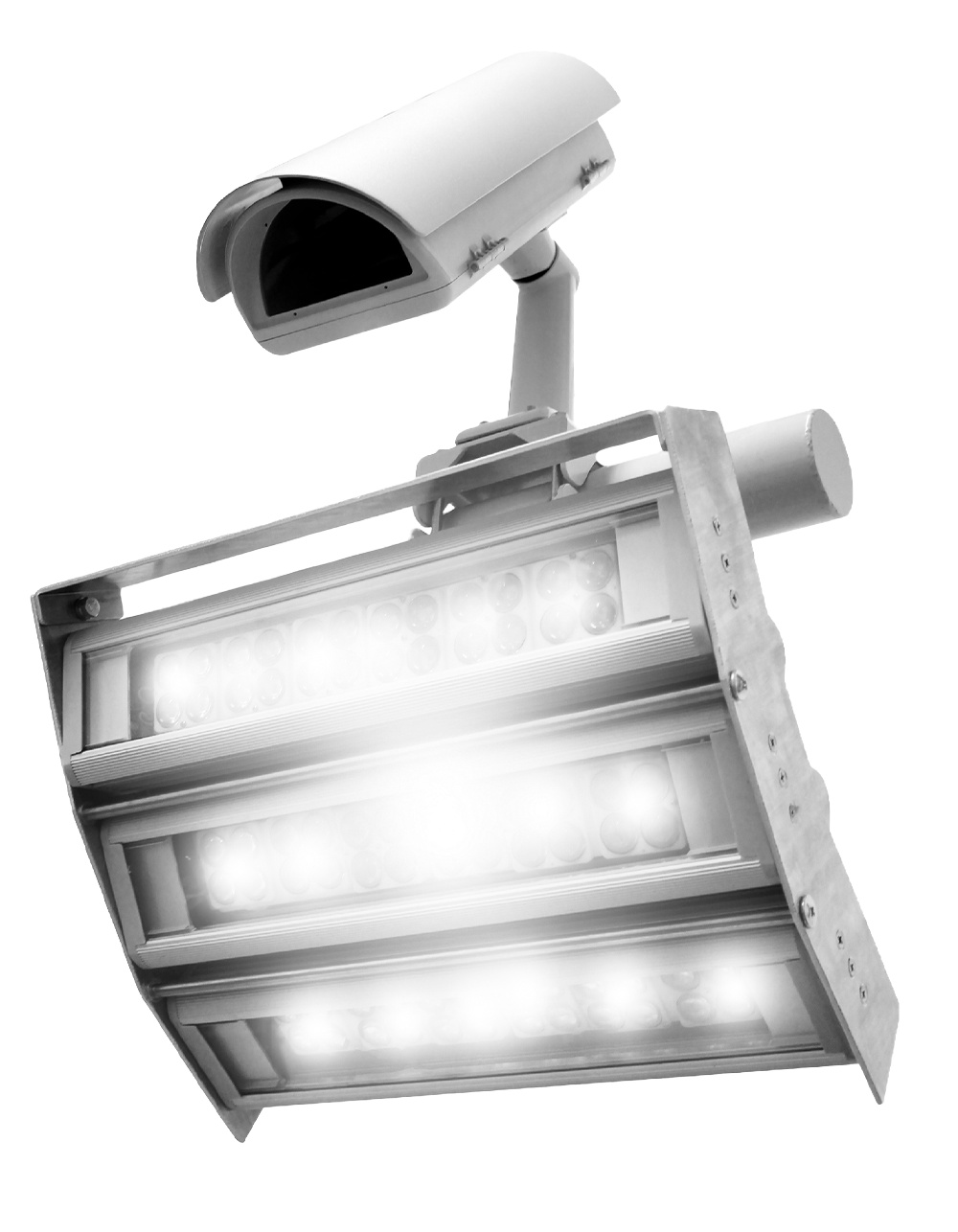
The system is SecurOS Soffit, made by ISS - Intelligent Security Systems. Its purpose is practical: make a person easier for an approaching driver to see. But it also offers a useful way into a company whose catalogue includes facial recognition, license plate readers, workplace analytics and under-vehicle scanners. A catalogue tells you what a business sells. A moving pool of light tells you what its engineers consider a worthwhile problem.
- The business: video management, AI analytics and specialized hardware for public agencies and enterprises.
- The revealing product: Soffit turns pedestrian detection into dynamic crosswalk lighting.
- The buying lesson: define the response you need, then test the whole installation where it will work.
The person the streetlight follows
Dublin’s choice began with residents’ concerns about visibility and vehicle speeds near Coventry Woods Drive. According to the January 2026 deployment announcement, the city reviewed traffic conditions, pedestrian volumes and speed data before selecting Soffit as an additional safety measure. That sequence matters. The city had a crossing problem before it had an AI purchase.
Conventional lighting spreads illumination across an area. Soffit detects people approaching and traversing the crossing, then directs its lighting toward them and their immediate path. Its product specifications also describe static crossing illumination in standby mode. The theatrical flourish has a fairly sober engineering explanation: put the light where the driver needs to look.
“Greater awareness is leading to more drivers yielding to pedestrians”Marc Dilsaver, Dublin transportation program manager
That observation, reported in ISS’s announcement, is encouraging. It is also an observation, rather than a quantified crash study. The distinction becomes particularly useful in Kodiak, Alaska, where the state transportation department installed a pilot on Rezanof Drive near Cope Street in February 2026.
Alaska has a peculiar autumn problem. Daylight recedes rapidly in September and October, while snow has yet to provide the bright background that can make a pedestrian more visible. Darkness arrives before its accidental reflector. The department chose to test dynamic illumination in that interval and said it would monitor equipment durability and gather public feedback.
The state covered installation costs. For a buyer, that is a reminder that the project extends beyond the device: getting equipment onto a pole and keeping it working are part of the purchase. In August, ISS announced another proof of concept at First Street and Ogden Avenue in downtown Las Vegas. These are different streets, climates and traffic patterns. A useful trial has to meet the place.
 01 / SOFFIT
An operating system for the security desk
ISS dates its founding to 1996. Roman Jarkoi, identified as its founder in a company leadership post, is now listed as chief innovation officer. CEO Aluisio Figueiredo has a background in software engineering and computer science. In a 2023 interview, he described the company as privately held, without outside investment, and owned by himself and Jarkoi. The portrait is of a business built around a technical platform and customer projects, rather than a single recent AI invention.
The platform is SecurOS. It brings live and recorded video together with analytics and connections to other security systems. A security operator can use it to monitor cameras, investigate footage and receive events. ISS offers editions for different deployment sizes, alongside MCC for centralized management, Dispatcher for incident workflows, and mobile and browser clients.
The company reports that SecurOS manages more than seven million cameras worldwide. That is an installed-base claim, not a count of cameras watching one screen. The architectural problem is how to connect many feeds to a smaller number of useful decisions. More pictures are easy to accumulate. Attention is expensive.
ISS’s reported global installed base. Scale creates a filtering problem as well as a storage problem.
Consider São Paulo Metrô. In December 2022, ISS described a FaceX deployment covering roughly 1,400 cameras at 18 Line 3 stations and two rail yards. Enterprise and MCC formed part of the expanded security system. The announcement described tools for detecting restricted-area intrusions, tracking objects and counting passenger flows, with events brought to operators in a centralized control environment.
These capabilities do different jobs. FaceX concerns identity. Passenger counting concerns volume. Intrusion detection concerns a boundary. Treating them as one interchangeable thing called “AI” obscures the purchasing decision. A transit authority needs to know which event matters, who receives it and what they are expected to do.
Editorial schematic. Soffit ends in light; a security deployment may end in an alert for human review.
A mirror beneath the truck
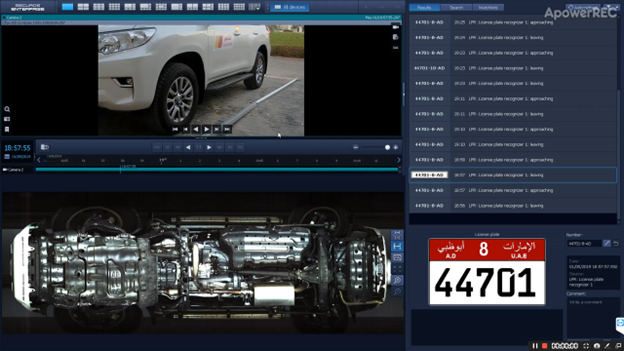
The same reasoning appears at a vehicle checkpoint. An undercarriage is awkward to inspect. The traditional pole-mounted mirror gives an officer a view, but the view depends on the inspection and takes time. ISS’s SecurOS UVSS captures an under-vehicle image and puts it into an operator’s workflow.
The system combines a roadway scanning platform with processing hardware. Software assembles a composite undercarriage image, highlights potential anomalies and can associate the result with a license plate record. The point is an inspectable image and a searchable history, with a person still responsible for judging what requires attention.
ISS’s August 2026 case study describes a Port Authority of New York and New Jersey proof of concept that began in May 2024. More than 2,000 vehicles were scanned over three weeks. The system connected with the authority’s security databases and supplied information about vehicle types, traffic flow and checkpoint passage times. Those details are more revealing than an isolated accuracy percentage: the scanner had to fit an existing operation.
Why a local partner belongs in the picture
ISS occupies the enterprise physical-security market, where software must coexist with cameras, access control, alarms and the people who maintain them. Milestone XProtect and Genetec Security Center are established alternatives for video management and unified security. Open integrations are common territory here. ISS’s distinctive pitch combines its own analytics, custom development and specialized hardware such as Soffit and UVSS.
The company lists integrations with equipment from more than 100 manufacturers. That gives a customer options, but compatibility still belongs on the project checklist. A broad vendor list cannot tell you whether a particular device, software release and required feature work together.
Its commercial model reflects those demands. SecurOS Enterprise documentation describes camera licensing per channel. Analytic capabilities, hardware and integration requirements shape the deployment, while distributors and systems integrators help deliver it. ISS also markets Analytics as a Service. For buyers, the meaningful budget is the scope of a working system: licenses, processing, storage, installation, configuration and ongoing support.
In September 2026, ISS announced a partnership with Polish integrator ZSK for government and critical infrastructure customers. ZSK contributes local systems integration and building automation experience. That relationship is an unglamorous but essential part of the product story. A model can detect an event; somebody has to connect the camera, configure the response and answer when the installation needs attention.
Buy the response, then test it
There is a repeatable lesson in these deployments. Start with an observable problem. Pick the action that would improve it. Then work backward to the camera view, analytics, integrations and maintenance needed to make that action dependable. At Dublin, the action is illumination. At a checkpoint, it is a better-informed inspection. On a metro network, it is an event brought to an operator’s attention.
The conditions matter as much as the demonstration. A lighting system cannot make an unsafe road geometry disappear or guarantee that a speeding driver yields. Camera placement, power and outdoor maintenance affect the installation. Identity recognition brings a different data task from anonymous pedestrian detection. A buyer should evaluate the module being purchased and its actual workflow, rather than borrow confidence from a different application.
Alaska’s commissioner Ryan Anderson put the pilot in proportion: “There’s no easy answer when it comes to pedestrian safety”. That is a sound place to begin. ISS makes an intriguing case for video intelligence when the chain from seeing to doing is short enough to inspect. A person steps into a crossing. A light moves with them. The engineering has a purpose you can watch.