A card reader can survive the company’s enthusiasm for the software behind it. That was the awkward discovery confronting customers of legacy Casi Rusco access-control products. Their buildings still had wires, readers and badges. The products were being retired. A functioning door had acquired an administrative problem: someone would have to decide how much of the installation to throw away.
AMAG Technology saw an opening. In its account of the project, customers brought their frustrations to the company, which developed the Symmetry SR retrofit panel series eight months later. The proposal was refreshingly literal: replace the supported control boards, retain compatible infrastructure, and move the system onto Symmetry. The wall could remain innocent.
- What it sells: access-control hardware and software, with video, visitor and identity management.
- Who buys: organizations with buildings, obligations and complicated access rules - from banks to data centers.
- The useful distinction: retrofit hardware and cross-platform identity tools can preserve existing investments.
- The buying question: what is compatible, what needs replacing, and who will support the result?
The expensive part is already in the wall
An access-control replacement is easy to underestimate from a conference room. The software is visible. The cables are less forthcoming. Readers have been fitted to doors, badges issued to people, and enclosures installed in places nobody wishes to revisit. A procurement decision can become a construction job.
Symmetry SR addresses a particular version of that problem. Its pin-for-pin replacement design supports reuse of existing wiring, enclosures, compatible readers and card populations in supported legacy installations. AMAG reported more than 140,000 readers converted by January 2019. That is a historical company figure, but it makes clear that the retrofit proposition found an audience.
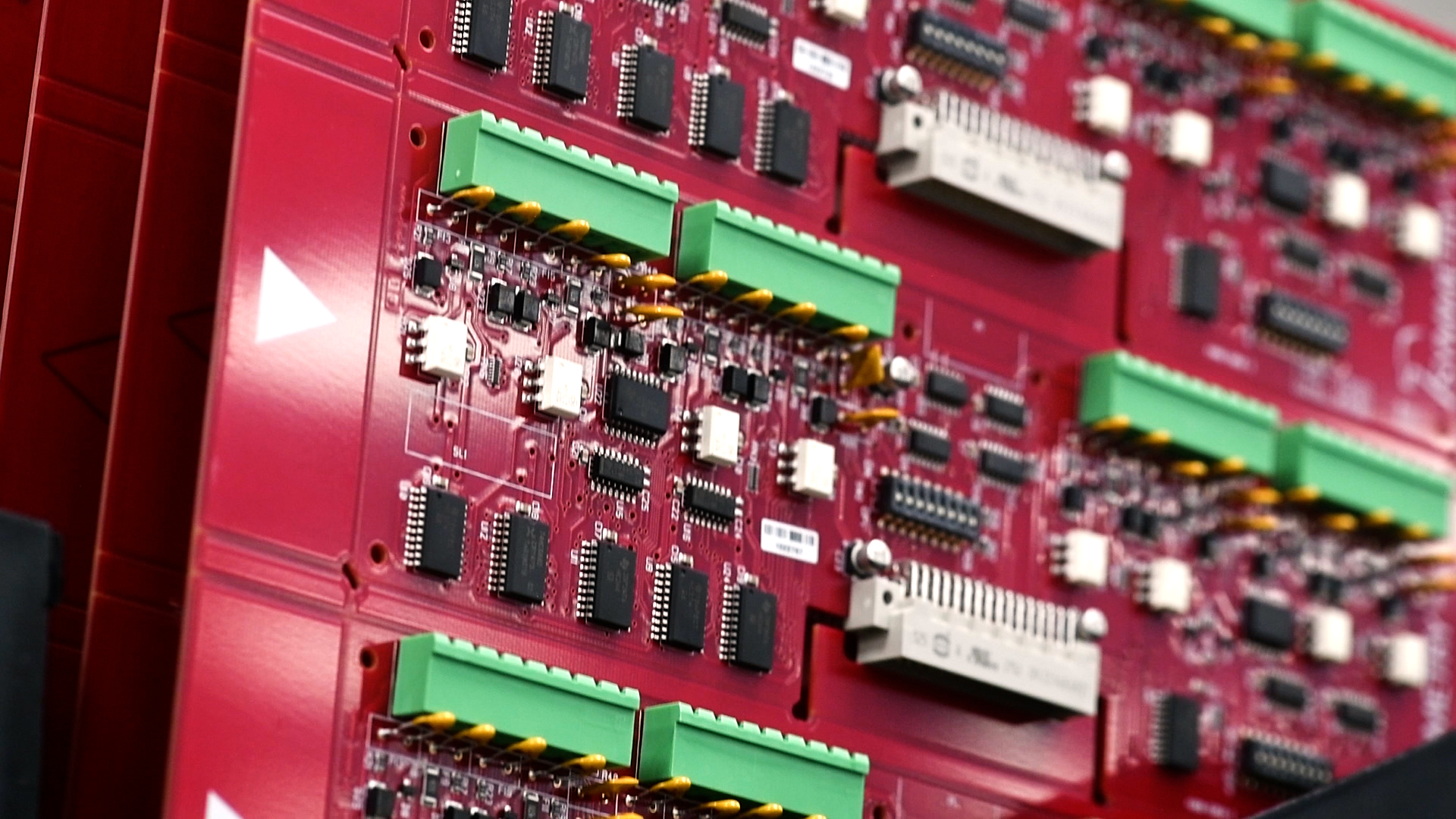
The lesson travels beyond security: before pricing the new equipment, price the removal of the old equipment. Labor, rewiring, replacement readers and operational interruption belong in the calculation. Keeping a component only helps if it remains suitable and supported. A cheap migration that preserves the wrong hardware is merely an expensive decision waiting politely for its turn.
Compare the whole installed job, including labor and downtime. Hardware price alone is an incomplete budget.
A door needs a decision
AMAG’s core business is physical security. Symmetry Access Control administers credentials, controls access and manages alarms; controllers and readers connect that software to actual entrances. Around it sit Symmetry CompleteView for video, GUEST for visitors and CONNECT for identity administration. The commercial attraction is that an event at a door can become something an operator understands and acts upon.
At the Reserve, a former Federal Reserve building in San Francisco, the case study describes access control linked to video, with alerts available at the command post, lobby workstations and officers’ tablets. The property’s stone façade makes new wiring difficult. Architecture has a way of expressing its opinion after the technology budget has been approved.
Northwestern Mutual offers another example. Its building project exposed separate access, alarm, video, intercom and visitor systems. AMAG’s case study says the company used Symmetry to combine security information across two campuses and open its new tower without adding security headcount. The claimed gain came from changing how the operation worked, rather than simply installing more equipment.
The employee with several digital shadows
A company can buy another company in an afternoon’s announcement and spend years discovering what came with it. Among the inheritances are buildings with different access systems. One employee may acquire several credential records, several approval paths and several opportunities for a forgotten permission.
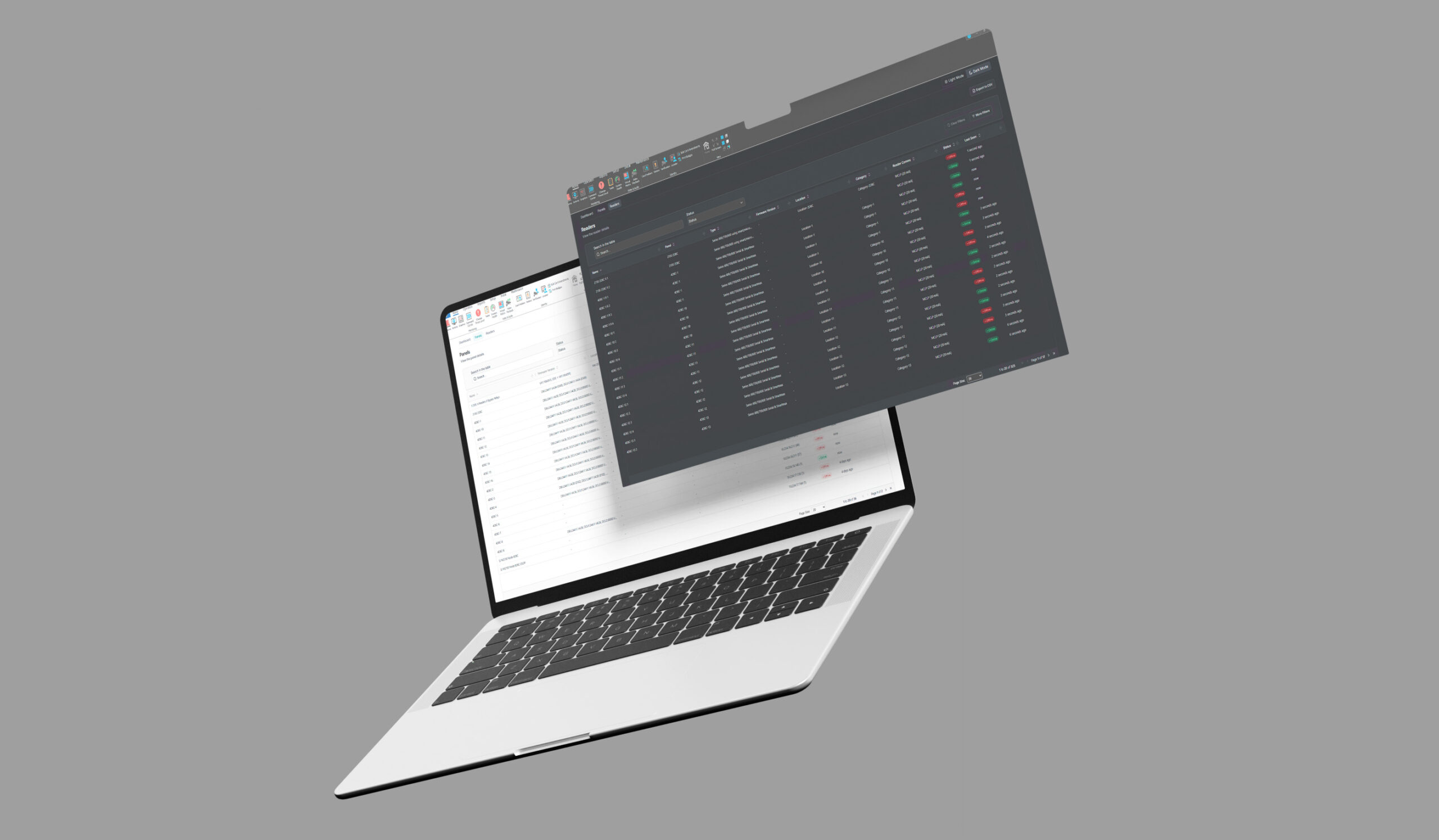
Symmetry CONNECT 2.0, announced in January 2026, addresses that mixed estate through AMAG’s partnership with SwiftConnect. It coordinates identity administration across multiple supported access systems while preserving existing infrastructure. Credentials, roles, approvals, onboarding and offboarding come into a central workflow. A departure should reach the doors as reliably as it reaches payroll.
GUEST handles the visitor’s shorter identity lifecycle: pre-registration, arrival instructions, QR or barcode check-in, host notifications and policy acknowledgments. Its dashboards report activity by hour. The receptionist gets less paper; the security team gets a record that can be examined later. Neither benefit requires the visitor to admire the software.
- 01JoinAssign access by role
- 02ChangeReview permissions
- 03LeaveRemove access, retain the trail
Count before you cut
The data center customer has an especially unforgiving version of the security problem. Physical access, power and cooling all affect whether expensive computing equipment remains useful. In AMAG’s Digital Realty case study, Symmetry receives building-management alarms and controls layered access, while local sites maintain their own servers.
The revealing episode concerns staffing. Digital Realty examined visitor activity rather than treating every hour as equally busy. The case study reports that analysis informed fewer overnight guards and almost $5 million shaved from the company-wide guarding budget. That is a customer-reported result from an older case study, not a price quote or a forecast for the next installation.
“It’s helped us improve our security program globally.”Jack Jones / Digital Realty, in AMAG’s case study
The transferable idea is modest: collect the records, examine the patterns, and test whether staffing matches demand. A building with different visitor traffic, regulatory duties or response requirements may need a different answer. Copying the method is more sensible than copying the saving.
Build some things. Choose the rest.
AMAG’s origins lie in computer storage. Marion W. Haun founded predecessor American Magnetics Corporation in 1971 to develop digital magnetic tape heads. The company later moved toward access control, adopted the AMAG Technology name in 2003 and introduced the Symmetry name in 2006. Its present mix of hardware and software has a long industrial ancestry.
The company manufactures its own access products, arguing that this gives it control over design changes and customer feedback. It also relies on specialists. Suprema became its strategic biometric-reader partner in October 2025. An expanded SwiftConnect agreement in April 2026 put Apple Wallet and Google Wallet credential activation into that partner’s remit. Owning the factory does not oblige you to invent every ingredient.
AMAG fits among enterprise physical-security suppliers such as LenelS2, Genetec and Software House. Its retrofit experience and integrated product family give buyers specific reasons to investigate it. “Open” remains a question to answer component by component: a supported software integration does not make every controller, camera or reader interchangeable.
The quiet work in the latest releases
CompleteView V8, released in June 2026, adds Enhanced Search for finding people and vehicles by attributes across supported cameras. The product documentation specifies ONVIF Profile M compatibility for that search. A Hardware Replacement Wizard handles recording-server replacement. These are useful details for the person who must find footage or restore a system while everyone else waits.
August’s Access Control V11 introduces a unified license file for clients, readers and capabilities, a standard Device Management Dashboard, and a modern API and SDK replacing the legacy XML/Data Connect integration layer. AMAG says it supports the two latest major software versions. Buyers therefore need an upgrade plan as well as an installation plan.
There is also evidence aimed at regulated buyers. AMAG announced NPSA accreditation in December 2025 for Symmetry Enterprise with M2150 OSDP panels and cabinets, including AACS and CAPSS. In September 2026, SIA announced an OSDP training partnership with AMAG. Accreditation has a defined configuration; training helps people deploy the technology. Neither should be treated as a blanket promise about every installation.
Who pays for the next door?
AMAG sells through a B2B model of hardware, licensed software, cloud offerings, support and professional services, with authorized integrators and resellers central to delivery. Its US financial-services program, powered by Vantage Financial, offers leasing alternatives. An integrator’s proposal should account for migration work, system configuration, camera storage and ongoing support alongside the products.
Ownership has changed too. Shore Rock Partners’ majority acquisition from Allied Universal was publicly confirmed in December 2025; Allied retained a minority interest. PNC Erieview announced acquisition-related co-investment in January 2026, and Egis Capital Partners announced growth investment in March. The announcements point to product development and customer relationships as priorities.
For the buyer, the useful conclusion is a set of concrete questions. Which existing components survive? Which identity changes propagate across the estate? What happens when a recorder fails? How are upgrades licensed and supported? AMAG’s story becomes interesting precisely where security stops being a shiny purchase and becomes the daily business of keeping a complicated place working.