eda
(19)
Atrisa
Atrisa (formerly Refortif AI) is a Y Combinator P26 startup building AI agents for analog circuit design. Its agentic workflow lets hardware engineers describe, design, debug and simulate analog circuits in natural language, encoding the 'tribal knowledge' of experienced analog designers that general-purpose LLMs never learned. Founded in 2026 in San Francisco by Sayan Mitra, Atman Kar and Rithik Jain, Atrisa integrates with existing PDKs, design docs and workflows to help engineers reason about topologies, parasitics and layout without leaving a chat-based interface.

Silimate
Silimate is a Mountain View startup building an AI copilot for chip designers. Its AI-native tools find and fix functional bugs and power, performance and area (PPA) issues in digital chip designs, aiming to make hardware development move closer to the speed of software. Founded in 2023 by Ann Wu and Akash Levy, Silimate was the first EDA company Y Combinator backed (S23) and runs on-premise for Fortune 500 enterprises and chip unicorns building GPUs, CPUs and AI accelerators.

Visibl Semiconductors
Visibl Semiconductors (YC W26) is a San Francisco startup building an AI-native coordination layer for chip design. Its software watches specifications, RTL code, CI pipelines and EDA tool outputs for 'drift' - the slow divergence between what a chip was supposed to do and what the design actually does - then opens evidence-backed cases and proposes review-ready fixes that a human must approve before anything ships. Founded by Bryce Neil (CEO) and Jordon Kashanchi (CTO), the company targets verification and methodology owners on teams heading toward integration, design freeze and tapeout, where a single missed misalignment can trigger a $5M-$20M respin.

Diode Computers, Inc.
Diode Computers is a New York-based startup building an AI-powered, code-first platform for designing and manufacturing custom printed circuit boards. Its open-source toolchain - a Rust-based PCB compiler that treats schematics as Python-readable code - lets AI agents and engineers generate, validate, and manufacture boards in days rather than months, with human-in-the-loop verification. Founded in 2024 and backed by a $11.4M Series A led by Andreessen Horowitz, Diode serves hardware teams in aerospace, robotics, and defense.

Dave Kelf
Dave Kelf is the CEO of Breker Verification Systems, a San Jose-based EDA company whose test suite synthesis technology automates verification of large, complex chips including more than half of the world's RISC-V processor core projects. A UK-trained engineer turned marketing and business leader, Kelf spent three decades across Cadence, Synopsys, Co-Design Automation, Novas, and OneSpin, where he helped introduce and grow the SystemVerilog language and the Verdi debug environment. He rose from Breker's chief marketing officer to chief executive in October 2021 and has since guided the company through back-to-back years of 35 percent revenue growth.
Gilad Tal
Gilad Tal is co-founder and CEO of DualBird, a Boston-based deep tech startup rebuilding the foundation of analytics and AI data infrastructure by running silicon acceleration as cloud-native software. A Technion-trained electrical engineer and physicist with 14 years in ASIC and software development, he previously founded and led TerrainEDA, an EDA startup acquired by Synopsys. At DualBird he and his co-founders use rewritable FPGA hardware to plug into Apache Spark and Iceberg environments, claiming up to 100x faster performance and up to 90% lower cost with no changes to existing workflows.
Synopsys, Inc.
Synopsys is an American electronic design automation (EDA) company that builds the software, IP, and simulation tools chipmakers use to design, verify, and manufacture advanced semiconductors. Founded in 1986 around logic-synthesis technology, it is one of three companies that dominate the EDA market and, following its $35 billion acquisition of Ansys in July 2025, has expanded from chip design automation into full silicon-to-systems engineering across electronics, structures, fluids, and optics.
Cadence Design Systems
Cadence Design Systems is a San Jose-based computational software company that builds the electronic design automation (EDA) tools, hardware systems, and semiconductor IP used to design chips, printed circuit boards, and full electromechanical systems. Under its Intelligent System Design strategy, Cadence software sits behind a large share of the world's advanced silicon - powering everything from smartphones and data-center accelerators to cars, aircraft, and, increasingly, AI-driven design automation and drug discovery.

Adnan Hamid
Adnan Hamid is the founder and core-technology inventor of Breker Verification Systems, a San Jose EDA company that pioneered graph-based, specification-driven chip verification and helped birth the industry's Portable Stimulus Standard. A Princeton-trained electrical engineer and computer scientist with an MBA from UT Austin, he earned the nickname 'The Breaker' for a simple reason: he breaks things for a living. After leading AMD's verification team to 100% coverage on an x86-class microprocessor and a stint at Cadence, he founded Breker in 2003 with his wife Maheen. He now serves as Executive President and CTO, holds more than 17 patents, and is regarded as one of the original visionaries behind teaching computers to verify the chips inside nearly every modern device.
Breker Verification Systems
Breker Verification Systems is a Silicon Valley EDA software company that pioneered Test Suite Synthesis - automatically generating multi-threaded, self-checking test cases that verify complex systems-on-chip far faster than hand-written testbenches. Founded in 2003 by Adnan and Maheen Hamid, Breker is a founding contributor to the Accellera Portable Stimulus Standard and a leader in RISC-V and SoC verification, with its SystemVIP libraries deployed across more than 15 commercial RISC-V projects.
JITX
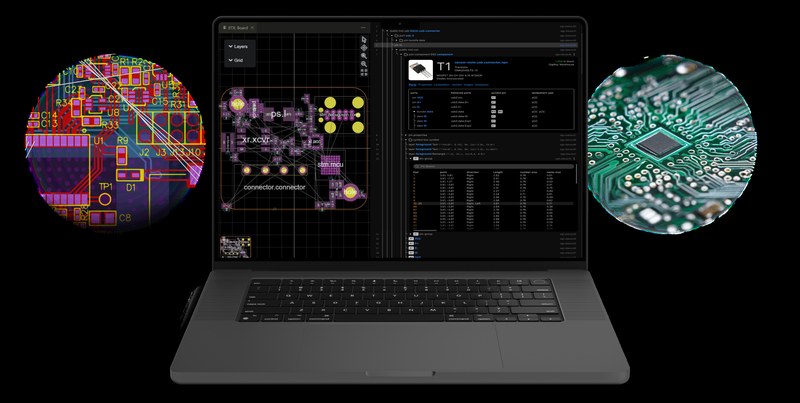
JITX is a Berkeley- and San Jose-based software company building a code-driven, AI-assisted platform for circuit board design. Instead of dragging parts around a canvas by hand, electrical engineers describe what a board must do in code, and JITX selects components, places parts, routes traces, and checks the design against electrical, mechanical, and manufacturing rules. Spun out of UC Berkeley and backed by Y Combinator and Sequoia Capital, the company is used by hardware teams at firms like Honeywell Aerospace, Lockheed Martin, Northrop Grumman, OpenAI, and HP, who report 5-20x productivity gains on complex multi-layer designs.
Quilter
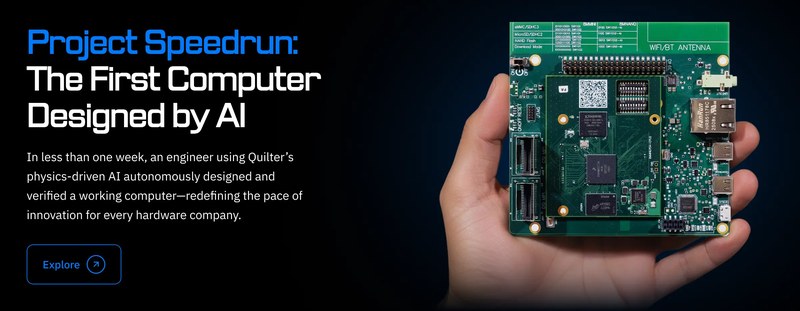
Quilter is a Los Angeles-based company building the first fully autonomous, physics-driven AI for printed circuit board (PCB) layout. Founded in 2019 by former SpaceX avionics engineer Sergiy Nesterenko, Quilter trains reinforcement-learning agents on the laws of physics - not human design patterns - to place components, route traces, and physics-validate complete board designs in hours instead of weeks. The company positions itself as the 'compiler for hardware,' aiming to make manual PCB layout as obsolete as hand-compiling code.
Ricursive Intelligence
Ricursive Intelligence is a Palo Alto frontier AI lab using artificial intelligence to compress the slow, expensive process of semiconductor design. Founded in late 2025 by Anna Goldie and Azalia Mirhoseini, the co-creators of Google's AlphaChip, the company is building an end-to-end AI model that designs, verifies and closes silicon, aiming to create a recursive loop where AI designs better chips and those chips train better AI. It raised $335M across seed and Series A rounds, reaching a $4B valuation roughly two months after launch.

Duncan Haldane
Duncan Haldane is the co-founder and CEO of JITX, a Berkeley-born startup that lets electrical engineers design circuit boards by writing code instead of dragging lines on a screen. Before software, he built robots: at UC Berkeley he created two Guinness World Record machines - the X2-VelociRoACH, the fastest robot relative to its size, and Salto, the most vertically agile jumping robot ever built. He holds a PhD in mechanical engineering from Berkeley and started JITX in 2017 because he wanted a faster way to design the hardware inside his robots.
Synopsys Inc
Synopsys is the quiet giant behind the world's chips. Its electronic design automation (EDA) software, semiconductor IP, and AI-driven design tools are used to design and verify nearly every advanced silicon chip on the planet - from smartphone processors to AI accelerators. Founded in 1986 by Aart de Geus and led today by CEO Sassine Ghazi, the Sunnyvale company turned the impossibly hard task of laying out billions of transistors into a software problem, and now layers AI on top of it. Its 2025 acquisition of simulation leader Ansys pushed it deeper into multiphysics and systems engineering.

Sassine Ghazi
Sassine Ghazi is the president and CEO of Synopsys, the electronic design automation company whose tools underpin most of the world's advanced chips. He took the top job in January 2024 after 26 years inside the company and steered the $35 billion acquisition of Ansys to close in July 2025.
Celera Corporation
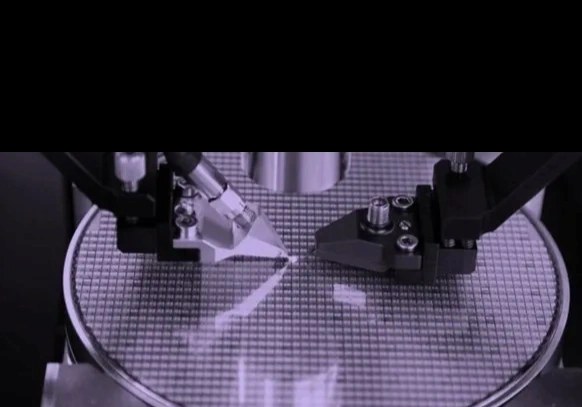
Celera is an Alameda-based analog semiconductor company using AI to automate the historically artisanal craft of analog IC design. Its ChipHUB platform combines proprietary machine-learning agents with decades of analog expertise to deliver custom analog and mixed-signal chips up to 10x faster than legacy vendors. In March 2025, Celera became the first company to sample an analog IC entirely designed by autonomous software.
Flux
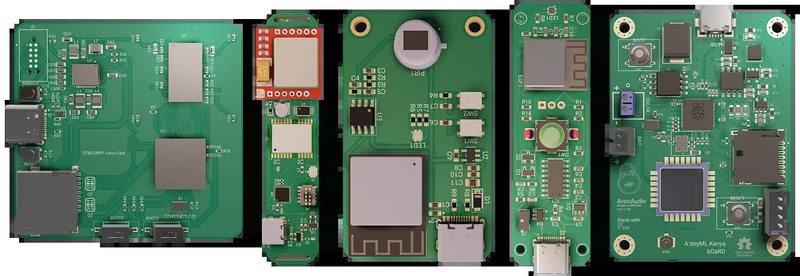
Flux is a browser-based, AI-native hardware design platform that turns text prompts into manufacturable printed circuit boards. The San Francisco company calls its product an 'AI Hardware Engineer' and is rewriting how electronics get designed by combining an electronic CAD environment with an agentic copilot that researches parts, draws schematics, lays out boards, and prepares files for fabrication.

Aki Fujimura
Aki Fujimura is the founder, Chairman, and CEO of D2S, Inc., a San Jose-based semiconductor technology company he started in 2007. Armed with MIT degrees in EECS and over 100 US patents, Fujimura has spent four decades at the sharp edge of semiconductor design automation - co-founding Tangent Systems (acquired by Cadence), serving as President/COO at Simplex Solutions (acquired by Cadence), and incubating new businesses at Cadence before betting on GPU-accelerated curvilinear mask technology at a time when the industry thought it impractical. Today D2S powers the photomask manufacturing pipeline for leading-edge chipmakers worldwide, with over 40 Computational Design Platform installations and a growing body of proof that curvilinear ILT masks deliver dramatically better process windows than conventional Manhattan OPC.