The Story
The quiet operator everyone in chips already knows
Most people will go their entire life without using anything Synopsys sells. Almost every chip they touch was designed with it.
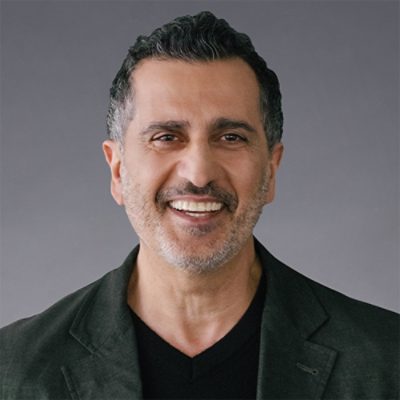
Walk into a fabless chip company anywhere on Earth and the engineers will know the names. Fusion Compiler. PrimeTime. VCS. Design Compiler. These are the pencils. Synopsys makes the pencils. Sassine Ghazi runs Synopsys. He has run it since January 2024, when he replaced the founder-era leadership and inherited a company that already happened to be at the center of the AI build-out without much warning.
Ghazi did not arrive at the corner office by parachute. He walked there. In 1998, when he joined Synopsys as an applications engineer, the company was building tools for chips with millions of transistors. The chips that come out of Synopsys flows today push toward a trillion. He saw all of it, from inside, for twenty-six years before they handed him the keys. That is a long apprenticeship.
The bio reads like a passport. Bachelor's in Business Administration from the Lebanese American University. Then a B.S.E.E. from Georgia Tech in 1993. Then an M.S.E.E. from the University of Tennessee in 1997. In between the last two, he led a joint research project for the U.S. Department of Defense at Oak Ridge National Laboratory on something called Variable Structure Control and Reconfigurable Computing. The phrase is impossibly dense. It means: how do you build a computer whose hardware reshapes itself for the problem in front of it. Twenty-eight years later, that question still pays his rent.
We are entering the most transformative decade in modern engineering, defined not by isolated technology breakthroughs, but by the unprecedented convergence of silicon, software, systems, and physics.
— Sassine Ghazi
Out of school he went to Intel as a design engineer. The story he tells about that period is short: he liked designing chips, but he wanted to build the tools that let other people design chips. There is something telling in that choice. He moved one level up the stack from product to platform before most people had heard the word "platform" used that way. Synopsys, in 1998, was a small enough company that you could meet every customer. He met them.
For a long time, that was the work. Applications engineering. Then sales. Then leading the EDA Design group - the digital and custom products that account for most of Synopsys's revenue. By 2017 he was Co-General Manager of the Design Group. By August 2020 he was Chief Operating Officer. By November 2021 he was also President. The line on a chart is almost boring in its evenness. There is no surprise turn, no public scandal, no left-field founder move. Just a person who showed up, knew the customers, and did the thing.
The interesting move came late. Under Ghazi as COO, Synopsys made the bet that AI would change chip design more than chip design would change AI. The product was named Synopsys.ai. The marketing copy called it "the industry's first AI-driven EDA suite." For a year or so after launch, the claim sounded promotional. It does not sound promotional anymore. The same generative models that learned to write English also turn out to be very good at proposing place-and-route geometries that a human would have rejected on instinct, and that turn out to work.
Then the larger move. In January 2024 he became CEO. By his first earnings call, the company already had a definitive agreement to buy Ansys for roughly $35 billion. Ansys did not make chip design tools. Ansys made the simulation software that engineers use to figure out whether a thing - a turbine blade, an electric motor, a circuit board - will actually survive the world. Combining the two was a stranger move than it sounds. It was a bet that the boundary between designing a chip and designing the system the chip sits inside was about to dissolve, and that whoever owned both ends of that workflow would own the next decade of engineering. The deal closed on July 17, 2025. The combined company addresses, by Ghazi's own count, a ~$31B market.
In December 2025, he sat next to Jensen Huang on CNBC's Squawk on the Street to talk about the relationship between Synopsys's tools and the chips Nvidia ships. The optics were notable. Huang is one of the most photographed CEOs alive. Ghazi was not previously. He held his own.
What is he actually like? The people who have worked for him describe a "positive, can-do attitude" and "boundless energy." Those phrases are bland on a page but unusual in semiconductor leadership, which tends to skew toward dry. He is, by all accounts, a customer-relationship engine. He remembers names. He travels. The phrase that keeps coming up is "relentless customer focus." This is also bland on a page and unusual in practice. Most CEOs of $7B-revenue companies do not show up in a customer's lab in person, repeatedly, over years. He does.
The Lebanese American University degree is a detail people skip. It is worth not skipping. It means he started in business, not in engineering, and went toward the harder discipline rather than the easier one. The order of his degrees - business first, electrical engineering second, electrical engineering more deeply third - is the order of someone who decided what he wanted to do after he found out what he could already do. There is a self-determination in that sequence which the resume otherwise hides.
The substantive bet now, the one he has staked his tenure on, is what he calls the "convergence of silicon, software, systems, and physics." Strip the corporate phrasing and it means: the next decade of engineering will not be won by people who are good at one of those four things. It will be won by the platform that lets one person be good at all four at once. Synopsys.ai is the chip-design half of that platform. Ansys is the physics half. The software and systems halves are next.
Whether the bet is right will not be known for some years. Ansys deals of this size do not pay off in one quarter, and integrating two cultures - one made of EDA engineers, one made of mechanical and physics simulation engineers - is the kind of project that quietly eats a CEO's first three years. Ghazi has 26 years of practice walking into rooms full of skeptical engineers and getting them to agree on a release schedule. If anyone in EDA was built for that integration, it is probably him.
The shorter version of all of this: Sassine Ghazi has spent his entire adult life one layer of abstraction up from the chips most people think of when they think of semiconductors. He picked the layer. The layer turned out to be where the value moved. He is now the steward of it.