Breaking
$4B valuation reached two months after launch $335M raised in roughly four months Backers include Nvidia, Sequoia, Lightspeed & DST Global Founders co-created Google's AlphaChip AlphaChip designed four generations of TPUs From fabless to designless Fewer than 20 employees Goal: turn chip design from years into hours
Ricursive Intelligence chip design visual
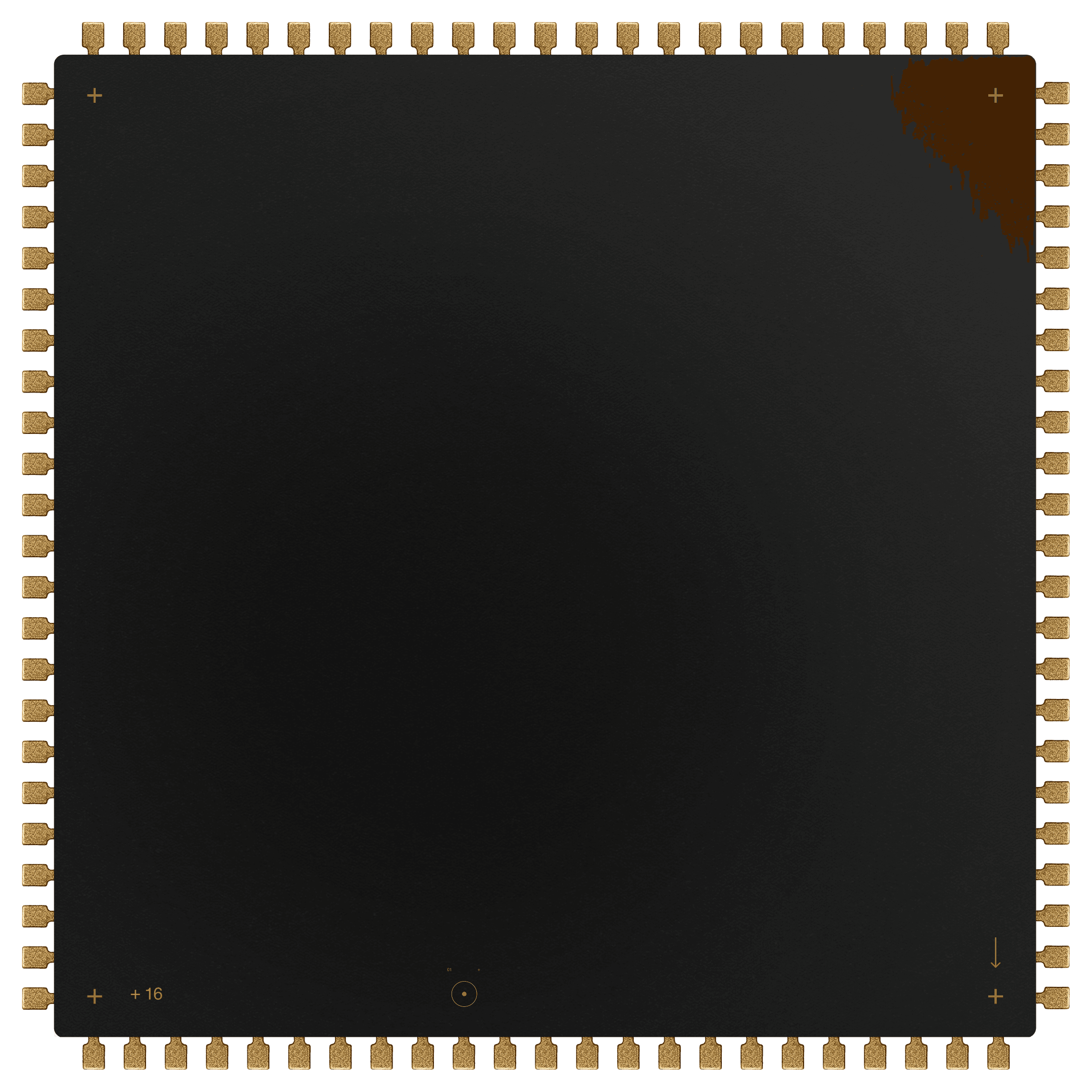
A chip, photographed like a portrait. The gold pins are real; the design ambition - to let software draw them - is the whole company.
Frontier AI Lab // Palo Alto, California

Ricursive
Intelligence

The lab teaching artificial intelligence to design the chips that, in turn, make artificial intelligence smarter.

$335M
Total raised
$4B
Valuation
2025
Founded
~19
People
Who they are now

A nineteen-person company worth four billion dollars

January 2026, Palo Alto

In early 2026, a startup most people had never heard of announced it was worth $4 billion. It had been a public company for about two months. It employed fewer than twenty people. Its product was not yet on the market. By the usual rules of the universe, this should not happen. Ricursive Intelligence is what happens when the usual rules meet two researchers who already proved the thing they are now selling.

The company sits at a peculiar intersection: it is an AI lab that makes chips, and a chip company that makes AI. Its pitch is a loop. AI designs better silicon. That silicon trains better AI. That AI designs even better silicon. The name is the thesis - recursion, spelled with the founders' own twist.

"Chips are the fuel for progress in AI, and the multi-year chip design process is holding back the field."- Anna Goldie, Co-Founder & CEO
The problem they saw

Designing a chip takes two to three years. AI moves faster than that by lunch.

The bottleneck nobody could route around

Here is the inconvenient truth the AI industry would rather not say out loud: the smartest models in the world run on hardware that takes a small army two to three years and hundreds of millions of dollars to design. The chip is the engine. The engine is the slow part.

Traditional chip design is manual, expensive, and reserved for companies with deep enough pockets to staff it. Floor-planning - deciding where each block of logic physically sits on the silicon - is closer to a craft than a science. The result is a mismatch: software iterates weekly, silicon iterates by the presidential term.

This is the tension Ricursive exists inside. If progress in AI is now gated by hardware, and hardware is gated by a design process that has barely changed in decades, then the fastest way to accelerate AI is not a bigger model. It is a faster chip. And the fastest way to a faster chip might be to hand the pen to the AI.
"The pace of AI progress is dictated by hardware."- Anna Goldie
The founders' bet

They already did this once, inside Google

Anna Goldie & Azalia Mirhoseini

Most founders pitch a bet. Anna Goldie and Azalia Mirhoseini pitched a track record. The two worked together at Google Brain and were early employees at Anthropic. In 2020 they co-created AlphaChip, a reinforcement-learning system that treats chip floor-planning as a game: the agent places components one at a time and earns a reward for good layouts. It learned to produce designs in hours that match or beat human engineers.

AlphaChip was not a demo. Google deployed it across four successive generations of its TPU accelerators, and outside chipmakers - MediaTek among them - adopted it too. So when the founders left to start Ricursive in late 2025, investors were not betting on whether the idea worked. They were betting on whether the same people could do it again, for everyone, outside the walls of a single company.

AG

Anna Goldie

Co-Founder & CEO

Co-creator of AlphaChip. Former Google Brain researcher and early Anthropic employee. Argues the pace of AI is set by hardware, not software.

AM

Azalia Mirhoseini

Co-Founder & CTO

Co-creator of AlphaChip. Pioneer of framing physical chip design as a reinforcement-learning problem. Wants models and silicon to co-evolve.

"We're using AI to accelerate AI, creating a feedback loop where our models design the next generation of AI chips."- Azalia Mirhoseini, Co-Founder & CTO
The product

From fabless to designless

An end-to-end AI model for silicon

The semiconductor industry already pulled off one great unbundling. Decades ago, "fabless" companies stopped owning factories and started designing chips that someone else manufactured. Ricursive wants the next unbundling, and it has a blunt name for it: designless.

The idea is that you no longer need a 200-person design team. You tell Ricursive which tradeoffs matter to you - power, speed, area, cost - and its AI delivers a fully optimized, ready-to-build chip design. The company is building the full stack: an AI system that designs, verifies, and closes silicon, so models and chips move together in a tight loop.

Design

An end-to-end AI model that lays out silicon, compressing cycles that used to take years.

Designless

Clients pick the tradeoffs; Ricursive returns a build-ready, optimized chip - no large design team required.

The loop

Chips optimized for AI workloads train better models, which then design better chips. Recursion, productized.

"We're aiming for a Cambrian explosion of custom silicon."- Ricursive Intelligence, on its mission
The short, strange history

Four months from launch to unicorn

2020

AlphaChip is born

At Google, Goldie and Mirhoseini frame chip floor-planning as reinforcement learning. It goes on to design four generations of TPUs.

Dec 2025

Ricursive launches

The founders unveil a frontier AI lab for semiconductor design with a $35M seed round led by Sequoia at a $750M valuation.

Jan 2026

$300M Series A

Lightspeed leads a $300M round at a $4B post-money valuation. Nvidia, DST Global, Felicis, 49 Palms, Radical AI and Sequoia join.

Feb 2026

The story spreads

Coverage details how a sub-20-person company raised $335M at a $4B valuation in roughly four months.

The proof

The money agrees with the math

Why a valuation 5x'd in eight weeks

Skeptics are right to raise an eyebrow at a $4 billion price tag on a company with no shipping product. But the investors are not naive, and the signal is hard to ignore: the seed round priced Ricursive at $750 million in December; the Series A priced it at $4 billion in January. That is not a typo. That is conviction, with Nvidia's own venture arm on the cap table.

Valuation, seed to Series A

USD, post-money // Dec 2025 - Jan 2026
Seed (Dec '25)
$0.75B
Series A (Jan '26)
$4.0B
Roughly a 5x step-up in about eight weeks. Total capital raised across both rounds: $335M.
Ricursive is "positioned to be the leading frontier lab applying AI to transform the chip design process."- Stephanie Zhan, Sequoia Capital
The mission

Remove the hardware bottleneck. Then keep going.

Ask the founders what they are really building and the answer gets ambitious fast. The near-term mission is concrete: drastically compress chip design cycles and unlock the co-development of AI models and the silicon that powers them. The long-term mission is the kind of thing that sounds like marketing until you remember these are the people who already shipped AlphaChip - a recursive feedback loop pointed, eventually, at artificial superintelligence.

The democratizing angle is the part worth taking seriously. Today, custom silicon is a luxury for the well-resourced. If a small team really can hand a set of tradeoffs to an AI and receive a build-ready chip, the list of companies that can afford their own hardware gets a lot longer. That is the Cambrian explosion they keep mentioning.

Near term

Cut chip design from years to a fraction of the time, and make custom silicon accessible beyond the giants.

The loop

Let AI models and chips co-evolve, each generation improving the next.

Long term

Remove hardware as the limiting factor on AI progress - the stated path toward superintelligence.

Watch & listen

The founders, in their own words

How Ricursive's Founders Are Using AI to Shape the Future of Chip Design
Watch the interview on YouTube ↗   Listen to the podcast ↗
Why it matters tomorrow

Back to the nineteen people

Return to that improbable opening: a company of nineteen, worth four billion dollars, with no product yet on shelves. Read coldly, it is a story about hype. Read carefully, it is a story about leverage. If the chip really is the bottleneck, and if the people who proved AI can design chips are now doing it for the whole market, then nineteen people pointed at the right constraint can be worth more than nineteen hundred pointed at the wrong one.

The bet could still miss. Shipping a build-ready chip for paying customers is a different sport than publishing a research result, and incumbents like Cadence and Synopsys are not standing still. But the question Ricursive forces is the interesting one: what happens to an industry when its slowest step learns to design itself? If the loop closes, the nineteen-person company stops looking improbable - and starts looking early.

"We're using AI to accelerate AI." The whole company fits in that sentence.- The thesis, in five words
Profile compiled from public sources including PR Newswire, SiliconANGLE, TechCrunch, EE Times, Lightspeed and Sequoia Capital. Figures - $335M raised, $4B valuation, ~19 employees - reflect reporting from December 2025 through February 2026 and may have changed.