ci-cd
(31)
CloudBees and the art of shipping safely
Writing code keeps getting easier. CloudBees has built its business around the harder question: what should be allowed to reach a customer?
ZAP found the bugs. Then came the bills.
A bruising security test gave Simon Bennetts a reason to build a free web scanner. Keeping it free turned out to be a different kind of engineering problem.

Lachlan Donald’s Second Act Has a Different Job Title
He helped Buildkite grow, stepped aside as CEO, and returned as CTO. Lachlan Donald’s career keeps circling the same question: what gets in the way of people doing good work?
SeaLights and the art of testing less
A passing test can be a splendid alibi. SeaLights maps software changes to the tests that actually touch them, giving teams a sharper answer to the question: is this release ready?
mabl and the art of believing a red light
Software teams can automate thousands of checks and still distrust the result. mabl sells a way to make testing easier - and its own engineers offer a useful lesson in knowing when to stop.
EngFlow makes waiting for software an expensive habit
Brave cut builds from two hours to 15 minutes; Snowflake cut the upkeep. EngFlow’s wager is that developer productivity depends on the machinery between writing code and shipping it.
Flox wants your setup guide to become one command
PostHog had 16 setup steps and 14 caveats. Flox helped replace them with a shared environment - and is betting that the same discipline can travel from a developer’s laptop to an AI agent and into production.
Defakto Security wants your machines to forget their passwords
A copied API key can outlive the job it was meant to do. Defakto replaces that lingering permission with short-lived workload identity, bringing an old security problem into the age of AI agents.
The Friday When 1,800 Settings Had to Move
A NetSuite consultant had a weekend to move a year of work into production. Salto’s bet is that the settings businesses live by deserve the same review, history and release discipline as software code.
Doppler and the Tiny File That Became Everyone's Problem
A developer's nuisance grew into a company with a large ambition: make the credentials behind modern software easy to find, change, and govern before one forgotten key causes a very public mess.
Gearset wants to end the Salesforce release-night shift
The Cambridge software company built its business on the awkward work of moving Salesforce changes into production. Now it wants an AI teammate to build those changes, too - with the same checks on the way out.

Jim Rose Has Spent Six Startups Hunting for the Flicker
Before CircleCI became the factory floor for digital goods, its CEO learned entrepreneurship through copy machines in China, a group-buying patent, a vanished Facebook growth engine, and one stubborn mobile testing problem.
Buildkite Put the Cloud in Charge - Then Refused to Put Your Code There
The Australian developer-tools company won demanding engineering teams with a split-the-stack model: Buildkite coordinates the work, while customers choose where it runs. Now it is trying to turn that architectural compromise into a broader software-delivery platform.

Ali-Reza Adl-Tabatabai Bet on the Part of AI Coding Everyone Else Left Until Later
After decades spent making compilers, runtimes, and developer platforms behave, the Gitar founder saw AI move software's bottleneck downstream. His answer was to make verification an active participant, not a final inspection.
Meticulous Wants Your Users to Write the Tests - So Your Engineers Can Ship the Code
The old bargain was simple: write more tests or accept more bugs. Meticulous is betting that recorded behavior, deterministic browsers and a startling amount of parallel compute can break that bargain - just as AI agents make verification the slowest part of shipping software.

Aditya Jayaprakash Is Making the Wait Between Code and Confidence Disappear
A dinner complaint about slow CI became a company built from gaming CPUs, microVMs and a stubborn question: how much developer time is hiding inside the wait?
The Cloud Company That Wants Every Branch to Feel Like Production
Upsun hides the plumbing beneath modern applications, then gives developers a full-stack rehearsal room for every change. Its wager is that the next cloud winner will sell fewer dashboards and more confidence.
Arga Labs
Arga Labs builds real-world sandboxes for AI agents and agent-facing software. Every time a team opens a pull request, Arga spins up a temporary staging environment that mirrors production, redeploying only the services that changed and routing everything else to prod. It runs code and agents against resettable API 'twins' of third-party services like Stripe, Slack, GitHub, and Gmail, so teams can surface edge cases, simulate failures, and test at scale without touching live data. A YC P26 company founded by Phillip Li and Akira Tong, Arga reached roughly $40K in monthly recurring revenue within seven weeks of launch.
Attune
Attune is a San Francisco developer-tools startup (YC X25) building drop-in build acceleration for engineering teams. Its tool, invoked by prefixing existing commands with 'hurry' (e.g. 'hurry cargo build'), delivers up to 20x faster builds through incremental compilation, remote execution, and distributed caching - with zero migration and no new config language to learn. Attune started with Rust and is expanding to Docker, npm, GitHub Actions, Swift, and Python. It also maintains an open-source project for fast, secure Linux package publishing. Founded by Xin Ding (CEO) and Eliza, who worked together for three years at FOSSA on build systems.
AutoRABIT
AutoRABIT is an enterprise DevSecOps and release-management platform built for the Salesforce ecosystem. It combines CI/CD automation (ARM), static code and security analysis (CodeScan), data and metadata backup and recovery (Vault), and security posture management (Guard) so teams in regulated industries - banking, financial services, healthcare, and government - can ship Salesforce changes quickly while keeping security and compliance intact. Founded in 2015 and bootstrapped for its first five years, the company is headquartered in San Francisco and serves customers including ABN AMRO, Cigna, and CyberArk.
Zelar
Zelar (ZelarSoft) is a cloud-native engineering and consulting firm that helps banks, telcos, oil & gas, and government teams adopt Kubernetes, DevOps, and AI without the usual pain. Founded in 2018 and led by CEO Vasu Maganti, the company pairs hands-on services - cloud migration, SRE, security, and data engineering - with its own platforms: Klusternetes for self-service Kubernetes multi-tenancy, OpenOps for production-ready GKE stacks, and Cokpit for agentic AI DevOps. A Google Cloud Premier Partner with offices across the US, Canada, India, and the UAE, Zelar bets that most teams want cloud-native outcomes, not cloud-native homework.
GitLab
GitLab is an AI-powered DevSecOps platform that brings the entire software development lifecycle - planning, source code management, CI/CD, security, and deployment - into a single application. Born as an open-source alternative to GitHub in 2011 and run as one of the world's largest all-remote companies, GitLab now serves enterprises and millions of developers, trades on Nasdaq under GTLB, and is pushing into agentic AI development with GitLab Duo.
JFrog
JFrog is the company behind the universal software supply chain platform anchored by Artifactory, the binary repository that lets engineering teams store, secure, and ship every artifact - packages, containers, and now AI models - from a single source of truth. Founded in Israel in 2008 and headquartered in Sunnyvale, California, JFrog (NASDAQ: FROG) serves thousands of enterprises and crossed $531.8 million in revenue in 2025 while pushing its 'Liquid Software' vision of continuous, secure software flow.
Netlify
Netlify is the platform that taught the modern web to ship fast. Founded in 2014 by Mathias Biilmann and Christian Bach, it pioneered the Jamstack architecture and a Git-driven workflow that turned every push into a production deploy. Today, more than five million developers and companies like Twilio, Unilever, and Peloton run on Netlify's global edge network - and the company is reinventing itself again around AI agents that ship code on behalf of humans.

Hans Dockter
Hans Dockter is the founder and CEO of Gradle Technologies, the company behind the Gradle build tool - downloaded over 23 million times per month - and Develocity, an enterprise developer toolchain observability platform. A German-born physicist-turned-software-engineer, he co-created Gradle in 2008 out of personal frustration with existing build systems, transforming it into one of the most widely adopted build automation tools in software development. Under his leadership, Gradle Technologies has raised $53.2M in total funding and grown to 170+ employees, serving enterprises including Netflix, Google, LinkedIn, and Airbnb.
Rainforest QA
Rainforest QA is an AI-powered, no-code software testing platform that helps product teams run regression and functional tests without building or maintaining brittle test frameworks. Founded in 2012 in San Francisco and backed by Y Combinator, the company has executed more than 42 million tests for over 10,000 startups and product teams.
Semgrep
Semgrep is a San Francisco application-security company that builds a unified AppSec platform (Code/SAST, Supply Chain/SCA, and Secrets) used by engineering teams at Dropbox, Figma, Snowflake and others. Born out of an open-source tool originally written at Facebook, it lets security teams write code-like rules and ship them through CI - cutting false positives and pushing fixes back to developers.
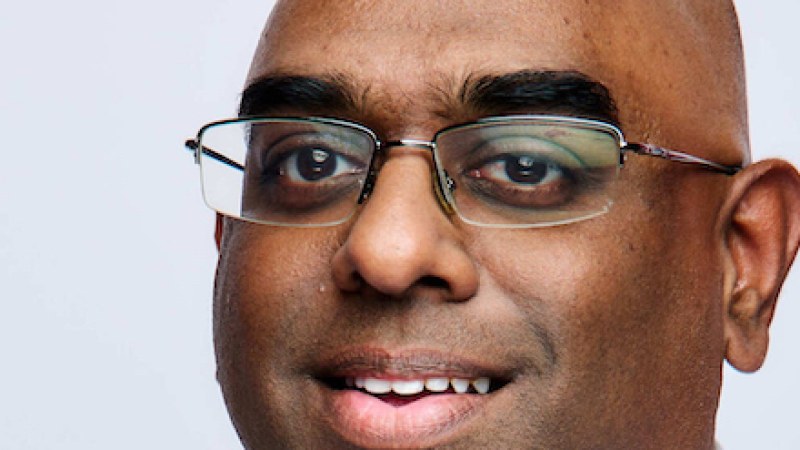
Kevin Gounden
Kevin Gounden is the Chief Executive Officer of Buildkite, the CI/CD platform trusted by Airbnb, Uber, Shopify, Slack, and Canva to ship software at scale. Appointed in August 2025, he brings over two decades of experience founding and scaling SaaS ventures, most recently as Chief Product Officer at Lightcast and Randstad where he drove product strategy across 70+ countries. His mandate at Buildkite: lead the platform's next chapter at the intersection of AI and software delivery.

Matan Grinberg
Matan Grinberg is the CEO and Co-Founder of Factory, an AI platform that deploys autonomous agents called Droids to automate the entire software development lifecycle. A theoretical physicist who dropped out of his UC Berkeley PhD program in 2023 after a fateful three-hour walk with Sequoia partner Shaun Maguire, Grinberg built Factory from a 72-hour hackathon demo into a $1.5B unicorn backed by Khosla Ventures, Sequoia, Blackstone, and Insight Partners. Named to Forbes 30 Under 30 AI in 2025, he is one of the defining voices in the agent-native development movement.

Zelos Cloud
Zelos Cloud is a San Francisco-based B2B data platform for mission-critical systems, founded in 2023 by three former Tesla and Neuralink engineers. The platform unifies data collection, remote command-and-control, real-time visualization, and automated testing for firmware and industrial systems - solving the tooling chaos that plagues teams building hardware that cannot afford to fail. Backed by Y Combinator (S23) and Human Capital, Zelos Cloud is building the operating layer that firmware and embedded systems engineers have always needed but never had.