accessibility
(53)
Mobikasa fixes what shoppers never see
A storefront can look perfectly fine and still make shopping hard. Mobikasa’s work reveals how much of ecommerce happens behind the glass.
Sfera made the handoff the product
A movie can cross an ocean before its subtitles are ready. Sfera built a cloud platform around the people and processes that close that gap.

William A. Amor and the architecture of getting it right
William A. Amor has taught architects, investigated construction defects, and built a commercial practice with Carol A. Amor. His career offers a view of architecture from the drawing board, the examination room, and the witness stand.
iSoftStone makes the complicated work.
A publishing backlog. Two hundred YouTube channels. An AI system that needs somewhere to live. iSoftStone has built a business around the awkward work between buying technology and making it useful.

Iyuno makes the world laugh in another language
A subtitle is a tiny piece of text with a very large job. Iyuno built a global business around getting it right, then bought the studios and built the software to make stories travel.
ansrsource and the art of making learning work
A textbook can explain active listening. ansrsource hired actors to show it. That small distinction helps explain a business built around the awkward distance between knowing something and doing it.
ArcTouch found the money in free apps
When App Store prices collapsed, two former college roommates changed who they charged. Their company now builds the apps behind airline journeys, fashion loyalty programs, and connected machines.
Deem and the art of making rules disappear
A travel policy can negotiate a wonderful hotel rate. It cannot make an employee book it. Deem’s business rests on closing that small, expensive gap.

Visceral and the expensive art of saying no
The creative agency builds brands and websites for organizations trying to change the world. Its own turning point was deciding which work to turn away.
Clearstory makes the building easier to read
A children’s hospital, a former shipyard, a campus full of competing destinations: Clearstory turns complicated places into places people can understand. Its most revealing design tool is the question it asks before drawing the sign.
Amor Architectural knows where buildings go wrong
A retail rollout is a promise to repeat yourself in places that refuse to be identical. Amor Architectural brings an unusual preparation to the job: years spent examining what happens when buildings go wrong.

DGA turns public funding into a working proposition
From factory pilots to life after coal, the Polish consultancy organizes the work between an ambitious idea and a useful result. Its accounts reveal why managing millions is a different business from earning them.

Jadu and the 50p council enquiry
At Wigan, a highways enquiry went from £7 to 50p. Behind that small number is Jadu’s bigger business: connecting public websites to the people and systems that actually get things done.
Solirius Reply and the hard work behind a simple public service
A court notification can hide a surprisingly large job. Inside the consultancy that helps government teams untangle the work, test the service and make it usable.

Junior Garcia Is Turning Open Source Into Interface Infrastructure
What began as a React component library became HeroUI, a YC-backed attempt to make good interfaces easier for humans and AI agents to build.
CNIB Quit Trying to Be Everything - and Built a Better Machine for Independence
The 108-year-old Canadian institution learned that serving people with sight loss did not mean owning every service. Its sharper model now combines donations, retail, training, guide dogs and advocacy - a playbook for any mission-driven organization that has grown too broad.

She Watched 'Love on the Spectrum' - Then Built the Dating App the Giants Ignored
Holly Fowler spent two years building Wable at 3am - a dating, friendship and jobs app for neurodivergent people. A A$1.5 million round and a Times Square billboard later, it is live in four countries.
Say It With Your Eyes
Tobii Dynavox turns eye movements into speech for people who have lost their voice. Here is how a Pittsburgh-and-Stockholm company built the tools that let hundreds of thousands of people be heard.
The Wheelchair Isn't the Product. The Fit Is.
Numotion builds roughly half of America's complex wheelchairs one measurement at a time - then spends the next decade keeping them rolling.
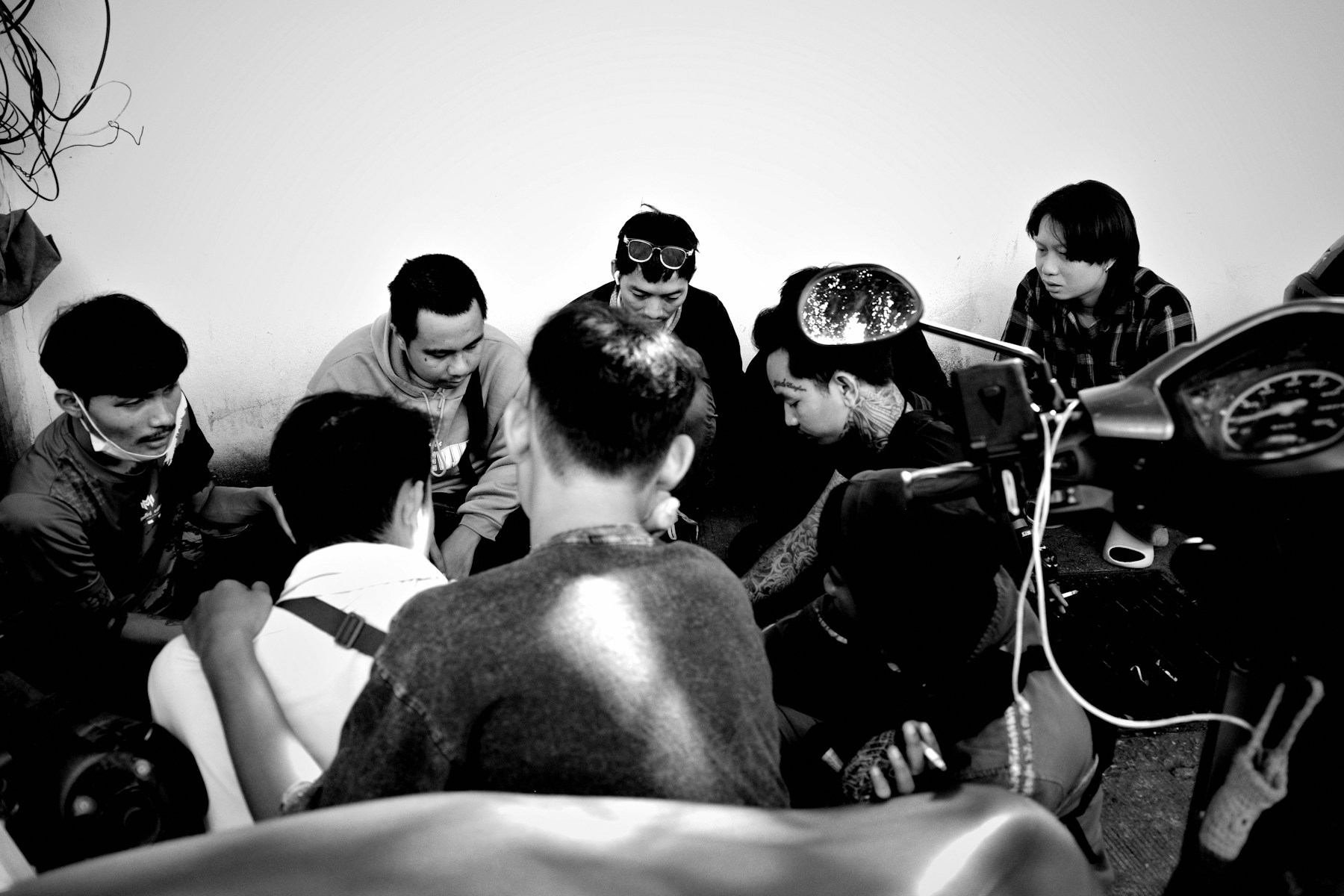
Community Platforms Put to the Member Test
Salesforce, Personify and Patreon promise different versions of belonging. A close look at the member journey - with Threado as a cautionary coda - shows where each experience connects, converts and creates friction.
AirCaps
AirCaps builds lightweight AR smart glasses that display real-time captions, translate 60+ languages, and take AI meeting notes directly in your field of view. Founded by Yale and Cornell computer scientists who have been building on smart glasses since age 13, the company started with the Deaf and Hard of Hearing community and expanded to travelers, language learners, and professionals. The 49-gram glasses run a 4-microphone beamforming array, claim 97% caption accuracy at roughly 300ms latency, and sell for $599 with a free-forever tier.

HeroUI
HeroUI (formerly NextUI) is an open-source React and React Native component library that pairs the accessibility of React Aria with the utility-first styling of Tailwind CSS. Founded by Junior Garcia and backed by Y Combinator's Summer 2024 batch, it ships 75+ web components plus a native library, and positions itself as a UI framework built for both human developers and AI coding agents.
CivicActions
CivicActions is a fully remote digital services firm that helps U.S. federal, state, and local government agencies modernize the technology behind public services. Founded in 2004 by Henry Poole and Aaron Pava, the company pairs free and open-source software - especially Drupal - with agile delivery, DevSecOps, human-centered design, and accessibility expertise to rebuild legacy government websites and platforms. Guided by the values of Balance, Openness, and Care, CivicActions has served agencies including Veterans Affairs, the FCC, the National Science Foundation, and the State of Georgia while contributing heavily back to the open-source communities its work depends on.
Haptic
Haptic (formerly WearWorks) is a New York-based company building navigation and communication that runs entirely on the sense of touch - no screen, no audio. Its patented HapticNav system creates a 'virtual corridor' of vibrations that keeps a person on course, first proven when a blind runner completed the NYC Marathon without sighted assistance. The company packages this into the Wayband wearable, a HapticNav app, and an SDK so developers can add tactile guidance to maps, rideshare, healthcare, and defense applications.
Speechify
Speechify is the world's largest text-to-speech platform, turning any text - PDFs, books, emails, Google Docs, web pages - into natural-sounding audio. Founded by dyslexic Brown University student Cliff Weitzman and his brother Tyler, the company grew from a personal reading aid into an AI voice empire spanning consumer apps, a voice cloning and dubbing studio for creators, and a text-to-speech API for developers. It serves 50+ million users across mobile, Chrome extension, and desktop, offers hundreds of voices in 50+ languages, and won the 2025 Apple Design Award for Inclusivity.
Xander
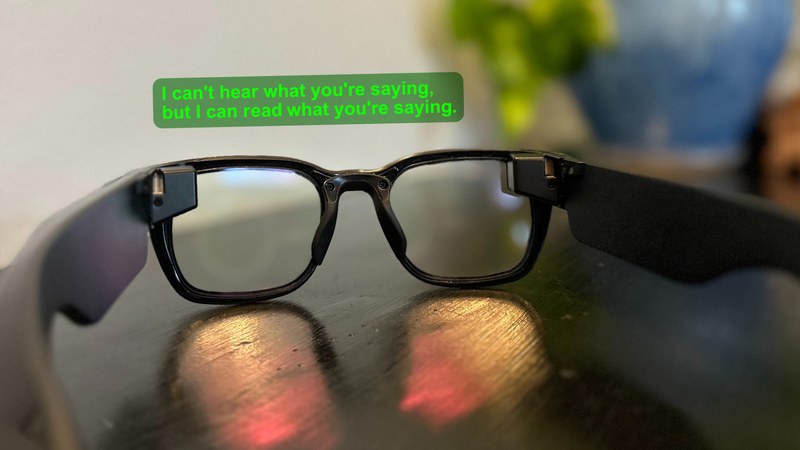
Xander builds XanderGlasses, standalone augmented-reality smart glasses that turn spoken conversation into real-time captions displayed in the wearer's field of view. Aimed at people with hearing loss who don't sign, the device runs speech-to-text offline - no phone, Wi-Fi, or cloud required - so private conversations stay private. An MIT Media Lab spinout founded by Alex and Marilyn Morgan Westner, Xander has been adopted by the U.S. Department of Veterans Affairs and is built on customized Vuzix Shield hardware.
Kevin Yoo
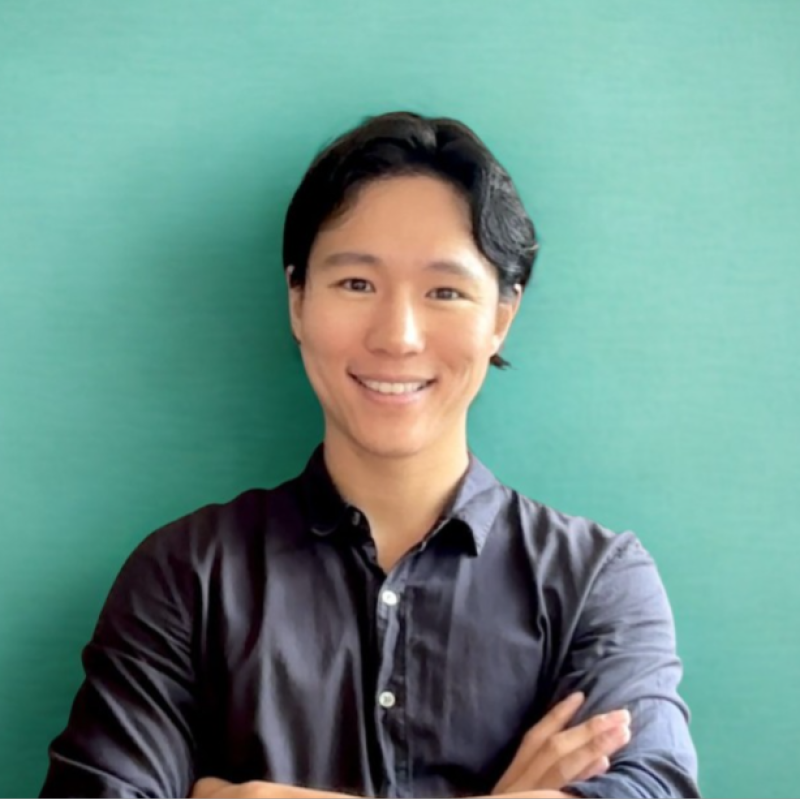
Kevin Yoo is the CEO and co-founder of Haptic (formerly WearWorks), a New York-based technology company building tactile-feedback navigation tools. With co-founders Keith Kirkland and Yangyang Wang, he created the Wayband - a wristband that guides users through pure vibration. In 2017, the device helped ultramarathoner Simon Wheatcroft become the first blind runner to attempt the NYC Marathon without sighted assistance. Yoo is an industrial designer by training, a Pratt Institute alum, and a Council of Korean Americans member.
Cliff Weitzman
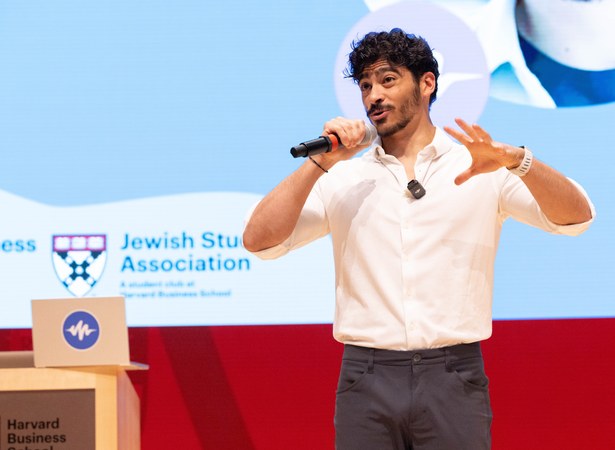
Cliff Weitzman is the founder and CEO of Speechify, the text-to-speech app that reads anything aloud in natural AI voices and now serves over 56 million users in 200+ languages. Diagnosed with dyslexia in third grade, he taught himself English by replaying a Harry Potter audiobook 22 times, then built the software he wished he'd had to keep up with the reading load at Brown University. What began as a personal hack for one dyslexic student became a Forbes 30 Under 30 company and an Apple Design Award winner.

Oddball
Oddball is a McLean, Virginia-based digital services agency that modernizes how the U.S. government talks to its citizens. It builds and maintains some of the federal government's busiest websites - notably VA.gov for the Department of Veterans Affairs and Medicare.gov for CMS - using human-centered design, agile engineering, and modern cloud infrastructure. Founded in 2016 and led by CEO Travis Sorensen and CTO Rob Wilkinson, the remote-first firm calls itself 'a strangely human digital agency,' and grew to roughly 340-366 employees and ~$117M in annual prime contract revenue before taking a 2025 growth investment from private equity firm Falfurrias Management Partners.
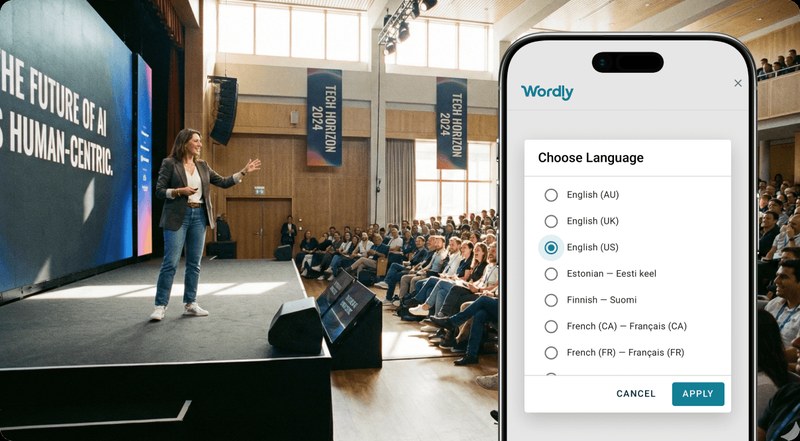
Wordly
Wordly is a San Francisco Bay Area company that delivers cloud-based, AI-powered live translation, captioning, transcription and summaries for meetings and events. Without apps, headsets or human interpreters, attendees scan a QR code and follow along in their own language across 60+ languages and 3,000+ language pairs. Founded in 2017 by Lakshman Rathnam, Wordly serves 4,000+ customers and has supported over 5 million users worldwide, and was ranked among the fastest-growing software companies on the 2025 Inc. 5000 list.