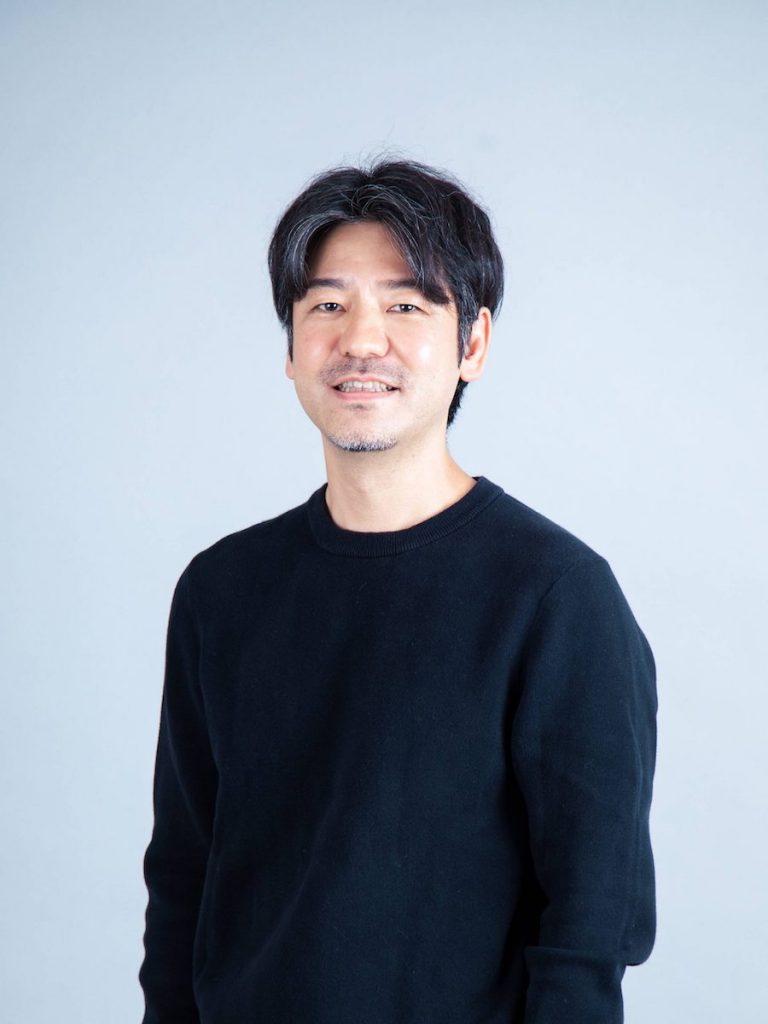
A friend told Satoshi Sugie he'd stopped going to the grocery store. Not because it was far - it was two blocks away. He'd given up because of how people looked at him in his wheelchair. That single sentence, offered without drama, handed Sugie a design problem and a moral imperative at the same time.
Sugie was working in Nissan's Advanced Transportation Department at the time, trained to see mobility through the lens of aspiration. Cars didn't have to justify themselves aesthetically - they were objects of desire. The wheelchair was stuck somewhere between hospital supply closet and apology. He decided that was a design failure, not an inevitability.
In 2011, he co-founded the WHILL project. In 2012, he moved to San Francisco and turned it into a company. His co-founders were Junpei Naito from Sony's R&D lab and Muneaki Fukuoka from Olympus's medical device division - three people with complementary expertise and the shared audacity to resign stable jobs and pool their savings into something that had never been done quite this way before.
The Design-First Bet
The foundational wager at WHILL was simple and radical: what if the wheelchair felt like a consumer product, not a prescription? Sugie's automotive instincts drove every decision. Where the industry defaulted to clinical white and institutional gray, WHILL went for omni-wheel technology that let you turn on a dime. Where competitors made devices that screamed "medical equipment," WHILL made something that looked like it belonged on the floor of a design show.
As I come from a car design background, my brain works outside the box. We don't want it to be a medical device: it's a consumer product. The design of it is like driving a car or riding a bike.
- Satoshi Sugie, Enable MagazineThe Model A launched commercially in 2015 in the United States. It sold out immediately. That was both a market signal and a validation - people had been waiting for exactly this, even if no one had articulated the category before. The company earned CES Best of Innovation awards and landed on TIME Magazine's 50 Best Inventions list. But Sugie wasn't chasing hardware accolades.
The FDA Gamble
Getting FDA clearance for the Model M took nearly two years. Sugie described it plainly: "a large opportunity cost for a small company." The regulatory process isn't designed for startups with runway pressure and the clock running. But the payoff wasn't just a checkbox - FDA clearance meant US health insurance could cover WHILL devices, fundamentally changing who could access them. The mission required the friction.
By 2019, WHILL was running autonomous wheelchair trials at Haneda Airport in Tokyo, partnering with Japan Airlines. The image of a passenger sitting in a WHILL and moving through one of Asia's busiest airports without a human attendant was a proof-of-concept for something much larger than a mobility device - it was the beginning of an infrastructure play.
Airports as a Platform
The autonomous mobility program grew quickly. Narita. Kansai. Winnipeg. Rome's Fiumicino Airport became WHILL's European beachhead in 2025. Close to a million autonomous rides have been logged across these deployments. A 2022 user study found 96% of WHILL users reported feeling safer, more confident, or more independent. Another 90% reported greater independence compared to their prior solutions. These aren't product metrics. They're lived-experience numbers.
In June 2023, Sugie stood before G7 Transport Ministers and made the case that personal mobility infrastructure belongs in the same category as roads and rail. The pitch wasn't about wheelchair technology. It was about how governments design public space for the full range of human mobility. Shortly after, he gave the Japanese Prime Minister a test ride at the Nippon Startup Awards. The product was doing its own lobbying.
Building for the Long Arc
WHILL hit Series E in 2022 with a $19M raise led by Woven Capital, bringing total funding past $153M. The company now operates in 30+ countries with 350 employees spread across Tokyo, San Mateo, Canada, and Europe. In 2024, a merger with Scootaround deepened WHILL's North American footprint as the company posted 40% year-over-year growth in Q1.
The product line has expanded to cover distinct user needs: the Model Ri for urban seniors who want stability and maneuverability, the four-wheel Model R scooter that won the Outbound Award for world-class design, and autonomous service units purpose-built for airport deployment. In April 2026, WHILL released a white paper, "Designing for Dignity: Reshaping Perceptions of Mobility" - part company statement, part design manifesto.
Sugie's vision has never been about selling better wheelchairs. It's been about proving that how a product looks and feels changes what people believe is possible for them. The friend who gave up on the grocery store two blocks away was a design brief. Everything since has been the answer.