The Profile / Vol. 1, No. 1
Lauren
Lauren
Dachille
She lost five hours a week to a spreadsheet. So she built the software that hires America's teachers.
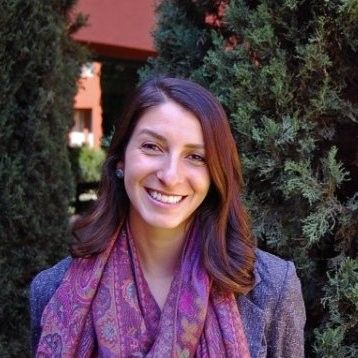
Exhibit A - the woman with the spreadsheet
She lost five hours a week to a spreadsheet. So she built the software that hires America's teachers.
Lauren Dachille runs Nimble, a data-driven applicant tracking system for K-12 school districts. The software reads thousands of teacher applications, predicts which ones are likely to thrive in front of children, and gets them through hiring committees before the good candidates accept jobs at Amazon. Nimble now touches roughly half a million students. It started, as most useful things do, as a workaround.
In 2010 Lauren was on the human capital team at DC Public Schools. The job included sorting through teacher applications. The job also included tracking school-by-school fill rates by typing numbers into Excel. By her own accounting, that piece alone ate five to ten hours a week. The system was the problem. There was no system.
She left DCPS for StudentsFirst, where for four years she worked on teacher-quality policy in 18 states. Policy taught her where the levers were. It also taught her that policy alone could not pick a kindergarten teacher. Software might.
In 2015 she enrolled at Stanford's Graduate School of Business. By her second year, in a class called Startup Garage, she had a hypothesis, two GSB classmates, and a name. By 2017 she had Y Combinator.
We are trying to answer one of the most important questions in K-12 education. What makes a good teacher?- Lauren Dachille
Nimble's pitch to a superintendent is unglamorous. The district keeps its hiring committees, its principals, its interview rubrics. Nimble keeps the inbox. A teacher applies. The system scores fit. A short list lands in front of a human who used to drown in long lists.
Underneath, the model is trained on value-added student growth data, the same statistical machinery education researchers have used for two decades to argue about teacher quality. Lauren does not pretend the model is neutral. She has said, in print, that her team looks closely at each factor to tease out interactions with race and gender. That sentence is the difference between a vendor and a company that has met an HR director.
The product is built around a thesis: there are not enough good teachers, but in most subjects there are enough good applications. The bottleneck is reading them in time. Solve the reading problem, fix the supply problem.
The screening process Lauren built into DC Public Schools in 2010 was later studied by outside researchers, who found it was actually predictive of classroom performance. Most hiring tools cannot say that. Most hiring tools have never been studied.
Edtech loves the consumer story - the tutoring app, the AI study buddy. Lauren picked the back office. Applicant tracking software for school districts. The least viral corner of the most important sector. She has stayed there for nearly a decade.
The story founders tell at demo day is usually clean. Lauren's is too. The real story is messier and better.
At DCPS the unglamorous task was fill-rate tracking. Manually. Tab by tab. A school called. A number changed. She opened the spreadsheet and updated it. Hours a week, weeks a year, years. It is the kind of work that does not appear in a quarterly board deck and does not get fixed by an academic study. It gets fixed by software, and only if someone who has done the manual version writes the spec.
A favorite Nimble origin story involves a California district that ran its teacher recruitment off, in Lauren's telling, an unwieldy stack of spreadsheet tabs and temporary staff. After switching to Nimble, the district hit fill rates near 100 percent. The headline is the number. The actual point is the temporary staff. There are people whose entire job description is "human glue holding the hiring process together." Nimble is, in a real sense, software written for them.
Give every K-12 student access to an excellent teacher. Make hiring faster, fairer, and predictive enough to be useful by Tuesday.- The Nimble Thesis, paraphrased