gemini
(22)
The computer made of atoms has a harder problem: staying useful
QuEra can arrange atoms with light and rent you time on a 256-qubit machine. Its next wager is less theatrical and more difficult: correcting mistakes fast enough that a quantum computer can earn its place beside a supercomputer.

GigaOm’s AI Analyst Never Sleeps—or Picks Favorites
Pythian turned 150 dense annual reports into a digital analyst that answers in seconds—without trading away the impartiality that makes the research valuable.

Wayfair’s AI Future Starts With Its Old Code
Thousands of applications stand behind Wayfair’s push for better shopping experiences. Matt Ferrari explains why Pythian’s ability to understand the business—and code alongside his team—mattered to the choice of partner.

Scrunch Spent Two Years Teaching Robots to Read Your Website - Then Sold for $225 Million
Chris Andrew bet that AI chatbots, not Google, would become the front door to every brand. Twenty-six months and $26 million in venture money later, Sitecore agreed - and bought the company for a reported $225 million.
The company that indexed the web is now betting everything on an AI it calls Gemini - and for the first time, the search box has competition it built itself.
Every company has a website.
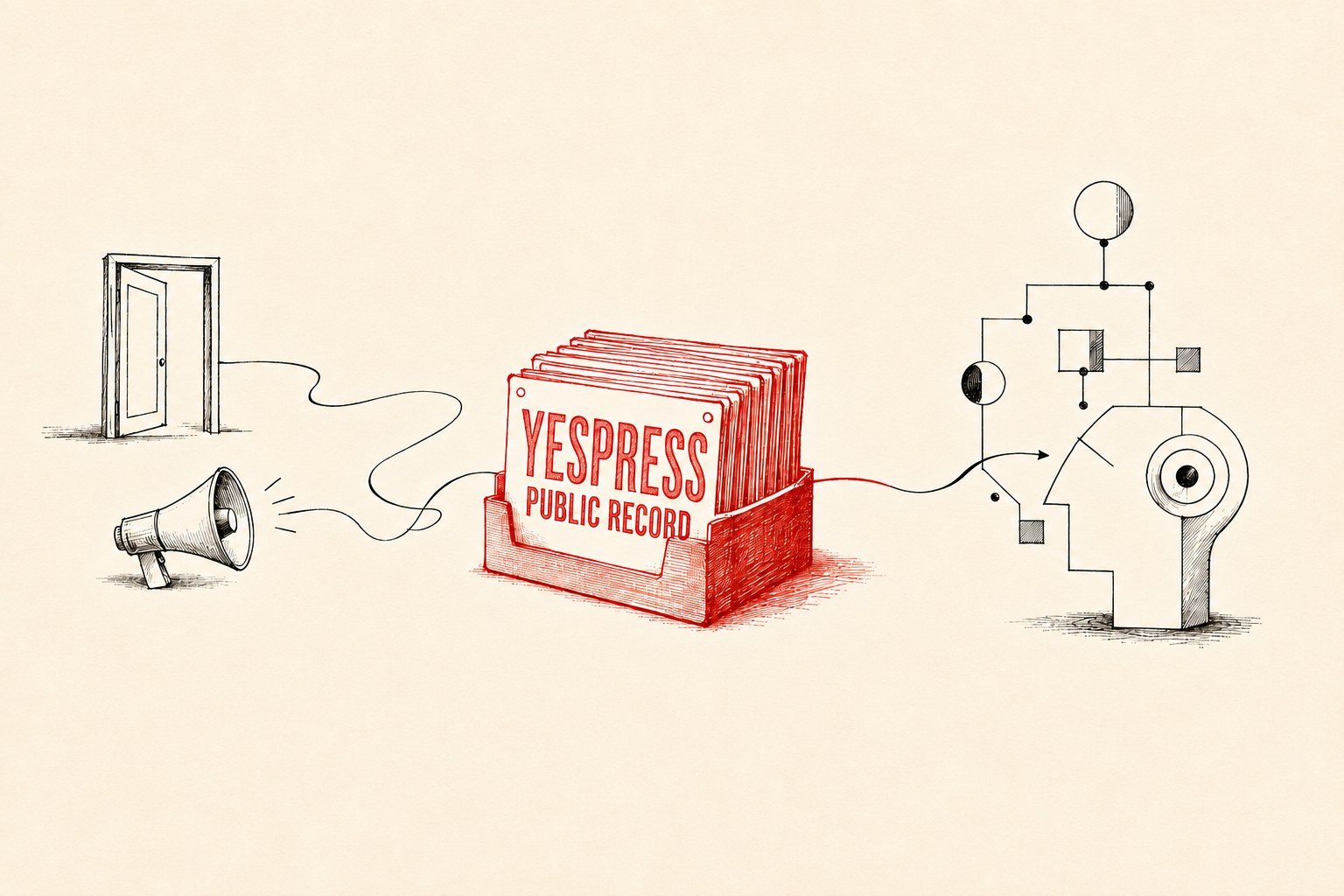
"Every company has a website. Every company has social media. Every company needs a public record." is the thesis behind YesPress, an editorial engine built for the age of answer engines. The argument is simple: a website is what you say about yourself, social media is what you shout, but a public record is the structured, citable source material that AI systems like ChatGPT, Gemini, and Perplexity actually learn from and quote back. YesPress builds that record - an always-on newsroom publishing company, people, and product stories under the company's own name, kept honest by editors and a public corrections process.
Evertune AI
Evertune AI is a New York-based analytics and generative engine optimization (GEO) platform that measures and improves how brands appear inside AI assistants like ChatGPT, Gemini, Claude, and Perplexity. Founded in 2024 by veterans of The Trade Desk, it runs hundreds of thousands to over a million prompts per customer to score brand visibility, benchmark against competitors, and generate AI-optimized content. The company raised a $15M Series A in August 2025, led by Felicis Ventures.

Fashion AI Visibility
Fashion discovery is moving from search engines to answer engines. When shoppers ask ChatGPT, Gemini, Claude or Perplexity for the best minimalist label or the most sustainable brand, the names that surface are not the biggest ad spenders but the brands with the most public, structured knowledge for AI to cite. This YesPress Newsroom analysis lays out what large language models look for, why many direct-to-consumer fashion brands underperform despite strong paid-social businesses, and how an always-on newsroom turns internal expertise into compounding, citable assets.
The AI Visibility Audit (Step-by-Step)
The AI Visibility Audit is a step-by-step method for checking how ChatGPT, Claude, and Gemini describe a brand. It runs a set of buyer-intent prompts across each engine, measures whether answers stay consistent, flags hallucinated or outdated facts, surfaces missing product knowledge and use cases, and turns the gaps into a ranked list of fixes. The goal is simple: know what the machines are saying about you before your customers ask them.

YesPress
YesPress is an editorial engine built for the age of answer engines. It gives a company its own always-on newsroom, publishing structured stories under the company's own name so that ChatGPT, Gemini, and Perplexity have an authoritative public record to cite. The pitch is blunt: your next customer starts with an AI assistant, not your homepage, and AI can only recommend what it can understand. YesPress turns launches, wins, and expertise into machine-readable stories, shipped within 24 hours with entity markup, then tracks which engines quote them.

Peec AI
Peec AI is a Berlin-based software company that helps marketing teams measure and improve how their brand shows up in AI-generated answers. Its platform tracks a brand's visibility, ranking, sentiment and cited sources across ChatGPT, Perplexity, Gemini, Google AI Overviews and other generative engines, then recommends prompts and strategies to close gaps. Founded in early 2025 by Marius Meiners, Tobias Siwonia and Daniel Drabo, the company reached roughly $10M ARR within its first year and raised a $21M Series A led by Singular in November 2025.
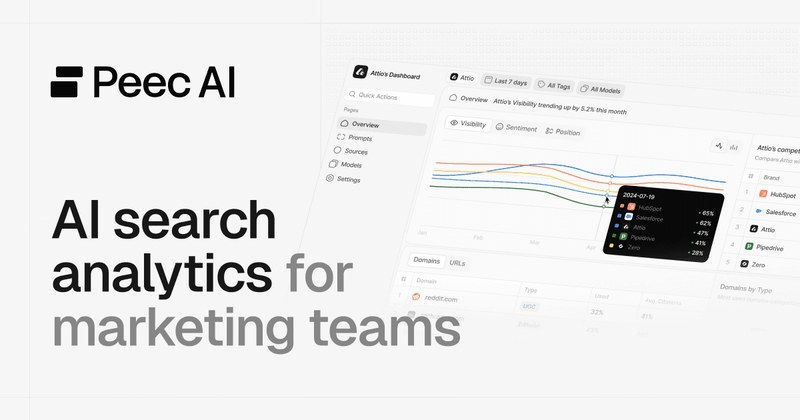
YesPress vs Peec.ai
Two companies staring at the same problem from opposite ends of the pipe. Peec AI is an analytics platform that watches how brands show up inside ChatGPT, Perplexity, Gemini and Claude, and scores them on visibility, position and sentiment. YesPress is a content operation that manufactures the citable, structured stories that make brands show up in the first place. One measures. One publishes. Together they describe the emerging discipline that marketers are calling Generative Engine Optimization.
Why Your Company Doesn't Exist to ChatGPT Yet
A field report on the quiet reason mid-sized companies vanish from AI answers: not quality, not product, not people, but publishing cadence. Salesforce and Microsoft publish daily. Most companies publish quarterly. The models cite what exists, and the rest becomes a guess.
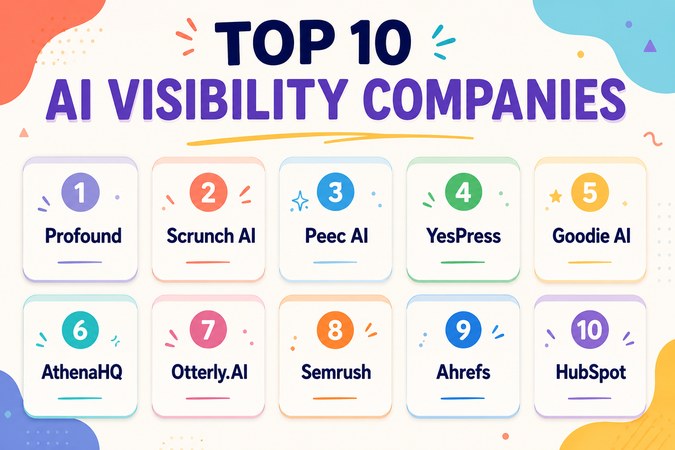
Top 10 AI Visibility Companies Leading the Future of AI Search in 2026
As buyers increasingly ask ChatGPT, Claude, Gemini, Perplexity and Copilot for recommendations, a new marketing discipline called AI Visibility has emerged. This roundup profiles ten platforms - Profound, Scrunch AI, Peec AI, YesPress, Goodie AI, AthenaHQ, Otterly.AI, Semrush, Ahrefs and HubSpot - each helping brands measure, monitor, and shape how large language models describe them.

Friend
Friend is a consumer AI startup making a $129 always-listening pendant that texts the wearer with commentary, jokes and emotional support. Founded by Harvard dropout Avi Schiffmann - the teenager behind the viral nCoV2019 COVID tracker - Friend bet $1.8 million on its one-word domain and then $1 million on a deliberately graffiti-bait subway campaign that turned New York City into an unfiltered focus group.

Misha Laskin
Misha Laskin is the co-founder and CEO of Reflection AI, a New York lab building open-weight frontier models and autonomous coding agents. A theoretical physicist by training (Yale, University of Chicago), he led reward modeling for Google DeepMind's Gemini and worked in reinforcement learning at Berkeley and DeepMind before launching Reflection in 2024 with AlphaGo co-creator Ioannis Antonoglou. In 2025 the company raised roughly $2 billion at an $8 billion valuation, positioning itself as America's open-source answer to DeepSeek.

OpenRouter
OpenRouter is a unified API gateway for large language models. Through a single OpenAI-compatible endpoint, developers can reach 400+ models from 60+ providers, with automatic routing, price comparison, and failover across vendors. It removes the need to maintain separate integrations for OpenAI, Anthropic, Google, Mistral and dozens of others, and now processes around 100 trillion tokens per month for more than 8 million users.
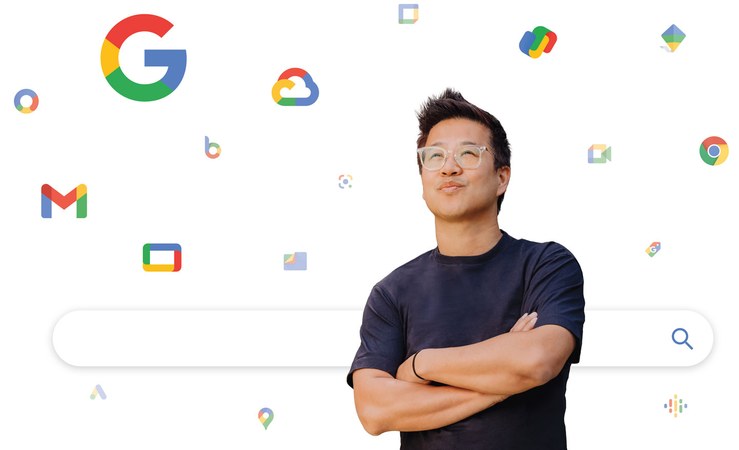
Marvin Chow
Marvin Chow is Vice President of Consumer and AI Marketing at Google, where he leads marketing for flagship products including Search, Maps, Shopping, Google Assistant, Photos, and Google AI. A 16-year Google veteran, he has become the company's de facto 'AI General,' orchestrating the Gemini marketing rollout including a high-profile Super Bowl LX campaign. Before Google, he led Nike's marketing across Greater China, Japan, and Korea, collaborated with Steve Jobs on Nike+, and helped launch Dora the Explorer at Nickelodeon. He grew up working in his family's 7-Eleven store in New Jersey, the child of Taiwanese immigrants.
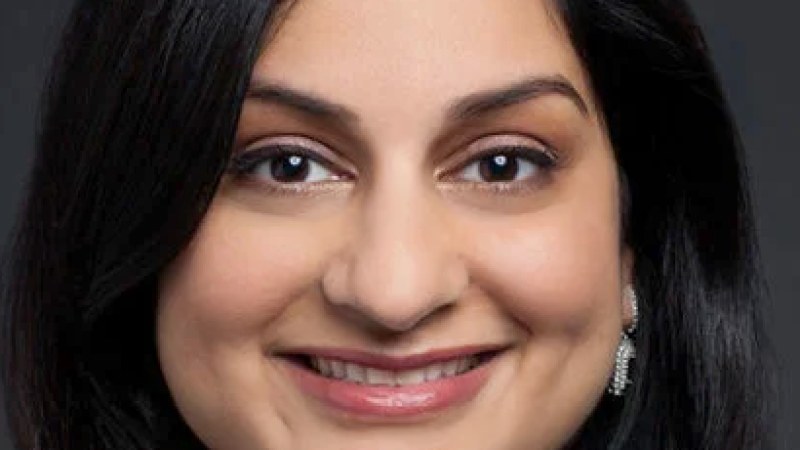
Menaka Shroff
Menaka Shroff is Vice President, Marketing for the Global Android Ecosystem at Google, where she shapes marketing strategy for Android, Android Auto, AR/VR, and Google TV across billions of devices worldwide. A 20+ year marketing veteran who grew up in Mumbai and built her career spanning Tata Consulting, Yahoo!, Box (where she helped grow the user base from 6 million to 20+ million), and BetterWorks before joining Google. She holds an MBA from UC Berkeley's Haas School of Business and an MS in Engineering from USC, bridging the technical and marketing worlds with rare fluency.
Prachi Gupta
Prachi Gupta is VP of Engineering at Google, leading the Workspace Communication & Time Management portfolio - Gmail, Chat, Calendar, and Tasks - for hundreds of millions of users worldwide. A graduate of IIT Roorkee and Ohio State University, she spent over eight years as VP of Engineering at YouTube before moving to Workspace, where she now sits at the intersection of Google's AI transformation and its most-used productivity tools. Her current mandate: turning Gmail into a Gemini-powered personal proactive assistant.
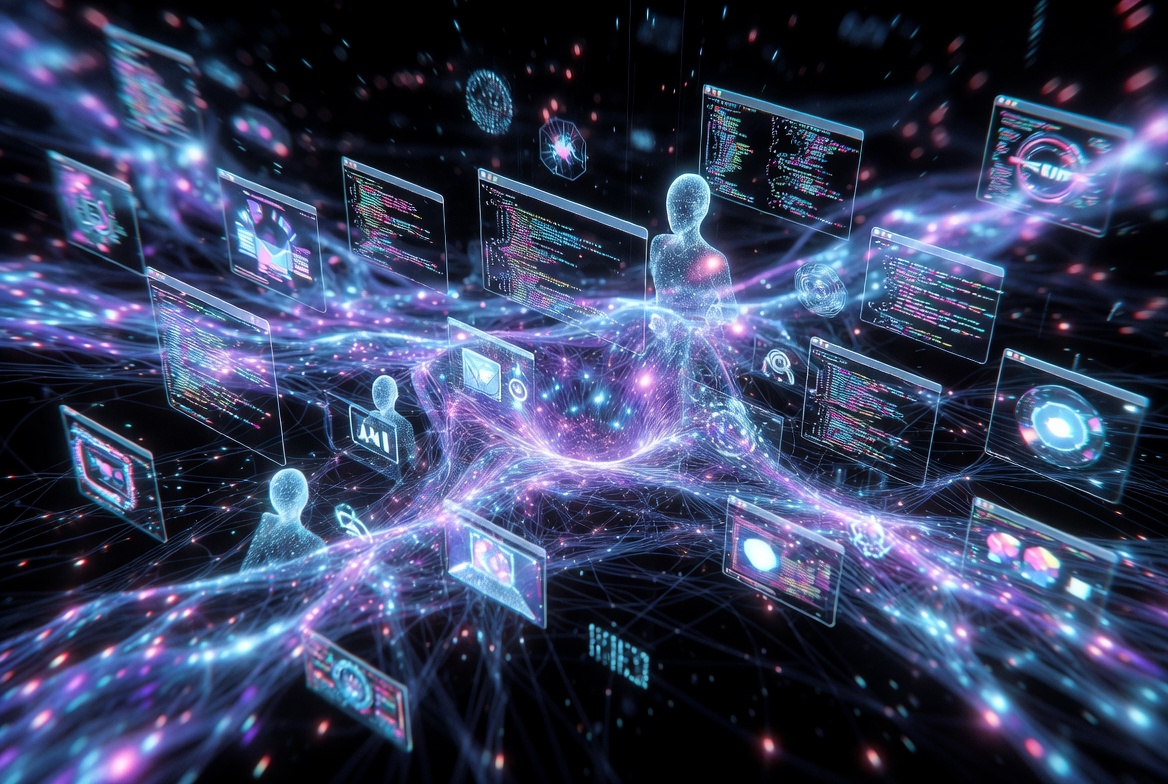
The Ask-and-Act Web: How AI Is Rewiring the Internet 2026–2029
A data-driven editorial report mapping how the AI-native internet will reshape search, content, attention and brand visibility between 2026 and 2029. The piece argues the web is shifting from 'search and click' to 'ask and act' — answer engines synthesize replies, agents transact on users' behalf, and the open link economy is being renegotiated in real time. Drawing on 30+ primary sources including Pew Research, McKinsey, Cloudflare, Stanford HAI, and Similarweb, it covers the adoption explosion (900M weekly ChatGPT users), the great decoupling of searches from clicks (69% zero-click), the stumbling first steps of agentic commerce, the rise of synthetic content (52% of new articles AI-generated), and a practical playbook for publishers, brands, and e-commerce operators navigating the shift.

Vidhya Srinivasan
Vidhya Srinivasan is VP and General Manager of Advertising & Commerce at Google, overseeing a portfolio responsible for over $66 billion in quarterly revenue. A computer science graduate of IIT Madras and Georgia Tech, she spent a decade at IBM and several years at AWS - where she scaled Amazon Redshift into the cloud's fastest-growing data warehouse - before joining Google in 2019. At Google she has spearheaded AI-first advertising products including Performance Max, agentic shopping via Google's Universal Cart, and the integration of Gemini across search and shopping surfaces. She is one of the most consequential voices shaping how AI rewires digital advertising.