Who He Is
Mid-Stride at the Center of AI's Biggest Marketing Bet
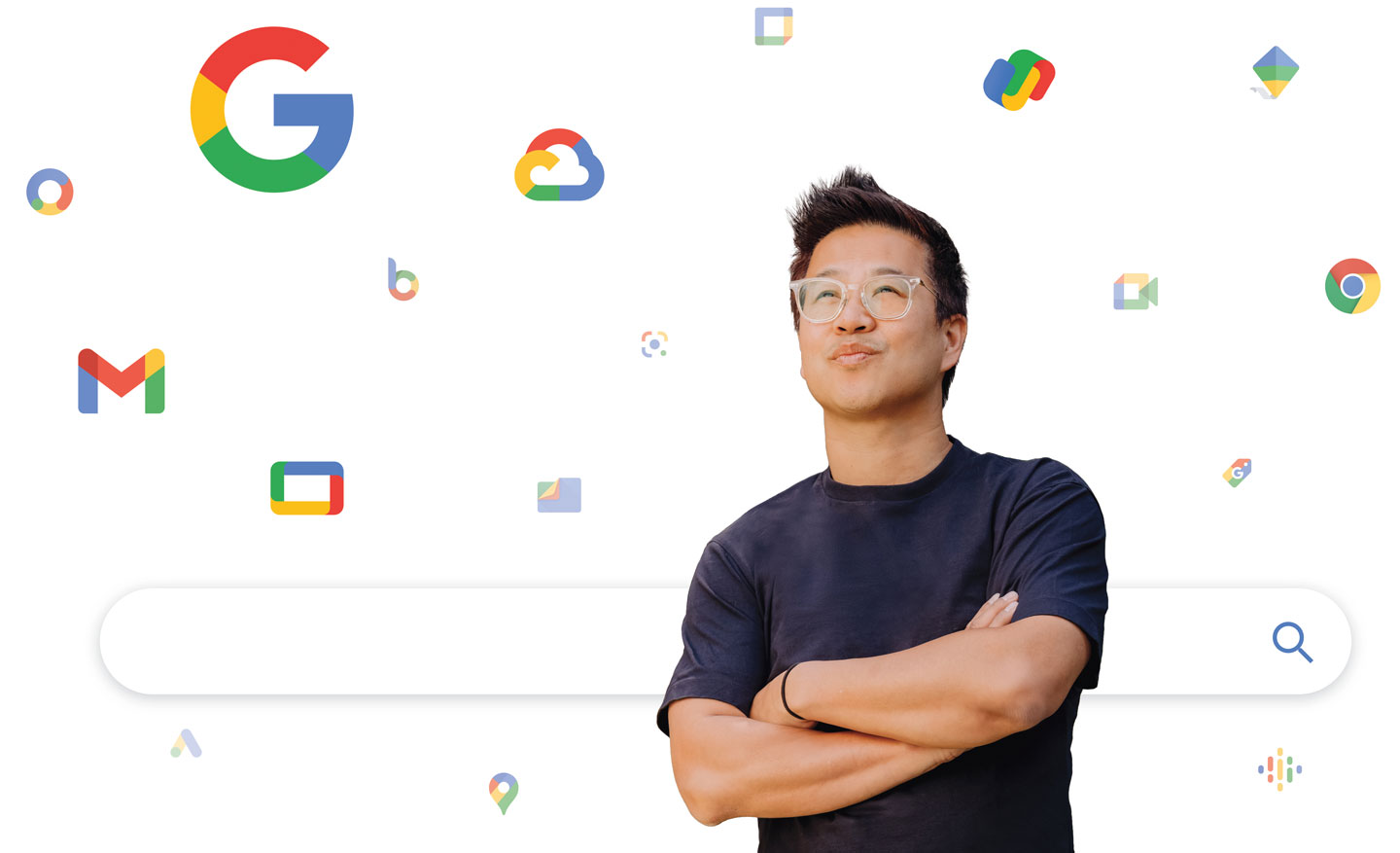
Marvin Chow is the Vice President of Consumer and AI Marketing at Google - which means he is, right now, the person responsible for making the most powerful AI tools on earth feel like something a grandmother would actually want to use.
When Gemini debuted on national television during Super Bowl LX on February 8, 2026, the ad showed a mother and son using Google's AI to redesign their home. No jargon, no demo reel, no robot voice. Just help. That was Chow's signature: the big tech moment dressed down into something human. The ad was titled "New Home." Chow has been building versions of it for 30 years.
His title is a mouthful - VP of Consumer and AI Marketing - but the job is simpler to describe: he makes people care about Google's products. Not the engineers. Not the demos. The actual lived experience of using something. His team numbers around 250 and covers everything from Search and Maps to Shopping, Photos, Google Health, Augmented Reality, and the full Gemini suite. He also orchestrates Google I/O, the annual event where Google shows the world what it's been building. Think of him as the company's editor-in-chief, with a budget that could fund a small country's space program.
The unofficial title inside Google is "AI General." As Gemini rolled out across the company's product portfolio in 2025 and 2026, Chow became the central figure coordinating AI marketing across divisions - a sprawling, fast-moving brief that required someone who could hold strategy and storytelling in the same hand simultaneously.
He has been at Google since 2010. Before that, he spent seven years at Nike managing international marketing across China, Japan, and Korea - and sat in the room when Steve Jobs and Nike's leadership built Nike+. Before that, he helped launch Dora the Explorer at Nickelodeon. And before that, he was an intern at Reebok who showed up early and stayed late.
The Origin
A 7-Eleven in New Jersey, and the Long Road to Mountain View
Chow grew up in New Jersey as the child of Taiwanese immigrants. His family ran a 7-Eleven, and as a teenager, he worked there. It was the kind of upbringing where the adults had already sacrificed what needed to be sacrificed, and the expectation was simple: excel, then go into medicine. Chow took the excellence and left the medicine behind.
He was one of few Asian students in his community and experienced discrimination early. It didn't make him quieter. It made him study how people connect - and disconnect. That curiosity about human behavior is probably the most persistent thread in his career, running from New Jersey through Boston College, through Seoul and Tokyo and Shanghai, to San Francisco's Noe Valley, where he now lives with his wife Ji-Young and their two daughters.
The daughters are named Polaire and Ceboline. Both names are French. He met Ji-Young while working in Korea in 2004. This is not a man who settled.
Marketing is about storytelling. It's about connecting with people. And mastering those fundamentals like empathy, insights, what motivates people, how to connect with people through story and words - that is the craft.
- Marvin Chow
At Boston College's Carroll School of Management, he studied Marketing and Information Systems - an odd pairing at the time that now looks like prophecy. He arrived as a shy kid and left as something else entirely: extroverted, curious, running multiple clubs simultaneously. A retired professor named Peter Olivieri handed him what would become his North Star: a project to help football coaches analyze game video through data points. Chow built the system. He was 19. The logic of it - data serving intuition, not replacing it - has governed his work ever since.
Boston College gave him its Distinguished Alumni Award in 2016 for his work spreading the benefits of Big Data. By then, he had spent 20 years proving that data without empathy is just noise.
The Career
From Reebok Intern to Google's AI Command
The career reads like someone was constructing the perfect resume for a job that didn't exist yet. Reebok (internet strategy, the early years). Nickelodeon (e-commerce, launched Dora). Nike (seven years, three countries, one Steve Jobs meeting). Google (sixteen years and counting, currently running the AI marketing operation).
Reebok
Internet Strategy
1995-2000
Nickelodeon
E-Commerce & Marketing
2001-2003
Nike
Marketing, Asia-Pacific
2003-2009
Google
VP, Consumer & AI
2010-Now
The Nike chapter is worth slowing down for. Chow was based first in Korea, then Japan, helping lead marketing for what were then some of the brand's fastest-growing markets. He was helping revitalize Nike in Greater China when the brand was fighting for traction - he drove double-digit growth. The work required him to understand how global brands land in local cultures, and how to make something aspirational feel personal. The lesson traveled with him.
The Steve Jobs story is not a name-drop. Nike+ - the collaboration between Nike and Apple that let runners track their workouts on their iPods - was a genuinely novel product for 2006. It merged two consumer brands with different philosophies and asked both to share the stage. Chow was in the room when that logic was being worked out. Years later, when he is talking about Google's AI products needing to feel like a "new kind of help" rather than a technology showcase, you can hear the Nike+ DNA.
He joined Google in 2010, initially working on Google+. That platform did not survive. Chow did. He climbed through the marketing organization over the next decade and a half, eventually taking on the VP role that now encompasses both the legacy consumer portfolio and the new AI one.
The Philosophy
Three Principles That Never Changed
01
Data serves empathy, not the reverse
"It's not how much data you collect. It's what you do with the data you collect." Chow has been repeating this since his football analysis project at Boston College. The insight is that numbers identify the question; humans have to answer it.
02
Advocacy beats impressions
"Getting a million people to talk passionately about what you stand for is still one of the biggest opportunities in this new era." He built his career on the logic that earned trust compounds, paid attention decays.
03
Purpose must be structural, not seasonal
Brands should pick issues aligned with their core values and commit - in words and deeds. "Sometimes choosing not to speak on every issue." The discipline of restraint is part of the philosophy.
The brands that tell great stories about people, products or experiences are successful - and I almost don't call that marketing. When you look around the world at marketing, that is very rare.
- Marvin Chow
The philosophy is not complicated, but it is consistent - which is the hard part. Chow has held these positions across Reebok, Nickelodeon, Nike, and now Google, and they have shaped wildly different campaigns without feeling like dogma. The Super Bowl Gemini ad is the most recent proof: 60 seconds of warmth and utility, no features list, no product walkthrough, no robot. Just a mother helping her son feel at home somewhere new, with Google Gemini quietly doing what it was built to do.
Timeline
Thirty Years in the Making
-
1991-1995
Boston College, Carroll School of Management - Marketing & Information Systems. Built a data system for football coaches with Professor Peter Olivieri. Arrived shy; left running clubs.
-
1995-2000
Reebok - Joined as intern after a pivotal conversation with alum Brenda Goodell. Helped pioneer the company's early internet strategy when most brands were still figuring out what the internet was.
-
2001-2003
Nickelodeon - E-commerce and marketing. Part of the team that launched Dora the Explorer, which became one of the most successful children's franchises of the 2000s.
-
2003-2009
Nike - Seven years across Korea, Japan, and Greater China. Led NIKEiD and NIKE+ initiatives. Collaborated with Steve Jobs on Nike+. Drove double-digit brand growth in China.
-
2010
Joined Google. Worked on Google+. Started building what would become a 16-year run inside the world's most-used software company.
-
2016
Boston College Distinguished Alumni Award for work spreading the benefits of Big Data.
-
2019
Adweek Brand Genius. The industry recognizes what Google's marketing had quietly become under his direction.
-
2021
Adweek 50. Gold House 100 Most Impactful Asians. Two separate organizations, same conclusion.
-
2025-2026
Leads Google Gemini AI marketing campaign. Produces Super Bowl LX ad "New Home" (Feb 8, 2026). Announced LA28 Olympic and Paralympic Games partnership. Earned the internal title: "AI General."
Context
The Scale of the Brief
Google Consumer Products Under Chow's Marketing Umbrella (approximate active users)
-
Google Search2B+
-
Google Maps1B+
-
Google Photos800M+
-
Google Shopping700M+
-
Gemini AIScaling fast
Approximate figures. Gemini is the newest and fastest-growing of Chow's marketing responsibilities.
The AI Chapter
Selling Gemini Without Selling Technology
The challenge with marketing AI is that most AI marketing is terrible. It promises transformation while showing demos. It claims to be human while sounding like a press release. Chow's approach is the opposite.
The Gemini "New Home" Super Bowl spot showed a concrete moment: a mother and her son, using AI to make a new apartment feel like home. No features mentioned. No product walkthrough. The emotional logic is identical to a Nike ad - the product disappears into the experience, and what you're left with is the feeling.
Chow describes Gemini's positioning as "a new kind of help" rather than just another chatbot. This is not a linguistic distinction. It shapes everything - which use cases get featured, what tone the campaigns take, how technical the language gets (answer: not very). It's the kind of strategic clarity that only comes from someone who has been doing this for 30 years and has watched a lot of technology marketing get the tone exactly wrong.
Chow also announced Google's partnership with LA28, Team USA, and NBCUniversal in early 2026 - an interactive fan experience spanning the Olympic and Paralympic Games. It's another example of the same playbook: find the moment where people are already emotionally invested, and let Google be useful inside it.
The "AI General" nickname inside Google is earned. When a company the size of Google decides to move every product simultaneously toward an AI-first positioning, someone has to hold the narrative together across teams that have never had to coordinate before. That is Chow's current job, on top of the day-to-day of running marketing for products used by billions of people.
Watch
Chow in His Own Words
The Details
Facts Worth Knowing
His Twitter handle is "Cat5BoatShoes" - Cat5 as in ethernet cable, boat shoes as in prep school footwear. The combination says something about him that no bio could.
His daughters are named Polaire and Ceboline - both French, both unusual. He met their mother Ji-Young while working in Korea in 2004.
Helped launch Dora the Explorer at Nickelodeon before most people working in AI marketing today had finished high school.
Worked the counter at his family's 7-Eleven in New Jersey as a teenager. His parents were Taiwanese immigrants who built a life there. He carries that origin as a point of pride, not a footnote.
Sat in the meeting where Steve Jobs and Nike figured out how to build Nike+. The product launched in 2006 and changed how runners thought about data before "wearables" was a word anyone used.
Co-chairs Google's Asian Leadership Group and serves as Executive Sponsor of Asians in Marketing at Google - using his platform internally the same way he uses it externally.
Describes himself as a "nomad, dreamer, and geek" - which tracks: he lived in three countries on two continents before settling in San Francisco's Noe Valley.
His first data analysis project - building a system to help football coaches review game video - happened in 1991 at Boston College. The insight that data should serve intuition has never left him.