Tagged: text-to-speech
15 results
Prosa.ai
Prosa.ai is an Indonesian deep-tech company that builds natural language processing and speech technology for Bahasa Indonesia. Founded in 2018 by ITB academics and an industry veteran, it develops NLP APIs, speech-to-text and text-to-speech engines, voice biometrics, chatbots and analytics that let banks, insurers, government agencies and enterprises understand and act on Indonesian-language text and voice data - a market largely underserved by global AI providers.

Dasha
Dasha is a voice AI platform that lets developers build, test, and deploy human-like conversational voice agents to automate phone-based business processes such as sales calls, customer support, and lead qualification. Founded by Vladislav Chernyshov and Ilya Stupakov, the company built its own low-latency speech recognition and text-to-speech stack, and exposes conversation design through a purpose-built scripting language (DashaScript) and a JavaScript/Node.js SDK. It positions itself as infrastructure for developers who want production-grade, real-time voice AI at scale.

The AI-Native Empire: ElevenLabs and Legora on the All-In Stage
Recorded live at the RAISE Summit inside the Louvre, this two-part All-In Podcast conversation, hosted by Jason Calacanis, features ElevenLabs co-founder and CEO Mati Staniszewski and Legora founder and CEO Max Junestrand. Staniszewski details how ElevenLabs raced from a research project to roughly $600 million in annual revenue in under three years, why the company runs on small engineer-embedded teams with zero product managers, how it protects voices from impersonation while paying creators over $22 million, and how it out-competes frontier labs like OpenAI and Anthropic on voice. Junestrand explains how Legora is compressing the trillion-dollar legal-services market with AI agents, growing 50% quarter-over-quarter for seven straight quarters, deploying 'forward-deployed lawyers,' and disrupting legacy players like LexisNexis and Westlaw.

Syllable
Syllable is a Mountain View, California company that builds, deploys, and manages AI voice and text agents, originally to automate patient communication for health system call centers and medical practices. Founded in 2016, it has expanded from healthcare-specific natural language understanding into a broader, model-neutral agentic platform that lets organizations build agents once and run them across any cloud with governance, analytics, and compliance built in. The company has raised roughly $81.7M+ across Seed through Series C, counts investors like TCV, Oak HC/FT, Verily, and Northwell, and acquired Actium Health in 2024.

Applied Brain Research
Applied Brain Research (ABR) is a Waterloo, Ontario AI hardware company spun out of the University of Waterloo's Centre for Theoretical Neuroscience. It builds brain-inspired chips and software that run real-time AI - full-vocabulary speech recognition, text-to-speech and sensor processing - directly on edge devices at power levels measured in milliwatts. Its patented state-space models and the Legendre Memory Unit power the TSP1 Time Series Processor, which ABR calls the world's first single-chip solution for full-vocabulary speech recognition, doing the work of cloud voice AI while consuming 10 to 100 times less power.

Speechify
Speechify is the world's largest text-to-speech platform, turning any text - PDFs, books, emails, Google Docs, web pages - into natural-sounding audio. Founded by dyslexic Brown University student Cliff Weitzman and his brother Tyler, the company grew from a personal reading aid into an AI voice empire spanning consumer apps, a voice cloning and dubbing studio for creators, and a text-to-speech API for developers. It serves 50+ million users across mobile, Chrome extension, and desktop, offers hundreds of voices in 50+ languages, and won the 2025 Apple Design Award for Inclusivity.

Rime
Rime is a San Francisco voice AI company building human-sounding text-to-speech models for enterprise. Founded by linguists and engineers, its Mist and Arcana models power more than 100 million customer phone conversations every month for brands including Domino's and Wingstop, with sub-200ms response times and pronunciation control designed for production call centers.

Cliff Weitzman
Cliff Weitzman is the founder and CEO of Speechify, the text-to-speech app that reads anything aloud in natural AI voices and now serves over 56 million users in 200+ languages. Diagnosed with dyslexia in third grade, he taught himself English by replaying a Harry Potter audiobook 22 times, then built the software he wished he'd had to keep up with the reading load at Brown University. What began as a personal hack for one dyslexic student became a Forbes 30 Under 30 company and an Apple Design Award winner.

Zyphra
Zyphra is a superintelligence research and product company building efficient, open foundation models and a full-stack AI cloud. Best known for its SSM-hybrid Zamba models, the ZAYA1 reasoning family trained entirely on AMD hardware, and the Zonos text-to-speech system, Zyphra argues that frontier intelligence should run cheaply, locally, and outside the walled gardens of a handful of labs. In June 2025 it raised a $100M Series A at a $1B valuation led by Jaan Tallinn.

Nagish
Nagish is a New York-based assistive-technology company that uses proprietary AI to caption phone calls in real time, converting speech to text and text to speech so people who are deaf or hard of hearing can make and receive calls independently and privately - without a human relay operator. Its name means 'accessible' in Hebrew. The company is one of the few firms certified by the FCC to provide telecommunication relay services and offers its consumer app for free.

Deepgram
Deepgram builds foundational voice AI - speech-to-text, text-to-speech, and full voice-agent APIs - used by more than 1,300 enterprises including NASA, Spotify, Twilio and Citibank to give machines the ability to listen, understand, and respond in real time.
Vapi
Vapi is a San Francisco developer platform for building, testing, and deploying conversational voice AI agents over phone and web. It abstracts the messy plumbing of speech-to-text, LLMs, text-to-speech, and telephony so developers can ship human-sounding voice agents in minutes, with sub-500ms latency and enterprise-grade compliance.

Scott Stephenson
Scott Stephenson is the co-founder and CEO of Deepgram, the voice AI company building foundational speech-to-text, text-to-speech, and voice agent models from scratch. A particle physicist who once helped build a dark-matter detector two miles underground, he now runs an AI company used by NASA, Spotify, and Twilio.
Lily Clifford
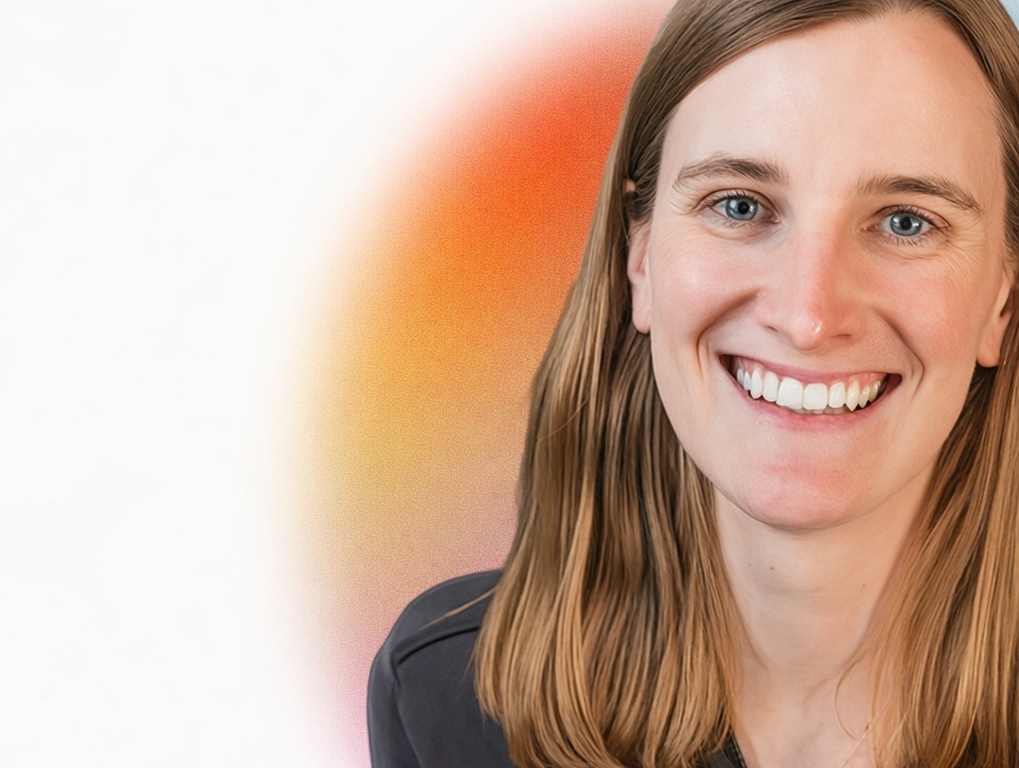
Lily Clifford is the CEO and co-founder of Rime, a San Francisco-based voice AI company building enterprise-grade text-to-speech models with a linguistic edge. A Stanford NLP PhD dropout with a background in sociophonetics, she left academia in 2023 to prove that AI voices could sound like a friend rather than a voice actor. Rime now powers over 100 million phone conversations monthly for brands like Domino's and Wingstop, having raised $8.6M in total funding. Her counterintuitive thesis - that slightly 'bored' voices outperform perfectly polished ones - has become the foundation of a fast-growing enterprise voice platform.
ElevenLabs
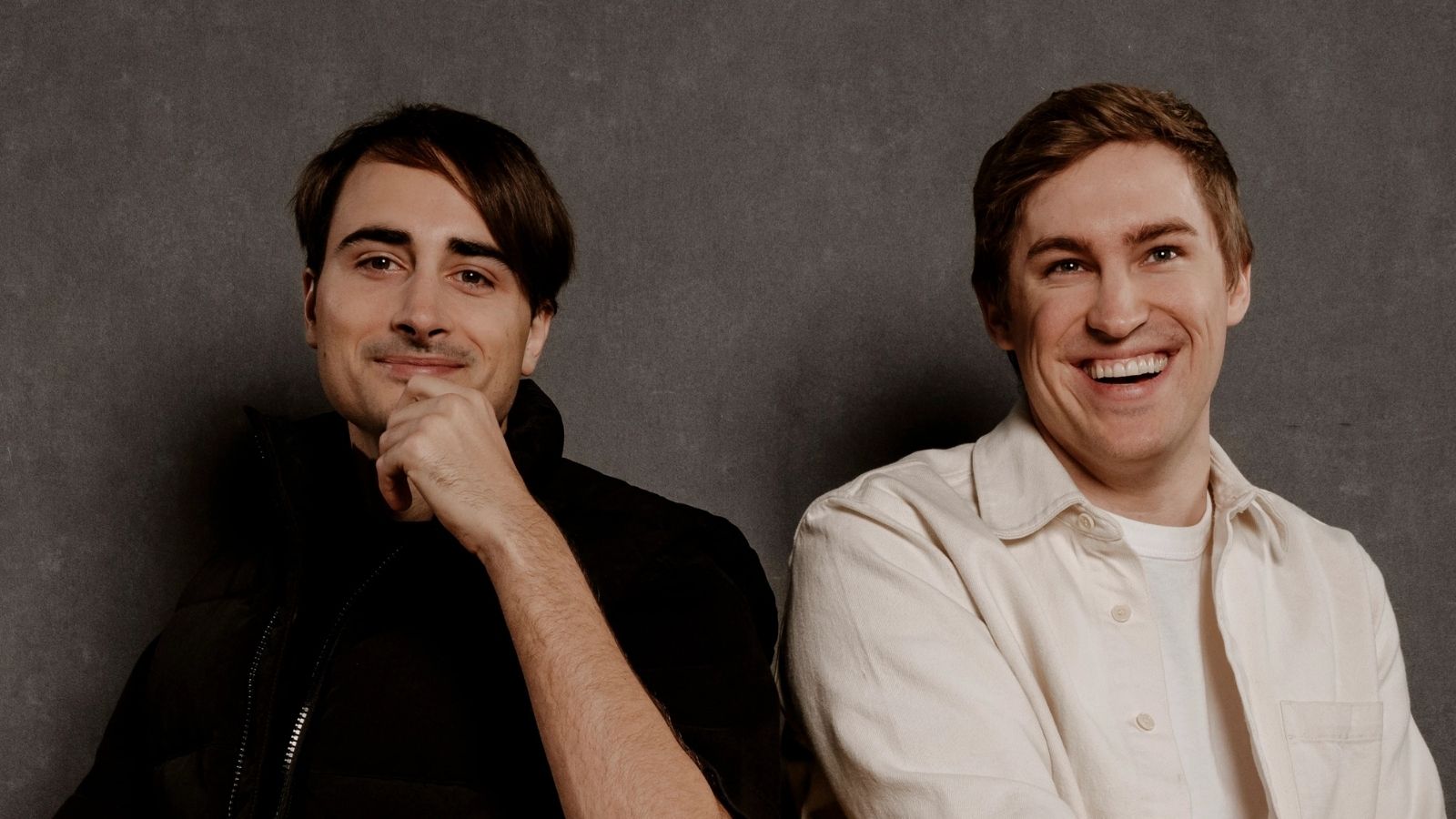
ElevenLabs is an AI research and product company that builds human-like voice technology. Founded in 2022 by two Polish engineers frustrated by badly dubbed movies, it grew from zero to $200M ARR in three years and reached an $11 billion valuation by February 2026. Its platform covers text-to-speech, voice cloning, AI dubbing, conversational agents, and speech-to-text across 70+ languages, used by everyone from independent creators to over 60% of Fortune 500 companies.