auto-finance
(23)
Primeritus and the art of the handoff
A recovered car still has a long way to go. Primeritus connects the people, paperwork, and software that turn a lender’s collateral back into cash.

defi SOLUTIONS: The seven-month lesson in lending’s hidden work
A Mazda Financial Services launch reveals what defi SOLUTIONS really sells: configurable software, experienced operators, and fewer loose ends between approving a loan and collecting its last payment.
Lightico keeps the customer on the line
A signature is easy. Finishing the loan, claim or handset purchase around it is harder. Lightico sells regulated businesses a way to close the gaps between those steps.

Lender Compliance Technologies and the money left after the loan
A paid-off vehicle loan can leave an unfinished refund. Lender Compliance Technologies gives lenders a system for following that money - and a record of what happened along the way.

Salient Moved Into the Lender's Office. Then the Calls Changed.
A Steve Jobs voice clone opened a door. The harder work was sitting beside a lender, learning the rules, and making a machine answer for every call.
Alfa’s real product is a lender’s next chapter
Behind the car payment sits a software problem that can outlive the car. Alfa Financial Software has built its business around replacing those systems - and staying for the next chapter.

The Spare-Bedroom Fintech That Put 50 Lenders in the Passenger Seat
CarClarity began with one car enthusiast's frustration at a foggy finance process. Six years later, its telling advantage is not removing people from the loan - it is giving them better software and more lenders to work with.

Capital One Built a Bank Like Software. Now It Has a Payment Network.
The credit-card upstart spent three decades turning data into a bank. With Discover's network and Brex's software now inside the company, its next test is whether one institution can make lending, payments and financial tools feel like a single product.
Gene Hall Runs Marketing Where the Math Never Sleeps
Inside Capital One, one of America's most data-obsessed banks, a divisional CMO answers a harder question than most marketers ever face: can you prove it worked?

CarMax
The company that killed the haggle in 1993 now sells three-quarters of a million used cars a year - and is trying to prove that a car lot can also be a website.

Santander US
Santander's American business is part neighborhood bank, part national auto lender and part digital-bank experiment. The connecting idea is simple: gather deposits more efficiently, then put that money to work across one of the world's largest financial markets.
Ally
Ally began as the machinery behind America’s dealerships. A century later, its old auto-finance engine is funding one of the country’s largest digital banks - and a quieter experiment in what a full-service fintech can become.

Andrew Rostami
From programming in his parents’ basement to designing finance products at national scale, Andrew Rostami has spent a career turning complex credit systems into practical choices for merchants, dealers, and consumers.

DataOceans Makes the Boring Letters From Your Bank Work
The Norcross, Georgia company has spent two decades on the software most founders ignore: the statements, notices, and adverse-action letters regulated industries are legally required to send. It turns out there is a real business in the mail nobody wants.

DataOceans
The letters your bank sends were probably built by a company you have never heard of. DataOceans wants to make sure you can actually read them - and pay online while you are at it.
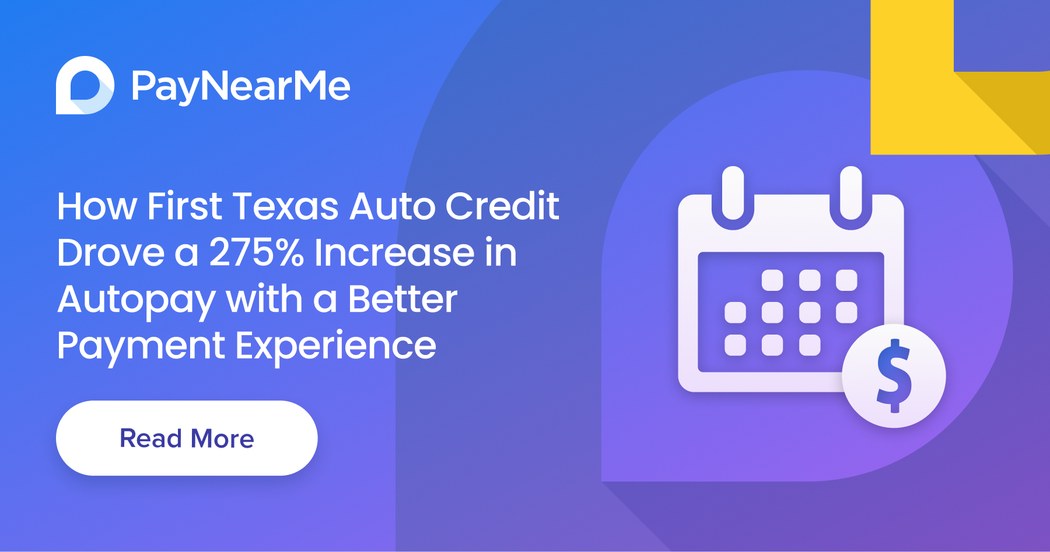
The Lender That Wanted Its Customers to Leave - And Made Paying Them Effortless
A PayNearMe case study detailing how First Texas Auto Credit, a Texas-based independent auto finance company focused on helping borrowers rebuild credit, used the PayXM payment experience platform to grow autopay enrollment from 4.8% to 18% - a 275% increase - over nine months. By embedding Smart Link one-click payment links in text messages and offering debit, Apple Pay and cash-at-retail options, the lender pushed self-service payments past 55% of all transactions while reducing the load on its lean support team.

Global Mobility Service Inc.
Global Mobility Service Inc. (GMS) is a Tokyo-based FinTech and mobility company that gives people locked out of traditional credit a path to vehicle ownership. By pairing its proprietary IoT device, MCCS, with a cloud platform called MSPF, GMS lets lenders remotely manage and, if payments stop, safely disable a financed vehicle - turning driving behavior and payment data into a new form of creditworthiness. The model has extended auto loans to gig drivers, taxi operators and delivery workers across Japan, the Philippines, Cambodia and Indonesia who would otherwise be rejected by conventional screening.

Andreas Wallendahl
Andreas Wallendahl is a co-founder and COO of Tenet, a New York fintech that makes electric-vehicle ownership cheaper by rewiring how EV loans get made. An MIT-trained engineer and former McKinsey consultant who helped build businesses inside Ethereum studio ConsenSys, he now partners with credit unions, green banks and asset managers to originate lower-cost EV financing, and bundles free smart-charging so customers save while they drive. Tenet has raised roughly $73 million in equity plus more than $100 million in committed loan funding.
Prodigal
Prodigal is a Mountain View-based AI company building the only intelligence platform purpose-built for consumer finance. Trained on more than a billion real U.S. lending and collections interactions, its AI agents and applications - proAgent, proCollect, proPay, proScore, proNotes, proAssist and the PIE intelligence engine - help banks, lenders, auto-finance firms, collections agencies and healthcare revenue teams collect more payments, cut costs and stay compliant. More than 100 companies run on Prodigal, which has processed over a billion consumer interactions to date.

Caribou Financial, Inc.
Caribou is a Denver-based auto fintech that helps drivers cut the cost of owning their car. Through a digital platform, it connects car owners with a network of credit unions and community banks to refinance their auto loans, typically saving customers over $100 a month, and pairs that with an auto insurance marketplace and vehicle protection products. Founded in 2016 as MotoRefi and rebranded to Caribou in 2021, the company reached unicorn status with a $1.1 billion valuation after a $115 million Series C round led by Goldman Sachs in 2022.

Tenet - EV Financing
Tenet is a New York fintech building the first lending platform designed exclusively for electric vehicles. It uses the unique attributes of EVs, chargers, and battery storage to offer lower monthly payments, fast 24-hour funding, and a path to home electrification - increasingly as a lending-as-a-service engine that powers credit unions and other lenders.

AutoFi
AutoFi is a San Francisco-based automotive commerce and finance platform that lets dealers sell and finance cars online and in the showroom. It connects buyers to a network of lenders, runs real-time credit decisioning, and powers checkout for big-name OEMs and dealer groups - most notably Ford Motor Credit.

Kevin Singerman
Kevin Singerman is the CEO and Co-Founder of AutoFi, a San Francisco-based automotive fintech company he co-founded in 2015 with Mandar Gokhale and Jonathan T. Palan. AutoFi has become a leading end-to-end automotive sales and financing platform, processing over 1 million financing requests and $3+ billion in vehicle sales annually, backed by $125M+ in funding including an $85M Series C at a $700M valuation. Singerman built his career at the intersection of finance and technology, with stints at Deutsche Bank, SunGard, Stephens Inc., and LendingClub before launching AutoFi to transform how cars are bought and sold.