A car loan has a longer memory than a car showroom. It remembers the deposit, the repayment date, the late payment, the revised agreement and the final settlement. Multiply that paperwork across a lender’s portfolio and the cheerful moment when someone gets the keys becomes a formidable software assignment. This is where Alfa Financial Software earns its living.
The London company supplies the systems behind automotive and equipment finance: the machinery that helps lenders originate agreements, service them, collect payments and handle what happens at the end. Its customers include CarMax Auto Finance, Siemens Financial Services and Novuna. The borrower may never encounter the Alfa name. The lender’s operations team has rather more reason to know it.
The interesting part is the duration of that relationship. Choosing a core finance platform commits a business to years of configuration, integration and learning. Alfa’s opportunity lies in making that investment useful long after the first launch. Its greatest selling point may be a decidedly unfashionable one: knowing the paperwork well enough to change it without losing the plot.
The contract keeps going after the sale
Alfa Systems covers origination, servicing, collections and wholesale finance. A lender can use it for a particular function, adopt a preconfigured implementation or install a broader platform. That range matters because an equipment lessor and a multinational automotive finance operation can share financial mechanics while having very different appetites for a replacement project.
Consider servicing. Alfa’s workflow and business rules can coordinate invoicing, payments and accounting across assets and jurisdictions. APIs allow lenders to expose functions through customer and dealer applications. For the person trying to settle an agreement or check a balance, the practical benefit is straightforward: fewer occasions when someone has to carry information from one system to another.
That places Alfa in specialist financial software, with alternatives including NETSOL and Solifi. Both also address asset finance. The useful comparison therefore goes beyond a checklist of lending functions. Buyers must establish which platform fits their portfolios, which integrations will require work and which supplier can help their own staff complete the transition.
Alfa brings implementation consulting, architecture, training and business transformation services to that contest. It also works with integration partners including Accenture, ITDS and Teamwill. The expertise for sale combines software engineering with familiarity with lending operations. A technically elegant installation is of limited comfort if the finance team cannot reconcile the migrated balances.
Nineteen weeks, with a very specific starting line
Hampshire Trust Bank provides the compact version of Alfa’s argument. Its specialist business finance division reached live production for new business in 19 weeks using Alfa Start. The bank accepted a preconfigured starting point, with preparation and scoping ahead of implementation. Business, finance, testing and IT participated in the project.
The qualification is important: this was initially a launch for new business. After Covid arrived, HTB moved 2,500 existing customers and their agreements into Alfa because its former platform could not process payment holidays effectively. A carefully bounded launch became a platform for a subsequent response to an emergency.
To live production for new business. Existing agreements followed later.
Today, the US equipment finance edition of Alfa Start describes more than 40 predefined back-office processes and 20 standard business intelligence reports. It includes configuration for products, billing and ledger mappings, alongside integration options. The commercial proposition is to reuse decisions that other lenders have already made successfully.
The copyable lesson is scope discipline. Start by testing whether an established process meets the business need. Treat each requested departure as an investment with consequences for delivery and maintenance. A lender whose essential requirements sit far outside the supplied configuration should expect a different project. A published fast implementation is evidence of one outcome, not a timetable for every buyer.
At Siemens, the hard part had 100 participants
The larger version is less tidy. Siemens Financial Services’ upgrade involved more than 100 people across 15 countries and ran for two years. The team prepared by examining country requirements, then moved through foundation, build and simulated day-to-day testing. Much of the software was adopted in standard form.
“Our key challenges were around backlog and scope management”Marc Friedman Morata, SFS IT Project Lead
Late requirements still appeared. Alfa added staff when needed, and Siemens acknowledged bumps during the opening days and weeks after launch. That is useful testimony precisely because it contains friction. The account points to familiar pressure points: controlling requests, preparing users and getting enough knowledgeable people into the work.
CarMax’s timeline supplies another reality check. It engaged Alfa in 2017 and went live in October 2021. The project included a major data migration and integration with the retailer’s wider systems. Former finance chief Mike Callahan praised the relationship: “From day one the Alfa team fit in seamlessly.” Compatibility between teams mattered alongside compatibility between applications.
These cases make implementation time tangible. They also suggest a sensible buying exercise: ask for reference projects that resemble the intended migration, including the awkward parts. The most useful demonstration may be a team explaining how it handled a late requirement or a disputed balance.
The cloud decision started with an ageing stack
Novuna’s move to Alfa Cloud began with niche hardware, an outdated operating system and scarce specialist skills. According to the customer case study, its data centre provider came close to failure during Covid. The business had already decided that running a data centre was outside its future; the experience sharpened the urgency.
Alfa’s managed cloud model gives each customer an isolated environment built around a standardized architecture. Novuna reported lower routine IT costs, retirement of legacy services and better access to historical data. Staff also moved toward platform, data and automation work. Hosting changed the allocation of responsibility as well as the location of the software.
The lesson is to cost the operating model. Finance and technology teams need shared visibility into recurring consumption, and the lender still has suppliers to oversee. Moving infrastructure does not remove the work of deciding recovery priorities or developing the skills needed to operate the business.
A software bill with people inside it
Alfa’s own accounts help explain why the service relationship matters. For 2025, the company reported £126.7 million in revenue and £40.1 million in operating profit. Annual recurring revenue stood at £43.9 million. ARR is a recurring-revenue measure at a point in time, so it should not be read as interchangeable with the year’s total sales.
Reported annual revenue. Bars begin at zero.
The September 3, 2026 half-year report adds a less comfortable detail. Revenue increased to £65.1 million, but reported operating profit fell to £18.4 million. Subscription income grew while software engineering revenue declined; severance costs and currency hedge effects also weighed on profit. A business with recurring contracts still has to manage its delivery capacity.
For customers, the relevant budget includes implementation effort, migration, integration, training and ongoing operation. The practical question is how those commitments compare with maintaining the existing environment. Alfa Start’s standardized approach offers one way to contain the work, provided a buyer can live with the starting configuration. The organization’s willingness to change processes belongs in the calculation.
Green screens, then a stock exchange balcony
Alfa began in 1990 as CHP Consulting, founded by Justin Cooper, Ian Hargrave and Andrew Page. Its product history includes a green-screen version in 1995, a Windows release in 2003 and a web-based Java version in 2009. Those transitions are a reminder that today’s replacement system eventually becomes tomorrow’s established infrastructure.
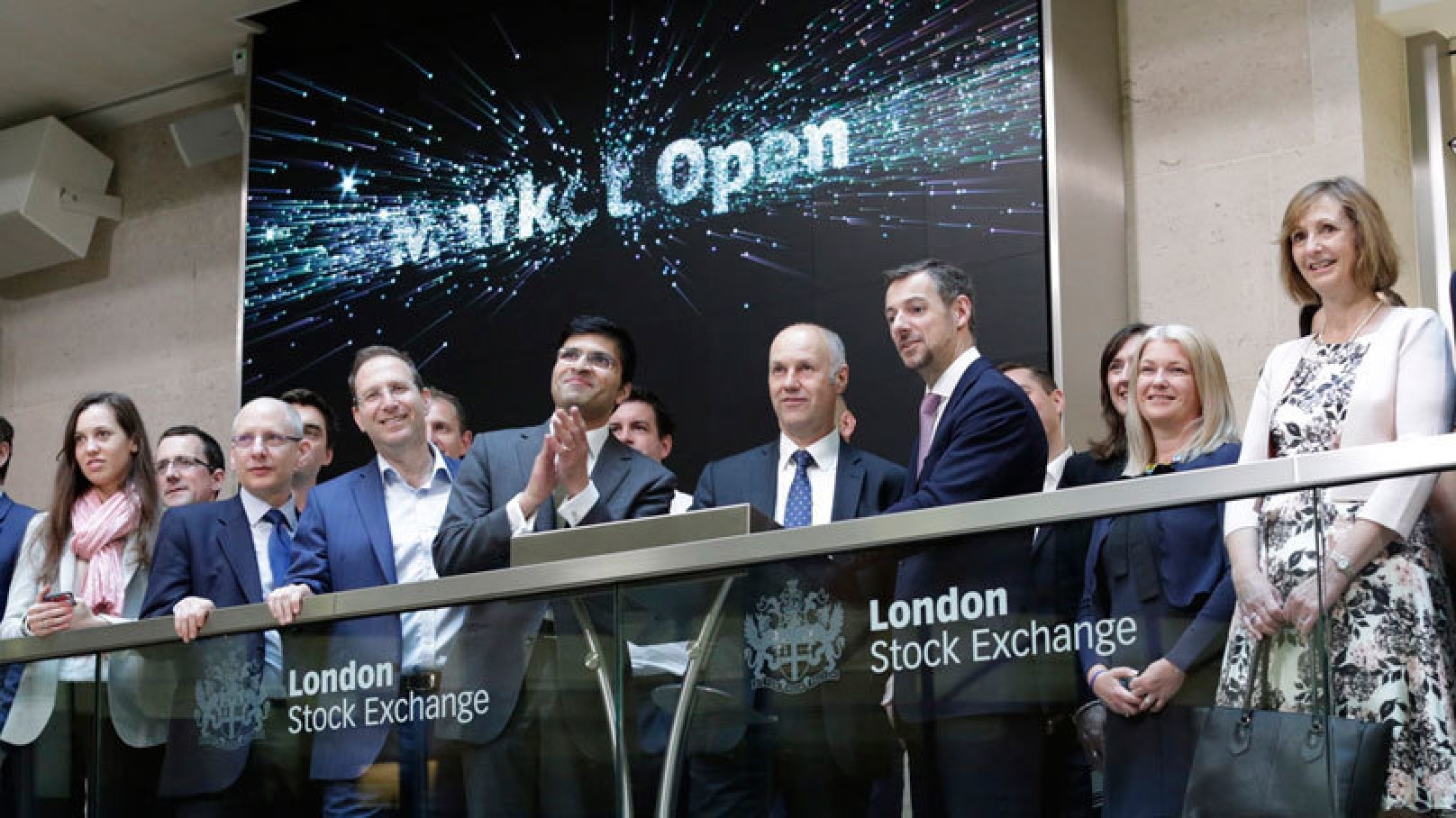
The company took the Alfa name in 2016 and listed in London in May 2017. Its flotation involved the sale of existing shares: the prospectus described approximately £248.4 million in net proceeds for the selling shareholder. That distinction matters when describing its financing history. Money changing hands in a flotation does not necessarily become money available to build the product.
Alfa’s people story contains its own continuity. Chief executive Andrew Denton recalls joining after answering an advertisement in Computer Weekly. The company promotes graduate recruitment, hackathons and employee communities; it reported 97 percent employee retention in 2023. In a business that sells accumulated knowledge, retaining people has an obvious commercial purpose alongside its cultural value.

AI gets an assignment it can explain
Alfa Systems 6, released in 2024, adds a composable user experience and further automation and integration capabilities. Compose lets users tailor screens. AskThea addresses a quieter problem: helping people find answers about the system they already operate. Alfa describes the assistant as grounded in its product documentation and terminology.
Alfa Decisioning combines decision trees and scorecards with optional predictive models. Its automation material also acknowledges that changes such as Covid and sudden interest-rate shifts can undermine assumptions drawn from historical data. For a lender, being able to inspect why a rule produced an outcome is part of the product’s usefulness.
The next chapter will be judged in ordinary working days: whether a new product can be configured, a customer request resolved and an upgrade absorbed. Alfa has spent decades making those tasks its specialty. For buyers, the strongest test remains wonderfully concrete: bring the difficult contracts, the real workflows and the people who know where the exceptions live.