The revealing detail in Mazda Financial Services’ 2020 technology launch was the toll violations. Alongside loan origination, account servicing, and a borrower portal, defi SOLUTIONS supplied back-office support that included handling toll violations. A car had left the showroom. Its administrative life had barely begun. For anyone wondering what this company actually does, that small, stubborn detail is a useful place to start.
- The job: software and services for originating and servicing loans and leases.
- The buyers: auto finance companies, banks, credit unions, and manufacturer-affiliated lenders.
- The distinction: lenders can operate the software themselves or outsource servicing work to defi.
Seven months, several kinds of work
In May 2020, defi and Toyota Motor Credit Corporation announced that the private-label Mazda Financial Services business had gone live on a solution configured and implemented in seven months. The package included the then-named defi XLOS originations platform, defi SERVICING, a borrower-facing portal, and operations delivered through Amherst, New York.
The scope went well beyond getting an application approved. Titles, cash management, collections, recoveries, and remarketing were in the bundle. These are the jobs that make a lending business function after the sale, when the dealer has moved on to the next customer and the lender has years of obligations ahead.
“We trusted defi to partner and work collaboratively with our teams to deliver critical solutions and execute an on-time project launch.”
Pete Carey · President, Mazda Financial Services · 2020
Seven months is a concrete result, though hardly a universal implementation promise. Its significance is the breadth of the launch. The project joined the screen, the ledger, and the people doing the work. For an enterprise buyer, that is a more useful unit of comparison than a handsome dashboard.
Mazda Financial Services’ combined software and operations implementation, announced May 2020.
The founder’s quarrel with the queue
Stephanie Alsbrooks founded defi in 2012 after more than two decades working with risk-based technology. Her stated ambition was specific: give auto lenders options that did not require a fleet of programmers to deploy. The complaint concerned who controlled change. A lender might know exactly which rule needed adjusting and still have to wait for someone else to implement it.
An early SAFCo case study supplies the customer version. The non-prime auto lender needed a system it could configure as it introduced financing plans to dealers. defi offered adjustable decision rules and scorecards, third-party data integration, and mobile access for field representatives. Flexibility meant responding to an actual business decision rather than commissioning another development job.
The same case study described variable pricing that eliminated fixed system costs and let the lender scale IT costs down when business declined. That is a historical description, not a current rate card. It does explain the original attraction: make technology less of a fixed obstacle to a changing lending business.
A merger changes the size of the job
In January 2018, defi announced a $55 million Series C investment from Bain Capital Ventures. The transaction’s adviser, FT Partners, said the money would support product development, resources, facilities, and planned staff expansion. This was capital for the company’s growth, rather than the cost of buying its software.
The next year, defi and Sagent Auto announced their merger. Their combined offering covered digital engagement, originations, servicing, lease care, maturity management, remarketing, and analytics, with backing from Warburg Pincus, Bain Capital Ventures, and Fiserv. The company founded in 2012 was acquiring a much longer operational memory.
That history helps explain today’s offering. defi sells B2B SaaS platforms and contracted servicing operations to institutional lenders across the United States and Canada. It is participating in the infrastructure market behind consumer borrowing: the customer who buys the software is the lender, while the borrower encounters its portals and service processes.
Two ways to put the machinery to work
The originations lineup makes a distinction worth noticing. defi positions defi LOS for smaller and medium-sized companies seeking lending automation on one platform. Its modular defi ORIGINATIONS, announced in January 2024, is positioned for larger lenders fitting software into an existing technical ecosystem. One sales proposition would be rather ambitious for both jobs.
The newer platform emphasizes cloud-native architecture, no-code configuration, a built-in decision engine, and libraries of workflows and rules. Lenders can change policies, add products, and move configurations between environments. The company describes performance guardrails alongside that freedom. Giving business users control is useful; making every change safe remains part of the job.
After funding, defi SERVICING covers account, collateral, and default management. Borrowers can use its digital portal for payments and requests such as due-date changes. Lenders choosing defi MANAGED SERVICING can outsource selected functions or a broader operation. The practical question becomes how much work they want their own staff to own.
The paperwork gets an AI assistant
The September 2025 Informed.IQ partnership announcement focused on applicant documents and funding stipulations. Its proposed integration would classify, extract, and verify information, detect missing or non-conforming documents, and return specific review reasons. The announcement scheduled defi LOS availability for October 2025.
It is a sensible place to look for automation. Approval and funding are different events; defects in the document bundle can keep them apart. Earlier partnerships with Gestalt Tech for data warehousing and F&I Sentinel for aftermarket-product risk management also address particular pieces of the lender’s workload. The attraction is assembling capabilities around the transaction.

Eventually, somebody sells the car
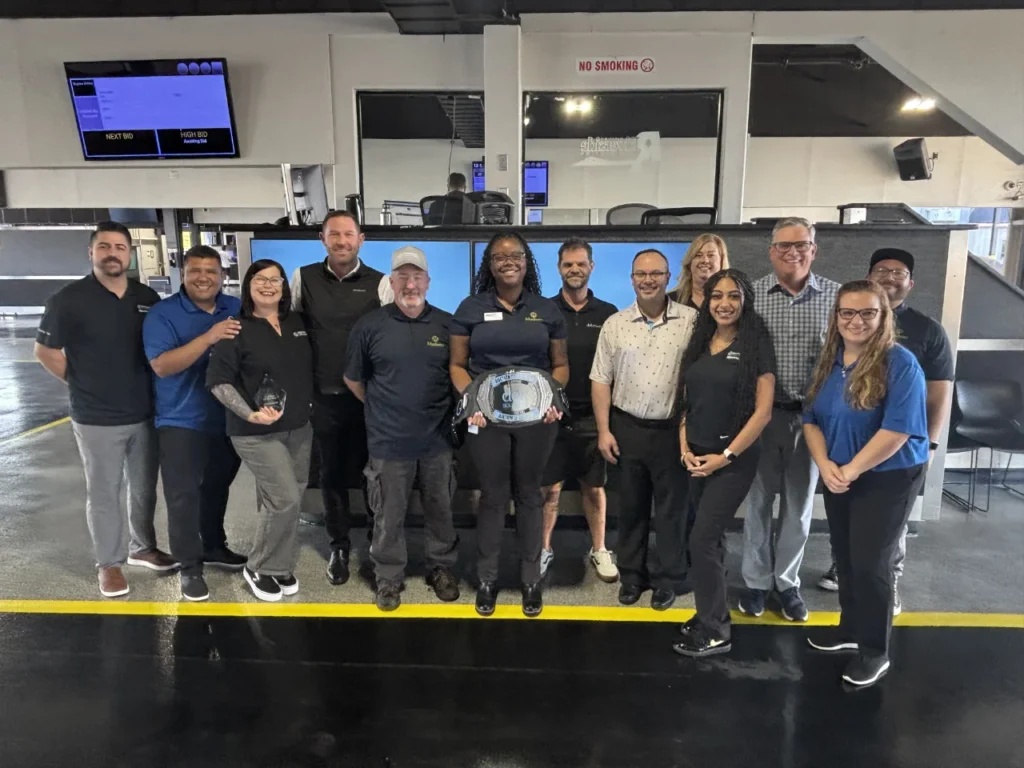
In April 2026, defi’s remarketing organization named Manheim Riverside its 2025 Auction of the Year. Selection considered sales effectiveness, vehicle certification rates, and account support. Off-lease and repossessed vehicles still have to be prepared and sold. The lending lifecycle eventually arrives at a decidedly physical auction lane.
defi operates in a competitive market. Alfa Systems also offers automotive originations, servicing, collections, and remarketing capabilities. Breadth alone does not settle a purchasing decision. defi’s particular pitch combines lender-controlled configuration with the option to have experienced operators use its software on the lender’s behalf.
The copyable lesson is to define the whole job before choosing the tool. A lender’s rules, data, and operating responsibilities need owners, whether work stays inside or moves outside. A seven-month rollout is interesting. Knowing who will handle the toll violation six months later may be more revealing.
Follow the work
Explore defi SOLUTIONS, its originations platforms, servicing software, and managed servicing.
LinkedIn · X / Twitter · Facebook · Company news · Blog · 2014 Finovate demo archive