loan-origination
(37)
Finova wants to give the mortgage market its time back
Darlington Building Society cut mortgage turnaround from 30 days to 14–15 days using Finova. The software group’s next target is the repeated form-filling that still follows brokers from lender to lender.

Amplifi Built a £500 Million Lending Machine. Then the Credit Losses Arrived.
Amplifi Capital turned overlooked credit unions into a digital near-prime lending network, serving more than 100,000 people and disbursing over £1 billion. Its fall into administration shows how quickly a clever credit machine can jam when loan losses, funding and servicing economics turn together.

The $3,000 Bet That Put VeriPark Behind 150 Banks
Born after a software-company bankruptcy and sharpened by 25 years with Microsoft, VeriPark has become the connective tissue between a bank's app, branch, call center and loan desk.

Scienaptic Wants Credit Unions to Stop Buying Scores - and Start Buying Decisions
A New York fintech is making a pointed bet: the useful output of lending AI is not another score, but an auditable answer. Its credit-union customers say that answer is helping them approve more borrowers without loosening the risk dial.

Flueid Found the $1,500 Title Problem Hiding at the End of a Mortgage - Then Moved It to the Start
The mortgage industry used to discover title trouble after time and money had already been spent. Flueid built a decision layer that asks the awkward questions up front - and turns the answers into a workflow.
The Bank That Got Tired of Banking Software - Then Built nCino
Born inside a working bank, nCino turned one lender's spreadsheet problem into a $594.8 million cloud-software business. Its next test is harder: making AI useful in the most regulated rooms in finance.
Abrigo’s Quiet Bet: Make 2,400 Community Banks Move Like the Giants
Community banks cannot outspend the giants. Abrigo’s answer is to package the unglamorous machinery of lending, fraud, compliance and risk into one operating layer - then let smaller institutions automate the work that used to eat their week.
Biz2X Turned a Lending Scar Into Software Banks Can Actually Use
Banks know small businesses want fast answers. Biz2X sells the less glamorous thing that makes those answers possible - a configurable lending stack built from years of watching loans move, stall and sometimes go bad.

Guido Galanter Took the Long Way to a Faster Loan
He began by financing homes in Chile. A rate shock, a candid YC conversation and years spent watching transactions break taught him to build the machinery banks were missing.

Harish Tejwani Is Building the Operating System Behind the Mortgage Broker
His wager is simple: the independent mortgage broker should not need a small orchestra of tabs to close one loan. ARIVE turns that frustration into a product strategy - and the broker community into its product team.

Glenn Bolstad Is Making Banking Software Feel Less Like Banking Software
After decades inside banks and technology companies, Glenn Bolstad arrived at a stubborn idea: the best digital banking system should make more room for judgment, relationships and service - not less.

Lukas Haffer Wants a Three-Day Business Loan. He Started With a Mini Cooper.
A risk-averse German banker, a competitive gamer and a freshly minted Stanford MBA drove straight from graduation to Y Combinator. Three years later, Lukas Haffer is trying to make a 90-day loan feel almost ordinary in three.

Upright Turned One Flipper’s Funding Headache Into a $3 Billion Lending Machine - Then Its Payment Rail Broke
Matt Rodak built the lender he wished he had when banks moved too slowly and hard-money shops charged 14 percent plus four points. A decade later, Upright’s best lesson is not merely how to scale a niche - it is how a single invisible vendor can put the brakes on the machine.
Biz2Credit Put the Bank in a Browser. Then Speed Became Its Most Expensive Promise.
The Arora brothers turned a small-business credit gap into a two-sided fintech: funding for owners, lending software for banks, and a data loop connecting both. The useful lesson is not simply to move faster - it is to make sure operations can cash every promise marketing writes.

Casca Tried to Automate the Whole Bank. Then One Customer Showed It the $1 Trillion Wedge.
The Stanford founders began with AI agents for everything a bank might do. A failed platform deal and one unusually candid customer pushed them toward the unglamorous bottleneck that mattered: getting small-business loans out of inboxes and into underwriting.

Vikar Wants Community Banks to Stop Buying Software One Broken Handoff at a Time
The New Jersey fintech is betting that smaller financial institutions do not need another shiny front door. They need one configurable system that keeps customers, bankers, underwriters, compliance teams and core software in the same conversation.

FBC Mortgage Sold, Bought Itself Back, Then Put Its Name on a Stadium - Here’s the Mortgage Playbook Builders Keep Buying
The Orlando lender built a national machine by making itself useful to both homebuyers and the people who deliver them. Its most revealing product is not a mortgage rate - it is a partnership system designed to keep complicated closings moving.

NFTYDoor Turned a 45-Day HELOC Into a Weekend Product - Here’s the Workflow Lenders Can Copy
The McLean fintech found its wedge in the boring handoffs that make home-equity lending crawl. After an acquisition and a return to independence, its most useful lesson is not “add AI” - it is to own the whole wait.
Jifiti Built the Lending Button You’re Not Supposed to Notice
The 2011 gift-card startup grew into the quiet machinery behind bank-branded loans at checkout. Its wager is that the next phase of embedded finance belongs to regulated lenders - and to software customers barely notice.

United Wholesale Mortgage
America's volume mortgage machine does not sell home loans to the public. It equips thousands of independent brokers with capital, software and speed - then earns its place behind the closing table.
ARIVE
ARIVE wants the independent mortgage broker to stop juggling tabs. Its wager is simple: put origination, borrower intake, live lender pricing and submission in one workspace - then let the broker get back to the human work.

Lenk
Lenk is a Latin American loan-origination platform that lets banks, financial entities, and fintechs digitize the entire credit lifecycle - from lead capture and onboarding to underwriting and disbursement. Its white-label, modular software automates commercial, consumer, mortgage, automotive, and leasing credit with configurable workflows and dozens of pre-built integrations to regional registries and bureaus. Founded in 2021 and backed by Y Combinator (W22), Lenk says it serves 20+ institutions across three countries, processing roughly 500,000 applications and $2B in transactions a year.

Climb Credit
Climb Credit is a New York-based fintech lender that finances career-focused education such as coding bootcamps, trucking, healthcare, cosmetology and aviation programs. It partners with vocational schools to offer private loans and interest-free recurring payment plans, using an AI-driven credit model built on more than 150 data points so applicants with limited credit history can still qualify. Founded in 2014, Climb has funded tens of thousands of learners and vets partner schools to ensure programs actually improve graduates' earning potential.

First Access
First Access is a New York-based fintech company that gives lenders in emerging markets a configurable software platform to originate loans and make credit decisions. Founded in 2011, it began by scoring the creditworthiness of people outside the formal financial system using mobile phone and alternative data, then grew into a full loan-origination and decision-engine platform that lets microfinance institutions and small-business lenders digitize operations, launch custom credit applications in roughly two weeks, and automate underwriting while keeping room for human judgment.

PrimeLending, A PlainsCapital Company
PrimeLending, A PlainsCapital Company, is a Dallas-based national residential mortgage originator founded in 1986. A wholly owned subsidiary of PlainsCapital Bank (part of Hilltop Holdings), PrimeLending offers a broad menu of home financing options - conventional, FHA, VA, USDA, jumbo, construction and renovation loans, plus refinancing - through a network of loan officers, retail branches and builder joint ventures across all 50 states. The company has ranked as a Top 10 purchase lender every year since 2012 and pairs a bank-affiliated balance sheet with digital origination tools to serve homebuyers and builder partners nationwide.

Tidalwave
Tidalwave is a New York-based agentic AI company building SOLO, an AI-native mortgage point-of-sale platform that automates the home loan process for lenders and borrowers. Founded in 2023 by ad-tech and mortgage-tech veterans, Tidalwave uses hallucination-free AI grounded in real loan data to handle document review, data extraction, borrower communication, verification, and underwriting support - letting borrowers complete a fully verified application in about 35 minutes, in over 30 languages. In November 2025 the company raised a $22M Series A led by Permanent Capital, with participation from homebuilder D.R. Horton.

Uptiq
Uptiq is an enterprise AI company purpose-built for regulated financial services. Its platform, Qore, lets banks, credit unions, wealth firms, non-bank lenders and fintechs build and deploy AI agents that automate operational work across lending, wealth, compliance and back-office functions - with document intelligence, a library of financial skills, multi-agent orchestration and secure integrations into existing core systems. Founded in 2022 and led by CEO Snehal Fulzele, Uptiq says more than 140 financial institutions run on its platform, reporting faster underwriting, lower operating costs and higher loan volume without adding headcount.

JazzX AI
JazzX AI is a Silicon Valley company building an end-to-end AI execution platform for the mortgage industry. Backed by enterprise-AI investment firm SAIGroup, it pursues what it calls Enterprise General Intelligence (EGI) - governed, policy-aware systems that automate the full loan lifecycle from intake to close while keeping decisions explainable and audit-ready. Rather than offering point tools, JazzX connects people, data, and workflows across existing LOS/POS systems to cut cost per loan, shorten time to close, and push more loans through the pipeline without replacing a lender's stack.
Spinwheel
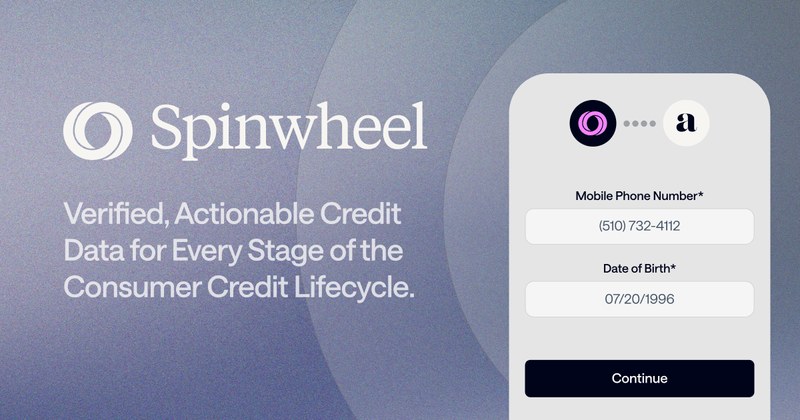
Spinwheel is an Oakland-based fintech that provides real-time consumer credit data and embedded-payments infrastructure through developer APIs. Using a credentialless approach that needs only a phone number and date of birth, Spinwheel lets lenders, personal-finance apps, and debt-management companies connect, verify, and act on a consumer's debts and liabilities. The platform supports the full consumer-credit lifecycle - from segmentation and prequalification to disbursement, management, and payment - and, as of its 2025 Series A, powers more than 15 million users and 165 million connected accounts representing over $1.5 trillion in connected debt.

Steve Thompson
Steve Thompson is President and CEO of PrimeLending, the Dallas-based national mortgage lender that operates as a subsidiary of PlainsCapital Bank under Hilltop Holdings. He oversees roughly 1,300 loan originators nationwide along with the company's National Operations, Capital Markets, Joint Ventures and Marketing organizations. A UCLA economics graduate with an MBA from UC Irvine's Merage School, Thompson climbed from a regional sales manager who joined PrimeLending in 2011 to president in 2017 and to president and CEO in 2020, and he was named a 2023 HousingWire Vanguard for his leadership of the mortgage company.