Guido Galanter's fintech education did not begin with a credit score. It began with the awkward bit after a person has decided to buy a home but before the old one has sold. Money is trapped in one property. The next property will not wait politely. The bank, meanwhile, has rules. In 2021, Galanter and two fellow Argentines moved to Chile to build Philippo around that interval. Their proposition was easy to explain and hard to operate: value the old home, advance most of its equity, let the owner move, then sell the property without a panic discount.
It was a business built inside a queue of appraisals, title checks, mortgage paperwork and registrations. A single transaction could consume seven months. Philippo promised to make liquidity available in ten days to a month and charged a three percent commission when the property sold. By early 2022, it held ten properties and had secured a US$20 million debt facility from Frontal Trust to finance purchases. It also had the startup ornaments founders are trained to want: a place in Y Combinator's Winter 2022 batch, backing from regional investors and expansion plans.
The ornaments were real. So was the machinery underneath them. Philippo had to build software to move a complicated financial operation from application to closing. That machinery would prove more durable than the original arrangement of capital around it.
A passport stamped by transactions
Galanter had been rehearsing for this kind of complexity without knowing the name of the company he would found. He studied economics and later finance at Universidad Torcuato Di Tella in Buenos Aires. After several years in financial consulting at Management Solutions, he joined OLX in 2016. His work moved through strategy, analytics, growth and, eventually, New Ventures. The geography was wide: India, South Africa, Kenya and much of South America. The subject was narrower. How do you turn an online listing into a transaction that actually finishes?
Marketplaces look clean on a screen. Real commerce rarely is. A buyer and seller still need trust, inspection, paperwork, payment and a workable handoff. At OLX, Galanter helped launch and assess transactional models and worked around acquisitions, including Naspers's purchase of Frontier Car Group. By late 2020, he decided to build something of his own. He called Nicolás Piqueras, a university friend with real-estate and capital-markets experience. Both left their jobs. Tomás Gropper, who had built a large retailer's technology operation, joined them two months later.
They chose Santiago partly because its residential market had unusually high transaction volume. Getting there during pandemic restrictions required its own workaround. The founders applied to Start-Up Chile, which offered a legal path to reside in the country. They were accepted, and Philippo was recognized as the most investable company in its program portfolio. The obstacle had become an entry point, a pattern that would repeat.
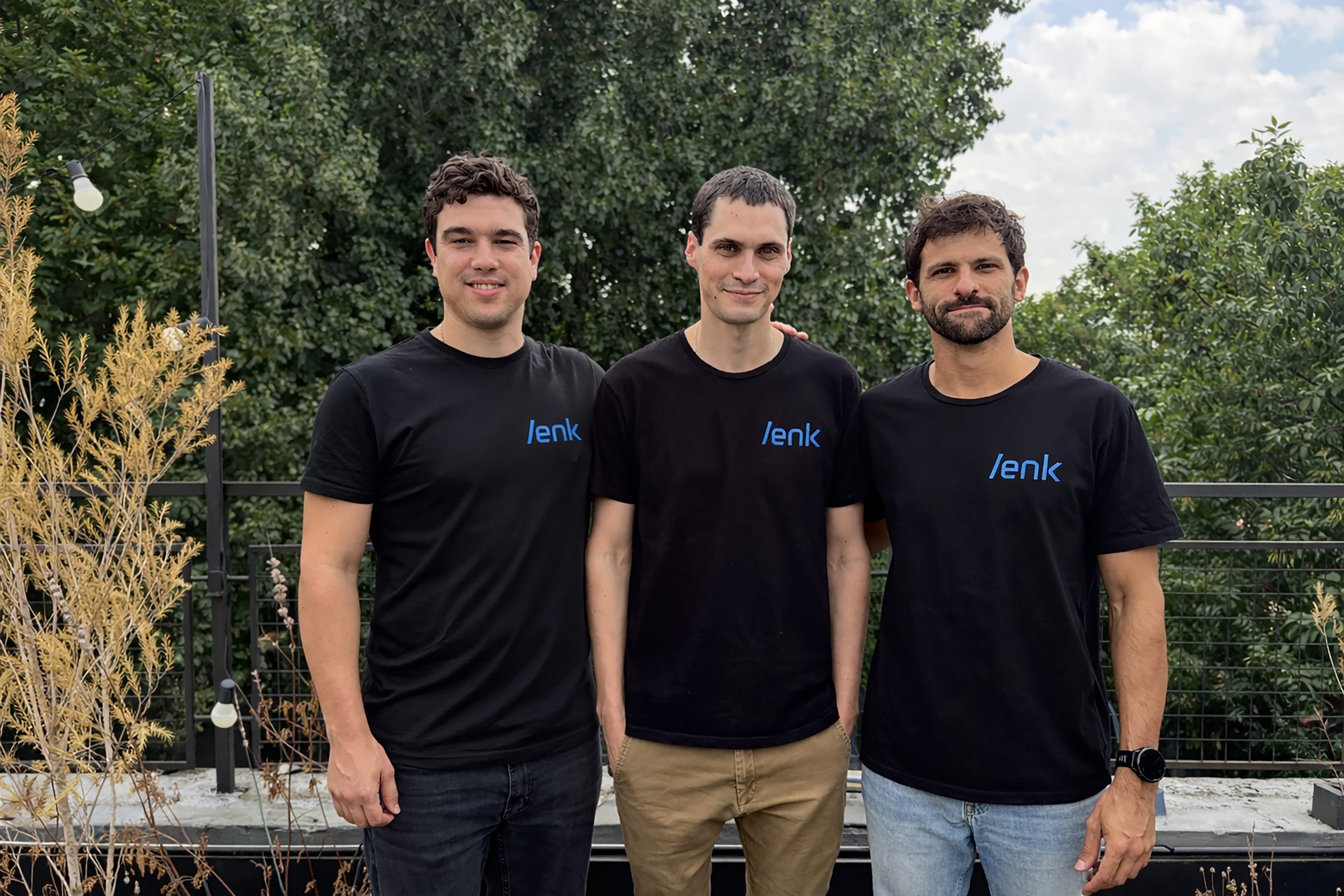
The company inside the company
Then money became expensive. Rising US interest rates tightened the logic of businesses that needed large pools of capital to grow. Philippo's debt facility could fund homes, but the underlying model was exposed to a market it could not sweet-talk. Galanter remembers the founders reducing the strategic crisis to a short question: “Ahí nos sentamos y dijimos: ¿qué hacemos?” They sat down and asked what to do.
A conversation with Y Combinator mentor Michael Seibel helped order the answer. Galanter had been nervous before their first meeting. He feared Seibel, who was skeptical of property businesses willing to lose money on transactions for growth, might tear the company apart. The meeting ended differently. “Pero no nos destruyó, nos animó a seguir adelante,” Galanter later recalled. He did not destroy them. He encouraged them to continue.
“The backend muchas veces sigue siendo una plataforma de hace 30 años.”Guido Galanter on the old machinery behind digital banking
The useful insight was not that traditional banks would disappear. It was that they would need to change while remaining banks. Philippo had already built a digital process stretching from application to closing. Its team had spent time with lenders and seen an industry polished at the front and patched together at the back. Consumer loans could be approved with a few clicks. A mortgage, lease or car loan still summoned more actors, more documents and more systems. Approval was a moment. Origination was a relay race.
So the founders changed what they sold. Philippo became Lenk. Instead of financing the asset itself, the company offered financial institutions a cloud platform to configure credit policies, gather documents and data, connect existing systems, automate decisions and manage the long workflow to disbursement. The internal tool stepped into the lobby and became the business.
Philippo launches in Chile to unlock home equity during a property sale.
The team joins YC W22 and secures a US$20 million debt facility.
A rate-driven rethink turns the operating software into Lenk.
Lenk operates across Argentina, Chile, Mexico and Colombia.
The unphotogenic work
Lenk's product lives in the least cinematic part of finance. A complex credit file can involve a customer, bank, dealership, broker, appraiser and lawyer. Each has a system and a clock. The work is to make those clocks cooperate. A platform can centralize the stages, assign tasks, collect documents, connect data sources and show the operation in real time. None of this has the drama of a trading floor. Anyone who has waited for a missing signature may consider that a feature.
The company says customers have recorded conversion gains of up to 50 percent, more than 16 hours saved per operation and the ability to scale business by as much as 33 percent without adding staff. It also says implementations happen in weeks rather than years. Those figures describe the possible operational result. Galanter's more revealing metric concerns patience: a bank sale can take over a year.
Trust sets the pace. Financial institutions move enormous sums and cannot casually experiment with critical workflows. “Estamos hablando de instituciones que manejan miles de millones. No pueden arriesgarse,” Galanter has said. The objection is not reluctance for its own sake. If the software touches identity, policy, documents and disbursement, caution belongs in the room. Lenk's job is partly technical and partly diplomatic: integrate with systems that already exist, prove security and make change feel less like a cliff.
This is where Galanter's biography becomes pleasantly literal. He was a national karate champion and remains an admirer of chess. He has said that startup and family demands pulled time away from both pursuits. Even so, the disciplines offer a neat vocabulary for his present work: position, sequence, repetition, the long match. It would be too tidy to claim a roundhouse kick prepared anyone for a bank procurement committee. Patience, however, travels well.
A little nerdy, then useful
Philippo's name contained the founders' original taste in miniature. It combined Filippo Brunelleschi, architect of Florence's cathedral dome, with phi, the golden ratio associated with the Fibonacci sequence. Galanter called it “a little nerdy.” The reference was grand, mathematical and not especially self-explanatory. Lenk is shorter. The rebrand arrived with a plainer proposition: help financial institutions modernize a process that was costly, slow and split across too many hands.
The ambition survived the name. In 2026, Lenk reported work in Argentina, Chile, Mexico and Colombia. The external pressure has only increased. Neobanks and digital wallets teach customers to expect speed. Artificial intelligence makes old manual routines look older. Yet the infrastructure of a bank cannot be wished into novelty. It has to be changed while the institution keeps lending, reporting and protecting data.
Galanter describes persistence as the strategy. It is an unfashionable word in a culture fond of hacks, but it fits a company selling consequential software to careful buyers. The work is to arrive with a useful module, connect it, measure it and earn the next piece of the process. Transformation becomes less a thunderclap than a series of approved tickets.
The first company financed the waiting. The second organizes it.The Philippo-to-Lenk pivot in one line
There is a broader founder lesson here, though Galanter's story does not need to be polished into a fable. Philippo was not an elaborate mistake. It was fieldwork with a balance sheet. Running the lender exposed the operational problem. Building for that problem produced reusable software. A change in rates forced the team to notice which part of the company could stand without the original model.
The journey began with a person caught between two homes. It now concerns the many invisible people caught between approval and completion, passing documents from one institution to another. Galanter did not shorten that distance by ignoring its complexity. He and his co-founders walked through it, changed the company, and began drawing a map.