The company began with a threat delivered at bedtime. Lukas Haffer was sleeping on his friend Isaiah Williams's couch in Manhattan, a few weeks from finishing his Stanford MBA, when Williams walked out of the bedroom and announced that on Monday he would quit his excellent AI job. They were starting a company together. They did not yet know what the company would make.
This was inconvenient. Haffer had more than $150,000 in student debt and, in his own phrase, was a “risk-averse German dude.” Williams had a new marriage, a promising career and enough savings to live on ramen for a year. Haffer did not have ramen money. What he did have was a career's worth of complaints about banking software.
On the flight home, he turned those complaints into a ten-slide deck. He entered it in a Stanford venture competition, sent it to Y Combinator and wrote a script for the application video. Williams recorded the thing about 70 times. After roughly ten minutes of interview, YC told them they were in. On Haffer's graduation day in June 2023, they packed his Mini Cooper and drove to the Summer 2023 batch kickoff.
A career inside the complaint department
Haffer knew precisely where to begin looking. In Europe, he had built and deployed core-banking systems, eventually serving as chief of staff at Avaloq, whose platforms managed trillions of dollars in assets. He describes core banking as a career he cannot recommend because the systems are a pain. The joke carries the résumé inside it. He had seen the connections from the customer's screen to payments, exchanges and regulatory reports. He understood why changing one apparently simple step could wake a nest of obligations elsewhere.
At Stanford, he added machine learning and data science to that map. He and Williams met there, bonded over competitive games, won AI hackathons and worked on predicting loan defaults. Their first notion was broad enough to be almost useless: “ChatGPT for your bank.” So they did interviews with more than 50 bank CEOs, CTOs, COOs and other operators, then built pilots, discarded assumptions and repeated the cycle.
The useful problem was not the cinematic part of lending, where an oracle pronounces yes or no. It was document collection. It was the loan officer typing another reminder for another tax return. It was an applicant beginning after dinner, when the branch was closed, then disappearing into a process designed around office hours. It was thousands of pages waiting for someone to find the few numbers that mattered.
Casca became a loan-origination system built around that dullness. Its software collects documents, follows up with applicants, extracts information and prepares a package for a banker to review. Numbers come with citations back to their pages. The machine handles repetition; the lender keeps the judgment. In a regulated business, Haffer argues, traceability and human oversight are part of the product rather than chores added after the demo.
The founder before the funding
The mission did not arrive with generative AI. At 19, Haffer went to an Enactus information evening at the University of Cologne because he wanted evidence that business and social value could belong in the same sentence. He persuaded dozens of students to join projects, helped work on ventures that created jobs for people with disabilities and spent years around student entrepreneurs. A trip to Senegal sharpened the thought. A regular factory turning fish waste into cattle feed could create durable jobs and lift farmers' incomes. The business did not need a moral label. It needed responsible leadership.
At the 2017 Enactus World Cup in San Jose, Condoleezza Rice invited participants to visit Stanford. Haffer declined. He did not want to fall for a school he assumed would reject him. Two years later, he got in. At Stanford GSB, surrounded by classmates who spoke comfortably about changing lives and institutions, his sense of acceptable ambition expanded. He graduated with honors as an Arjay Miller Scholar. He also left with the debt, the co-founder and the instruction from someone close to him that he should stop entertaining a safer big-tech job and go be the entrepreneur he said he wanted to be.
His chosen mission sounds almost mischievous: “Make banking magical.” The magic, once unpacked, is magnificently unmagical. It is a complete application. A number with a source. An email sent when the borrower is awake. A credit officer reading the insight instead of searching for it. Haffer is not promising to eliminate the banker. He is trying to eliminate the conditions that prevent a banker from banking.
Win the match, lose the ego
Haffer's friendship with Williams started with a League of Legends metaphor. Haffer had played the game at a high global rank and competed internationally in judo; Williams had competed at the Pokémon Trading Card Game world championships. Their pastimes sound like the contents of a particularly unruly dorm room, but Haffer took a serious operating lesson from them. Across every match you play, you are the only constant. If the losses accumulate, inspect your own decisions before blaming the team.
That reflex now shapes how Casca builds. Engineers work directly with bank users for hours at a time. A user can look at the latest work and say it makes no sense. The desired response is curiosity, not a closing argument. In Haffer's description, the company wants competitive people who believe they can improve, then asks them to leave ego at the door.
There is a companion rule: kind people only. A startup consumes too many evenings to fill the room with talented people who make the room miserable. Casca has reportedly turned down paying customers when the cultural fit was wrong. This is more practical than sentimental. Early bank partners become teachers. Investors and board members become helpers during a crunch. If the people cannot work candidly together, the information that improves the product stops moving.
When the customers buy shares
Bankwell became the first customer and a design partner. Live Oak and Huntington followed, representing the top ranks of SBA lending by different measures. In August 2025, Casca announced a $29 million Series A led by Canapi Ventures. The round brought disclosed funding to $33 million. The striking detail was not merely the number. Live Oak, Huntington and Bankwell invested. Customers had inspected the plumbing and decided to own a piece of the plumber.
The money supplied permission to scale, but it also raised the burden of proof. Lending software lives where optimistic demos meet adverse-action rules, sensitive documents and the long memory of regulators. Haffer's answer is responsible automation: standardized workflows, logged actions, source-linked analysis and humans retained for consequential decisions. Newer customers include Celtic Bank, added after Casca spent more than a year building with its earlier design partners.
A few welcome eccentricities round out the portrait. Haffer has worked in four countries, driven 25 car models and visited 45 coffee shops while ordering the same flat white. He claims zero knowledge of American football or baseball. Consistency, it appears, has limits, and they begin around the coffee order.
His company is now larger than two founders coding at night, yet the original pattern remains visible: locate a frustration known from the inside, sit beside the people enduring it, and revise until they stop politely explaining why the idea is wrong. The aspiration to close a loan in three days is memorable. The method is composed of deeply unmemorable acts performed well.
The useful version of magic
Haffer frames the problem morally because the delay has a price. A small business owner often chooses between a bank offering better terms slowly and an online lender offering speed at a severe cost. He cannot alter another lender's funding economics. He can give community and regional banks better machinery. Faster affordable credit keeps more capital near the people who use it to hire, buy equipment and keep the lights on.
There is no wand in that account. There are integrations, document parsers, audit logs and bank-grade access controls. Oscar Wilde might have found the paperwork aesthetically unforgivable. Haffer finds it improvable. His wager is that removing the paperwork does not make banking less human. It gives the humans a chance to reappear.
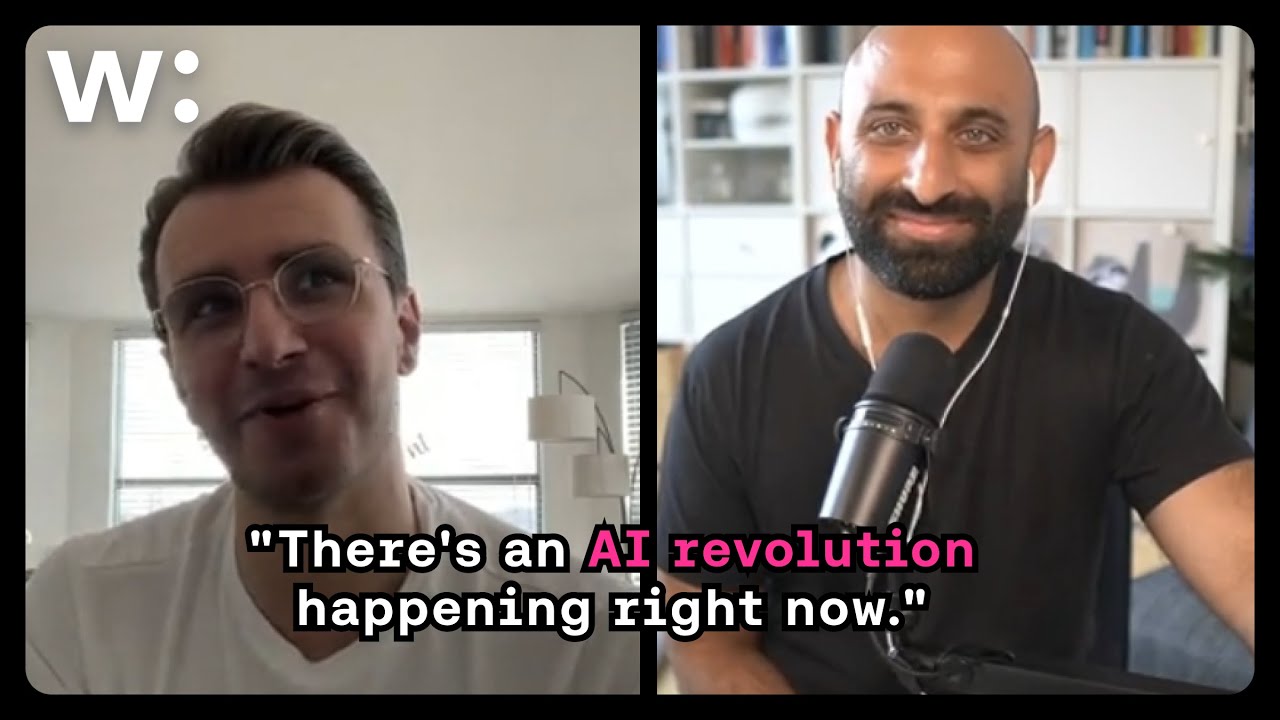
▶Watch: Why Work Here with Lukas Haffer26 minutes / Founder story and culture