At Colony Bank, the revealing number is 95. That was the count of manual tasks in a lending process its team was trying to improve. With Lama AI, the count fell to 32. For a business owner waiting for money, those 63 missing chores are rather more interesting than another demonstration of a chatbot writing a charming email.
- Lama AI sells commercial lending software to banks and their partners.
- Its agents collect documents, organize financials and prepare credit work for review.
- Banks can adopt a single workflow or the complete origination platform.
- The opportunity is cheaper processing of loans that still need careful judgment.
There is a wrinkle. Colony’s closing time did not become instantaneous. Darren Davis, its president of small business specialty lending, told FinXTech in August 2026 that new Small Business Administration requirements had threatened to stretch seven to ten business days into three weeks. The bank got back to its previous range. Here, progress meant preventing a queue from getting longer.
About 66% below the previous count
The small loan’s large appetite for time
A small loan can be surprisingly hungry. It needs evidence about the business, its finances and its ability to repay. Somebody must gather that evidence, reconcile it and put it into a form another person can judge. A smaller principal does not obligingly shrink the administrative bill. That is the problem Lama AI has chosen to sell against.
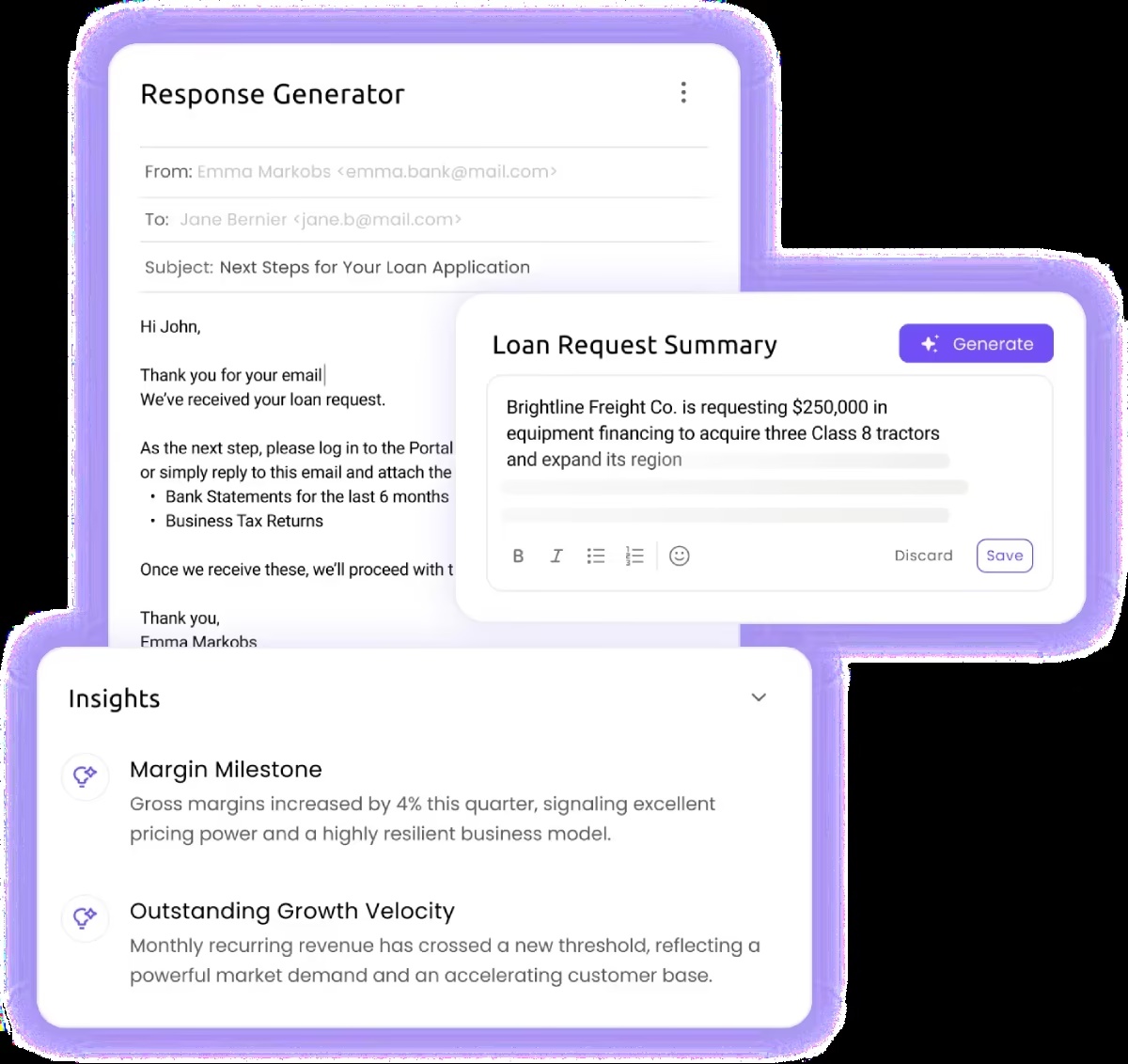
The company describes an AI-native loan origination platform for community and regional banks, with credit unions and fintech partners also in its market. Origination is the journey from an application to an approved and closed loan. Lama’s tools cover borrower intake, document requests, financial analysis, underwriting support, credit memos and subsequent monitoring. The customer buys help moving a deal through the institution.
Consider financial spreading: taking a business’s statements and tax returns and arranging their figures for credit analysis. Lama’s spreading module adapts to a lender’s templates and chart of accounts. Its memo tools assemble the narrative that accompanies the numbers. A banker can spend less time preparing the file and more time asking whether the business inside it makes sense.
One workflow is a foot in the door
A bank is an awkward place to demand a clean slate. It has existing systems, approval chains and employees who know how those systems misbehave. Lama offers an entire origination platform, but it also sells modules that can work alongside what is already there. Automated spreading can be the first purchase, rather than the prize at the end of a wholesale replacement.
In its investment explanation, EJF Ventures singles out a standardized data model and modular architecture. Its argument is that customization within common building blocks makes new AI capabilities easier to deploy across customers. That is an investor’s thesis, but it explains the product logic: learn the bank’s procedures without rebuilding the software’s foundations for each bank.
The alternatives include nCino, Abrigo, Baker Hill and software supplied by core banking vendors. They bring existing relationships and established controls. Lama’s proposition is broader workflow automation with a manageable starting point. The less photogenic competitor is the spreadsheet beside the inbox, still doing work that a paid origination system has failed to absorb.
- 01CollectApplications and documents
- 02PrepareSpreads and credit narratives
- 03ReviewLender policy and judgment
Illustrative workflow. Approval authority and exception handling depend on the lender’s configuration.
This is business software sold through a demonstration and commercial agreement. Its platform page advertises APIs, more than 100 integrations and configurable workflows. For a buyer, the useful cost calculation includes integration, training and ongoing review alongside the software bill. The task chart above cannot, on its own, answer that calculation.
A borrower can travel further than a credit box
Lama also tackles a different obstruction: a reasonable application can fail to fit one bank’s lending appetite. Its exchange lets participating institutions receive matching opportunities or refer deals elsewhere. The idea is to preserve the customer relationship while finding a lender with suitable criteria. A referral, naturally, remains an invitation to assess a loan.
The distribution strategy has named partners. A September 2023 Salesforce announcement put Lama’s lending capabilities into Financial Services Cloud and Experience Cloud. An August 2024 Bridge partnership connected lenders with another commercial loan marketplace. Embedded lending APIs and a white-label interface give business-focused platforms another route to offer credit.
Gate City Bank announced its adoption in January 2025, stressing configurability, borrower experience and risk analysis. That combination matters. A polished application form helps little if the next department must reconstruct everything the borrower just supplied.
What the banker gets back
CEO Omri Yacubovich and CTO Ran Magen founded Lama in 2022. Yacubovich’s background spans banking and AI businesses; Magen brings experience in large-scale data systems. Their company now names SouthState, Colony, Gate City and Luminate among its bank customers. Its June 2026 Series A announcement says dozens of banks are in production and cumulative funding exceeds $20 million.
“Community and regional banks should not have to choose between speed and discipline.”Omri Yacubovich / June 2026 announcement

Yacubovich’s early marketing decision provides a smaller example of the same preference for doing the work directly. After the $9 million seed round, he considered a PR agency. Firms would not guarantee coverage in the publications he wanted, so he managed the launch himself. In a Hetz Ventures account, his advice was practical: prepare the materials, understand a reporter’s interests and approach publications carefully. It is an appealingly ordinary episode in an AI company’s history. Someone still had to make a list, write a useful message and follow up.
The method another team can copy is modest: identify one expensive handoff, connect it to existing tools and compare the work before and after. Count exceptions as well as completed applications. Automation needs usable documents, agreed policy and reviewers willing to check the output; a fluent credit memo can still contain a mistake.
Colony’s experience offers a useful measure of ambition. The software helped restore a workable timetable as requirements changed. A business owner got a bank that could keep moving. The banker got fewer chores between a question and an answer.