The first version of Casca was the sort of idea that looks terrific on a whiteboard: AI agents for the whole bank. They would gather documents, answer customers, navigate crusty internal systems and resolve the manual exceptions that pile up whenever money moves. In banking, the founders argued, software had become a scavenger hunt across old screens. Let the machines do the hunting.
Lukas Haffer had spent years around core banking systems at Avaloq. Isaiah Williams had built production machine-learning systems at EliseAI. They met at Stanford, discovered a shared appetite for competitive games, and founded Cascading AI in 2023. Haffer went from graduation to Y Combinator's Summer batch; during the day, he and Williams interviewed banks. At night, they coded what those banks described.
The vision was broad because the pain was broad. A bank may receive tens of thousands of service requests, handle payment exceptions and chase loan applicants across email, phone and PDF forms. Casca's early agents had names and jobs: one for lending and onboarding, another for customer service, another for back-office operations. The addressable market looked enormous. The product definition did not.
The failure arrived before the focus
A Stanford business-school case on the company records the first useful crack in that strategy: a proposed “platform” partnership in Europe derailed. The public case summary does not disclose a price tag, but its strategic cost is plain. Casca had tried to sell a horizontal platform into an institution where deployment, procurement and accountability are unusually tangled. A big promise created too many places for a deal to stop.
Then Bankwell Bank supplied a better question. Ryan Hildebrand, its chief innovation officer and Casca's first customer, directed the founders toward small-business lending rather than mortgages or every bank workflow at once. Loan officers were spending hours persuading applicants to finish forms and upload the right documents. Borrowers often abandoned a bank application and found faster, more expensive money elsewhere. The bottleneck was not credit judgment alone. It was everything required to assemble a file worth judging.
“The first time we sent the first message, about five weeks ago, everything changed.”Ryan Hildebrand, Bankwell Bank, on the early Sarah pilot
Casca changed its mind because it could watch the workflow move. Its assistant, Sarah, could answer a Friday-night question, explain an unfamiliar requirement, remind a business owner about a missing tax return and route sensitive or uncertain questions to a person. An independent 2024 profile reported that one customer moved application submission from 5 percent to 70 percent and saved loan officers roughly 20 hours a week. Bankwell said the resulting leads were five or six times the quality of organic marketing.
What the software actually does
Casca is not a lender. It does not fund the loan and, under its own terms, does not make the credit decision. It sells the operating layer to the institution that does. A bank can brand a digital application, collect documents in a secure portal, run identity and know-your-business checks, pull credit data, spread financial statements, generate analysis and move a file through underwriting and closing. SBA-specific tools include eligibility logic and E-Tran submission.
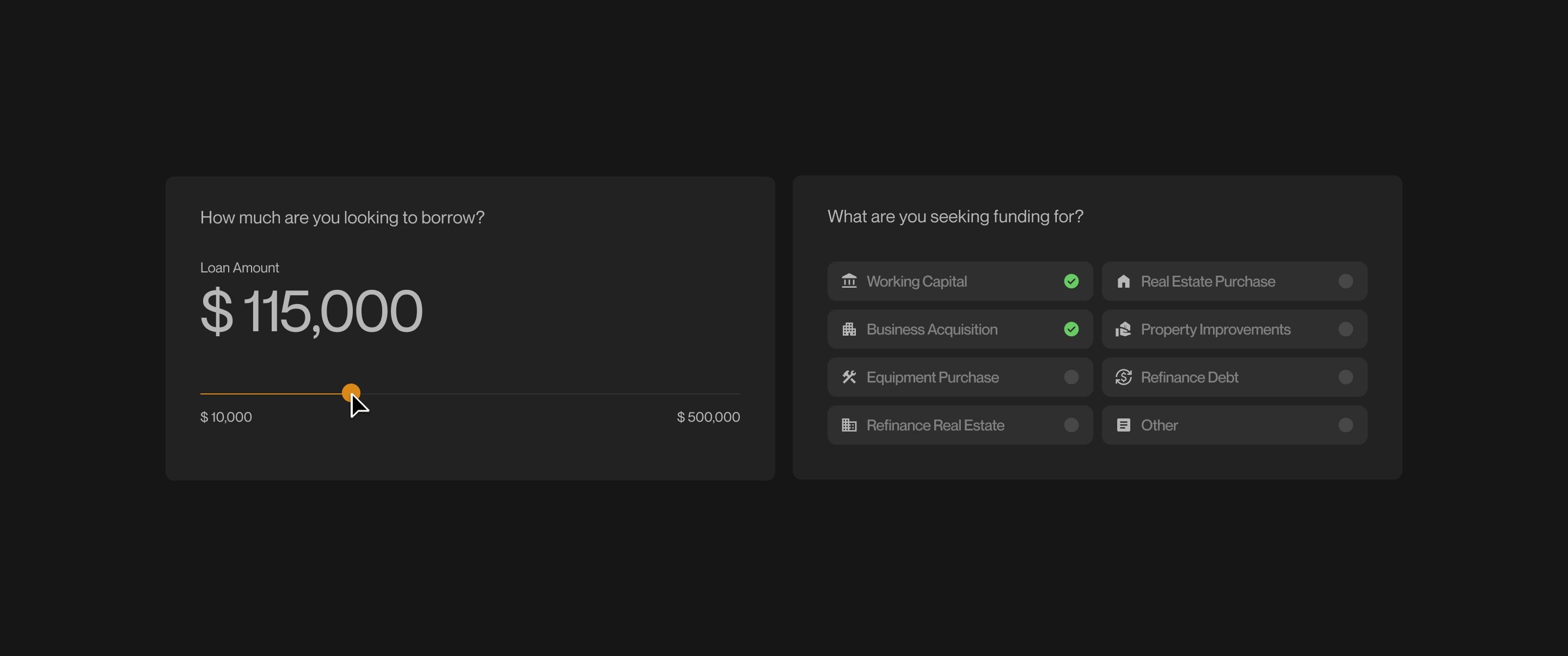
The product's most visible character is Sarah, the always-on assistant that communicates through email, text and, in demos, voice. The less photogenic machinery matters more: integrations with data providers and core systems, lender-specific rules, document extraction, audit logs, role-based access and human review. Casca says its AI can read 10,000 pages of financial material in minutes. That is useful only if the extracted fact lands in the correct field, under the correct policy, with enough traceability for a regulated employee to trust it.
One file, five handoffs
That is the difference between Casca and a chatbot taped to an old loan system. Traditional suites such as nCino and Abrigo cover broad portfolios and have long institutional histories. Newer infrastructure companies attack origination from other angles. A bank can also build internally or preserve the reigning stack: inboxes, spreadsheets and heroic operations staff. Casca's bet is that an SBA-first system, designed around AI from intake onward, can remove handoffs rather than merely decorate them.
The price of replacing the paper chase
Casca does not post a menu price. A 2024 independent company profile described pay-as-you-go software: a flat charge per application, a percentage tied to approved loan volume and smaller platform fees. It also described six-figure annual contract values, even among smaller banks. Those are historical third-party terms, not a current quote. The meaningful comparison for a lender is total workflow cost - software and implementation against the hours spent chasing applicants, rekeying financials, checking entities and losing qualified borrowers before submission.
The implementation claim is equally central. Casca advertises launches in as little as two weeks; one case study describes a bank launching an automated $10,000 small-business product in that span, with a five-minute application and instant decisions. Celtic Bank said Casca moved from contract to configuration in weeks, while traditional loan-system projects can take a year or more. Fast does not mean frictionless. The lender still has to define policy, approve integrations, govern models, train staff and decide which exceptions remain human.
The business model benefits from that embeddedness. Once application logic, data connections, lender policy and staff habits live inside a workflow, replacing it is not casual. Casca's reported usage components also let revenue grow with application and funding volume. The company raised $3.9 million in early 2024, then $29 million in August 2025. Canapi Ventures led the Series A; customers Live Oak, Huntington and Bankwell participated alongside other investors. The announcement put total funding at $33 million.
Customers became the distribution
Casca spent roughly a year to a year and a half designing with Live Oak and Huntington before a wider push to market. By 2026, those institutions were the first- and second-largest SBA 7(a) lenders in agency rankings cited by American Banker. Celtic Bank, another top-ten lender, became the next named customer. Live Oak used the software in its Express program for loans up to $350,000 and was targeting far greater annual originations as the program scaled.
This is an enterprise sales tactic disguised as product development: embed with demanding reference customers, learn the ugly exceptions, then let their credibility shorten the next conversation. It also carries a condition. A system shaped too closely around a few large design partners can inherit their assumptions. Community banks may lack equivalent integration teams. Non-SBA credit products have different policies and data. Casca must turn bespoke learning into configurable software without turning configuration back into consulting.
The boundary that matters
AI assembles and explains; the lender decides. Casca's own terms reserve credit decisions and funding for its customers. That division is not legal fine print around the product. In regulated lending, it is part of the product.
What a founder can steal
The useful Casca lesson is not “put AI in banking.” It is to find the point where expensive people repeatedly convert messy information into a standardized decision. Start one step before judgment. Applicants fail to finish; documents arrive in the wrong shape; policies live across manuals; staff retype the same facts. Automating that queue produces a visible before-and-after without pretending software should own every consequential choice.
Copy this
Choose one regulated workflow. Sit beside its operators. Measure completion, elapsed time and touches per case. Keep escalation obvious. Turn each customer's exception into a reusable rule.
Skip this when
Volume is low, policy changes case by case, source data is unreliable, leaders will not redesign operations, or an error cannot be detected and safely reviewed before harm occurs.
Casca's culture mirrors that approach. Public founder accounts describe engineers living near bank customers, shipping directly into real workflows and screening teammates and partners for kindness as well as ability. The company was named to American Banker's 2026 Best Places to Work in Fintech list. Its founders' competitive streak is real - one reached elite ranks in League of Legends, the other competed at the Pokémon world championships - but the more durable habit is observational: watch where a professional sighs, opens another spreadsheet and sends another reminder.
The approach will not work everywhere. A lender without enough applications cannot spread the integration cost. A bank with undefined credit policy cannot automate its way to clarity. A model operating without audit logs, human escalation or tested controls creates a faster route to compliance trouble. And borrowers with complex circumstances still need a person who can understand the exception rather than classify it away.
Casca began by imagining AI across the bank. It found traction by respecting the sequence in which banks can actually change: one file, one policy and one accountable team at a time. The grand vision survived. It simply had to pass through the loan department first.