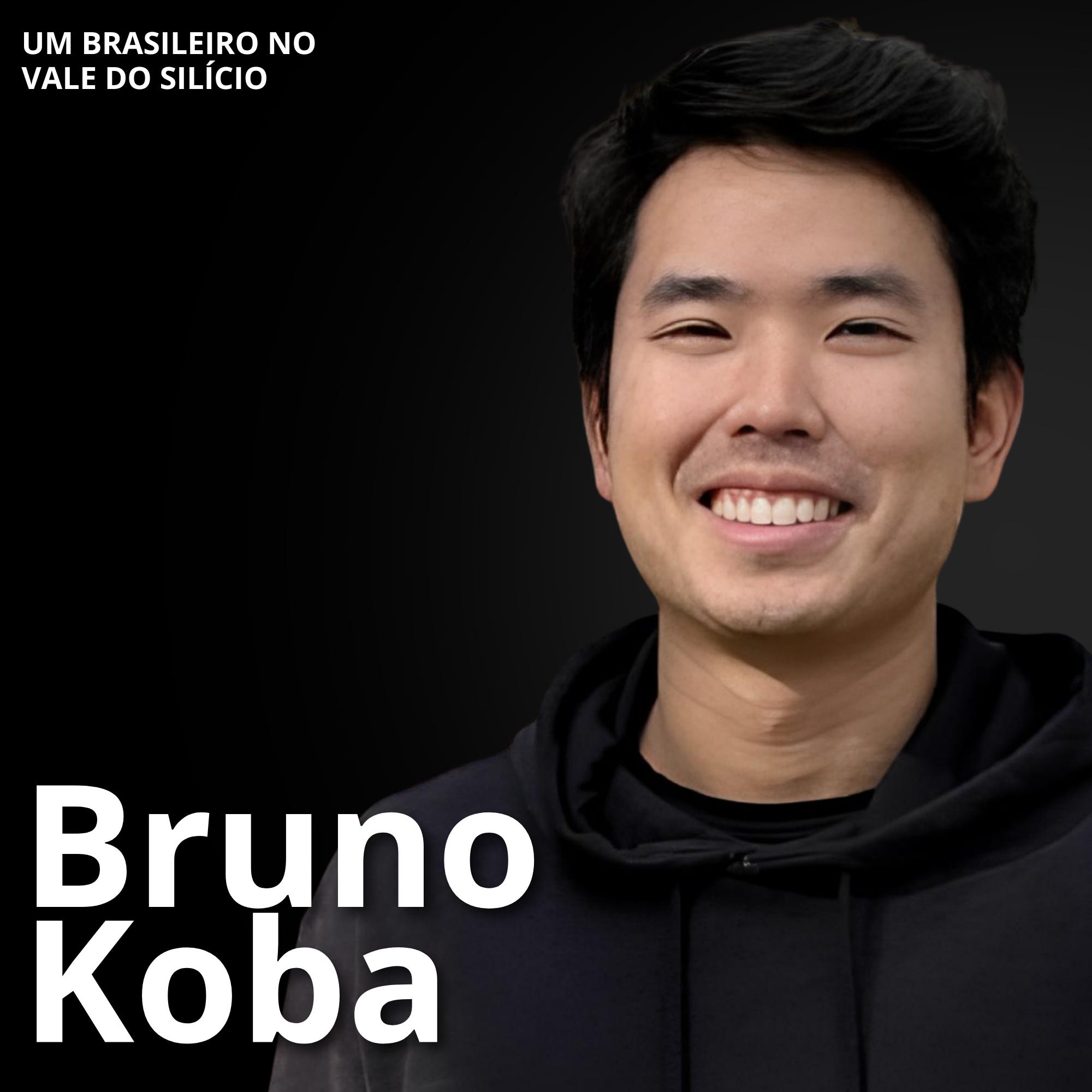
The useful version of the Astor origin story does not begin with artificial intelligence. It begins with two supposedly rational investors admitting that their portfolios contained an embarrassing amount of instinct. Bruno Koba was living in Palo Alto; Daniel Tulha was in San Francisco. Millbrae was their convenient midpoint, close to BART and innocent of symbolism. Over dinner, the two Brazilians compared how they managed their own money. Both used Robinhood. Both liked to think in evidence. Yet when it came time to allocate, "vibes" kept sneaking into the room like a third co-founder who never paid for dinner.
They had already been searching for applications made possible by the new generation of AI models. The investment problem had the useful sting of personal irritation. They knew what a good answer ought to feel like, because they wanted one themselves. The line Koba remembers is admirably free of grandeur: "Let's build something we'd love to use ourselves." A few days later, the pieces became a thesis. American investing was large, advice was expensive, model capabilities were improving, and nobody had plainly won the category.
A cold message, then coffee
The co-founder search had been less cinematic. During his final year at Stanford Graduate School of Business, Koba sent messages on LinkedIn to roughly 20 Brazilians working in Bay Area technology. About ten replied. Around five agreed to meet for coffee. Tulha, an engineer whose résumé included Stripe, Robinhood, and Amazon, was one of them. Koba has said the first meeting revealed an alignment of values and interests. They began working on projects beside school and work, patiently trying on ideas.
Patience mattered. Before Astor, Koba cycled through four startup ideas that did not survive. Failure sounds dramatic when compressed into a sentence; in practice it often resembles a lot of documents, calls, lukewarm user reactions, and coffee. His route to the founder's chair had supplied unusually good instruments for noticing weak signals. At Nubank, he spent two years in analytics and data science, building machine-learning systems in a financial company serving millions. At Monashees, he spent three years evaluating early-stage fintech businesses. He learned how products behave in data, and how founders explain products to capital.
2014-19
2018-20
2020-23
2023-25
2025-now
Stanford gave him room to move from analysis toward creation. Y Combinator's Summer 2025 batch gave the new company a metronome. Koba describes the YC routine as code, talk to customers, exercise. He even ran a half-marathon during the batch, a slightly unreasonable footnote that makes the routine sound less like advice and more like a dare. The contrast stayed with him: an MBA offered context, frameworks, and a broad map; YC insisted that the customer was standing just off the map, waiting to tell you what was wrong.
“The most important thing is to get your first win, and then stay in the game long enough. Just keep going.”Bruno Koba
The Brazilian surprise
Koba and Tulha brought a Brazilian expectation to an American market. In Brazil, brokerage customers are commonly paired with advisers. In the United States, personalized financial advice often arrives only after a person has accumulated substantial wealth, and may cost thousands of dollars a year or a percentage of assets. Everyone below the velvet rope is left with generic articles, account dashboards, robo-advisers that manage without really explaining, or a hopeful question typed into a general-purpose chatbot.
The contrast also exposed a matter of incentives. Koba and Tulha had each been frustrated by human advisers whose recommendations could be tangled with what they were paid to sell. A flat subscription offered cleaner architecture: the customer pays for guidance, rather than wondering whether a product commission is steering the conversation. Regulation gives that architecture obligations as well as elegance. An adviser must put the client's interest first, a sentence that sounds obvious until one remembers how much of finance has been built to avoid saying it plainly.
Astor's wager is that advice can be both personal and comparatively inexpensive. The service connects to brokerage and financial accounts, develops a view of the customer's portfolio and risk, and answers questions by text or voice. Its early prices ranged from $15 a month to a higher unlimited tier. The intended customer is not necessarily rich today. Koba has described the initial audience using the finance acronym HENRY: high earners, not rich yet. These are people competent enough to have complicated money and busy enough to postpone understanding it.
In April 2026, Astor announced a $5 million seed round led by Monashees, with participation from Y Combinator, Goodwater Capital, 468 Capital, Gilgamesh Ventures, Sunshine Lake, Valutia, and individual investors connected to companies including OpenAI and Stripe. The circle was tidy without being sentimental: Koba's former employer was now backing him. Astor said that in less than two months after launch, thousands of users had connected more than $200 million in assets. Fortune reported roughly 4,000 customers at the time.
The numbers gave the young company momentum, not absolution. Money is an awkward place to let software improvise. Astor registered as an investment adviser, and Koba became an investment adviser representative in California in February 2026. He has explained the trust design as a loop: the AI generates an idea, the client evaluates it, the client authorizes what happens next. The customer remains the validator, not a passenger staring through the window while an algorithm drives.
“Everyone who invests their own money deserves personalized, expert financial guidance.”Bruno Koba
Escaping the chat-box trap
Astor did not arrive fully dressed. It began as Gaus, a web product the founders once described as "Cursor for retail investors." During YC, users around the world demonstrated real demand for AI-assisted investment research. They also revealed a trap. Research alone was becoming cheap. Anthropic, OpenAI, Perplexity, and other model providers could absorb generic analysis into their products. A startup with only a charming chat box might find that the floor beneath it belonged to someone else.
The company moved toward a mobile, account-connected adviser and changed its name. Koba wrote that the startup journey had been "completely nonlinear" and that thousands of users taught the team which features mattered, how to price, and how to serve them. The rebrand was less cosmetic than developmental: Gaus had gathered evidence; Astor was meant to carry a more durable relationship. First-party financial data could give the product context a general model lacked. Registration could let it cross the line from information toward advice.
The longer plan extends beyond a conversational recommendation. Koba has discussed tools that could execute orders after customer authorization and, later, manage part of a portfolio automatically. He also sees a route outside the United States, including Brazil, though each market demands its own licenses. The ambition is expansive, but the sequence is cautious: earn context, earn permission, earn the right to do more.
Taste after abundance
Koba's most interesting ideas are often about bottlenecks. In his 2026 Aura conversation, he argued that direct distribution is a strategic choice, not merely a sales channel. Selling to end investors is expensive, but it lets Astor own the relationship, the feedback, and the pace of product change. He also offered a deliberately sharp hiring prediction: taste may matter more than hard work over the next five years. When AI makes competent execution abundant, the scarce ability is choosing what deserves to be made.
This does not sound like an excuse for idleness from a founder who coded, interviewed users, and trained for a race during YC. It is a claim about judgment. Koba has worked where decisions are made through models, investment memos, classroom cases, and customer conversations. Each environment offers a different approximation of truth. The founder's job is to notice when the approximation has become the problem.
He is similarly unsentimental about San Francisco. The city's real advantage, in his telling, is not a magical calendar of founder events. Most serious people are working. Digital communities can provide much of the same information from anywhere. Capital is the notable exception: in the Valley, a half-hour call can lead to a large check from someone who has never met the founder in person. Geography still matters, just less romantically than the postcards suggest.
Koba's career has made a neat loop through the financial machine. He modeled customers at Nubank, judged companies at Monashees, studied organizations at Stanford, and submitted himself to YC's weekly arithmetic. Now he runs a regulated adviser whose product will be judged by people facing ordinary, consequential questions: Am I taking too much risk? What does this market move mean for me? Can I afford the next thing my life requires?
Astor's answer is software, but its premise is almost old-fashioned. Advice becomes valuable when it knows your circumstances and stays available when the circumstances change. The clever part is not making a robot sound human. It is taking a service once reserved for wealth, pulling down the velvet rope, and then doing the unglamorous work required to deserve the conversation.