Somewhere in the life of Ryan King, there is a coin that deserves a modest line on a résumé. When he was applying to college, King could not choose between music and computer science. He liked both. So he flipped. Computer science won, which is a charmingly analog origin for a career spent making digital systems behave. The choice carried him through UCLA, a master's degree at Stanford, engineering work at Microsoft and Liberate Technologies, and then into the unruly early world of consumer internet companies.
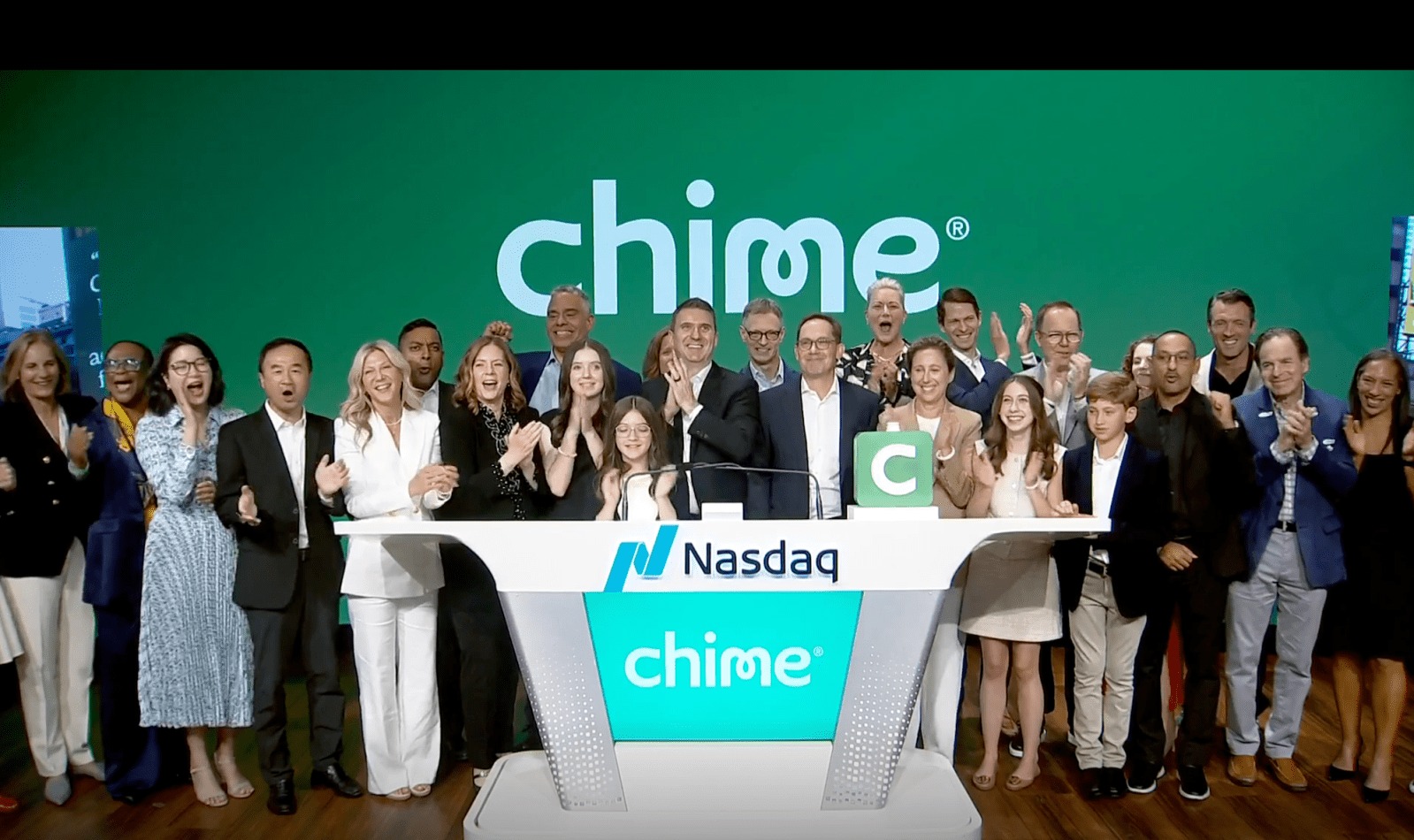
King does not tell the story as destiny. That would be too neat. His professional life is full of decisions made with the odds plainly visible, followed by the slightly unreasonable act of proceeding anyway. In 2012, he left the sort of work that had made him employable and chose the sort that might leave him unemployed. Four years later, more than 100 investors declined to finance his company. In 2025, he stood at Nasdaq while that company, Chime, became public.
The bell is photogenic. The years before it are where the story lives.
The engineer who wanted his hands back
By the time King met Chime co-founder Chris Britt, he had already learned what happens when a product grows up. At Plaxo, the online address book and early social-networking company, he joined as an engineer and rose to vice president of engineering. The company reached roughly 20 million users before Comcast acquired it in 2008. King went along, eventually serving as chief technology officer and vice president at Comcast's Silicon Valley Innovation Center. He had moved from writing and shipping toward hiring, organizing and leading.
The career market had an obvious opinion about what should come next: another senior job at another established startup, with another substantial team. King had a different appetite. “I wanted to be building something,” he said in a 2020 Chime profile. “I knew my time for growing teams would come later.” He called himself an “impact junkie,” a phrase with enough self-mockery to rescue it from corporate varnish.
Music or computer science? A coin selected the discipline. King supplied the persistence.
Britt lived across a park from King in their San Francisco neighborhood. He understood payments and consumer finance; King understood how products and technology organizations are built. Their conversations turned toward a simple irritation with a complicated industry: ordinary Americans were paying fees to institutions that were meant to help them manage money. King had spent his life, as he put it, inside the technology and Silicon Valley bubble. Consumer banking offered a door out of it.
He also had no illusions. “I fully anticipated that we'd fail,” King said. He could have taken the later-stage job. Instead, he was “looking to swing for the fences.” In 2012, he and Britt founded Chime. Britt became chief executive; King became the original chief technology officer.
“I have lived my entire life within the bubble of technology and Silicon Valley. I wanted to have an impact on something outside of that bubble.”Ryan King
A hundred small funerals
Chime began offering services in 2014. Its proposition was legible to customers and awkward to investors: a mobile-first financial experience for working people, without the punitive fee structure familiar at traditional banks. Chime would earn primarily from interchange when members used their cards. The model required trust, regulatory patience and enough capital to survive before scale made the economics persuasive.
By early 2016, the arithmetic looked grim. Chime needed an extension to its Series A and was close to running out of money. King and Britt pitched more than 100 investors. They received more than 100 rejections. King read an article about Robinhood's founders enduring 50 to 75 investor passes and remembered thinking, with the bleak cheerfulness available only to a founder in fundraising purgatory, “I get 50 no's in a week.”
Lauren Kolodny, then at Aspect Ventures and later a co-founder of Acrew Capital, said yes. She led a $9 million extension, the only term sheet available. King has described her wager in human rather than financial language: she believed in the founders' “passion and zeal and sort of attitude.” The phrasing is endearingly imprecise. Desperation rarely arrives with audited adjectives.
That investment did more than fill a bank account. It bought Chime the time required for consumer behavior to catch up with its premise. The company had not yet found the kind of growth that makes investors forget earlier doubts. Then, in King's telling, something clicked. Sign-ups accelerated. The engineering problem changed from proving that anybody cared to coping with the fact that many people did.
Empathy, then architecture
Rapid adoption can flatter a company while quietly threatening it. Every new account brings traffic, customer-service needs, fraud risk and one more person who expects access to money on demand. By 2020, Chime's technology organization had grown from 12 people to more than 250 in two and a half years. Some measures were doubling every four or five months.
King's answer was partly technical and partly social. He reminded engineers that they were often building for people unlike themselves. Technology salaries do not resemble the average American salary. A feature that seems minor from an office in San Francisco may govern whether a member can buy groceries before payday. “We must have a lot of empathy for the people we're serving,” he said.
Reliability therefore acquired moral weight. For many members, Chime was their primary or only spending account. King compressed the requirement into four words: “It can't not work.” Grammarians may object; anyone waiting for a card authorization will understand perfectly.
Early Chime was built on a third-party payments platform. That was sensible: young companies rent what they cannot yet afford to own. But an accelerant can become a ceiling. At Chime's later scale, dependence on one outside vendor created limits around reliability, cost and speed. King began advocating for more control of the stack, insourcing critical components and sourcing from multiple providers where appropriate.
The strategy eventually became ChimeCore, the proprietary core banking platform King discussed publicly in 2026. It is the sort of achievement that resists the founder mythology of a whiteboard and a weekend. Core migrations are slow, exacting and dangerous. Success looks like millions of people noticing nothing at all, except perhaps that new products arrive faster and the old ones continue to work.
The card in the guard's wallet
Chime's first years did not move in a clean ascent. There were regulatory disputes, layoffs and a 2021 private valuation that the public market would not preserve. When Chime finally listed on June 12, 2025, it priced shares at $27 and raised $864 million. The stock closed its first day at $37.11. Those figures gave television and markets a tidy scorecard. King's favorite moment came somewhere less ceremonial.
During the IPO roadshow, King and Britt entered a white-marble building with the theatrical chill of a prestige finance drama. A security guard asked for identification, noticed Britt's Chime card and winked. Was he a member? “Checking and savings, baby!” the guard replied, before giving the founders a high five.
There it was: the mission, hiding in a wallet. King had wanted to build outside the bubble. Thirteen years later, an ordinary encounter confirmed that the product had traveled farther than the pitch decks. The security guard was not a symbol invented for the story. He was a customer trying to get through a workday, which made the moment better.
The most convincing person on Chime's IPO roadshow was not buying stock. He was carrying the card.The measure beyond the market
After the bell, more machinery
King no longer holds the CTO title. Public filings show that he served from Chime's founding to August 2022, returned from August 2023 to May 2024, and remains co-founder and a director. That role suits the later chapter: less a departure from technology than a wider view of what the technology must permit.
By the second quarter of 2026, Chime reported 10.4 million active members, $670 million in quarterly revenue and its second consecutive quarter of GAAP profitability. The figures are corporate, not personal, but they describe the system King helped architect. In September, Chime agreed to acquire longtime partner Stride Bank for $590 million in cash. If the deal closes, Stride is expected to become Chime Bank, a further step toward the control King had argued scale would require.
He has also turned his attention to artificial intelligence in finance. His public argument is consistent with the rest of his career: the best model alone will not define the winner. The primary account, the complete technology stack and the member's trust matter together. An automated agent can be clever and still serve the wrong incentive. Alignment begins in the business model before it appears in the software.
The coin toss remains the delightful first scene because it makes everything afterward look accidental. It was not. Chance picked a major. King spent the next three decades choosing where to place his labor: in consumer products, in difficult systems, in a company aimed beyond his own social world, and through a season when almost everyone with a checkbook declined to join him.
A hundred noes can sound, in retrospect, like a heroic montage. In real time they were simply a hundred appointments followed by bad news. King's distinction was not that he knew the ending. He explicitly did not. He kept enough humor to count the rejections, enough humility to design for lives unlike his own, and enough engineering instinct to worry about the rails before everyone else could see them.
The bell rang once. The system has to work every day.