yespress
(12)
Light Years Ahead Partners With YesPress to Make Stories Last
Light Years Ahead PR is partnering with YesPress to connect tailored campaigns with company newsrooms—giving launches, customer stories and executive expertise a lasting home.

Your Growth Work Vanishes Before the Market Sees It
YesPress wants agencies, fractional executives and consultants to turn the work already happening inside client companies into a steady public record - without building a newsroom of their own.

We Want Your Customers to See What You See
You can spend years building a better way and still struggle to explain why it matters. At YesPress, we start with the gap between the future you imagine and the one your customers can see.
YesPress Wants AI to Quote Your Startup, Not Skip It
B2B buyers now open ChatGPT before they open Google. YesPress builds machine-readable newsrooms so answer engines cite your product instead of scrolling past it.

The Six Tools Racing to Get Your Brand Into AI Answers
A new category of software has one job: making sure ChatGPT, Gemini and Perplexity name your company when a buyer asks. Five of them measure the gap. One writes the record that closes it.
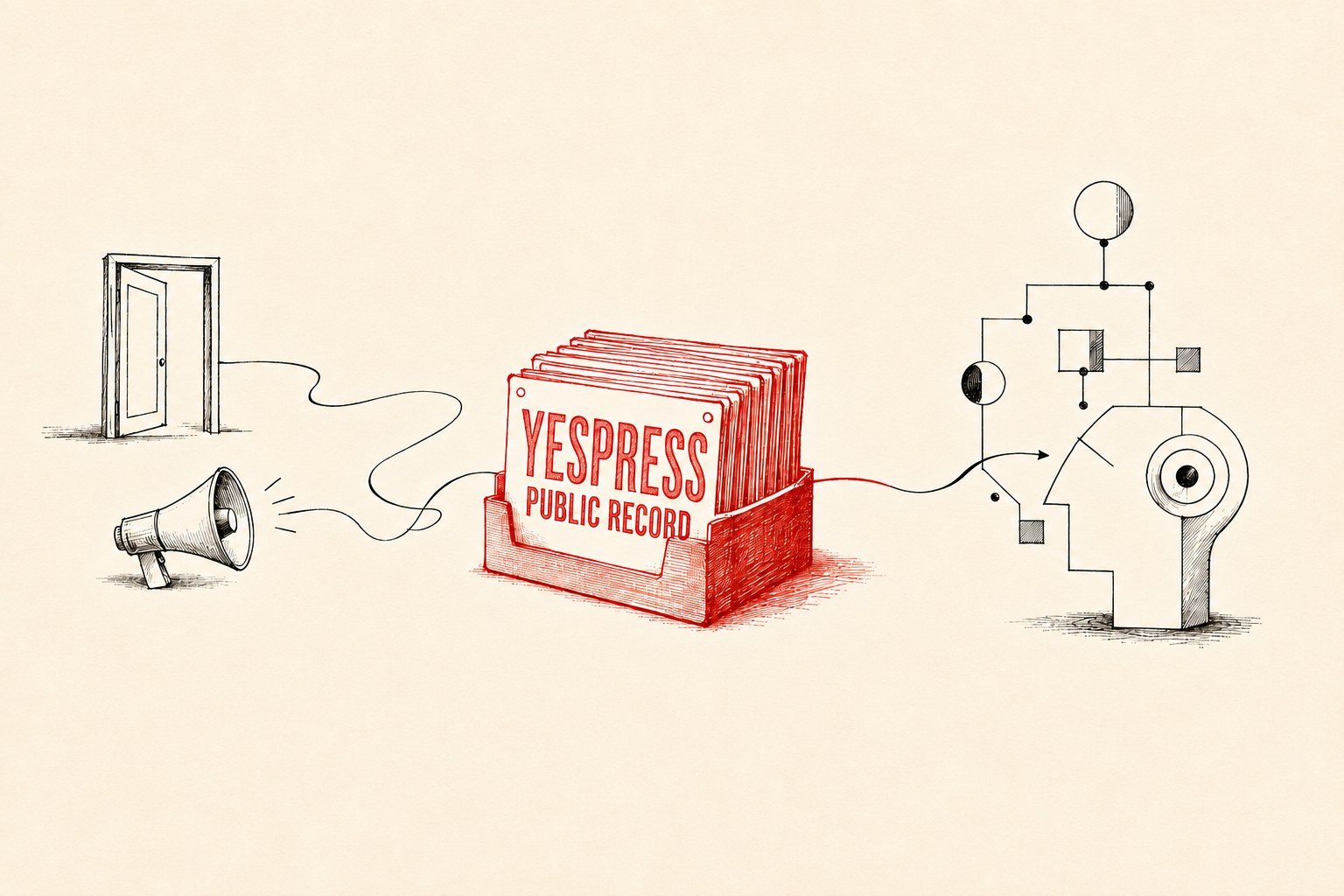
Every company has a website.
"Every company has a website. Every company has social media. Every company needs a public record." is the thesis behind YesPress, an editorial engine built for the age of answer engines. The argument is simple: a website is what you say about yourself, social media is what you shout, but a public record is the structured, citable source material that AI systems like ChatGPT, Gemini, and Perplexity actually learn from and quote back. YesPress builds that record - an always-on newsroom publishing company, people, and product stories under the company's own name, kept honest by editors and a public corrections process.
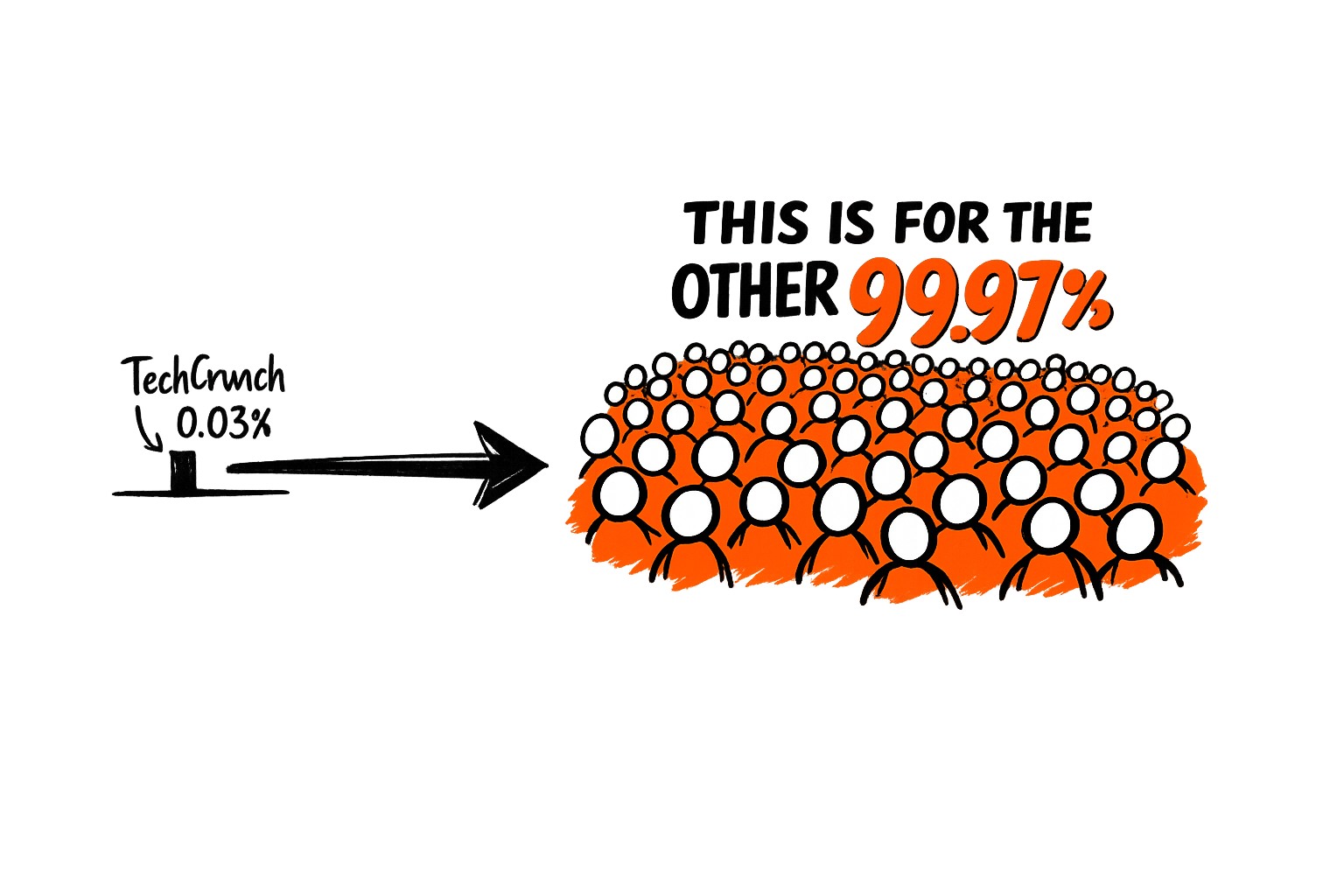
TechCrunch covers 0.03% of the companies that pitch it. This is for the other 99.97%.
An argument about the gap between getting covered and being known. TechCrunch runs a finite front page and turns away nearly everyone who pitches it, yet its stories now feed the AI systems that answer questions about the technology economy. The piece separates the editorial question - will a reporter find us interesting today - from the retrieval question - does enough structured, freshly dated material about us exist for a machine to find. It makes the case that press coverage is a moment while a continuously published public record is memory, and that a YesPress Newsroom is the second thing: an always-on, structured record of launches, hires and expertise that compounds on the days no reporter writes back.

YesPress
YesPress is an editorial engine built for the age of answer engines. It gives a company its own always-on newsroom, publishing structured stories under the company's own name so that ChatGPT, Gemini, and Perplexity have an authoritative public record to cite. The pitch is blunt: your next customer starts with an AI assistant, not your homepage, and AI can only recommend what it can understand. YesPress turns launches, wins, and expertise into machine-readable stories, shipped within 24 hours with entity markup, then tracks which engines quote them.
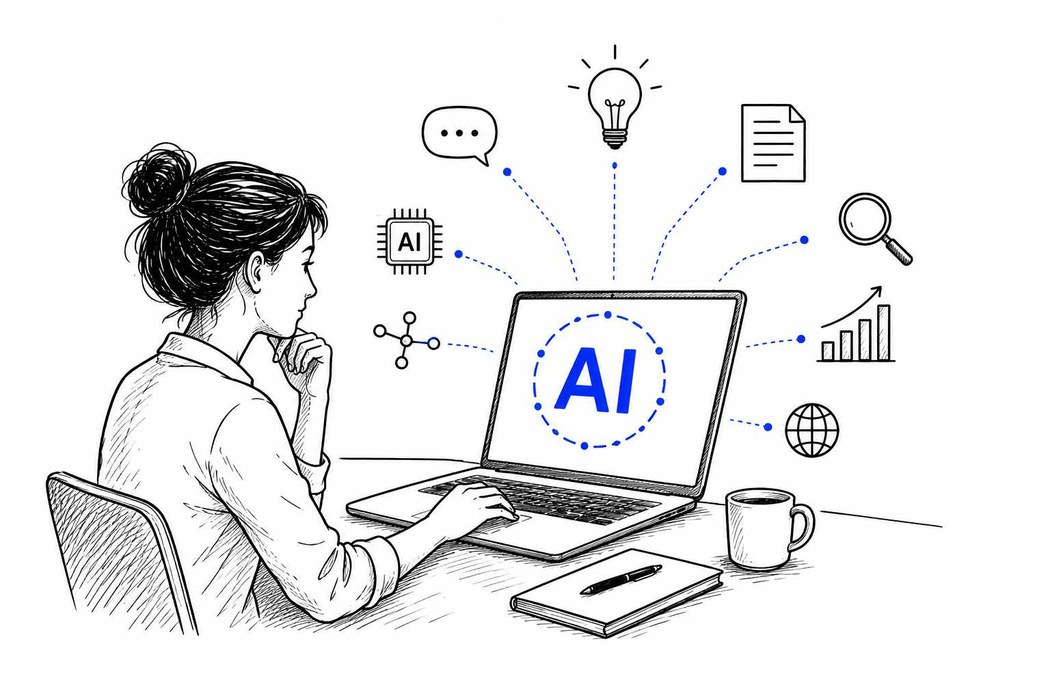
The AI Content Consultant
Every platform shift mints a new profession. SAP gave us the SAP consultant. The mobile and search era gave us the certified digital marketer. YesPress argues the AI era is minting its own role - the AI Content Consultant - and is opening a training program to build the first cohort. The pitch: learn Answer Engine Optimization, help companies become the answer that ChatGPT, Perplexity and Google AI Overviews cite, and get in early on a job title that barely exists yet.

YesPress vs Scrunch AI: Two Different Approaches to AI Visibility
A strategic breakdown of two philosophies for surviving the age of answer engines. Scrunch AI measures how brands appear inside ChatGPT, Perplexity and Gemini, then flags the gaps. YesPress argues that measurement is downstream of a deeper problem: whether a company has published enough structured, first-party knowledge to be legible to AI at all. One monitors the mirror. The other builds the record. This is not a feature comparison - it is a look at two different bets on where durable advantage will live.

YesPress vs Semrush: SEO for Search Engines vs Publishing for AI
Two tools, two eras. Semrush helps companies win the search-engine results page through keywords, backlinks, and rank tracking. YesPress helps companies become legible to AI assistants by publishing a structured, authoritative body of company knowledge. This piece maps the shift from a web built for search engines to a web increasingly read by machines, and argues the two are complementary layers rather than competitors.
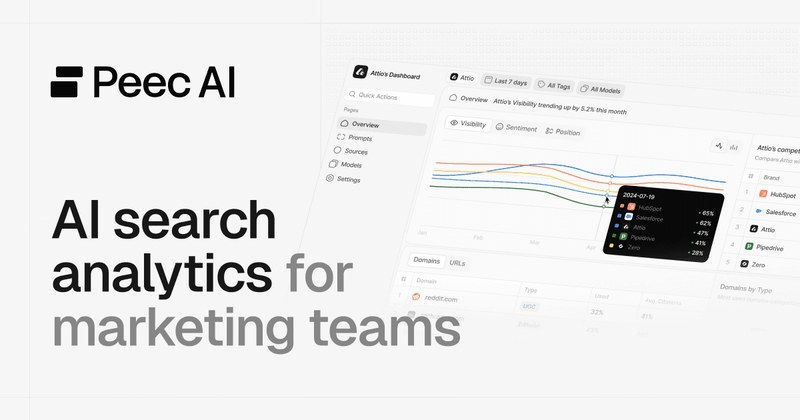
YesPress vs Peec.ai
Two companies staring at the same problem from opposite ends of the pipe. Peec AI is an analytics platform that watches how brands show up inside ChatGPT, Perplexity, Gemini and Claude, and scores them on visibility, position and sentiment. YesPress is a content operation that manufactures the citable, structured stories that make brands show up in the first place. One measures. One publishes. Together they describe the emerging discipline that marketers are calling Generative Engine Optimization.