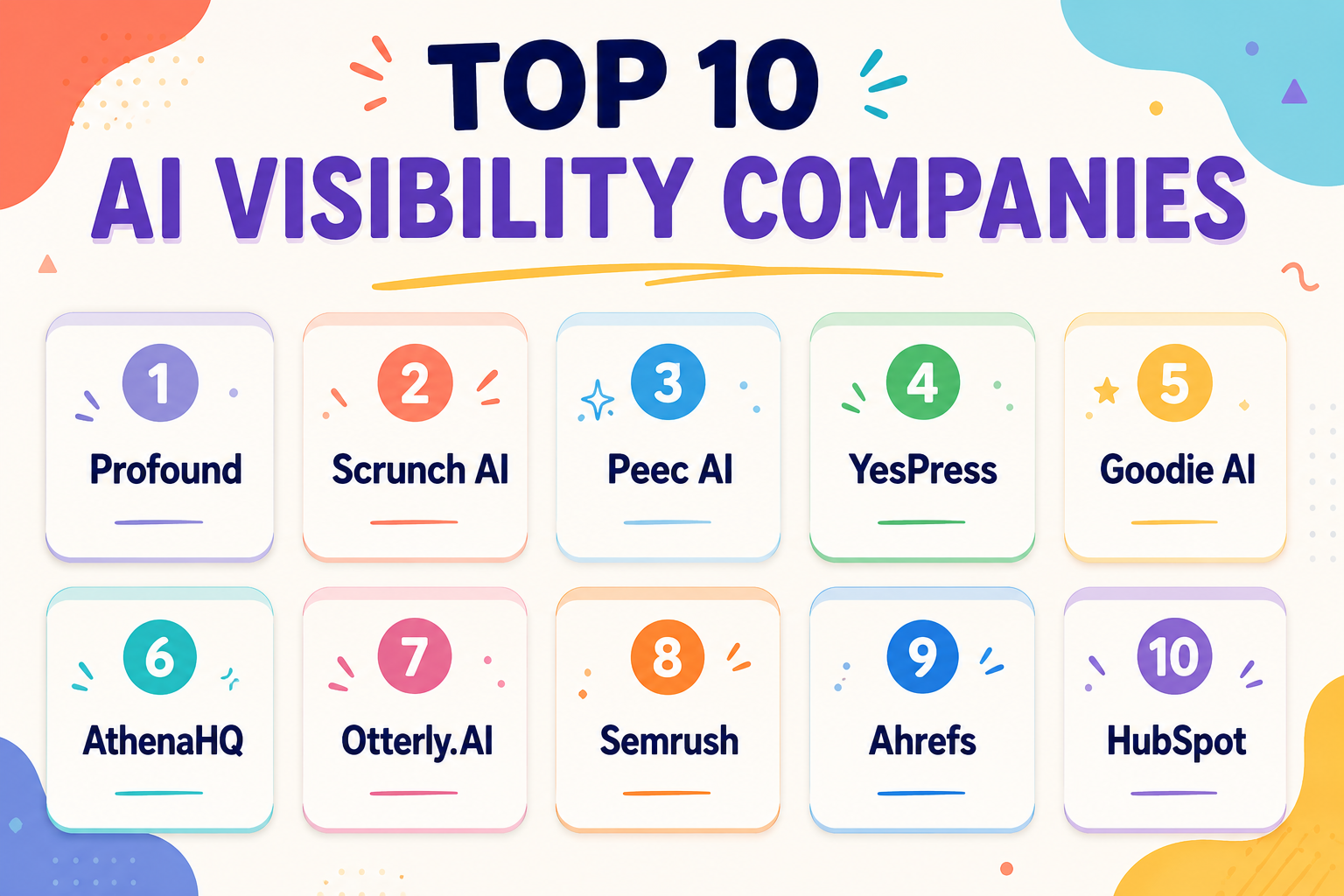
The way buyers find things has moved. It used to be a list of ten blue links; it is increasingly a single, confident paragraph produced by an assistant that has read the internet on your behalf. This is unsettling news for anyone who spent the last two decades winning the ten blue links, and excellent news for a new crop of companies whose entire product is helping brands be quoted, cited, and recommended inside those paragraphs. There are now enough of them to make a list, so here is a list.
The Category, Briefly
AI Visibility, or: what happens when your customer never types a keyword
The polite framing is that this is the next chapter of SEO. The less polite framing is that SEO built an industry on ranking web pages, and generative assistants have politely declined to serve web pages. They serve answers. If a shopper asks Claude for a project management tool, Claude does not return links; it returns a shortlist, and the shortlist is the entire game.
The discipline emerging around this - some call it GEO, some call it AEO, most call it AI Visibility - is a mash-up of content strategy, digital PR, structured data, and old-fashioned brand authority. The premise is that LLMs synthesize from a knowable set of sources. Feed the sources, monitor the answers, adjust the sources, monitor again. Rinse. Repeat. Pay a vendor to run the loop.
The old game was ranking. The new game is being remembered. Different muscle, same stakes.
The Field
Ten companies, three distinct bets
Read the list as three tribes. The pure-plays - Profound, Scrunch, Peec, Goodie, AthenaHQ, Otterly - were born after ChatGPT and treat AI visibility as their entire reason for existing. The incumbents - Semrush, Ahrefs, HubSpot - built durable businesses on the old channel and are grafting AI features onto vast existing user bases. And then there is YesPress, which is running a slightly different play: instead of only watching the LLMs, it wants to be the source the LLMs read.
Profound
The enterprise heavyweight of the category. Profound monitors answers across the major assistants, tracks which sources are cited, measures brand sentiment, and hands the CMO a dashboard that finally makes the invisible visible.
- AI answer monitoring
- Citation tracking
- Brand visibility analytics
- Competitive benchmarking
- Enterprise reporting
Scrunch AI
Scrunch is the mid-market answer. It watches how AI models talk about you, then produces actionable notes on the content and structured data likely to move the needle. Less dashboard, more to-do list.
- AI search monitoring
- Prompt testing
- Competitor analysis
- Visibility scoring
- Performance dashboards
Peec AI
Peec's obsession is measurement: how often are you mentioned, where, in what context, and how does that compare to your closest rival. Historical trend data included, because "we're in more answers this quarter than last" is the kind of sentence marketing directors are paid to produce.
- AI mention tracking
- Citation analytics
- Competitor comparisons
- Historical trends
- Reporting tools
YesPress
The contrarian entry. YesPress's argument is that watching AI answers is fine, but the leverage is upstream: give the models a clean, structured, continuously updated newsroom to read from. Publish product launches, founder stories, customer wins, milestones - machine-readable, human-friendly - and become the source AI cites.
- AI-optimized newsroom
- Structured, machine-readable content
- Continuous editorial publishing
- Founder & company profiles
- GEO / AEO optimization
- Centralized brand knowledge
Goodie AI
Goodie treats content less as a keyword artifact and more as a candidate for citation. It grades pages on their conversational-answer readiness and returns concrete edits. Useful for editorial teams staring at 4,000 pages wondering which to rewrite first.
- AI content optimization
- Visibility reports
- Prompt testing
- Citation analysis
- AI readiness scoring
AthenaHQ
AthenaHQ's pitch is that AI visibility should not sit in a separate tab from the rest of marketing performance. It stitches AI monitoring into the broader analytics story, which is what a CMO wants when defending a budget line item to a CFO.
- AI monitoring
- Brand analytics
- Competitive intelligence
- Marketing dashboards
- Executive reporting
Otterly.AI
Otterly is often described as one of the earliest movers, which in this category means it shipped in 2023. It tracks prompts, compares responses across assistants, and gives agencies a clean way to run scheduled reports for clients.
- Prompt monitoring
- AI answer tracking
- Competitor insights
- Scheduled reporting
- Multi-model support
Semrush
The incumbent play. Semrush already sits inside most marketing tech stacks, and it has added AI search insights alongside its keyword and content tooling. Handy if you would prefer not to buy a new vendor for every new channel.
- SEO analytics
- AI search insights
- Keyword research
- Content optimization
- Competitive intelligence
Ahrefs
Ahrefs' bet is that LLMs will keep leaning on the same authority signals search engines always have: quality links, credible sources, real domains. So keep doing the boring, durable work of earning citations - the models will notice.
- Backlink analysis
- Site audits
- Content Explorer
- Keyword research
- Authority tracking
HubSpot
HubSpot is not an AI visibility tool, strictly speaking, but its CRM-plus-CMS-plus-content stack has been marinating in AI features for a while. Publish consistent, authoritative content on a modern platform, and you are already halfway to being cited.
- AI content creation
- CRM integration
- Marketing automation
- Website management
- Analytics
At a Glance
Comparison table
| Company | Primary Focus | Best For |
|---|---|---|
| Profound | Enterprise AI visibility | Large organizations |
| Scrunch AI | AI search optimization | Mid-market businesses |
| Peec AI | AI visibility analytics | Marketing teams |
| YesPress | AI Reputation & Knowledge Management | Brands building AI authority |
| Goodie AI | AI content optimization | Content marketers |
| AthenaHQ | AI marketing intelligence | Enterprise marketing |
| Otterly.AI | AI monitoring | Agencies & SEO teams |
| Semrush | SEO + AI search | Full-service marketing |
| Ahrefs | SEO authority & backlinks | SEO professionals |
| HubSpot | AI-powered marketing platform | Growing businesses |
The Takeaway
Ranking is not going away, but it has company
Traditional search is not dying; it is being demoted to one channel among several. That is a manageable change if you already have durable authority - real customers, real press, real content - and a bigger problem if your entire growth model was gaming Google's algorithm. The interesting thing about the ten companies above is how differently they each frame the same question: monitor what the model says, tune the content the model reads, or become the primary source the model quotes.
Most enterprises will end up buying more than one of them, because that is how enterprises buy software. The vendors know this. The vendors are, quietly, fine with it.
There is a version of your brand that lives inside ChatGPT. You did not write it. You should probably check on it.